
Company
MYBA - The Worldwide Yachting Association
Explore the company profile and related Superyacht Guide coverage.
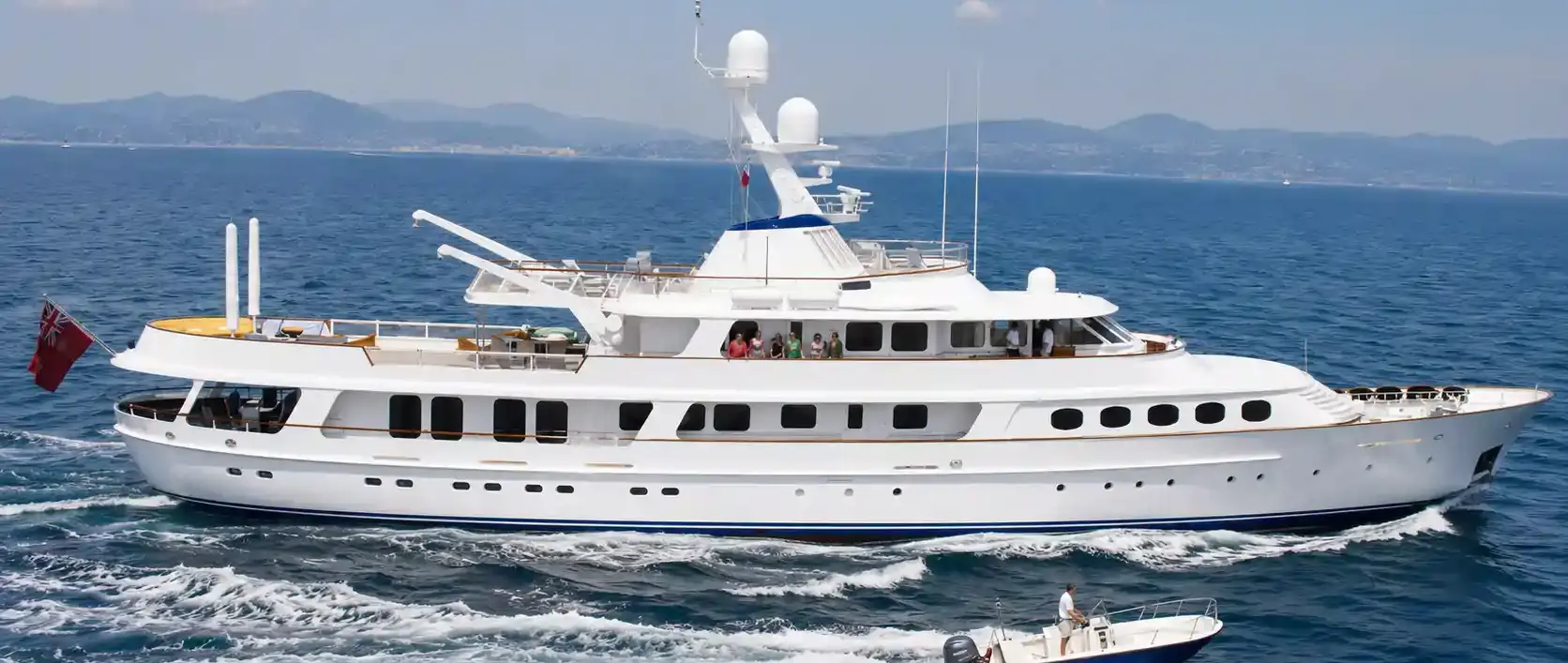
Chartering outside the traditional summer peak can bring quieter destinations, greater yacht availability and sometimes lower rates. Weather, positioning, operating schedules and the yacht's seasonal programme determine whether low season is genuinely better value.
For many charter guests, the image of a Mediterranean superyacht holiday is tied firmly to the height of summer: crowded anchorages, warm evenings, busy waterfronts and intense demand for the most desirable yachts. Yet the charter fleet does not simply disappear when the peak weeks end, and the conventional high season represents only one part of a much larger global charter calendar.
Out-of-season chartering is a genuine part of the superyacht market, although the industry more often uses terms such as low season, shoulder season, winter season, or simply a yacht's summer and winter programme. For the right guest, choosing dates outside the traditional peak can produce a very different experience, with more availability, quieter cruising grounds and sometimes a different weekly rate.
The important word is sometimes. Out-of-season charter should not be confused with a guaranteed discounted version of exactly the same holiday, because once the high season ends, weather, yacht location, crew scheduling, maintenance and the shore-side economy can all change.
The superyacht industry operates seasonally, but there is no worldwide date on which the charter season begins or ends. MYBA's Charter Committee guidance reflects this directly: charter managers are expected to maintain information including high and low rates, winter and summer locations, home ports, bookings, owner use, shipyard works and unavailable periods.
In the Mediterranean, demand generally concentrates around the summer programme, with shoulder periods on either side. That distinction matters because a yacht's season is partly geographical and partly commercial: a date that is relatively quiet in the western Mediterranean may coincide with an active programme elsewhere.
Out of season therefore does not necessarily mean that the yacht itself is inactive. It can simply mean that the yacht has moved to another part of the world where weather, cruising conditions and charter demand are better suited to that time of year.
The most attractive alternative to peak season is often not deep winter but the shoulder period immediately before or after the busiest summer weeks. In many Mediterranean destinations, late spring and early autumn can offer a useful compromise, although conditions vary substantially by region and from year to year.
The advantages can be considerable. Marinas may have more berth availability, anchorages can be less congested, restaurants and historic towns may be easier to enjoy, and guests can avoid some of the heat and crowding associated with the height of summer.
September in particular can retain much of the character of a Mediterranean summer while producing a calmer cruising environment in many areas. The trade-off is that weather becomes less predictable as the season progresses, so an itinerary built around exposed anchorages, beach days and water toys needs more flexibility than it might during the most settled summer period.
Seasonal pricing is an established part of yacht charter, and MYBA's own professional guidance explicitly refers to high and low rates. The difference between them, however, is determined yacht by yacht rather than by a universal industry discount.
Owner availability, existing bookings, location, local demand, events, operating schedules and the commercial strategy of the owner and charter manager can all influence the rate. An empty week between existing commitments may be treated differently from a yacht that is deliberately operating a full winter charter programme.
A yacht with genuine low-season availability may therefore be attractive on price, but the date on the calendar alone does not guarantee a bargain. The better comparison is the complete charter proposition: yacht, location, itinerary, weather, availability and total expected expenditure.
A lower advertised charter rate should never be treated as the final cost of an out-of-season holiday. The MYBA Charter Agreement separates the Charter Fee from the Advance Provisioning Allowance, delivery or re-delivery fees, the security deposit and other agreed charges, so the economics of the charter extend well beyond the headline weekly figure.
MYBA's broker guidance also says clients should be informed about the usual extra costs and how the APA works. Fuel, provisioning, berthing and other voyage-related spending therefore remain important whether the charter takes place in high season, shoulder season or winter.
This can change the economics considerably. Saving money on the weekly fee may be less valuable if the yacht has to reposition specifically for the charter, while a yacht already based in the desired cruising area can make an off-season booking considerably more efficient.
Some yachts remain in or return to Mediterranean cruising areas outside the main summer period, but the experience should not be presented as an August charter with fewer people around. Daylight is shorter, water temperatures are lower, weather can be less settled, and some seasonal businesses may operate reduced hours or close altogether.
For some guests, that is precisely the attraction. A large yacht can become a private travelling residence from which to visit historic cities, coastal restaurants and cultural destinations without requiring every day to revolve around swimming, sunbathing or beach clubs.
The yacht itself also becomes more important. Enclosed interior volume, heating, stabilisation, protected deck areas and comfortable salons can matter more during a cool-season charter than extensive sunpads or a large open sundeck.
The alternative to stretching one region's season is to follow the yacht fleet into another. Many commercially operated yachts move between seasonal markets, most visibly between the Mediterranean summer and Caribbean winter, while other programmes can include the Bahamas, Indian Ocean, Middle East, Southeast Asia or South Pacific.
This turns the idea of out of season on its head. A date that is unsuitable for one cruising ground may fall squarely inside the preferred season somewhere else, so guests whose priority is warm weather rather than one particular destination can often obtain a better charter by following the seasonal movement of the fleet.
The drawback is travel and logistics. Longer flights, different embarkation arrangements and less familiar cruising grounds may make an alternative destination less convenient even when the conditions at sea are more favourable.
A yacht moving from one seasonal cruising area to another may occasionally have scope for a charter around part of that movement. Such opportunities can produce unusual itineraries that would rarely appear in a conventional one-week coastal charter, but they are not something a guest should assume will always be available.
Commercial certification, insurance, cruising permits, crew hours, delivery schedules, owner plans and the practical demands of the passage can all determine whether guests can be carried and whether the itinerary makes sense as a charter. MYBA guidance specifically expects brokers to check whether a yacht's location, itinerary and delivery time are viable before proceeding with an enquiry.
The experience can also be different from a conventional holiday. A longer passage places greater emphasis on the yacht itself, life at sea and the route between destinations rather than a succession of short hops between anchorages and restaurants.
There is another reason yachts cannot simply extend their charter calendars indefinitely: the vessel and crew require time for maintenance, leave, training and refit. What looks like an empty period on a guest-facing calendar can be an important operational window onboard.
Engineering teams may undertake machinery work that cannot easily be completed between charters, while deck and interior departments use quieter periods for deeper maintenance, inventories and preparation. Shipyard periods, surveys and warranty work are also commonly scheduled around the yacht's principal cruising programme.
Crew leave matters as well. A yacht that has operated intensively through a busy season cannot assume that every member of its established charter team will simply remain available for an unexpected booking several weeks later.
The strongest argument for an out-of-season charter is not necessarily price. It is the possibility of experiencing a destination when the yacht is competing with fewer vessels for anchorages, berths, restaurants and shore experiences.
For guests who value privacy, exploration and flexibility, that can be more attractive than the social intensity of peak summer. A yacht anchored in a quieter bay can provide a very different sense of freedom from the same yacht arriving there during one of the busiest weeks of the year.
The compromise is that itinerary planning becomes more dependent on conditions. A successful shoulder- or low-season charter should therefore be built around several possible routes rather than a rigid sequence of compulsory stops, with the captain retaining the flexibility to adapt the programme safely.
There is no reason to regard the end of the traditional high season as the end of superyacht chartering. The professional charter market already works with high and low rates, winter and summer locations, delivery logistics and yachts whose annual programmes move between different cruising regions.
The more useful question is whether a particular yacht, destination and date work together. A lower rate can be valuable, but so can quieter anchorages, greater availability and the freedom to cruise without the pressure of peak-season crowds.
For some guests, the height of the Mediterranean summer will always represent the quintessential superyacht charter. For others, the best week of the year may come during a quieter Mediterranean shoulder period or aboard the same yacht thousands of miles away during its winter programme, making out-of-season chartering not a lesser alternative but a different way to use the fleet.
Explore
Go deeper into the yachts, companies, events and destinations directly connected to this article.
Company
Explore the company profile and related Superyacht Guide coverage.
Continue reading
Yes, some superyachts can be chartered for three days, but minimum terms and pricing are yacht-specific. Depending on the contract, a short booking can …
Guest-caused damage on a superyacht charter can involve the security deposit, the yacht's insurance and separate charterer liability. Superyacht Guide explains where APA ends, …
Superyacht crew gratuities remain discretionary, and MYBA has removed its former percentage recommendation in updated 2026 guidance. We compare current broker tipping ranges, explain …

Difficult charter guests are not necessarily the most demanding. The hardest groups to serve are often those whose expectations are unclear, contradictory or constantly …
Superyacht Guide
Continue into the wider Superyacht Guide.
Business opportunities · Superyacht Guide
Companies serving the superyacht market can discuss clearly identified advertising, sponsorship and business-profile opportunities. Commercial activity remains separate from independent editorial coverage.