
Company
MYBA - The Worldwide Yachting Association
Explore the company profile and related Superyacht Guide coverage.

Yes, some superyachts can be chartered for three days, but minimum terms and pricing are yacht-specific. Depending on the contract, a short booking can cost about half the weekly rate before APA, VAT and positioning.
Yes, it is possible to charter some superyachts for three days, but a three-day booking is not automatically available simply because a yacht publishes a weekly rate. The owner must be willing to accept the shorter period, the dates must fit the yacht's calendar, and the contract has to specify exactly when and where the charter starts and finishes.
That distinction matters because the international superyacht charter market is still built largely around weekly pricing. A yacht shown at €200,000 per week may accept three days in a shoulder-season gap, reject the same request for a prime August week, or quote a short-charter premium that makes three days materially more expensive than three-sevenths of the advertised weekly rate.
The MYBA Charter Agreement does not impose a universal seven-day minimum in its standard charter particulars. It provides for the beginning and end of the Charter Period, places of delivery and redelivery, the Charter Fee, Advance Provisioning Allowance and other contractual amounts, allowing the parties to state the actual period and commercial terms agreed for the booking.
In practical terms, the commercial minimum is therefore yacht-specific rather than a single MYBA duration applying to every superyacht. Some owners prefer seven-night bookings throughout the principal season, while others may consider five, four or three nights when the shorter charter fits between confirmed bookings, falls outside peak demand or is commercially attractive enough to justify the additional turnaround.
A three-day request is usually easier to place when the requested dates fit an otherwise unusable calendar gap than when they divide a prime week into two difficult pieces. Exact embarkation and disembarkation times also matter because a nominal three-day booking must leave the crew enough time to reset the yacht before the next charter.
One short-charter pricing structure is to establish a daily rate by dividing the published weekly charter fee by six rather than seven and multiplying that daily figure by the number of charter days. This is not a universal MYBA rule and should never be assumed without checking the individual yacht's commercial terms, but it illustrates why a three-day charter can cost about half of the weekly rate rather than 42.9 per cent.
Under that illustrative formula, a yacht advertised at €100,000 per week would produce a €16,666.67 short-charter daily rate and a three-day base fee of about €50,000. At €250,000 per week, three days would be approximately €125,000, while a €500,000 weekly yacht would produce a three-day base fee of around €250,000 before APA, tax or other contractual charges.
The economics behind that premium are straightforward. A short charter can occupy dates that might otherwise form part of a full week, while the yacht still has to prepare cabins, provision for the guests, complete laundry and housekeeping, organise embarkation and disembarkation, reconcile accounts and potentially reposition before or after the booking.
Reducing the charter period does not remove the operating expenses created by the guests. Under the MYBA agreement, the charter fee covers the agreed use of the yacht and defined owner-side costs, while variable charter expenses such as fuel, guest provisions, berthing and other itinerary-related expenditure remain for the charterer's account.
Those variable expenses are normally funded through the Advance Provisioning Allowance. As explained in Superyacht Guide's APA guide, the allowance is a working account rather than a second charter fee: the captain spends against it during the trip, provides accounting and returns any unused balance, while a shortfall must be settled.
For illustration, if a €200,000-per-week yacht accepts three days using the weekly-rate-divided-by-six formula, the base fee would be €100,000. An illustrative APA equal to 30 per cent of that short-charter fee would add €30,000, producing €130,000 of rate plus APA before applicable VAT, delivery charges, a security deposit or any other amounts stated in the agreement.
Tax can be particularly important on a short charter because three days is still a short-term hire for European VAT purposes. Article 56 of the EU VAT Directive treats vessel hire of no more than 90 days as short-term and places the supply, under the basic rule, where the vessel is actually put at the customer's disposal; the applicable national treatment and itinerary still need to be checked for the individual booking.
Superyacht Guide's 2026 European charter VAT guide explains why the headline national rate is not enough on its own. A three-day charter delivered in one jurisdiction can therefore carry a different tax result from an otherwise similar booking delivered elsewhere, and the applicable treatment should be established before the final charter budget is agreed.
Positioning can also dominate the economics of a very short booking. If the yacht must travel a substantial distance simply to reach the requested embarkation port and then reposition again after three days, delivery and redelivery costs can erase much of the apparent saving compared with choosing a yacht already based near the intended cruising area.
Special events are another exception to simple pro-rating. Monaco Grand Prix, major film festivals, yacht shows and other high-demand periods can carry fixed minimum terms, premiums or event-specific packages, so a three-day request during a major event may cost considerably more than a longer charter during an ordinary shoulder-season week.
The most useful request is specific: exact embarkation and disembarkation dates and times, preferred ports, guest numbers, intended cruising area and whether the dates are flexible. That allows the owner or central agent to determine whether the booking fits the calendar and to quote the actual short-charter fee rather than simply applying a mathematical fraction to the published weekly rate.
The quotation should separate the base charter fee, APA, applicable VAT or other tax, delivery and redelivery charges, security deposit and any event premium. Crew gratuity should remain separate again; Superyacht Guide's current charter gratuity guidance explains why it is discretionary rather than an automatic contractual percentage.
For a client who only has a long weekend available, three days can therefore deliver a genuine overnight superyacht charter rather than a day-hire experience, but availability is the decisive factor. The strongest three-day opportunities are generally yachts already positioned in the desired cruising area where the proposed dates fit cleanly into the calendar, reducing both scheduling friction and unnecessary positioning costs.
Explore
Go deeper into the yachts, companies, events and destinations directly connected to this article.
Company
Explore the company profile and related Superyacht Guide coverage.
Continue reading
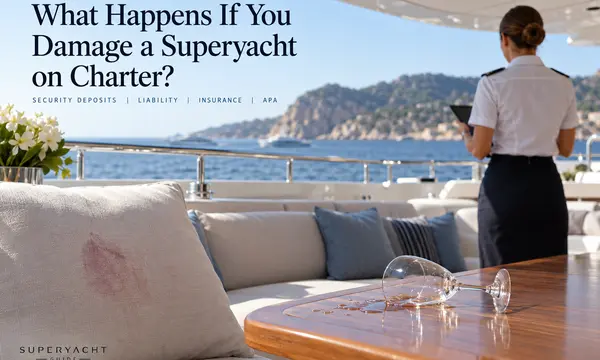
Guest-caused damage on a superyacht charter can involve the security deposit, the yacht's insurance and separate charterer liability. Superyacht Guide explains where APA ends, …

Superyacht crew gratuities remain discretionary, and MYBA has removed its former percentage recommendation in updated 2026 guidance. We compare current broker tipping ranges, explain …
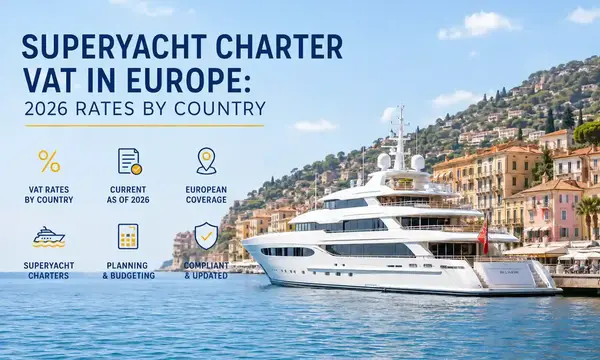
European superyacht charter VAT is determined by more than a country's headline tax rate. This 2026 guide compares major charter jurisdictions and explains the …
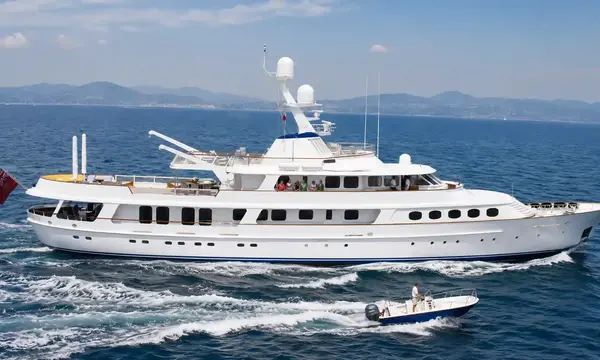
Chartering outside the traditional summer peak can bring quieter destinations, greater yacht availability and sometimes lower rates. Weather, positioning, operating schedules and the yacht's …
Superyacht Guide
Continue into the wider Superyacht Guide.
Business opportunities · Superyacht Guide
Companies serving the superyacht market can discuss clearly identified advertising, sponsorship and business-profile opportunities. Commercial activity remains separate from independent editorial coverage.