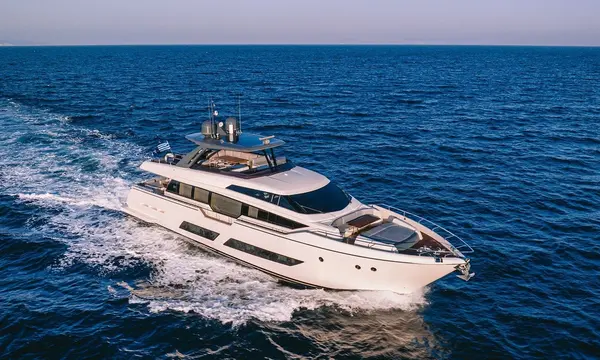
26m Ferretti ANASSA A Offers Extra May 2027 Greece Charter Day
The 26.18m Ferretti motor yacht ANASSA A is offering eight days for the price of seven for eligible May 2027 Greece charters booked before …
The APA is the spending account behind most non-inclusive superyacht charters, covering fuel, provisions, berthing and other guest expenses. Superyacht Guide explains how much to budget, who controls the money, what happens when it runs short and how unused funds are returned.
A yacht advertised at €250,000 per week does not necessarily cost €250,000 to charter. The weekly charter fee normally pays for use of the yacht, its crew and the vessel's ordinary insurance, while many variable expenses created by the charterer's itinerary and preferences are paid separately.
That is the purpose of the Advance Provisioning Allowance, usually shortened to APA. It is money advanced before the charter so that the captain and crew can pay fuel, provisions, berth costs and other charter-specific expenses without asking guests to settle individual invoices throughout the trip.
The APA is best understood as a pre-funded operating account rather than an extra fee automatically retained by the yacht owner. Under the MYBA Charter Agreement, the charterer's advance is used for expenses attributable to the charter, while the captain monitors expenditure and ultimately accounts for what has actually been spent.
Typical expenses can include fuel for the yacht's main engines and generators, tender and water-sports fuel, food and beverages for the charter party, marina and harbour charges, pilots, local agents, water, shore electricity, communications, personal laundry and other costs generated by the guests' programme. Extraordinary requests such as special equipment, major excursions or unusual shoreside arrangements can require separate advance funding depending on the agreement.
This is why two groups chartering the same yacht for the same weekly rate can finish with very different total bills. One group may anchor most nights and cruise relatively short distances, while another may request prime high-season berths, extensive cruising, premium wines, imported ingredients and frequent tender or shoreside movements.
There is no universal percentage that applies to every yacht and every charter. Current broker guidance spans roughly 20% to 40% of the weekly charter fee, with the figure influenced by the yacht, itinerary, cruising distance, destination and expected style of use.
Fraser currently describes APA as typically around 20% to 30% of the charter fee, while Burgess commonly advises approximately 30% to 40% and also describes a wider 20% to 40% range depending on the booking. Northrop & Johnson currently uses an industry estimate of around 35% to 40% for variable expenses on its non-inclusive charter terms.
A higher APA percentage does not necessarily mean one yacht is intrinsically more expensive than another. It can simply mean that the expected itinerary or provisioning requirements justify a larger working balance so that the captain is less likely to request an additional transfer during the charter.
Weekly charter rate APA percentage APA funded Rate plus APA €200,000 20% €40,000 €240,000 €200,000 25% €50,000 €250,000 €200,000 30% €60,000 €260,000 €200,000 35% €70,000 €270,000 €200,000 40% €80,000 €280,000
Those figures still do not necessarily represent the final cost of the charter. VAT or other local taxes, delivery or redelivery charges, security deposits and discretionary crew gratuity can sit outside both the headline charter rate and APA, so the contract and broker quotation need to be read as a complete financial package.
MYBA's accounting guidance makes the captain directly accountable to the charterer for the disbursement of the APA and also responsible for expenditure made from the account by crew members. The captain is expected to monitor the level of spending throughout the trip and keep the charterer informed about the position of the account.
This does not make APA general yacht revenue or give the captain an unrestricted spending budget. Purchases should relate to the charter, expenditure should be recorded, and supporting invoices or receipts should be retained as far as possible so that the final reconciliation can be explained.
Provisioning provides an obvious example because guests may request particular wines, spirits, fresh seafood, specialist dietary products or ingredients that must be sourced specifically for their trip. These purchases are made for the charter and charged through the APA at the applicable cost, while specialist agents may introduce additional charges where their services are needed.
The percentage written into the contract is an advance estimate rather than a legal ceiling on actual charter expenditure. If the remaining balance becomes insufficient in light of current spending, the MYBA Charter Agreement provides for the charterer to supply enough additional money to maintain an adequate credit balance.
Burgess describes the same process in practical terms: if expenditure exceeds the original APA, the charterer needs to top up the account. This can happen when guests substantially change the itinerary, cruise farther than expected, choose expensive marina berths or request provisions and activities beyond the assumptions used when the initial allowance was calculated.
Good communication helps prevent a top-up request from becoming a surprise. The charterer can ask for an update on expenditure during the trip, and the captain should be able to explain whether the existing balance remains sufficient for the planned programme.
Yes. Paying a €70,000 APA does not mean that €70,000 automatically becomes part of the owner's income or must be spent before the charter ends, because the account is ultimately reconciled against actual charter expenses.
The MYBA Charter Agreement provides for the captain to present a detailed account of expenditure before disembarkation. If the actual expenses are lower than the amount advanced, the captain repays the overpaid balance; if actual expenditure is higher, the charterer settles the amount still outstanding.
MYBA's accounting guidance also provides that charterers should have the option of receiving an APA refund by bank transfer rather than cash. Supporting receipts should accompany the final account as far as possible, making the reconciliation a record of actual expenditure rather than an arbitrary final charge.
Suppose a charterer advances €70,000 in APA and the final documented expenses comprise €19,500 of yacht fuel, €14,800 of food and beverages, €9,400 of berthing and port costs, €2,300 of tender and water-sports fuel, €3,700 of agents and transfers, and €1,800 of communications and miscellaneous guest expenses. Total expenditure is therefore €51,500, leaving €18,500 of the original advance unspent.
The €18,500 balance remains the charterer's money and is returned through the final reconciliation. Conversely, if documented expenditure had reached €76,000, the original €70,000 allowance would not limit liability to that amount because the additional €6,000 represents genuine charter expenditure that still needs to be settled.
There are circumstances in which part of the remaining balance may need to be retained because a genuine charter-related cost has not yet been finalised. MYBA's accounting guidance says outstanding additional expenses should be reflected in the APA account and that a realistic amount may be withheld where a final invoice is still awaited.
Damage attributable to the charter party requires particular care because the captain should establish a realistic repair amount, explain the issue on the APA account and obtain acknowledgement before disembarkation if money is to be retained. Once the actual cost is known, any excess amount held should be returned, which is different from simply treating the entire APA as a security deposit.
Current advertised charter rates show how quickly APA can become a material part of the cash required before embarkation. The calculations below use current Burgess advertised weekly rates and an illustrative 30% to 40% APA range; they are examples of the arithmetic rather than yacht-specific APA quotations, because the actual percentage must come from the relevant charter agreement.
Current advertised yacht Weekly rate from Illustrative 30% APA Illustrative 40% APA BIANCA, 32.8m €68,000 €20,400 €27,200 BEL 1, 49.9m €295,000 €88,500 €118,000 OCTOPUS, 126.2m $2,200,000 $660,000 $880,000
For BIANCA, the currently advertised rate begins at €68,000 per week, so an illustrative 30% to 40% allowance would be €20,400 to €27,200 and the initial rate-plus-APA funding would be €88,400 to €95,200. Tax and any other separate contractual charges would still need to be added where applicable.
BEL 1 is currently advertised from €295,000 per week, producing an illustrative APA of €88,500 to €118,000 at the same 30% to 40% range. That would put the base rate plus advance allowance at approximately €383,500 to €413,000 before separate tax, positioning or other contractual items.
At the top end of the market, OCTOPUS is currently advertised from $2.2 million per week. A purely illustrative 30% APA would equal $660,000 and a 40% allowance would equal $880,000, creating a potential rate-plus-APA funding requirement of approximately $2.86 million to $3.08 million before other applicable charges.
This distinction is one of the most important things for first-time charterers to understand. If a contract requests 35% APA, it is providing the captain with a practical working balance; it is not declaring in advance that every euro or dollar in that account will necessarily be spent.
Provisioning starts before the guests arrive and fuel, berth bookings, agents and local arrangements can require prompt payment during the trip. An allowance that is too small may therefore appear attractive at booking stage but create avoidable transfer requests later, whereas a realistic allowance provides operating headroom and leaves any genuine surplus available for refund.
For that reason, comparing yachts only by their APA percentage can be misleading. The more useful questions are what assumptions produced the allowance, how much cruising is planned, what sort of berthing and provisioning the guests expect, and which variable expenses are likely to consume the account.
The cleanest way to understand a superyacht charter quotation is to keep its financial components separate. The charter fee pays for the yacht and the services included under the contract, while APA funds variable charter-party expenses and taxes depend on the jurisdiction and itinerary.
Delivery or redelivery charges can also apply if the yacht must reposition specifically for a booking, and a contract may require a security deposit in addition to APA. Crew gratuity is normally treated separately again, so none of those figures should automatically be assumed to sit inside the provisioning allowance.
A €250,000 charter might therefore require a €75,000 APA if the applicable allowance were 30%, but €325,000 would still not automatically be the complete final commitment. Applicable tax, positioning charges and any other agreed contractual amounts must also be identified before the real charter budget is known.
Before signing a yacht charter agreement, ask for the base rate, APA percentage, applicable taxes, potential delivery or redelivery charges, any security deposit and gratuity guidance as separate figures. Breaking the quotation into those components makes it much easier to distinguish genuine charter price from money being advanced to pay variable expenses.
During the charter, the captain should be able to explain the position of the APA account, particularly if the itinerary or guest requests are moving expenditure materially above the initial forecast. At the end, the documented expenses are reconciled and the charterer either receives the unused balance or pays the outstanding amount.
The essential point is that APA is not a hidden surcharge and it is not automatically lost. It is a pre-funded account for the real variable costs created by the charter, allowing the yacht to operate smoothly while giving the charterer a transparent accounting of how those funds were actually used.
Continue reading
The 26.18m Ferretti motor yacht ANASSA A is offering eight days for the price of seven for eligible May 2027 Greece charters booked before …
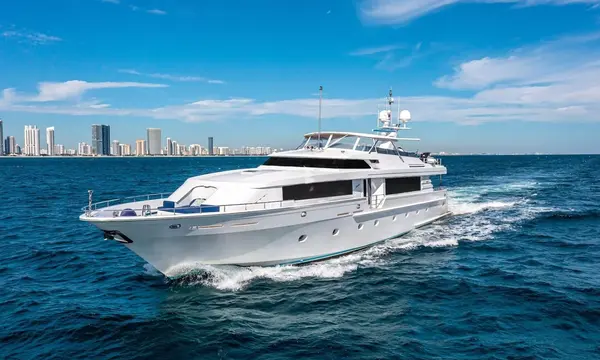
The 36m Intermarine Savannah yacht XOXO has released a new photo collection before its Caribbean and Bahamas winter charter season, presenting classic interiors and …
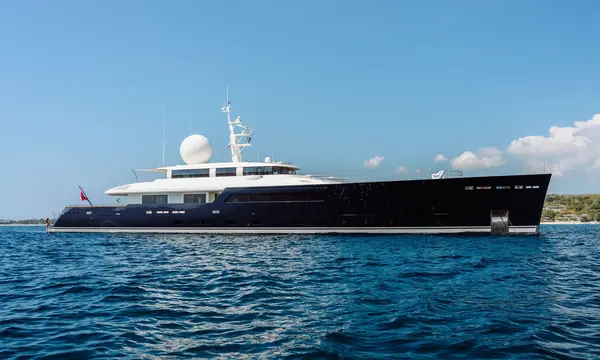
The 55.7m Picchiotti explorer GALILEO is opening French Polynesia charters through March 2027, with potential longer passages to New Zealand and a reported 9,000nm …
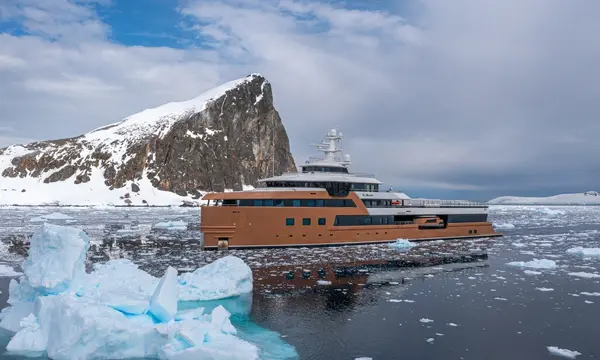
Damen's 77m LA DATCHA is advertised for Antarctica charters in 2026–27, combining ice-class expedition systems, helicopter capability and accommodation for 12 guests.
Superyacht Guide
Continue into the wider Superyacht Guide.
Business opportunities · Superyacht Guide
Companies serving the superyacht market can discuss clearly identified advertising, sponsorship and business-profile opportunities. Commercial activity remains separate from independent editorial coverage.