
Burgess Reports 35% Rise in Yacht Charter Days as Private Travel Demand Grows
Burgess says charter days booked increased 35% in 2025, with demand also rising in the 40–60m sectors and winter 2026/27 bookings well ahead of …
European superyacht charter VAT is determined by more than a country's headline tax rate. This 2026 guide compares major charter jurisdictions and explains the rules and exceptions that can change the final charge.
Europe does not have one superyacht charter VAT rate. The tax applied to a charter can depend on where the yacht is handed over to the client, how long the hire lasts, how the supply is classified and, in some countries, where the yacht is actually used. That means a 20%, 22% or 24% national headline rate is only the starting point for understanding the final tax charge.
For EU VAT purposes, the central rule for short-term yacht hire comes from the EU VAT Directive. A vessel hire of no more than 90 days is treated as short-term, and the place of supply is where the yacht is actually put at the customer's disposal. Member States can also use effective-use-and-enjoyment provisions in defined circumstances, which is why two charters with similar prices can produce different VAT outcomes when their delivery points and cruising patterns differ.
The table below shows the principal rates verified for major European and Mediterranean charter jurisdictions as at 1 September 2026. It deliberately distinguishes a standard or headline VAT rate from a special reduced treatment, because a reduced rate that applies to a particular type of supply cannot safely be presented as the universal tax rate for every superyacht charter in that country.
Country or jurisdiction 2026 VAT rate Charter treatment to note France 20% standard Short-term hire put at the client's disposal in France is in principle taxable there; documented actual use outside EU territorial waters can reduce the French taxable portion under the verified rule. Monaco 20% standard Monaco's VAT framework closely follows the French system, but French yacht-charter concessions should not automatically be assumed to apply identically without checking the Monegasque rule. Italy 22% standard Short-term hire put at the client's disposal in Italy is relevant to Italian VAT; actual use outside the EU is determined from evidence rather than the former fixed presumptive percentage approach. Spain 21% standard Short-term hire is located in Spain when the yacht is put at the client's disposal in the Spanish VAT territory. No automatic French- or Italian-style cruising reduction is assumed here. Greece 24% standard The EU short-term place-of-supply rule applies. No lower general superyacht-charter rate is stated without a separately verified current Greek provision. Croatia 25% standard; 13% for qualifying nautical accommodation The 13% reduced rate applies to qualifying accommodation in floating objects of nautical tourism and should not be described as the rate for every yacht-hire supply. Malta 18% standard; 12% for qualifying pleasure-boat hire The 12% rate applies where the place of supply is Malta and the qualifying hiring period, aggregated under the rule, does not exceed five weeks or 35 days. The relevant excess term is subject to the 18% default rate. Cyprus 19% standard This is the verified headline rate; no special effective yacht-charter rate is assumed without a separately verified current rule. Portugal 23% standard on the mainland Madeira and the Azores have different VAT rates, so the mainland figure must not be treated as the rate for every Portuguese territory.
The table is therefore a planning guide rather than an invoice calculator. A charter broker or tax adviser still has to identify the actual supply, the yacht's delivery point, the charter duration and any country-specific rule before deciding the VAT amount that belongs on a contract or invoice. The same caution applies when a yacht crosses borders during the charter, because the itinerary alone does not necessarily move the place of supply away from the country where the short-term hire began.
France applies a normal VAT rate of 20%, and French administrative guidance states that short-term pleasure-boat hire put at the customer's disposal in France is in principle fully taxable in France. The same guidance allows the proportion corresponding to actual use outside EU territorial waters to be excluded from French taxation when that use can be substantiated. This makes evidence important: the legal treatment is based on actual use and the supporting record, not simply on an assumed percentage because a yacht is capable of leaving EU waters.
Italy's ordinary VAT rate is 22%. Italian guidance similarly makes the place where a short-term yacht is put at the customer's disposal central to territorial treatment, while actual use outside the EU is now established through evidence rather than the older fixed presumptive percentage system. Owners, charterers and brokers should therefore be cautious with old rate charts that still show automatic Italian reductions based only on yacht length or an estimated proportion of offshore cruising.
Malta is one of the clearest examples of why the headline rate and the charter rate can differ. The country's default VAT rate is 18%, but qualifying hiring of a pleasure boat can be taxed at 12% when the place of supply is Malta and the relevant hiring period, including qualifying previous hire to the same person under the rule, does not exceed five weeks or 35 days. Where the qualifying period is exceeded, the relevant excess term is taxed at Malta's 18% default rate rather than automatically remaining at 12%.
Croatia requires a different distinction. Its standard VAT rate is 25%, while a 13% reduced rate is provided for qualifying accommodation in floating objects of nautical tourism. That does not mean every bareboat, crewed yacht or other vessel-hire transaction can simply be invoiced at 13%, because the tax treatment depends on what is actually being supplied and whether it falls within the qualifying accommodation category.
Spain's general VAT rate is 21%, and its short-term means-of-transport rule places the supply in Spain when the yacht is actually put at the client's disposal within the Spanish VAT territory. For vessels, the short-term threshold is no more than 90 days. The verified Spanish material does not support applying an automatic outside-EU cruising percentage simply because comparable mechanisms exist elsewhere, so a Spanish charter should be analysed under the Spanish rules rather than through a Mediterranean rule of thumb.
Greece has a regular VAT rate of 24% and follows the EU rule that the place where the vessel is put at the customer's disposal determines the place of short-term hire. Monaco uses a normal 20% rate and a VAT framework that closely follows France under the Franco-Monegasque arrangements, but that similarity is not a licence to copy every French administrative concession into a Monaco charter without checking the Monegasque position. Cyprus's verified standard rate is 19%.
Mainland Portugal's standard VAT rate is 23%, but that figure does not apply uniformly across every Portuguese territory because Madeira and the Azores have their own rates. For charter planning, that geographical distinction matters in the same way that the place of yacht delivery matters elsewhere: the contract should identify the actual jurisdiction rather than using a single 'Portugal' figure for every possible embarkation point.
VAT follows the legal supply, not simply the yacht's flag or the nationality of the charterer. A bareboat arrangement, a crewed charter, passenger transport, accommodation and a wider composite hospitality supply can raise different classification questions, while customer status, yacht registration, commercial status and local tax-registration requirements can add further layers. Commercial charter VAT should also be kept separate from the question of whether a privately owned yacht itself has VAT-paid status.
VAT is only one part of the overall charter budget. Superyacht Guide's broader 2026 charter price guide explains how the weekly base rate, Advance Provisioning Allowance, fuel, food, berthing, gratuity and local taxes combine into the total amount a client may ultimately commit. Keeping that price question separate from this country-by-country tax analysis avoids treating a local VAT percentage as though it were the entire additional cost of the charter.
These rates and rules are a general editorial guide based on official material verified for 1 September 2026, not individual tax advice. The signed charter agreement, client status, place where the yacht is put at the customer's disposal, duration, itinerary, type of supply and local registration position can all change the result, so the applicable treatment should be confirmed for the specific charter before an invoice is issued or a final budget is agreed.
Continue reading
Burgess says charter days booked increased 35% in 2025, with demand also rising in the 40–60m sectors and winter 2026/27 bookings well ahead of …
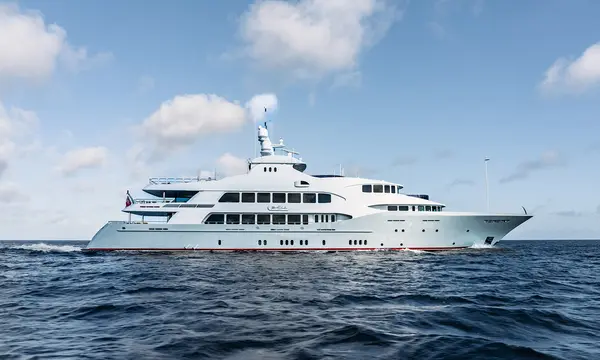
The 60m Trinity superyacht IRON BLONDE has rejoined IYC charter, offering seven guest cabins, a three-level elevator, dedicated wellness facilities and an owner deck.
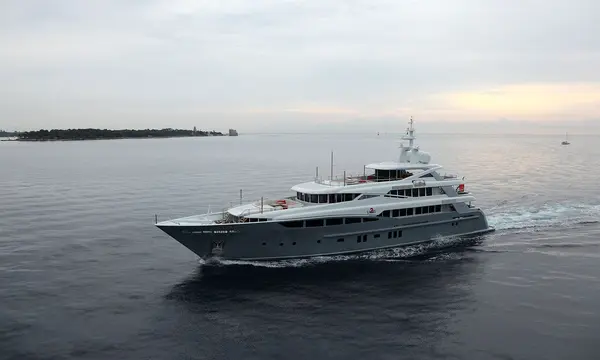
The 46.35-metre Rossinavi 2 LADIES is listed for Mediterranean charter from €230,000 per week, offering six cabins for 12 guests and an accessible glass …

The advertised weekly charter rate does not cover every expense. We explain what the base fee normally includes and how APA, fuel, food, VAT …
Superyacht Guide
Continue into the wider Superyacht Guide.
Business opportunities · Superyacht Guide
Companies serving the superyacht market can discuss clearly identified advertising, sponsorship and business-profile opportunities. Commercial activity remains separate from independent editorial coverage.