
Company
MYBA - The Worldwide Yachting Association
Explore the company profile and related Superyacht Guide coverage.
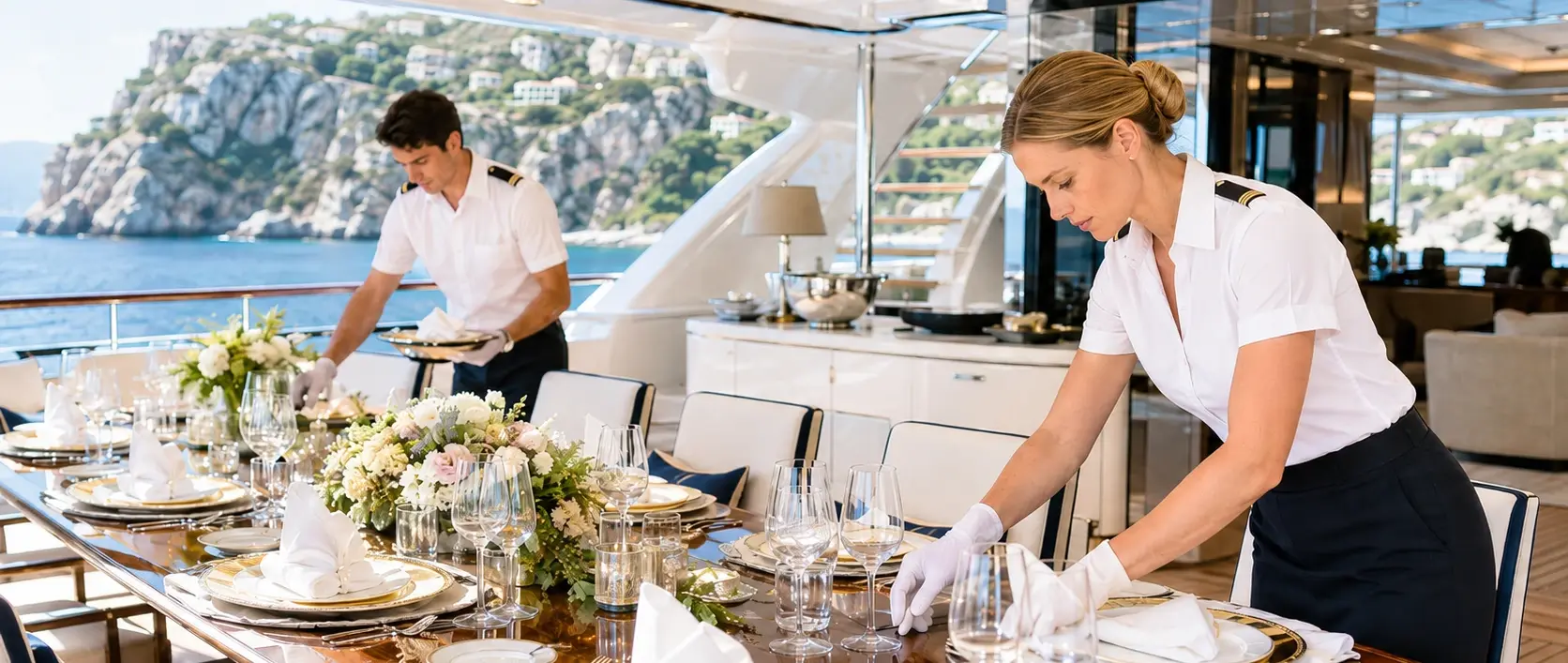
Difficult charter guests are not necessarily the most demanding. The hardest groups to serve are often those whose expectations are unclear, contradictory or constantly changing, turning apparently simple requests into problems for the entire yacht.
The most difficult charter guest is not necessarily the person who asks for the best wine, the most elaborate dinner or the largest collection of water toys. Superyacht crews are trained for demanding service, and a well-prepared yacht can accommodate an extraordinary level of personalisation when the requirements are understood early enough and are physically, legally and operationally achievable.
Difficulty usually begins somewhere less obvious. A charter becomes hard to serve when expectations remain unclear, when different members of the party want incompatible things, when plans change faster than the crew can safely reorganise them or when the guests assume that paying a very large charter fee removes the practical limits imposed by weather, geography, crew numbers and the yacht itself.
This distinction matters because demanding and difficult are not the same thing. A guest who provides a detailed preference sheet, explains exactly what matters and accepts sensible advice can request an extremely sophisticated programme while remaining comparatively straightforward to look after, whereas someone asking for much less can create continuous pressure if every decision changes at the last moment.
The industry's own procedures recognise how important preparation is. MYBA's guidance for retail charter brokers says that brokers should assess a client's requirements, service style, cuisine preferences and itinerary before offering suitable yachts, and later obtain a comprehensive preference document covering guest details, medical or mobility issues and other information needed by the captain and crew.
A successful charter therefore starts long before anybody steps onto the passerelle. When the broker, charterer and yacht communicate well before embarkation, the crew can build an experience around the guests; when information arrives late, contradicts itself or proves inaccurate after arrival, the crew begins the week by discovering the charter while simultaneously trying to deliver it.
Preference sheets can look like administrative paperwork, but in practice they are one of the crew's most valuable planning tools. They tell the chef what people actually eat, help the interior team understand drinks and service preferences, give the deck team clues about activities and allow the captain to anticipate mobility, medical or itinerary requirements before the yacht is committed to a particular programme.
The problem is not usually that a guest has too many preferences. It is that the information supplied may be incomplete, treated casually or completed by one person on behalf of an entire group whose preferences turn out to be very different once everyone is aboard.
Food is one of the clearest examples because a chef cannot improvise an unlimited supply chain at sea. A preference sheet saying that the group enjoys Mediterranean food is useful only at a broad level, while information about allergies, dislikes, breakfast habits, children's meals, preferred brands, religious requirements and whether guests expect formal multi-course dinners every evening can materially change provisioning and preparation.
The same problem appears with drinks. A yacht can provision specific wines, spirits, soft drinks and specialist products before embarkation, but a preference first mentioned after departure may require an agent, tender trip, courier or itinerary change simply to obtain something that would have been easy to purchase the previous day.
None of this means guests should arrive with a military timetable. Part of the attraction of charter is being able to change one's mind, but flexibility works best when the yacht understands the broad shape of the holiday and can prepare enough options to absorb those changes without rebuilding the entire operation several times each day.
MYBA's broker guidance is explicit about the importance of understanding the client's desired style and level of service before recommending a yacht. That point is easily overlooked because two yachts of similar length and price can deliver very different experiences depending on crew culture, layout, toy inventory, cruising speed, chef, formality and the way the owner normally operates the vessel.
A mismatch at the booking stage can therefore create problems that no amount of goodwill from the crew completely solves. A highly formal yacht may feel uncomfortable to a family wanting completely relaxed service, while a yacht built around quiet luxury may struggle to satisfy a group expecting nightclub-scale entertainment and watersports from dawn until well after midnight.
There is also a difference between what guests say they want and what they discover they enjoy once aboard. That is normal and often part of a successful charter, but the strongest crews adapt from an understood starting point rather than trying to infer the group's expectations from scratch while simultaneously serving meals, operating tenders and moving the yacht.
The best preference information is consequently not about controlling guests. It gives the crew enough knowledge to make spontaneity possible, because the more accurately the yacht is prepared beforehand, the more easily it can make an unexpected request appear effortless.
A guest sees a yacht and understandably associates it with freedom. From the aft deck, another island may appear to be a simple decision away, and changing lunch from one bay to another can sound no more complicated than asking a driver to take a different road.
The captain sees a different picture. A change of destination may alter passage time, weather exposure, anchoring conditions, berth availability, fuel consumption, pilotage, customs arrangements, tender operations and the point at which crew who have been working since early morning can finally stand down.
This is where a perfectly reasonable guest request can become difficult through repetition rather than scale. One itinerary change may be easy, but a day containing repeated decisions to move, stop, move again, launch toys, recover them, change the restaurant booking, relocate the yacht and then arrange a late shore transfer can create work across almost every department.
The interior team may have been preparing lunch for one time while the galley works towards another, and the deck team may have rigged the swim platform just as the bridge decides the yacht needs to get underway. Tenders that were cleaned and secured may need to be relaunched, while the chef may be trying to preserve a meal whose service time has moved by two hours.
Guests rarely see these dependencies because professional crews deliberately hide them. That invisibility is one of the strengths of superyacht service, but it can also create the impression that changes have no operational cost because the resulting work disappears below deck or happens after the guests have gone to sleep.
Weather creates an even harder boundary because it cannot be negotiated. A charterer may have built the week around a particular restaurant, island or event, yet sea state or wind can make a tender transfer uncomfortable, an anchorage unsuitable or a passage sufficiently unpleasant that the captain recommends a different plan.
A difficult interaction develops when operational advice is interpreted as unwillingness to serve. The crew's challenge is then no longer simply finding an alternative; it is persuading a guest who believes the yacht has refused a request that the alternative is actually an attempt to protect the quality of the charter.
The best captains and chief stewardesses handle this by avoiding a bare no whenever possible. They explain enough to make the constraint credible, then offer another anchorage, another restaurant, another activity or another timing so that the guest still experiences choice rather than simply being presented with a restriction.
One of the unusual characteristics of superyacht charter is that the guest experiences the yacht as an intensely private space while the crew experiences exactly the same environment as both a workplace and an operating vessel. Those perspectives coexist successfully most of the time, but friction appears when the private-holiday expectation begins to obscure the fact that safety rules and working limits still apply.
MYBA's guidance recommends that captains brief charterers after embarkation on matters including onboard safety, security, watersports, smoking, recreational drugs, policies concerning children and relevant local restrictions. The same guidance also refers to the captain's authority and procedures for addressing breaches of the charter agreement, illustrating that luxury service operates inside a formal command and contractual structure.
Most guests have no problem with this, particularly when rules are explained calmly and early. The more difficult cases are those in which a restriction is first encountered at the moment somebody wants to do something, because what is fundamentally a safety or legal issue can then feel like the crew has suddenly invented a barrier.
Watersports provide an obvious example. A guest may reasonably expect the jet skis, e-foils or tender to be available because they appeared in the yacht's marketing material, yet local licensing rules, weather, visibility, sea state, insurance conditions or the captain's assessment can affect whether and how they can be used.
Children create another layer of judgement because families differ dramatically in how much independence they expect children to have aboard. A crew can be warm, attentive and extremely helpful around younger guests, but crew members simultaneously have their own duties and cannot simply become an unplanned childcare department without affecting the rest of the operation.
Privacy can produce similar misunderstandings. Charter crews are expected to be discreet, and MYBA's captain-and-crew guidance places strong emphasis on confidentiality concerning charterers and their guests, including restrictions on disclosure of information and photographs.
Extreme privacy requirements, however, are easiest to deliver when they are known before the charter. Security teams, unusual communications restrictions, limits on crew access to certain spaces or highly sensitive guest movements can all be accommodated more effectively when the captain has time to integrate them into the yacht's normal operating procedures.
Crew working time also imposes a limit that is largely invisible to guests. The Maritime Labour Convention regulates hours of work or minimum rest for covered seafarers, including a minimum-rest standard of at least ten hours in a 24-hour period and 77 hours in seven days, subject to the Convention's detailed provisions and permitted exceptions.
That does not mean a yacht stops providing service at a particular hour. It means department heads need rosters, handovers and sufficient staffing to sustain late dinners, early breakfasts, navigation, tender movements and continuous guest service without allowing an intense charter programme to become an uncontrolled fatigue problem.
The difficult guest is therefore not simply the person who stays up late. The real difficulty arises when every day combines very late service, very early starts, continuous daytime activities and repeated schedule changes, because the yacht still has to maintain safe watches and adequate rest while trying to make the service appear continuous.
A charterer may sign the agreement, but a yacht normally serves a group. Families, couples, friends, business associates and invited guests can arrive with different ideas about what the week is supposed to be, and the crew may have to discover those differences in real time.
One guest wants breakfast at seven while another wants the yacht silent until ten, and one half of the party may want to remain at anchor while the other wants to move immediately. Some want formal dinners every evening, others want casual food whenever they happen to be hungry, and children may want the water toys operating while adults want an uninterrupted lunch beside the pool.
None of these requests is individually unreasonable. The difficulty comes from trying to deliver all of them simultaneously with the same galley, the same tender, the same deck team and the same finite interior crew.
Family hierarchy can make this particularly delicate. The person paying for the charter may give one instruction while another influential member of the party gives a conflicting one, leaving the crew trying to determine whose preference should govern without creating visible tension among the guests.
Strong chief stewardesses manage this through careful communication rather than forcing the issue into the open. They learn who makes decisions, who prefers to be consulted and which requests are personal rather than instructions for the whole group, allowing the yacht to accommodate differences without repeatedly asking the charterer to adjudicate.
Social mood matters as much as logistics. Guests may be tired after travel, relationships may become strained, children may become restless and groups that seemed perfectly aligned during planning can behave differently after several days living together in a relatively contained environment.
The crew has to absorb some of that atmosphere without becoming part of it. Professional hospitality means recognising when conversation is welcome, when guests want privacy and when the service style needs to become quieter or more formal because the mood at the table has changed.
Alcohol can magnify all of these dynamics without necessarily creating a dramatic incident. A late evening can alter the following morning's schedule, increase housekeeping work, create additional requests and change how people assess risks that they would approach differently earlier in the day.
The important point is not to label particular behaviours as bad guests. The yacht's challenge is that service becomes substantially more complex when the group's own expectations conflict, because the crew is no longer simply delivering a programme but continuously mediating among several competing versions of the holiday.
Damage is one point at which that complexity stops being purely social. MYBA's captain-and-crew guidance contains a specific procedure for dealing with guest-caused damage, including informing the broker and central agent, showing the issue to the charterer and documenting it, which demonstrates that even a luxury hospitality relationship requires clear boundaries when the vessel itself is affected.
A professional crew will usually try to deal with minor incidents discreetly and proportionately. Problems escalate when a guest expects the service relationship to mean that every consequence of behaviour must disappear along with the broken glass, damaged furnishing or equipment.
The easiest charter groups to serve are not necessarily undemanding. Some of the most elaborate charters can run smoothly because the guests communicate clearly, trust the crew to interpret their preferences and understand that the purpose of preparation is to create freedom rather than restrict it.
A good broker plays a major role in that outcome. MYBA's retail-broker guidance says the broker should carefully assess the client's desires, service level, cuisine and itinerary before recommending yachts, and should later provide detailed guest information to the captain in time for preparation.
That process protects the charterer as much as the yacht. A client who wants high-energy nightlife, continuous watersports and an informal family atmosphere should ideally be matched with a yacht and crew that enjoy delivering exactly that programme rather than discovering after embarkation that the vessel operates in a very different style.
The yacht also benefits from knowing what truly matters. If an anniversary dinner is the emotional centre of the week, the crew can protect the timing, source the right ingredients and build the itinerary around it, while less important parts of the programme can move if weather or logistics intervene.
Clear communication during the charter remains equally valuable. A guest who tells the chief stewardess at breakfast that dinner will probably be late gives every department time to adjust, while the same information arriving as the table is being laid can turn a simple schedule change into wasted preparation and additional hours of work.
Crew also need to avoid creating difficulty themselves by promising too much. Saying yes immediately to every request may feel like excellent service, but a promise that the captain, chef or deck team cannot realistically deliver is more damaging than an early explanation followed by a credible alternative.
This is where experienced crews distinguish between exceptional service and unlimited service. Exceptional service means using skill, planning, creativity and effort to make difficult things happen, while unlimited service implies that every request must be possible regardless of time, weather, law, safety, staffing or the physical characteristics of the yacht.
The distinction is important because charter guests are entitled to expect an extraordinary level of attention. They are spending very large sums for a short period aboard a yacht marketed around freedom, privacy and personalised hospitality, so the crew's first instinct should naturally be to find a way rather than search for a reason something cannot be done.
At the same time, the yacht performs best when the guest allows experienced people to solve the problem rather than prescribing every operational step. Telling the captain that the group wants a quiet swimming bay tomorrow gives the bridge team room to choose the best location for the weather, while insisting on one particular anchorage regardless of conditions removes the very expertise the charter fee is also paying for.
Trust therefore becomes one of the hidden luxuries of a successful charter. Guests do not need to understand crew rosters, provisioning logistics, tender limitations or weather routing if they trust that the people managing those systems understand what they are trying to achieve.
The most difficult charter is often the opposite situation, where every request becomes a test and every operational constraint is treated as resistance. The crew then spends increasing amounts of time demonstrating why something cannot happen instead of using the same energy to create something better.
Superyacht service works at its highest level when the relationship becomes collaborative without ever feeling like work for the guest. The charterer explains what matters, the crew learns the group's rhythm, the captain protects the safe operating envelope and each department quietly reorganises itself as the week evolves.
That is why the demanding guest can be one of the easiest people to serve, while a seemingly uncomplicated party can become exhausting. Complexity is manageable when it is communicated; uncertainty, contradiction and constant last-minute reinvention are much harder.
A great charter should still feel spontaneous from the guest side of the door. Behind that spontaneity, however, is an operation that succeeds because the crew has enough information, enough time and enough trust to make changing plans look effortless rather than allowing every change to become a crisis.
Explore
Go deeper into the yachts, companies, events and destinations directly connected to this article.
Company
Explore the company profile and related Superyacht Guide coverage.
Continue reading
Yes, some superyachts can be chartered for three days, but minimum terms and pricing are yacht-specific. Depending on the contract, a short booking can …
Guest-caused damage on a superyacht charter can involve the security deposit, the yacht's insurance and separate charterer liability. Superyacht Guide explains where APA ends, …
Superyacht crew gratuities remain discretionary, and MYBA has removed its former percentage recommendation in updated 2026 guidance. We compare current broker tipping ranges, explain …
Chartering outside the traditional summer peak can bring quieter destinations, greater yacht availability and sometimes lower rates. Weather, positioning, operating schedules and the yacht's …
Superyacht Guide
Continue into the wider Superyacht Guide.
Business opportunities · Superyacht Guide
Companies serving the superyacht market can discuss clearly identified advertising, sponsorship and business-profile opportunities. Commercial activity remains separate from independent editorial coverage.