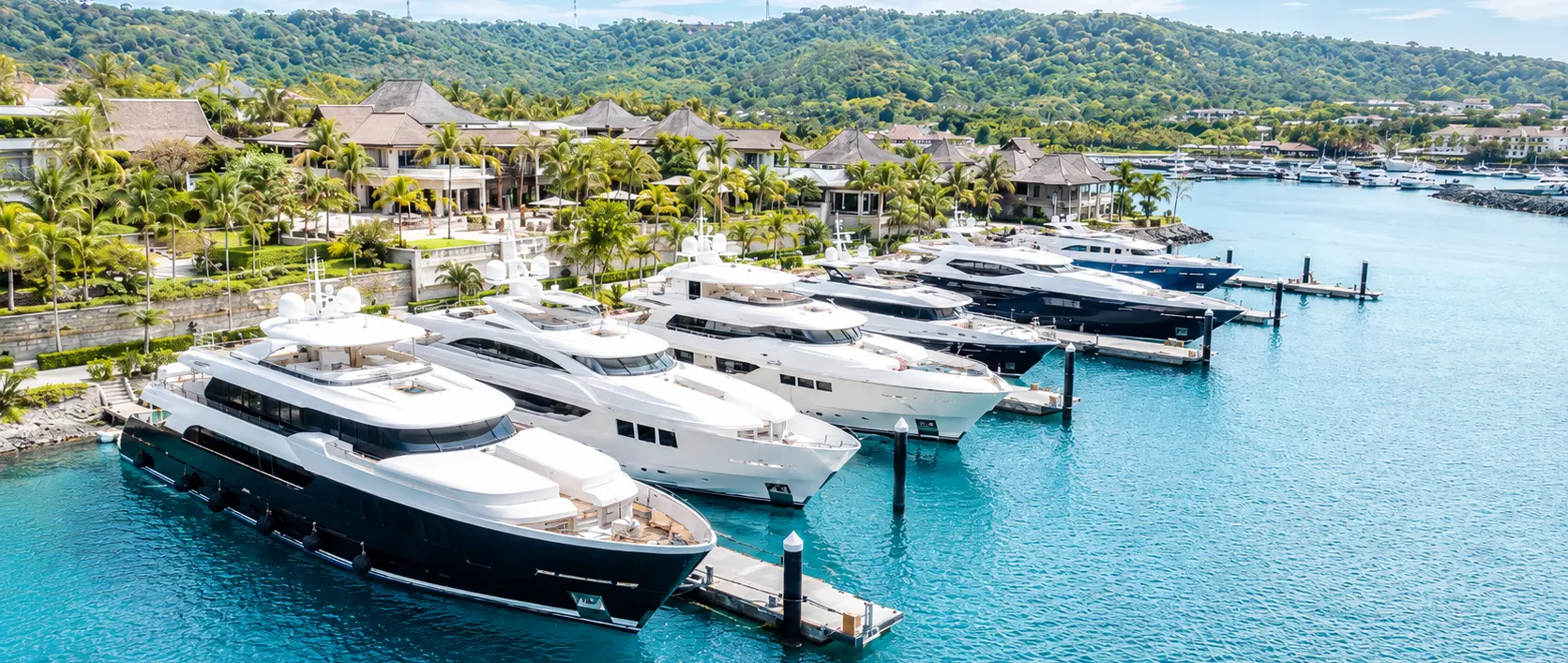
Indonesia is placing yacht tourism alongside cruising and diving as a core part of its strategy for higher-value marine tourism. The challenge now is turning an extraordinary cruising geography into the marina, technical, regulatory and service network international yachts expect.
Indonesia has made an unusually explicit statement about where yachts fit into its future tourism economy. Speaking during the INSA Yacht Festival in Bali, Tourism Minister Widiyanti Putri Wardhana identified yacht tourism as one of three principal pillars of the country's strategy for higher-quality marine tourism, alongside cruises and diving. The objective is not simply to attract more boats to Indonesian waters, but to use yacht traffic to stimulate a much wider maritime economy involving marinas, shipyards, shipping businesses, local suppliers and coastal communities.
The announcement matters because Indonesia has always possessed the raw geography of an exceptional cruising destination. It is an immense archipelago extending through some of the world's most biologically rich tropical waters, with Bali, Lombok, the Komodo region and countless more remote island groups capable of supporting the kind of extended itineraries that increasingly appeal to owners of explorer yachts and long-range cruising vessels. Geography alone, however, does not create a successful superyacht destination. Owners and captains also need reliable arrival procedures, suitable berthing, fuel, provisioning, waste handling, technical assistance, crew logistics and confidence that problems can be solved once the yacht moves beyond the major tourism centres.
That is what makes the government's language in Bali more significant than a conventional destination-marketing campaign. The Ministry of Tourism's announcement presented the INSA Yacht Festival as a demonstration of Indonesia's developing marine-tourism ecosystem, while Wardhana linked yachting directly to the country's ambition to attract higher-value visitors and improve tourism competitiveness. The Ministry argues that cooperation between government, investors, industry, communities and tourism stakeholders could spread economic activity beyond the yacht itself into maritime businesses and the communities surrounding the places yachts visit.
The festival provided an appropriate setting for that argument. Held at Benoa Marina from 7 to 9 August, the third edition brought together yachts, maritime businesses and tourism interests rather than operating solely as a display of luxury boats. Indonesia's official tourism portal describes it as a meeting point for the maritime industry, marine-tourism businesses and coastal lifestyle sectors, with discussions covering charter, luxury tourism and maritime education alongside the yachts themselves.
For the international superyacht market, the more interesting question is what comes next. Indonesia does not have to prove that its islands are attractive. It has to prove that a yacht can move through them with the operational confidence expected in an established cruising region.
The distinction between attracting tourists and attracting yachts is important. Conventional tourism infrastructure is concentrated around airports, hotels and established destinations. Yacht tourism moves the accommodation with the visitor, meaning that expenditure spreads differently. The yacht needs fuel, berth or anchorage support, provisions, agency services, engineering assistance, waste disposal, transport for crew and guests, local guides and sometimes shipyard work. A yacht staying for several weeks can therefore interact with a much wider group of businesses than a visitor moving directly between airport and resort.
Wardhana made this multiplier effect central to the government's argument. According to the Ministry and the government-backed ANTARA report of her remarks, Indonesia expects stronger yacht tourism to stimulate shipping, marinas and shipyards as well as smaller businesses and coastal communities. Indonesian National Shipowners Association chairwoman Carmelita Hartoto made a similar case, arguing that marine tourism has strategic value precisely because its economic impact extends across several maritime sectors.
That reasoning is particularly relevant to superyachts. A large yacht can be a valuable visitor without requiring the destination to build another resort or substantially increase conventional tourist numbers. Its economic contribution instead comes through expenditure associated with operating the vessel and supporting the people aboard it. For a country seeking what its Tourism Ministry calls higher-quality marine tourism, that can make yachts attractive even when absolute visitor numbers remain relatively modest.
The opportunity also extends well beyond Bali. Bali is the obvious international gateway and the natural venue for a festival intended to place Indonesian yachting before a global audience, but the broader attraction of Indonesia lies in the ability to move through very different cruising areas. Indonesia's official tourism material already promotes Labuan Bajo as the gateway to Komodo National Park and describes boat-based exploration as fundamental to experiencing the surrounding islands.
A successful yacht strategy would therefore not necessarily be measured by how many yachts remain permanently in Bali. The more valuable model could be one in which Bali becomes a dependable entry, service and logistical hub before yachts disperse through the archipelago, spending money in smaller destinations while returning to established centres when they require more sophisticated support.
That is also where the distinction between ordinary leisure boating and superyacht tourism becomes important. Small recreational craft can operate with relatively limited shoreside infrastructure. Larger yachts require substantially more: deeper water, larger berths or secure anchorages, high-volume fuel supply, appropriate power, waste reception, freight handling, technical contractors and administrative processes capable of dealing with internationally registered vessels and professional crew. The destination has to work not only on an owner's itinerary but on a captain's operational plan.
The most revealing aspect of the INSA Yacht Festival may be the subjects being discussed away from the pontoons. The official programme included sessions on the geopolitics and evolution of yacht destinations, yacht import procedures, flag conversion and crewing, modern-marina waste management and the marketing of luxury yachting experiences.
Those topics amount to a useful outline of what separates an attractive cruising ground from a mature yacht destination. A yacht captain considering Indonesia does not look only at photographs of secluded bays. The operational questions start much earlier: how straightforward will arrival be, which authority deals with the yacht, what documentation will be required, whether crew changes can be handled efficiently, how parts can arrive from Europe or Singapore if machinery fails, where waste can be discharged correctly and which ports can accommodate the yacht's length and draught.
The fact that import, flag, crewing and waste-management issues were prominent enough to form dedicated festival discussions suggests that Indonesia's emerging yachting sector understands that the product cannot be built entirely around destination appeal. That is an inference from the programme rather than a government admission of deficiencies, but it is an important one. Mature yacht hubs tend to succeed because the administrative and technical parts of the visit become almost invisible to the owner. The yacht arrives, the agent coordinates the formalities, fuel and stores appear, crew movements are organised and the owner experiences only the destination.
Indonesia's challenge is more complex because of scale. Building one excellent marina in Bali would be valuable, but it would not by itself create a cruising network across an archipelago. A yacht moving hundreds of miles east needs varying levels of support along the route, even if the more remote destinations will never require full-scale superyacht marinas.
That does not mean replicating Monaco or Palma throughout Indonesia. Much of the attraction would be lost if every remote island were transformed into a heavily developed yacht centre. A more realistic hierarchy would have major service hubs capable of supporting large yachts, secondary ports offering reliable fuel and logistics, and remote cruising areas where yachts can operate more independently while still having clear procedures and access to assistance when necessary.
For explorer-yacht owners in particular, that balance can be more appealing than marina density. The yacht itself provides autonomy; what the captain needs is confidence that the country's infrastructure and administrative system will support that autonomy rather than complicate it.
The decision to hold the festival at Benoa Marina reinforces Bali's role as the obvious front door to Indonesia's international yacht market. The Ministry of Tourism lists the festival at Benoa Marina and describes the event as bringing together luxury yachts, traditional Phinisi vessels, maritime innovation and industry discussions. The official festival material goes further, positioning Bali as the centre of a premium marine-lifestyle proposition involving yachting, tourism, gastronomy and coastal experiences.
Bali gives that strategy an enormous advantage. Owners already know the destination, international air connectivity is established, hospitality infrastructure is mature and there is a large tourism economy capable of supporting luxury travel. It is much easier to persuade a yacht owner to consider an unfamiliar cruising region when the itinerary begins or ends somewhere already recognised internationally.
The risk is that Bali becomes the product rather than the gateway to it. Indonesia's real competitive advantage is not another luxury marina beside an established resort destination; it is the extraordinary cruising territory beyond Bali. Komodo, eastern Indonesia and the country's more remote islands offer something fundamentally different from the Mediterranean's dense sequence of ports and beach clubs. The opportunity is to combine that remoteness with enough operational certainty that owners do not have to choose between adventure and professional support.
This is why the Ministry's emphasis on collaboration matters. No single tourism ministry can create the entire yacht ecosystem. Port authorities, customs and immigration services, maritime regulators, marina developers, fuel suppliers, yards, agents, hospitality businesses and local authorities all affect the yacht's experience. The INSA Yacht Festival itself reflects that breadth, with its official programme deliberately combining commercial, legal, environmental and tourism discussions.
The Tourism Ministry is also using the event to connect yachting with workforce development. ANTARA reports that the Ministry is supporting the festival through the Bali Tourism Polytechnic, which is providing hospitality services during the event, while government promotional support is intended to increase awareness of Indonesia's marine-tourism potential.
That service element should not be underestimated. Superyacht destinations compete partly through infrastructure, but they also compete through the ability of local businesses and people to understand an unusually demanding customer. Captains remember whether an agent solved problems, crew remember whether parts arrived, and owners remember whether the experience felt effortless. A destination can have beautiful water and expensive pontoons and still struggle if the supporting service culture does not develop alongside them.
The INSA Yacht Festival itself ends on 9 August, but Indonesia's success in yachting will be determined by what happens after the event infrastructure is dismantled. The government has now publicly identified yacht tourism as one of the three pillars of its quality marine-tourism strategy, giving the sector a level of policy recognition that should matter to investors considering marinas, yards and related maritime businesses.
The potential prize is not simply more foreign yachts appearing in Indonesian marinas. A credible superyacht cruising economy can create demand for technical employment, marina management, refit services, yacht agency, provisioning, crew services, transport, hospitality and specialist maritime businesses. It can also move tourism expenditure into coastal regions that do not have the capacity or desire to accommodate conventional mass tourism on the scale experienced by Bali.
There is an environmental responsibility attached to that expansion. The festival's decision to devote part of its 9 August programme to waste management and standards in modern marinas is therefore significant. Bringing more yachts into environmentally sensitive waters without adequate waste reception, operating standards and local infrastructure would undermine the very marine environment on which the strategy depends.
The strongest version of Indonesia's yacht strategy would consequently be measured by quality rather than raw vessel numbers. A smaller number of well-supported yachts cruising for longer periods, purchasing local services and moving responsibly through the archipelago could be more valuable than concentrating large numbers of boats in a handful of already busy destinations. That interpretation is consistent with the Tourism Ministry's emphasis on higher-value, quality marine tourism rather than simply maximising arrivals.
For the superyacht industry, Indonesia is therefore worth watching for a reason that goes beyond another emerging marina market. Few countries can offer comparable geographic scale, biodiversity and cruising variety. What has historically been harder to replicate is the predictable operational network available in established yacht regions.
The announcement in Bali suggests that Indonesia increasingly understands that distinction. The attraction of the islands was never the difficult part. The commercial opportunity lies in building the ecosystem around them: marinas where they are genuinely needed, shipyards and technical businesses capable of supporting visiting yachts, clear administrative pathways, reliable environmental services and local companies able to capture more of the expenditure generated by each vessel.
If those elements develop together, Indonesia does not need to become another Mediterranean. Its strength may be precisely the opposite — a vast cruising ground capable of offering genuine exploration while giving owners and captains enough professional infrastructure to venture much farther into it with confidence.
Explore
Go deeper into the yachts, companies, events and destinations directly connected to this article.
Continue reading

Floating Life says its current new-build activity includes a 42m superyacht, a Maiora M|30 and a 48m full-custom Baglietto project under construction in Italy.
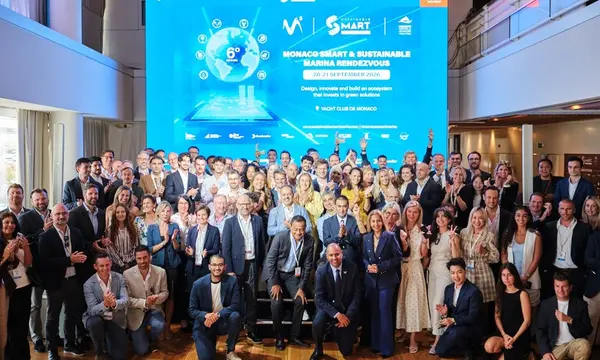
Monaco’s Smart & Sustainable Marina Rendezvous closed with new technology awards, six S3 certifications and a focus on investment, AI and infrastructure.
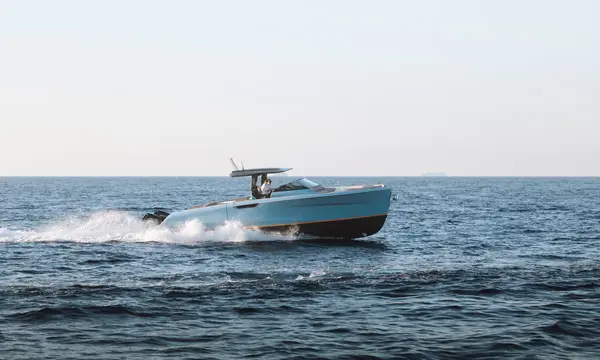
Bellini Yacht will act as Royal Yacht International’s official transport partner at Monaco Yacht Show 2026, using an Astor 38 for client transfers.

i-Bos and EWG have formed an alliance linking CelloPlus crew-management and payroll workflows with international and multi-currency payment services.
Superyacht Guide
Continue into the wider Superyacht Guide.