Top Superyacht Builders 2026
Superyacht Guide ranks the leading yacht builders of 2026 using its own structured fleet database rather than a subjective list of favourites. The results …
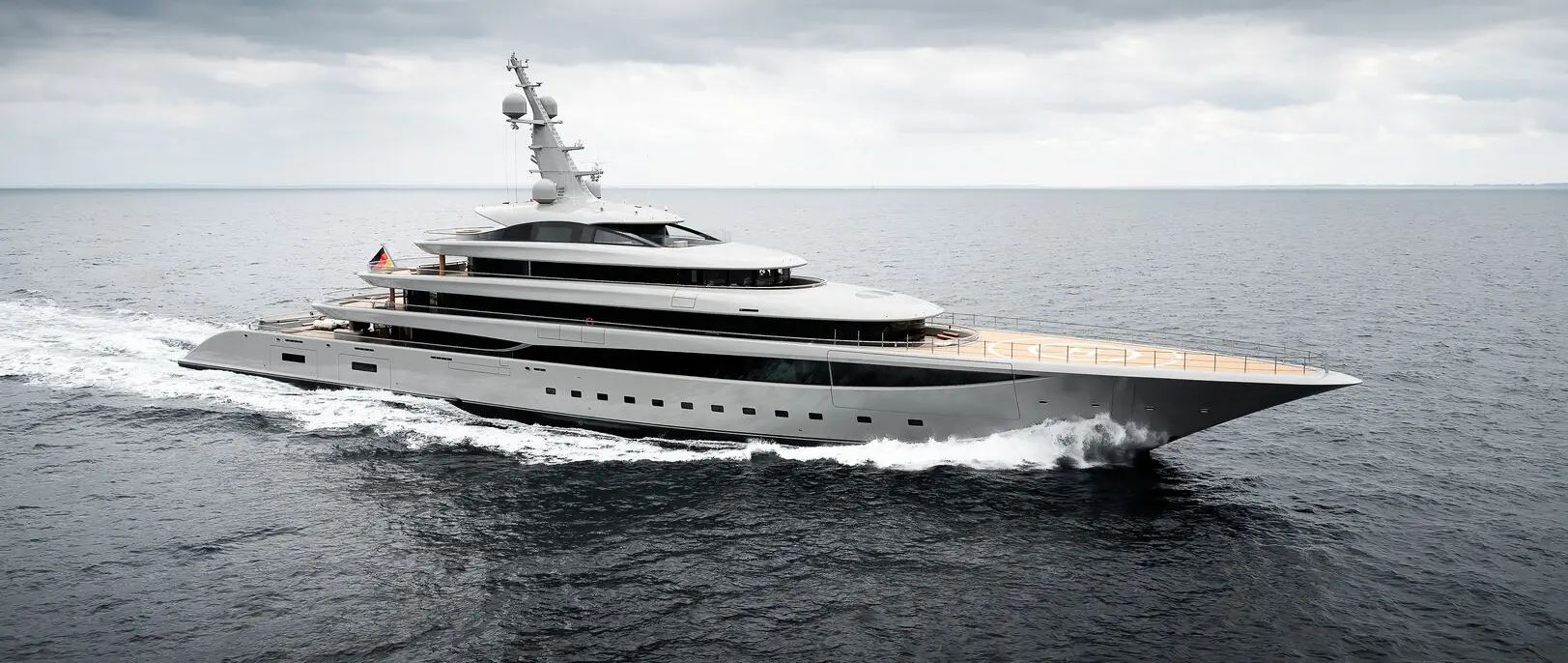
Lürssen has released a time-compressed look at the construction of the 102.4-metre superyacht Nixie, tracing the project from the first steel cuts in November 2022 through launch, outfitting, sea trials and delivery.
Lürssen has released a condensed visual record of the construction of the 102.4-metre superyacht Nixie, showing how one of the most significant deliveries of 2026 progressed from the first steel plates to a completed yacht in little more than three minutes.
The footage compresses approximately 44 months of construction into a short sequence covering structural assembly, superstructure work, outfitting, launch, trials and final delivery. The first steel cuts reportedly took place in November 2022, following several years of design development, engineering and project planning.
Previously known as Project JassJ and Lürssen 13785, Nixie was delivered on 26 June 2026 after completing sea trials in Germany. She is expected to make her public debut at the Monaco Yacht Show in September, where she will be presented by Lürssen and Edmiston.
The short construction film is valuable because it presents a process that owners and the wider public rarely see in full.
A large custom superyacht does not emerge from a single production line. The build involves naval architecture, structural engineering, mechanical systems, electrical integration, interior manufacture, painting, testing and thousands of coordinated decisions made over several years.
The early stages are dominated by steelwork. Plates are cut, formed and welded into sections before being assembled into the hull. The aluminium superstructure is fabricated separately and later joined to the steel hull, requiring careful control of materials, weight and structural tolerances.
As the shell takes shape, the project gradually changes from heavy shipbuilding to precision outfitting. Machinery, cabling, pipework, insulation and technical systems must be installed before much of the finished interior can be completed.
The three-minute sequence may make the process appear continuous and effortless, but the reality is a complex chain of dependencies. A delay in one technical area can affect multiple trades working elsewhere in the yacht.
Nixie was designed both externally and internally by the British studio RWD, while Lürssen developed the naval architecture in-house.
Her profile is defined by flowing surfaces, broad convex forms and large areas of glazing intended to soften the transition between the yacht’s structure and its windows. The hull and superstructure are finished in a warm grey tone that changes in appearance under different light conditions.
At 102.4 metres overall, she has a beam of 15 metres and a draught of approximately 3.9 metres. Her hull is steel and her superstructure aluminium, the conventional material combination for a yacht of this size.
The yacht extends across five decks and accommodates up to 12 guests in 10 cabins for commercial charter operation, with additional provision for supernumeraries. Crew accommodation is arranged for 34 people.
The interior uses light oak, pale neutral tones, stone and layered fabrics, with large windows drawing daylight deep into the accommodation. RWD’s approach is restrained rather than highly decorative, using curves, natural materials and carefully controlled proportions to create visual continuity between spaces.
The most visible parts of a completed yacht are its exterior lines and interiors, but much of the build programme is governed by systems that remain hidden.
Nixie uses diesel-electric propulsion supported by an energy-storage system. This arrangement is intended to improve efficiency while reducing noise and vibration during operation.
Installing and commissioning such a system requires close coordination between propulsion equipment, generators, batteries, power-management systems and hotel loads. The yacht’s technical architecture must support both normal cruising and the significant electrical demands created by climate control, lighting, entertainment, pools, spa facilities and hotel services.
Noise and vibration control are particularly important on a yacht intended for high-end charter. Machinery foundations, insulation, structural connections and rotating equipment must all be engineered to reduce disturbance within guest spaces.
The time-lapse film therefore represents much more than visible construction. It compresses months of testing, commissioning and troubleshooting that cannot easily be shown in a short public video.
One of the yacht’s defining features is the large glass swimming pool aft.
Lürssen has described the semi-suspended pool as approximately six metres wide, extending over the swim platform and incorporating adjustable water levels and a privacy screen. The feature is intended to serve both as a visual centrepiece and as a practical family space.
Edmiston’s charter specification describes a 7.5-metre infinity pool on the main deck, reflecting the difference between the overall pool installation and the width of the principal glass element.
Below it lies a substantial beach club. Lürssen and Edmiston describe the space differently depending on whether the surrounding fold-out areas are included, but both identify it as one of the largest beach-club arrangements created aboard a yacht of this type.
It includes direct access to the sea, lounge and dining areas, a bar and fold-down terraces. The yacht also contains a large gym with a cryotherapy chamber, spa facilities, sauna and steam room, as well as indoor and outdoor cinemas. A helipad forward can also be used as a recreational court.
These features illustrate why build programmes for yachts of this scale are measured in years. Pools, terraces, lifting systems and large openings in the hull or superstructure must be integrated without compromising structural strength, watertight integrity or stability.
Construction began at Lürssen’s Rendsburg facility, with the project first seen publicly when the hull emerged from the construction shed in December 2023.
The completed yacht was launched in early 2026 before moving into the final stages of commissioning and sea trials. She was later seen in Kiel during trials in May.
Sea trials represent the point at which years of design and construction are tested as a complete operating vessel.
Propulsion, steering, navigation, communications, stabilisation, emergency systems and hotel services must all be demonstrated. Trials also allow the yard and owner’s team to identify defects, calibrate equipment and confirm that contractual performance requirements have been met.
For a yacht with diesel-electric propulsion and extensive energy storage, trial work also involves testing multiple operating modes and verifying how the electrical system behaves under different loads.
Delivery followed on 26 June 2026, after which Nixie began her maiden voyage.
A custom yacht of this scale is not managed by the shipyard alone.
Moran Yacht & Ship’s new-construction team negotiated the original build contract, developed the technical specification and represented the client during construction.
The owner’s representatives act as an independent layer between client and builder. Their role may cover contract compliance, quality control, design decisions, change orders, cost monitoring, testing and acceptance.
During a 44-month build, hundreds of decisions can affect delivery time and final cost. Changes requested after construction has begun may require redesign, re-engineering or the removal of completed work.
A strong owner’s team can reduce risk by ensuring decisions are documented, technical concerns are raised early and the finished yacht is tested against the agreed specification.
The compressed construction footage does not show this administrative and contractual work, but it is central to the successful completion of any major custom build.
Following delivery, Nixie joined the Edmiston charter fleet as an exclusive central-agency listing.
The yacht is being offered from €2.4 million per week, excluding operating expenses, taxes and gratuities. She is expected to operate in the Mediterranean during summer 2026 and the Caribbean during the 2026–27 winter season.
Her entry into charter is commercially significant. Newly delivered yachts above 100 metres are rarely available on the open charter market, and the combination of scale, wellness facilities and large guest spaces places Nixie in a very small group.
The charter programme also provides a clearer public picture of the yacht than would normally be available for a privately operated vessel. Detailed descriptions of the accommodation, guest facilities, tenders and operating regions have been released as part of the marketing process.
This information confirms that the yacht was conceived not only as a private residence at sea, but as a highly serviced platform capable of supporting commercial charter operations.
Lürssen has confirmed that Nixie will be presented at the Monaco Yacht Show from 23 to 26 September 2026.
The yacht is scheduled to occupy berth R03 and will be one of six Lürssen deliveries represented at the show, although the remaining yachts are expected to appear primarily as models at the builder’s stand.
For Lürssen, the presentation offers an opportunity to demonstrate its ability to deliver a highly complex yacht while balancing engineering, guest experience and contemporary design.
For Edmiston, the show will provide the first major opportunity to introduce Nixie to prospective charter clients and the international brokerage community.
The yacht’s appearance is likely to attract considerable attention because it allows visitors to see the finished result of the construction sequence now shown in Lürssen’s short film.
Shipyards often reveal yachts only after launch or delivery. The release of construction footage adds context to the finished vessel by showing the scale of work concealed beneath the final paint, glass and interiors.
For prospective owners, such material can help explain why a major custom yacht requires several years to complete. It also shows that the visible launch is only one stage in a much longer process.
The progression from steel cutting to delivery is a reminder that a yacht of this scale is both a luxury product and a complex shipbuilding project.
Nixie may now appear complete and effortless, but the three-minute film represents 44 months of fabrication, engineering, installation, commissioning and human decision-making.
The finished yacht is the visible result. The real story is the process that made it possible.
Continue reading
Superyacht Guide ranks the leading yacht builders of 2026 using its own structured fleet database rather than a subjective list of favourites. The results …
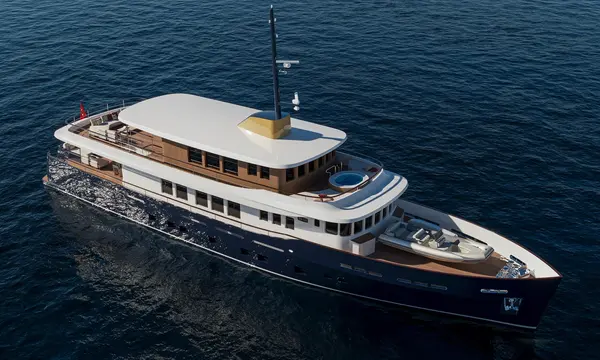
Numarine has unveiled five interior concepts for its 38XPC and 39MXPC Classic Line explorer yachts through the new Numarine Atelier.
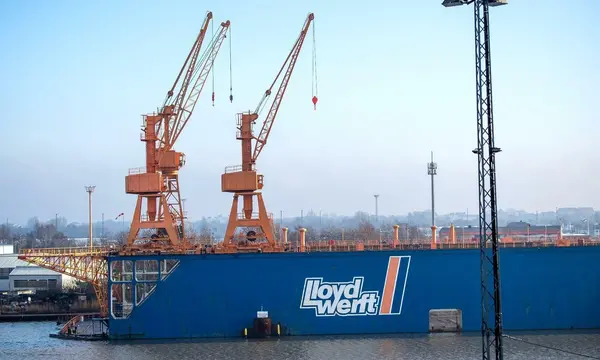
Lloyd Werft is planning a second Bremerhaven facility on a seven-hectare Columbuskaje site, centred on a new floating dock.
Maxi Dolphin says it will restart at another site after a fire destroyed an Erbusco shipyard building and three yachts, including the 27.07m MD80.
Superyacht Guide
Continue into the wider Superyacht Guide.