Italian Sea Group Concludes Competitive Process Ahead of 23 November Board Meeting
By Superyacht Guide Newsroom · Edited by Superyacht Guide Newsroom
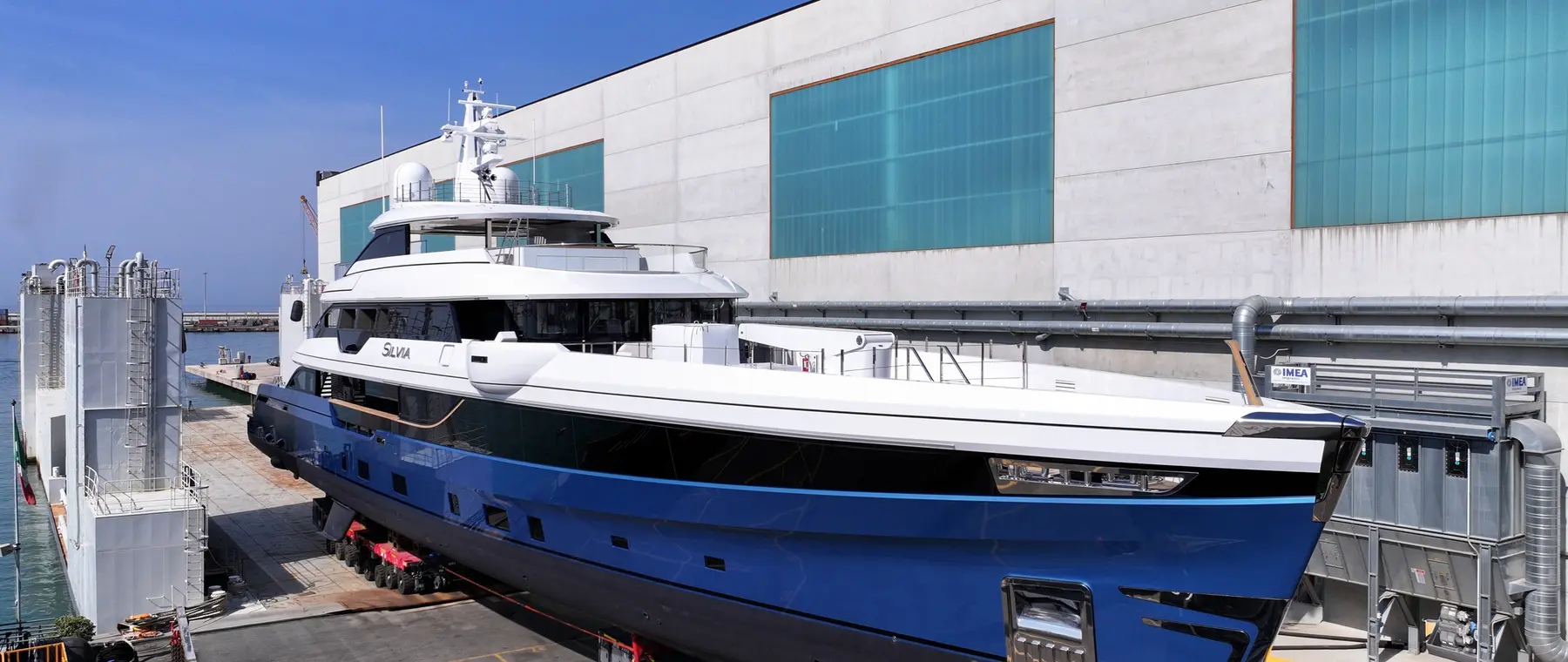
Italian Sea Group official July 2026 Admiral Panorama launch press photograph archival
The Italian Sea Group confirms SRI Global Limited's €220 million offer was selected at the close of competitive bidding, with further approvals still required.
The Italian Sea Group has announced the conclusion of the competitive process organised within its restructuring proceedings before the Court of Florence. In a regulated disclosure dated 16 November 2026, the Marina di Carrara-based builder identified SRI Global Limited's offer for the entire operating business as the best proposal at the end of that process. The consideration stated in the announcement is €220 million. The disclosure marks a step beyond the selection of a reference offer earlier in November, which provided the basis for the restructuring plan while permitting further competition. It does not announce the completion of an acquisition or the transfer of the shipyards. The immediate milestone is a meeting of the board of directors scheduled for Monday, 23 November, at which the company expects to consider the next resolutions. For owners with yachts under construction, employees and specialist suppliers, the distinction between a preferred bidder and a new legal operator remains essential.
The significance of the latest filing is procedural as much as commercial. Earlier announcements established the stages of a competitive search for potential investors, including the receipt of binding offers and the selection of a reference transaction for a proposed restructuring. The process contemplated further competition under the supervision of the court. The company has now said that the competitive stage has ended and that SRI Global Limited presented the best offer for the whole business. The outcome establishes the bidder against which the next steps are being organised. It is more advanced than a provisional choice for the purpose of drafting a plan, but it still does not constitute a final transfer. The announcement sets out several prerequisites that must be met before the company can proceed towards the relevant contracts. The new information is therefore the conclusion of the competition, the named bidder and the timetable and conditions for the next corporate decision, rather than a newly announced purchase price.
The board is expected to decide on the appropriate steps in connection with the restructuring plan deposited on 2 November. Among those steps, the company identifies an application to the court for permission to sign an operating-business lease and a preliminary sale agreement with SRI Global Limited. The announcement does not suggest that these documents have already been signed. Nor does it establish that the meeting will automatically result in an unconditional decision. The board must consider the availability of funding and the relevant approvals, together with the other prerequisites specified in the filing. The next disclosure following the meeting will consequently be of particular interest. It should help clarify whether the proposed contractual structure is moving towards authorisation, whether the remaining requirements have been met and whether any further procedural steps are necessary. Until formal information is released, the precise date of an effective handover cannot be stated.
The filing explicitly refers to evidence that sufficient funds are actually available to comply with the commitments in the offer, including the proposed industrial plan. That requirement deserves attention because the resources necessary to acquire a shipbuilding business and those needed to operate it through a period of recovery are not necessarily identical. A yard undertaking several custom projects needs to finance labour, subcontracted work, components and the physical facilities required for production. Cash receipts from customer instalments depend on contractual milestones, which may themselves require expenditure before payment becomes due. The resources necessary to sustain those activities are distinct from the headline consideration associated with an acquisition. The November announcement does not quantify the working capital that SRI would provide or disclose the evidence to be supplied. It would therefore be inappropriate to assign a financing structure or claim that the proposed commitments have been secured simply because the bid has been selected.
The group also identifies necessary approvals from the competent authorities, explicitly including port authorities, among the prerequisites. That is an important element in a business where production facilities and waterfront access form part of the operational capability. A shipyard needs more than ownership of machinery and buildings. It may rely on rights of access, concessions, docking areas and arrangements for the movement of vessels between construction and fitting-out locations. These arrangements can be subject to specific conditions and permissions. The precise requirements depend on the individual facility and its legal framework, and the regulated announcement does not list the authorisations already obtained or the status of every location. Prospective clients should consequently distinguish the value attributed to the transferred business from the question of whether the future operator has all the authorisations needed to continue using its facilities. Both matters are relevant to the completion of an effective industrial transition.
The release also makes the intended next step conditional on concluding the prescribed agreements with trade unions. A superyacht builder relies heavily on accumulated technical experience, including the knowledge of employees familiar with individual projects, shipyard practices and the interfaces between machinery, structure and interior construction. Continuity of that expertise can matter as much as access to tools or production halls. A change in the operator of a yard can raise questions about the contractual employment arrangements, the allocation of staff between projects and the responsibilities of management during the transition. The disclosed requirement for union agreements should be interpreted as part of the formal process. The announcement does not provide their terms, confirm that they have been signed or specify the consequences for individual employees. Readers should not infer particular staffing changes from the existence of the condition alone. Those details require a separate announcement or other reliable confirmation.
The two proposed contracts serve different purposes in the process described by the company. An operating-business lease can provide a means for another entity to undertake the business activities during a transitional period, subject to the agreement's terms and the applicable authorisations. A preliminary sale agreement can set out commitments and conditions associated with a future transfer. Neither should be treated as interchangeable with a completed sale of the operating assets. The sequence may allow the industrial activity to continue while the wider restructuring proceedings develop. Its precise effects on contracts, assets and the allocation of liabilities depend on the final documents and the applicable legal process. The company has not published the text of either contract in this announcement. Owners and suppliers must therefore avoid assuming that any particular contractual liability will transfer to a new operator merely because the company intends to seek permission to enter these agreements.
For an owner who has a yacht in production, the relevant questions go beyond the selection of the bidder. They include the position of the construction contract, the status of completed work, ownership of materials and equipment already paid for, the availability of specialist contractors and the intended schedule for the remaining stages. A project representative can use the coming corporate announcements to identify which of these questions need to be addressed directly with the yard. Individual contractual arrangements and protections vary considerably, so the general restructuring announcement cannot determine the position of a particular purchaser. The same applies to warranty service for yachts already delivered, where the contractual entity and the scope of the obligation need to be identified. Nothing in the 16 November filing confirms a particular delivery timetable or changes the specifications of any individual yacht. Any project-specific implications should be established through the appropriate contractual and professional channels.
A large Italian yacht builder draws on a network of equipment makers, designers, naval architects, interior contractors and specialist marine service businesses. For these companies, continuity is important both commercially and technically. An interrupted supplier relationship can affect production where an item is built to order or where equipment requires subsequent integration by trained technicians. The selected offer concerns the whole operating business, according to the disclosure, rather than a transaction described as the purchase of one yacht brand in isolation. Nonetheless, the public release does not specify how each supplier relationship or outstanding debt would be handled. The financial position of the existing company and the terms governing future work should remain separate considerations. A supplier assessing whether to accept a future order needs to know which legal entity is placing it, what contractual conditions apply and how payment is to be secured. Such matters cannot be settled by the headline acquisition figure.
The critical date is now 23 November, when the board is scheduled to meet. The company has committed to informing the market of material developments under the applicable disclosure rules. Until the outcome of that meeting and any subsequent court decisions or signed agreements are published, the appropriate description is that the competitive procedure has concluded and SRI Global Limited's proposal has been selected as the best offer. The consideration remains €220 million, and the necessary conditions and authorisations have not been reported as fulfilled. For the superyacht sector, this represents a consequential step towards identifying the future operator of a substantial industrial business. It is not confirmation that the restructuring has been completed. The progress from a selected proposal to authorised agreements and, eventually, a transfer is the part of the process that still requires evidence.
Primary source: The Italian Sea Group, regulated announcement of 16 November 2026.
Further official information: The Italian Sea Group regulated announcements.
Photo: The Italian Sea Group, official July 2026 Admiral Panorama launch press release; archival illustration of the group's yacht-building activity, not of the November bidding process. Official source.
Explore
Go deeper into the yachts, companies, events and destinations directly connected to this article.
Continue reading

The Italian Sea Group's unaudited court filing shows a €58.7 million year-to-date loss at 30 September 2026, with cash down to €1.75 million and …

The Italian Sea Group's 30 October 2026 regulatory disclosure sets out €292.3 million in overdue consolidated liabilities at 30 September, €184.2 million in net …

The Italian Sea Group reappoints founder Giovanni Costantino as CEO, creates new board committees and moves half-year reporting to 3 November.

The Italian Sea Group has reported a €170.9 million consolidated net loss for 2025, with revenue down 27% to €295.1 million.
Superyacht Guide
Continue into the wider Superyacht Guide.
Business opportunities · Superyacht Guide
Companies serving the superyacht market can discuss clearly identified advertising, sponsorship and business-profile opportunities. Commercial activity remains separate from independent editorial coverage.
