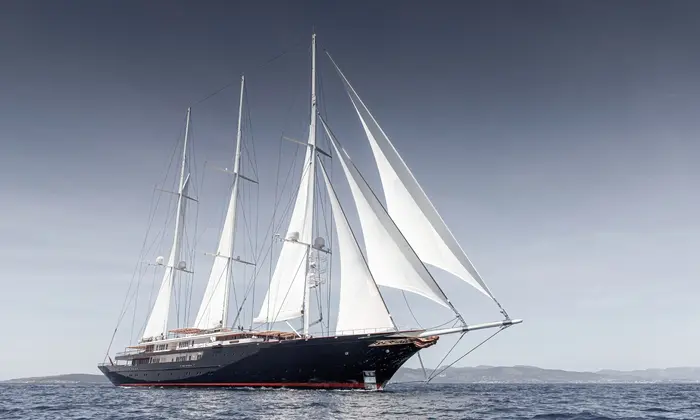
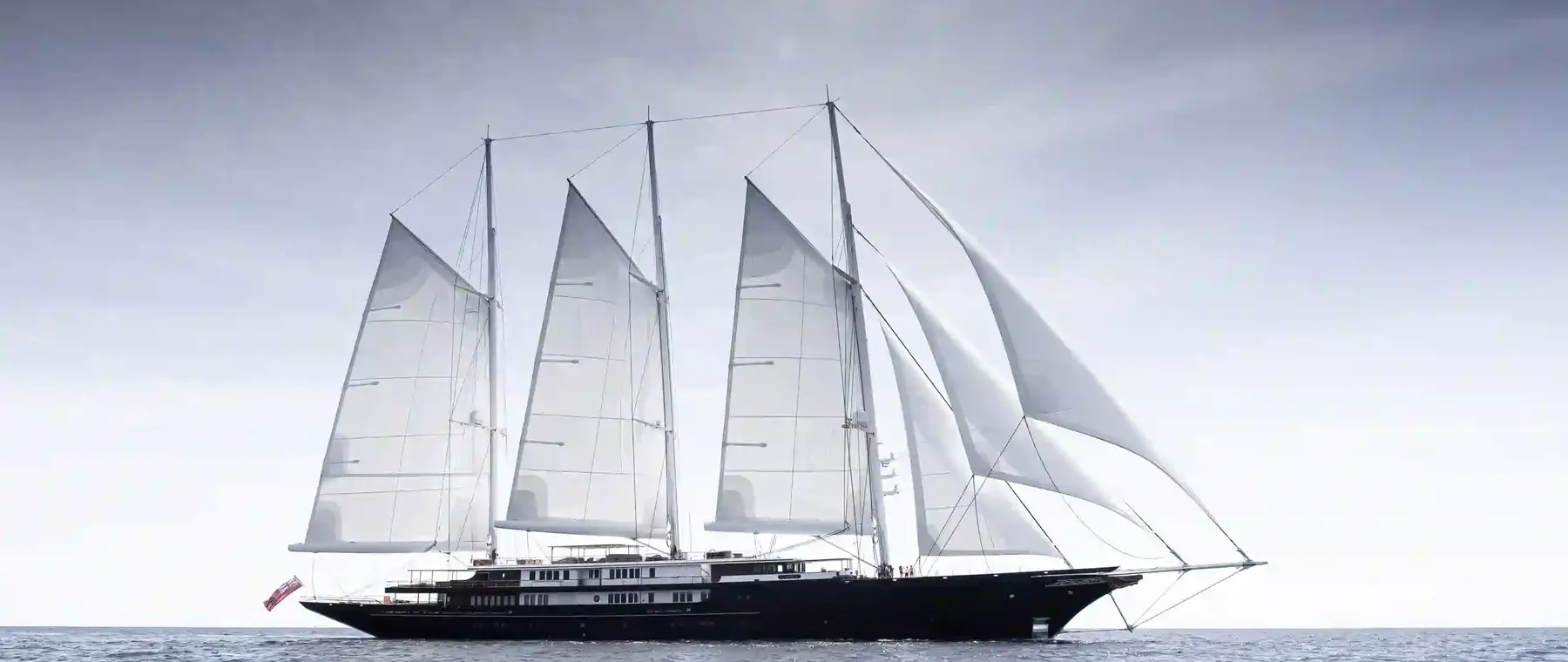
The arrival of 125-metre sailing yacht Koru in Cairns is expected to contribute close to A$1.95 million to the local economy. The visit illustrates how expenditure from a single large superyacht can spread through marine contractors, suppliers, hospitality businesses and the wider regional economy.
The arrival of 125-metre Oceanco sailing yacht Koru in Cairns has provided a striking demonstration of the economic value that a single large superyacht can bring to a regional destination. Beyond the attention generated by one of the world's largest sailing yachts, the visit is expected to produce substantial expenditure across the marine, hospitality and service sectors of Far North Queensland.
Superyacht Australia and Superyacht Group Great Barrier Reef estimate that Koru's stay could contribute close to A$1.95 million to the Cairns economy. Their modelling attributes approximately A$641,000 to crew expenditure on food, retail, hospitality and recreation, with a further A$1.23 million expected to be spent by the yacht through local marine businesses, contractors and suppliers.
Those figures show why destinations increasingly view superyacht visitation as much more than a marina business. A large yacht operates as a travelling enterprise, drawing on a network of engineers, agents, provisioners, transport providers, tradespeople and hospitality businesses throughout its stay.
The operational requirements of a yacht the size of Koru extend far beyond the cost of a berth. Large yachts can require fuel, engineering support, rigging, diving, shipwright services, cleaning, detailing, waste handling, provisioning, freight, transport and specialist technical assistance, creating opportunities for businesses throughout the local marine economy.
Crew spending adds another layer of economic activity. Restaurants, supermarkets, hotels, vehicle hire companies, leisure operators and retailers can all benefit when dozens of crew members remain in port for days or weeks, while visiting specialists and contractors may generate further accommodation and transport demand.
For Cairns, Koru represents an unusually large example of that economic effect. Oceanco officially records the yacht at 125 metres in length with a beam of 17.2 metres, making her one of the largest sailing yachts in operation and a vessel with correspondingly substantial logistical and technical requirements.
Australian reports surrounding the visit have frequently described Koru as 127 metres, but Superyacht Guide uses the builder's official 125-metre specification. Delivered by Oceanco in 2023, the three-masted yacht has exterior design by Dykstra Naval Architects, naval architecture by Lateral Naval Architects and Dykstra Naval Architects, and interiors by Tino Zervudachi and Associates.
The yacht's scale makes the Cairns visit particularly significant for local businesses. While the headline value of A$1.95 million is an estimate based on industry visitation modelling, it demonstrates how spending from a single vessel can extend through numerous parts of the regional economy rather than remaining concentrated within the marina itself.
Cairns has been developing its position as a superyacht destination for more than two decades, combining access to the Great Barrier Reef with an increasingly established marine service sector. That combination is important because attractive cruising grounds alone are not enough to persuade large yachts to remain in a destination for extended periods.
Superyacht Group Great Barrier Reef has worked to promote the region internationally while strengthening the network of local businesses able to support visiting vessels. The objective has been to position Cairns not simply as an arrival point for yachts cruising the Great Barrier Reef, but as a practical technical and operational base within the wider South Pacific and Asia-Pacific cruising circuit.
Infrastructure has developed alongside that industry effort. Ports North states that Cairns Marlin Marina can accommodate superyachts up to 140 metres, placing vessels of Koru's scale within the port's current capacity and giving Cairns the ability to receive some of the largest yachts operating internationally.
The marina's location also strengthens its appeal as an operational stop. Cairns Marlin Marina is close to the city's marine and superyacht refit precinct and within easy reach of Cairns International Airport, allowing yacht crews, contractors, spare parts and specialists to move relatively efficiently between the vessel and international transport connections.
That accessibility can determine how much value a destination captures from each visit. When technical services, logistics, provisioning and crew facilities are available close to the berth, yachts have more reason to remain locally rather than moving elsewhere for significant maintenance or operational work.
The most valuable superyacht visits are not necessarily those that create the biggest spectacle on arrival. From an economic perspective, the greater prize is persuading yachts to remain long enough for maintenance, provisioning, crew changes and technical work to be carried out locally.
A yacht remaining for several weeks can generate substantially more economic activity than one calling briefly for fuel or an overnight berth. Contractors gain access to larger work packages, suppliers receive repeated orders and crew spending continues throughout the vessel's stay, multiplying the value created by the original port call.
This is why the strength of the surrounding marine industry matters as much as the marina infrastructure itself. A destination capable of accepting a 100-metre yacht gains relatively little if the vessel must subsequently leave the region to obtain engineering support, specialist parts, haul-out services or other operational requirements.
Cairns has increasingly developed the combination of infrastructure and expertise needed to capture more of that expenditure locally. Koru's visit therefore serves as a high-profile example of the broader ecosystem that has been built around the city's superyacht sector.
Superyacht Australia is also placing the Cairns visit within the broader context of the 2032 Olympic and Paralympic Games in Brisbane. The organisation says interest is already emerging from owners and captains of very large yachts considering Australia around the Games, creating the possibility of a significant influx of vessels into Queensland.
Major international sporting events have historically attracted yachts to host regions, but the longer-term opportunity for Australia extends well beyond the event itself. Queensland can combine Brisbane with the Whitsundays, the Great Barrier Reef and established superyacht centres farther north, potentially encouraging visiting yachts to remain in Australian waters for extended cruising and maintenance periods.
Realising that opportunity will depend heavily on infrastructure and regulation. Deep-water berthing, straightforward entry procedures, technical support, provisioning capacity and sufficient facilities for large yachts will determine whether Australia captures the full economic value of increased visitation or simply receives a series of short calls.
Koru's presence in Cairns demonstrates that yachts at the very top end of the fleet are already capable of incorporating Queensland into international itineraries. The challenge for the Australian industry is to turn individual visits into a more regular pattern of large-yacht traffic and to ensure that the businesses surrounding each destination can service those vessels effectively.
There is inevitably considerable public interest whenever a yacht as distinctive as Koru arrives in port. Her three masts, dark hull and exceptional dimensions make her immediately recognisable, but the most important aspect of the Cairns visit for the Australian superyacht industry is what happens after the yacht is alongside.
The estimated A$1.95 million economic contribution provides a tangible measure of why governments, ports and regional marine industries compete for large-yacht traffic. Much of that money is expected to reach businesses that rarely appear in photographs of the yacht itself, including engineers, chandlers, provisioners, transport providers, tradespeople and service companies.
For Cairns, the visit also validates years of investment in building a credible superyacht destination around the Great Barrier Reef. A capable berth is only the starting point, because the deeper economic benefit comes from creating an environment in which yachts can provision, repair, maintain and operate without needing to leave the region.
Koru will eventually continue to another destination, but a significant share of the expenditure generated during her stay will remain in Cairns. That is the broader lesson behind the visit: attracting large superyachts is not simply about having impressive vessels in the harbour, but about building the infrastructure and businesses capable of turning every visit into lasting regional economic activity.
Explore
Go deeper into the yachts, companies, events and destinations directly connected to this article.
Continue reading
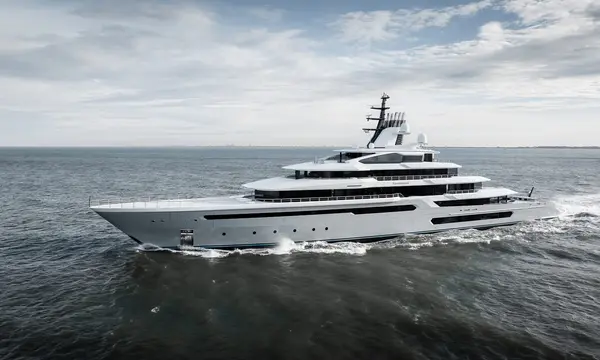
Oceanco will present 111-metre LEVIATHAN and 92.9-metre DRAAK together at the 2026 Monaco Yacht Show, placing a recent new build alongside an extensively rebuilt …
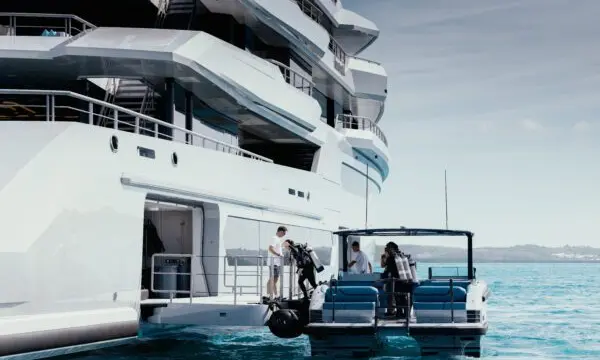
Oceanco has released a first look at Leviathan in operation, following the delivery of the 111-metre yacht.
Oceanco has listed DRAAK among its recent press releases, marking the relaunch of the yacht after work at the yard.
Oceanco has listed Project Y729 heading to its outfitting facilities as part of its recent press release activity.
Superyacht Guide
Continue into the wider Superyacht Guide.
Business opportunities · Superyacht Guide
Companies serving the superyacht market can discuss clearly identified advertising, sponsorship and business-profile opportunities. Commercial activity remains separate from independent editorial coverage.