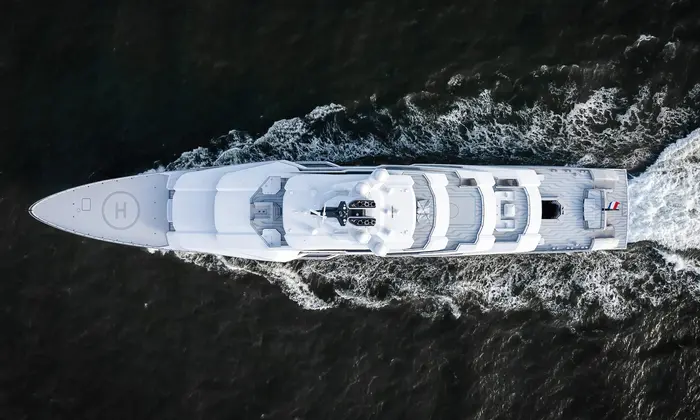
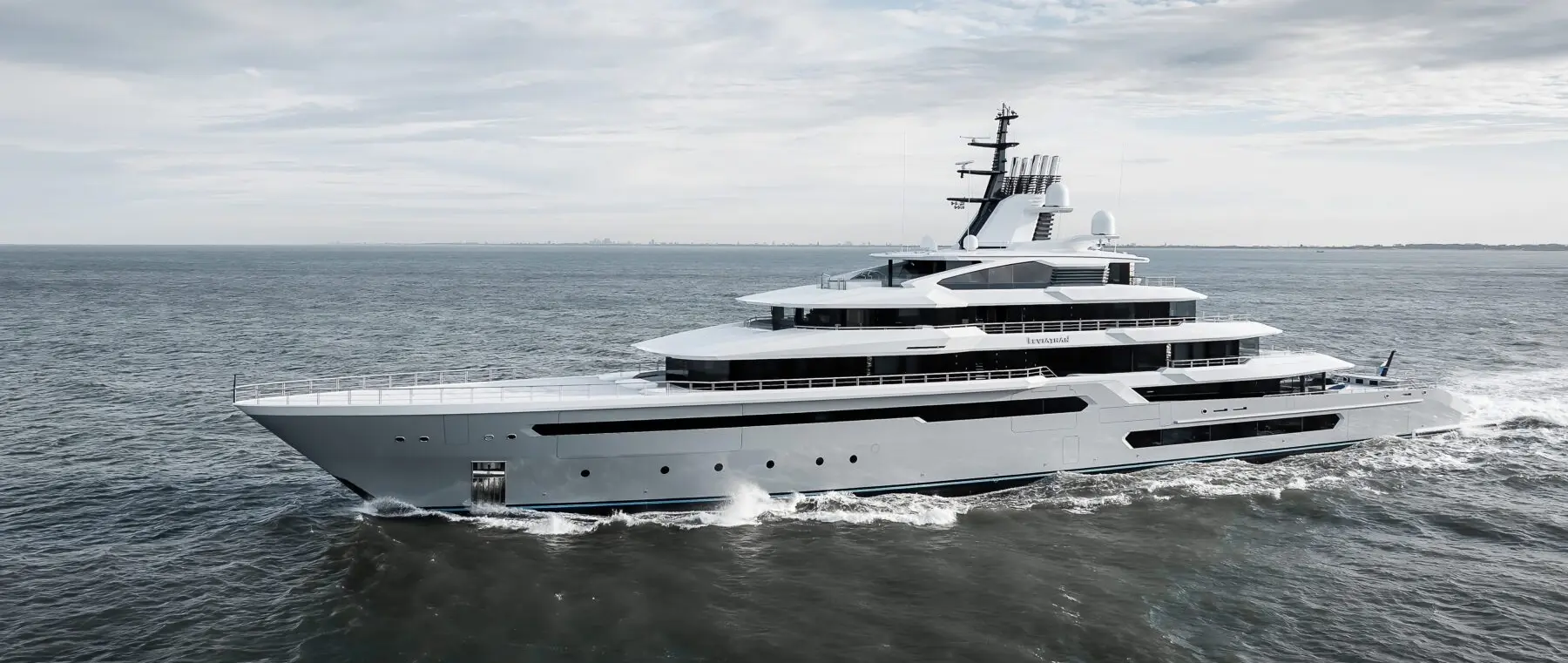
Oceanco will present 111-metre LEVIATHAN and 92.9-metre DRAAK together at the 2026 Monaco Yacht Show, placing a recent new build alongside an extensively rebuilt companion yacht designed to support the same exploration-focused fleet.
Oceanco will bring two of its most unusual recent projects to the Monaco Yacht Show this September, with the 111-metre LEVIATHAN and the rebuilt 92.9-metre DRAAK scheduled to appear together in Port Hercule. The pairing is significant not simply because of the combined scale of the two yachts, but because they represent two very different sides of the modern superyacht business: one is a recently delivered full-custom new build, while the other is an existing Oceanco yacht substantially reworked for an entirely different operational purpose.
Oceanco says this will be the first time it has presented both a new build and a rebuild at the Monaco Yacht Show simultaneously. Both yachts are owned by Gabe Newell and form part of his Inkfish fleet, where they have been developed to operate together rather than as unrelated large yachts sharing the same ownership. Newell’s relationship with Oceanco subsequently extended beyond that of a client; the builder says he joined the Oceanco team in 2025 following his experience developing LEVIATHAN.
The Monaco Yacht Show itself is scheduled for 23–26 September 2026, with the official fleet expected to reach around 120 yachts by opening day. Against that background, the appearance of LEVIATHAN and DRAAK gives Oceanco a particularly clear way of demonstrating how a new yacht and an extensively rebuilt older platform can be developed around a common operational philosophy.
LEVIATHAN was delivered by Oceanco in November 2025 after being developed under the project name Y722. At 111 metres, she is a diesel-electric yacht whose design departs in several respects from the traditional separation between owner, guest and crew spaces. Oceanco describes the yacht as being shaped around teamwork and community, with communal areas deliberately intended to encourage greater interaction among the people living and working aboard.
That philosophy extends beyond interior arrangement. Earlier in the project, Oceanco said the yacht was designed for 22 guests and 33 crew, with scientific research, discovery and exploration forming part of the intended programme. A diesel-electric power plant and large battery energy-storage system were incorporated both to improve efficiency and to permit periods of silent running, while the finished yacht includes a dive centre, laboratory and onboard hospital.
Oceanco’s operational imagery released in May showed how some of those ideas translated into day-to-day use. A space that would conventionally become the main saloon was instead conceived as a large communal dining area, while facilities such as a gaming lounge, basketball court and sun deck were designed for shared use. Material decisions were similarly influenced by operation and maintenance, with the builder pointing to durable decking, bead-blasted stainless-steel railings, synthetic handrails and an off-white exterior finish as examples intended to reduce crew workload.
DRAAK approaches the same philosophy from the opposite direction. Rather than beginning with a blank-sheet new build, Oceanco’s Life Cycle Support division took an existing large yacht and comprehensively reworked it around a new mission. The result was delivered in June 2026 following an extensive rebuild at the company’s Zwijndrecht facilities.
The two yachts are therefore not intended simply to cruise in formation for visual effect. Oceanco says they were developed to operate seamlessly as companion vessels within the Inkfish fleet, with DRAAK providing additional capability for the scientific, diving and exploration activities supported aboard LEVIATHAN.
The scale of LEVIATHAN gives the project enormous physical capacity, but Oceanco’s description of the yacht consistently focuses on how that capacity is used rather than simply on interior volume. The yacht combines conventional large-yacht accommodation with facilities more closely associated with expedition and research operations, including the laboratory, hospital and fully equipped dive centre.
Comfort was also treated as an engineering objective. Oceanco describes LEVIATHAN as its most comfortable yacht to date, attributing that claim to hull testing and optimisation, technical-platform configuration and focused work on reducing onboard noise and vibration. Her diesel-electric arrangement therefore serves not only efficiency and operational flexibility but also the less visible objective of reducing the machinery disturbance experienced by those onboard.
That combination makes LEVIATHAN a particularly relevant example of how the definition of a large private yacht is broadening. Traditional measures such as length, volume and accommodation remain important, but the project places equal emphasis on what the yacht can actually support: extended operation, specialist diving, scientific work, medical capability and a large community of guests and crew.
The owner’s approach also influenced how the yacht was created. Oceanco has repeatedly characterised the project as unusually collaborative, with operational crew involved alongside the shipyard, owner representatives and technical partners. In its original Y722 project update, the yard described contributions from Oceanco, YTMC, Y.CO, suppliers, subcontractors and members of the future operational fleet.
This background makes LEVIATHAN’s Monaco appearance more than the conventional presentation of a recently delivered flagship. The yacht is being shown as the physical result of a broader operating philosophy that has subsequently been extended into DRAAK.
DRAAK is the more revealing yacht of the pair from a lifecycle perspective. Originally delivered by Oceanco in 2014, the yacht has now emerged from a comprehensive rebuild measuring 92.9 metres overall, with a 14.5-metre beam and gross tonnage of 2,951 GT. Oceanco lists its own team as responsible for the exterior design, with naval architecture by Oceanco and Azure Yacht Design & Naval Architecture and interior outfitting by Vedder.
The Monaco Yacht Show identifies the yacht as the former Equanimity and Tranquility, but the significance of the latest work lies less in her previous identities than in how extensively the yacht’s function has changed. Instead of merely refreshing interiors or completing a conventional technical refit, the project was used to turn DRAAK into a specialist companion yacht for the wider Inkfish operation.
Oceanco says the rebuilt yacht carries specialist diving facilities, a capable tender fleet and heavy-duty lifting systems, allowing it to support expeditions alongside LEVIATHAN. Many of the operational and design principles introduced aboard LEVIATHAN were also incorporated into DRAAK during the rebuild, giving the two yachts a degree of common philosophy despite their very different origins.
That makes DRAAK an unusually strong demonstration of what major lifecycle work can achieve. Large yachts are often described as assets with operational lives extending across decades, yet the word “refit” can cover anything from paint and interior renewal to fundamental changes in mission. DRAAK sits toward the latter end of that spectrum: a 2014 platform has been repositioned to support a programme that could not have been anticipated simply by looking at the yacht’s original configuration.
For Oceanco, that carries strategic significance. The builder has been expanding its Life Cycle Support work alongside new construction, and DRAAK gives the company a highly visible example of how an existing Oceanco can be substantially transformed rather than replaced. The yard presents the project as evidence that yachts can continue to evolve well beyond their original delivery.
The decision to display LEVIATHAN and DRAAK together is particularly effective because Monaco normally encourages each yacht to be judged as an individual object. Visitors compare length, design, interior finish, technical specification and market positioning one yacht at a time. These two projects make more sense when considered as a system.
LEVIATHAN provides the principal living, community and scientific platform. DRAAK adds specialised expedition capability, tenders, diving support and lifting capacity. Tasks that might otherwise consume substantial space aboard the principal yacht can therefore be distributed across the fleet, allowing the flagship and companion vessel to become more specialised rather than forcing one yacht to perform every possible role. Oceanco describes them explicitly as companion yachts developed to operate together within the Inkfish fleet.
There is also a broader shipyard story behind their appearance. Oceanco notes that the show will take place a little more than a year after Gabe Newell became directly involved with the company, during a period when the Oceanco Group has continued to expand its network of specialist businesses. The yard identifies Alewijnse and Winel among more recent additions alongside companies including Aluship, Lateral and Mercury, presenting that ecosystem as part of its ability to tackle increasingly complex yacht projects.
The Monaco Yacht Show therefore provides an unusually appropriate stage for the two yachts. The event’s official 2026 fleet is expected to reach around 120 superyachts, placing large new deliveries, brokerage yachts, refits and emerging technology in the same harbour. LEVIATHAN and DRAAK will arrive not merely as two sizeable Oceancos, but as an example of how those categories can overlap within a single ownership programme.
For owners considering their own fleets, that may be the most interesting aspect of the pairing. A new build does not necessarily make an existing yacht redundant, and a companion yacht does not necessarily need to begin life as a purpose-built support vessel. An established platform can be redesigned around a new function if the economics, structure and technical condition justify the work.
LEVIATHAN and DRAAK demonstrate both approaches at once. One began as an unusually owner-driven 111-metre new-build programme. The other began its present life with an existing 92.9-metre yacht and a decision to change what that yacht was for.
When they appear together in Port Hercule in September, Oceanco will therefore be showing something more substantial than two additions to the Monaco fleet. It will be presenting two different ways of creating the capability an owner wants: build it into a new yacht from the beginning, or transform an existing yacht until it can perform an entirely new role.
Explore
Go deeper into the yachts, companies, events and destinations directly connected to this article.
Continue reading
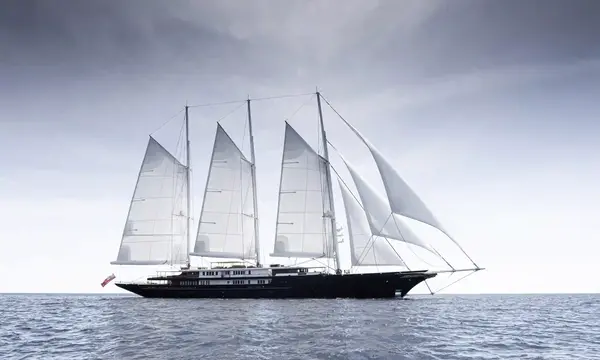
The arrival of 125-metre sailing yacht Koru in Cairns is expected to contribute close to A$1.95 million to the local economy. The visit illustrates …
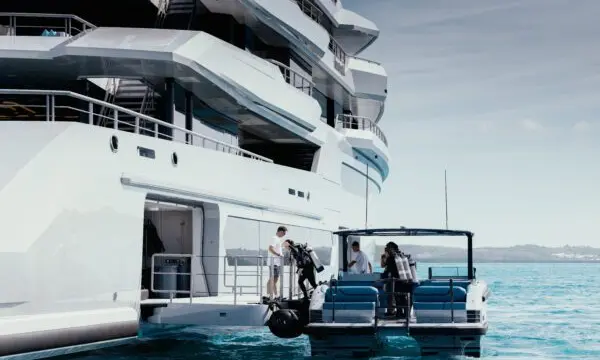
Oceanco has released a first look at Leviathan in operation, following the delivery of the 111-metre yacht.
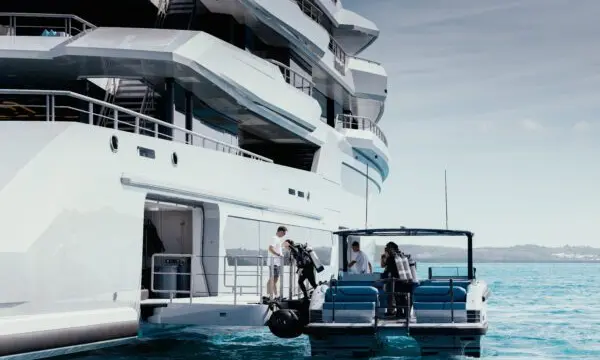
Oceanco has listed DRAAK among its recent press releases, marking the relaunch of the yacht after work at the yard.
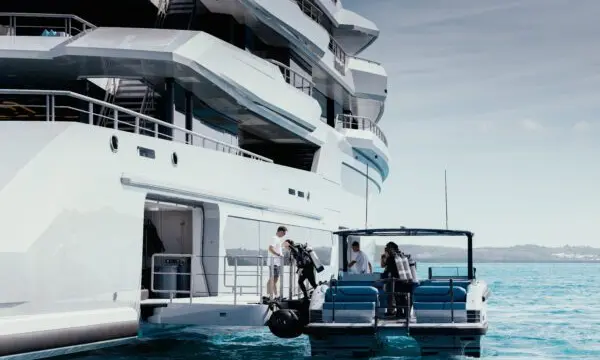
Oceanco has listed Project Y729 heading to its outfitting facilities as part of its recent press release activity.
Superyacht Guide
Continue into the wider Superyacht Guide.