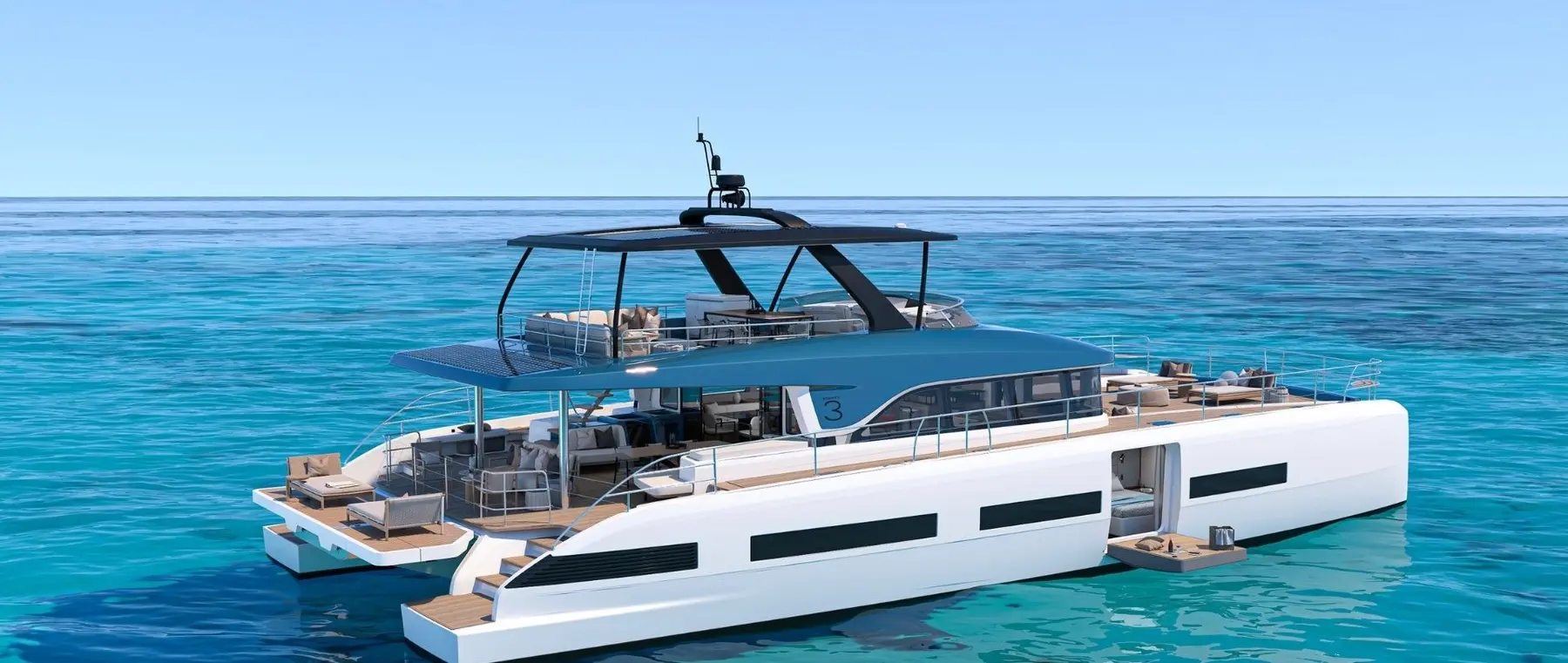
Lagoon Expands Its 24m-Plus Catamaran Market With EIGHTY 3
By Stephen Yardley · Edited by Stephen Yardley
Lagoon product director Rosalie le Gall explains the growth in demand for catamarans above 24m as the company promotes its 24.4m EIGHTY 3 power yacht.
Lagoon is continuing its move into the 24-metre-plus superyacht market, with the EIGHTY 3 power catamaran now at the centre of its larger-yacht offering. A 13 October 2026 industry interview with product director Rosalie le Gall and designers from Nauta examines why the French builder is expanding beyond the familiar mid-sized cruising multihull.
Le Gall describes an initial movement among Lagoon owners who progressed through several of the company’s smaller models before seeking more space and increased range. The 24-metre-plus market remains relatively narrow, so the builder is pursuing clients who might otherwise consider a traditional motor yacht rather than a catamaran.
The executive says existing Lagoon customers account for around thirty to forty percent of interest in the largest models, with the remaining enquiries coming from yacht owners changing brand and new entrants to ownership. These proportions are interview observations, not independently audited industry sales statistics.
The Lagoon EIGHTY 3 measures 24.4 metres overall and has an 11-metre beam, giving the multihull a very different waterside footprint from conventional motor yachts of similar length. VPLP Design developed the naval architecture, with Patrick le Quément contributing to the exterior and Nauta Design responsible for the interiors.
The manufacturer lists standard propulsion from two John Deere engines rated at around 580 horsepower each and an indicated fuel capacity of 8,500 litres. A claimed maximum cruising autonomy of approximately 3,500 nautical miles reflects the yard’s intended long-distance operating profile, although real consumption depends on speed and conditions.
Lagoon describes approximately 300 square metres of usable exterior living area, including an aft platform that can extend to roughly 22 square metres. Those numbers underscore the space offered by two hulls but also remind owners that a suitable wide berth may be more difficult to arrange than one for a conventional yacht.
The EIGHTY 3 can be configured with four, five or six cabins, with published berth options ranging from eight to sixteen. The builder promotes personalisation in furnishings, materials and the location of the galley, allowing owners to consider how the yacht will work for families, friends and any professional crew.
Interior options include a range of textiles, stones and timber finishes, using an approach that places the visual continuity of internal and external spaces at the centre of the design. The extent of customisation must still be discussed within the structural, classification and equipment limits of a production-derived platform.
An owner contemplating extended passages should examine the distinction between guest accommodation and working space. The distribution of crew facilities, technical storage and routes around the yacht becomes particularly important when many guests remain aboard for prolonged periods.
A power catamaran can place living spaces across a broad deck without the same hull geometry as a conventional monohull, creating the possibility of very wide saloons and outdoor lounging areas. The EIGHTY 3’s relatively shallow published draft of 1.27 metres may also be appealing for some sheltered cruising grounds.
Those attributes do not automatically make a large catamaran simpler to berth or easier to own. A beam of eleven metres can substantially reduce the range of conventional slips available, and the cost and availability of suitable marina arrangements should be assessed well before purchase.
Operating requirements also depend on the displacement, windage and twin-hull motion of the particular vessel. Owners should evaluate stability, seakeeping and docking through trials and experienced technical advice rather than relying on broad assumptions about the advantages of multihulls.
Lagoon’s experience suggests some buyers want a more connected indoor-outdoor living environment without ordering a completely bespoke steel superyacht. The new larger multihulls offer one alternative, while still requiring professional attention to maintenance, certification and the logistics of long-range cruising.
As Lagoon broadens the offering, the relationship with Nauta and the manufacturer’s engineering partners becomes more important. The interior and structural demands of a yacht above twenty-four metres may require a different set of supplier and service arrangements from those associated with its smaller cruising cats.
The EIGHTY 3 is a defined production model, and the latest industry discussion concerns Lagoon’s strategic growth and client mix rather than announcing an additional hull sale or launch. The continuing test will be whether the wider accommodation and cruising flexibility attract owners who would otherwise prefer a single-hull luxury motor yacht.
Explore
Go deeper into the yachts, companies, events and destinations directly connected to this article.
Continue reading
Northrop & Johnson’s Q3 2026 market analysis reports 126 used yacht sales above 24m, down from 160 in Q2, while 40–50m sales grew across …
A reported interview indicates Leonardo Maria Del Vecchio is considering selling one of two yachts, but no named vessel or confirmed brokerage listing has …
BoatPro figures discussed by SuperYacht24 show 34 superyacht sales in September 2026, up from 23 a year earlier, alongside a rise in listing additions …

Monaco's yacht and maritime businesses reported €659.7 million in 2025 turnover and 1,495 jobs, according to data discussed at Cluster Yachting Monaco's October Winter …
Superyacht Guide
Continue into the wider Superyacht Guide.
Business opportunities · Superyacht Guide
Companies serving the superyacht market can discuss clearly identified advertising, sponsorship and business-profile opportunities. Commercial activity remains separate from independent editorial coverage.