Lloyd’s Register Advances Nuclear Propulsion Debate for Superyachts
By Stephen Yardley · Edited by Stephen Yardley
Image: Lloyd's Register
Lloyd’s Register says nuclear propulsion for superyachts now warrants serious safety and regulatory work, while major technical and societal barriers remain.
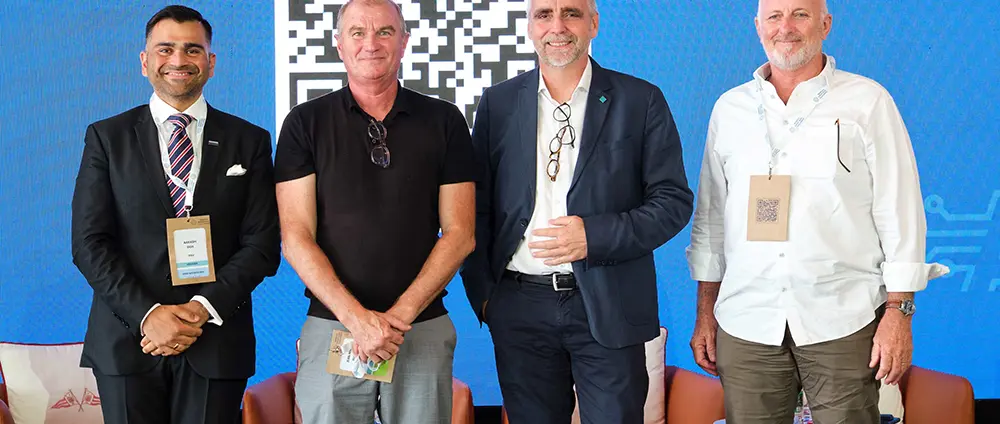
Lloyd’s Register has pushed the discussion of nuclear-powered superyachts further into the mainstream technical debate, arguing that classification societies need to begin developing safety, risk and assurance frameworks long before the technology is ready for normal yacht use. LR’s 28 July 2026 statement followed a panel at the Monaco Energy Boat Challenge examining what small modular reactors and other emerging nuclear technologies could eventually mean for large yachts.
The message is not that nuclear superyachts are about to enter production. LR describes the idea as a long-term proposition and highlights substantial barriers including safety regulation, crew competence, port acceptance, insurance, waste management and public perception, all of which would have to be addressed before a private yacht could operate routinely with a reactor onboard.
The attraction begins with energy density. A nuclear plant can operate for very long periods without conventional bunkering, potentially providing propulsion and hotel power while reducing dependence on large volumes of liquid fuel, and that theoretical endurance is particularly interesting for yachts designed for extended-range or remote-area operation.
Large yachts also carry growing electrical loads. Air-conditioning, hotel services, pools, lighting, communications, tenders, scientific equipment, battery systems and increasingly sophisticated entertainment installations all demand energy, so an onboard source capable of providing substantial continuous power has an obvious engineering appeal.
LR also points to lower operational emissions as a potential advantage, because a reactor does not produce combustion exhaust in the way a diesel engine does. That does not make nuclear energy impact-free, however, because the full lifecycle includes uranium production, reactor manufacture, maintenance, decommissioning and the long-term management of radioactive material.
Interest has increased partly because new reactor concepts are smaller and more modular than the naval and power-station reactors that shaped public perceptions of nuclear propulsion. Developers are exploring sealed cores, factory-built modules and passive safety features intended to reduce complexity and improve containment, although most concepts remain far from a certified yacht installation.
A yacht application would also create constraints that are different from a shore power station. The reactor would have to withstand ship motion, collision and grounding loads, maintain cooling and containment through casualties, integrate with the vessel’s electrical and propulsion architecture and remain safe while the yacht moves between jurisdictions.
Space and shielding are additional issues. Radiation protection has to keep crew, guests and service personnel within acceptable exposure limits, and shielding can add substantial weight, which means the naval architecture cannot treat the reactor as a direct drop-in replacement for a diesel engine.
LR’s Global Yacht Segment Manager Engel-Jan de Boer emphasised that classification societies would have a central role in developing safety frameworks and assurance processes if nuclear propulsion became viable for superyachts. Class rules would be only one layer, because a nuclear yacht would also need flag-state approval and would face port-state, coastal-state and possibly national nuclear-regulator requirements.
Port acceptance could become one of the decisive commercial constraints. A yacht with effectively unlimited range would still be of limited practical value if many marinas, anchorages or territorial waters refused entry, so regulation would have to develop internationally rather than through one enthusiastic flag administration.
Insurance presents a similar problem because conventional yacht policies are not designed around reactor incidents and long-tail nuclear liability. Owners, underwriters and governments would need clarity about financial responsibility, emergency response and environmental damage before routine private operation could be considered.
A nuclear-powered yacht could not be operated simply by adding a reactor-control screen to the existing engineering room. Specialist training, licensing, radiation protection, maintenance procedures and emergency roles would be necessary, and some functions might require personnel with qualifications closer to the nuclear navy or civil nuclear sector than to current yacht engineering certificates.
That would affect manning levels and career pathways as well as operating cost. Even if future reactor designs become highly automated, safe operation would still require defined responsibility for reactor systems, independent oversight and procedures for abnormal events that conventional yacht crews are not presently trained to manage.
Waste management and eventual decommissioning also extend the owner’s responsibilities beyond normal yacht disposal. Nuclear fuel and contaminated components cannot enter ordinary ship-recycling streams, so any credible design would need a cradle-to-grave plan before the vessel was launched.
The significance of the Monaco panel is not that it announced a nuclear yacht project, but that established classification and energy specialists are now treating the subject as something that deserves structured technical work. LR joined representatives from DNV, France’s CEA research organisation and Yacht Consultancy Ltd to examine the opportunities and constraints rather than presenting nuclear propulsion as a futuristic styling exercise.
That distinction matters because yacht concepts featuring reactors have appeared for years without a regulatory pathway, approved machinery package or operating model. Classification involvement begins to ask the harder questions: what failure cases must be considered, what level of containment is required, how is the vessel surveyed, and who has authority when it enters a foreign port?
LR has also published a dedicated “Fuel for thought: Nuclear for Yachts” resource, showing that the discussion is becoming part of the broader search for long-term propulsion options alongside methanol, hydrogen, batteries and other low-carbon technologies. Nuclear power is unlikely to compete with those alternatives on ordinary yachts, but the extreme energy demands and long-range ambitions of the largest vessels make the sector a plausible test case for future maritime applications.
Owners should therefore separate the strategic discussion from near-term purchasing decisions. No mainstream nuclear propulsion package is available for a superyacht new build today, and the legal, operational and social barriers are at least as significant as the engineering challenge.
The conversation still matters because major yacht projects can take years from concept to delivery, while new rules and certification regimes can take even longer. If small modular reactor technology reaches maritime maturity, the safety framework will need to exist before a responsible yard or owner can order a vessel around it.
LR’s intervention is an early step in that process rather than an endorsement of a particular reactor or yacht. It signals that nuclear propulsion has moved far enough beyond speculation for class societies to examine the practical questions, while also making clear that unlimited range and low operational emissions would come with an entirely new level of regulation, crew responsibility and lifecycle management.
Explore
Go deeper into the yachts, companies, events and destinations directly connected to this article.
Continue reading

Monaco's 2026 Smart & Sustainable Marina Rendezvous will focus on AI, cybersecurity, investment, biodiversity and decarbonising the existing yacht fleet.
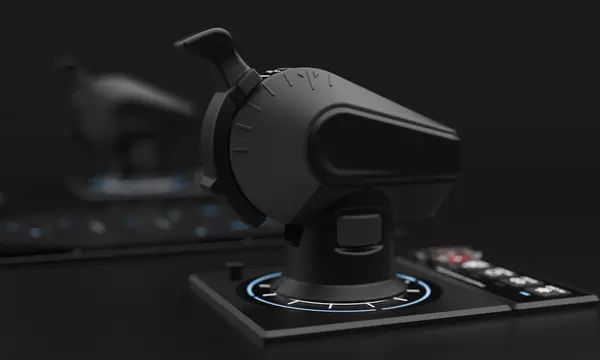
SCHOTTEL’s new PropControl 4 platform combines propulsion controls, telemetry, cybersecurity and remote service for thrusters and controllable-pitch propellers.
How Much Does Starlink Cost on a Superyacht? 2026 Plans and Setup Starlink’s current European maritime pricing starts around €250 per month for 50 …
Can You Work Remotely from a Superyacht? Wi-Fi, Starlink and Power Yes, remote work from a superyacht is technically realistic when the yacht has …
Superyacht Guide
Continue into the wider Superyacht Guide.