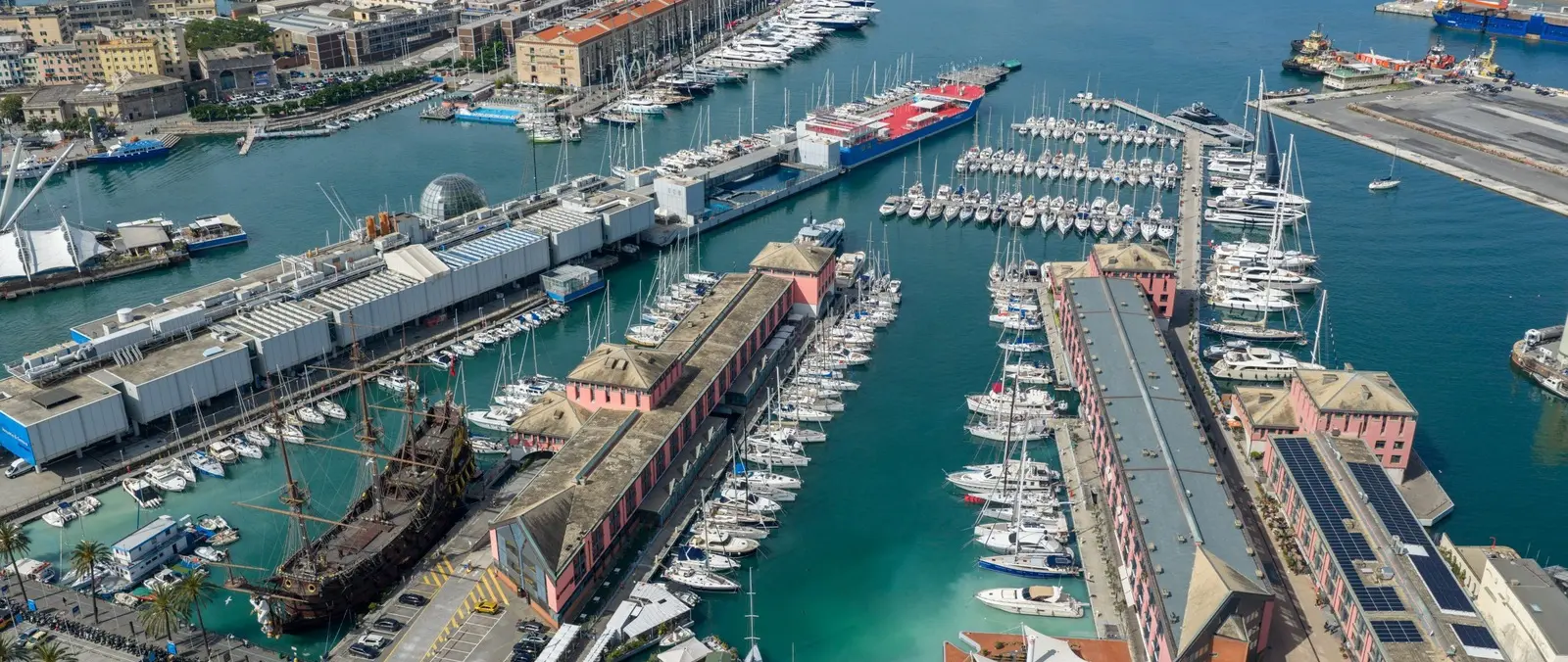
Genoa’s Marina Porto Antico Marks 30 Years of Superyacht-Ready Upgrades
By Stephen Yardley · Edited by Stephen Yardley
Image: Marina Porto Antico official anniversary release, 7 October 2026; official marina photography
Genoa's Marina Porto Antico commemorates its 1996 opening and details advances in yacht shore power, access control and waterfront operations.
Marina Porto Antico has marked three decades of operation in the historic centre of Genoa, recalling its inauguration on 10 October 1996 and the transformation of a neglected commercial waterfront into a place for yacht owners and visiting crews. The marina scheduled a private anniversary evening for longstanding customers at the neighbouring NH Marina hotel on Saturday 10 October 2026, using the occasion to describe changes in the demands made on Italian berthing facilities.
The anniversary is more than a ceremonial date because it tracks the growth of large-yacht ownership over a generation. When the first vessels arrived, parts of the adjacent land development were still construction sites and the management office was housed in a temporary building. The operator says some early customers are still moored at the same pontoons today, providing rare continuity within a harbour that has otherwise changed substantially.
Porto Antico was once physically separated from the city by fences, service infrastructure and working-harbour areas. The marina developed during the broader renewal of Genoa's historic port district following the city's early-1990s waterfront projects. The result was not a newly reclaimed stretch of coast but a different use for an already developed harbour area, placing leisure vessels within walking distance of the old town.
This history matters to marina planners because urban sites offer existing roads, services and a nearby hospitality economy but leave little room to enlarge berthing basins. Genoa's approach demonstrates how changing the uses of waterfront buildings, improving circulation and maintaining maritime operations can support an attractive marina without the same land requirements as an entirely new coastal development.
The present marina reports 270 berths for vessels from six to 75 metres, with an indicated maximum draught of seven metres. Larger berths serve owners who need a city-centre mooring and direct access to Genoa's shipyard and specialist supplier network. The declared maximum length is an overall facility capability; it should never be interpreted as a guarantee that an appropriate 75-metre berth is available for a particular arrival.
The transition from relatively narrow leisure boats to broader, taller and heavier vessels places added demands on fairway clearances, mooring loads and shore-side services. A modern 35-metre motor yacht may require far more electrical power and maintenance access than a 1990s vessel of similar length. Catamarans introduce another set of planning constraints, because beam can determine berth suitability even when length remains modest.
Among the operational changes highlighted by the marina are newer water and electricity pedestals offering metered consumption and remote-control functions. The company says shore-power supplies can reach 400 amperes, reflecting a shift towards yachts with sophisticated climate control, domestic electrical equipment and communication systems that continue to operate while alongside.
Professional captains should confirm the voltage, phase configuration, connection standards and actual power allocation before arrival. An advertised maximum current rating may apply to particular berths or installations rather than the whole marina. Responsible management also requires accurate billing, appropriate isolation and safe cables, since poorly coordinated connections can disrupt both onboard systems and marina distribution equipment.
The marina reports site-wide Wi-Fi and RFID-controlled pontoon access, together with continuing maintenance of mooring equipment. For visiting owners these may be familiar services, but they have become essential elements of a modern berth offer. Crews also benefit from a drivable quay, specialist yacht agents and access to repair yards without leaving the shelter of the wider port breakwater.
On land, the marina points to a parking development with 120 electric-vehicle charging spaces operated with Duferco Energia. That investment supports the increasing use of electric road vehicles by visitors and locally based customers; it is not the same thing as high-capacity charging for electric superyachts. Different technical, grid and safety provisions would be required before any such vessel-charging capability could be inferred.
Marina Porto Antico describes its access as open 24 hours a day throughout the year, sheltered within Genoa's harbour defences. The central location can simplify provisioning, hotels and owner transfers, while also providing a practical base for appointments with marine contractors around Genoa and Liguria. The benefits are particularly relevant to yachts that combine cruising with technical stops.
A skipper arriving in a large vessel should still plan with harbour authorities and the marina, taking account of commercial traffic, weather limitations and any local restrictions. The availability of a drivable quay or nearby workshop does not automatically mean every type of lift-out, painting or major refit operation can be performed within the marina itself. The service provider, operating site and access arrangements should be confirmed separately.
Industry attention is moving towards increased onboard electrical loads, smarter operational monitoring and the need to use existing waterfront infrastructure more efficiently. Marina Porto Antico's experience suggests that investments in utilities, pedestrian access and berth management can be just as important as headline additions to mooring capacity. More complex propulsion technologies may eventually create new demands, but future hydrogen, biofuel or charging facilities cannot be assumed without confirmed development plans.
The anniversary provides a useful perspective on how far a working city-centre marina has travelled since its improvised opening days. For superyacht owners the lasting value lies in reliable depth, berthing arrangements, trained personnel and practical service connections, not simply a prestigious waterfront address. The operator's latest account presents thirty years of incremental investment rather than announcing a new expansion or an increase beyond the published 75-metre limit.
Explore
Go deeper into the yachts, companies, events and destinations directly connected to this article.
Continue reading
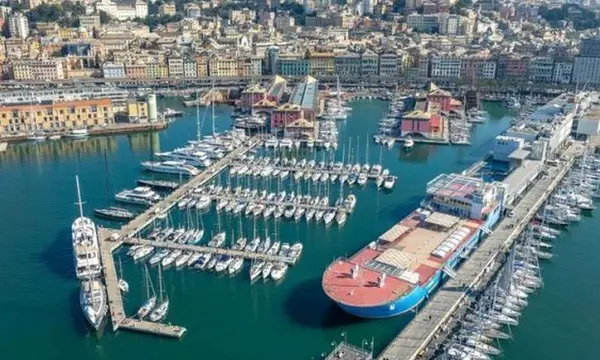
Marina Porto Antico is positioning its 270-berth Genoa facility as a city-centre stop for cruising yachts and superyachts up to 75 metres.

Cantiere Rossini renewed gender-equality certification in April 2026 and reported women in a quarter of its workforce and 40% of operational leadership.
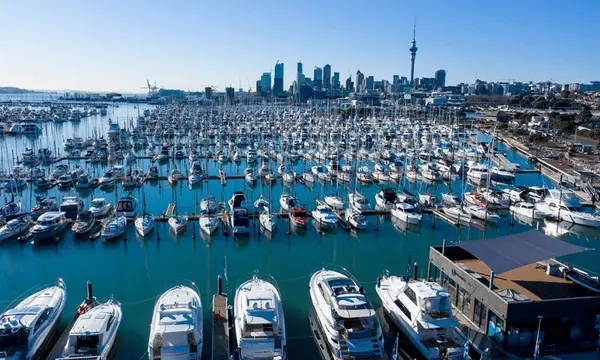
SeaKeepers South Pacific announced a July 2026 partnership with three Auckland Council marinas to widen access to citizen science and conservation programmes.
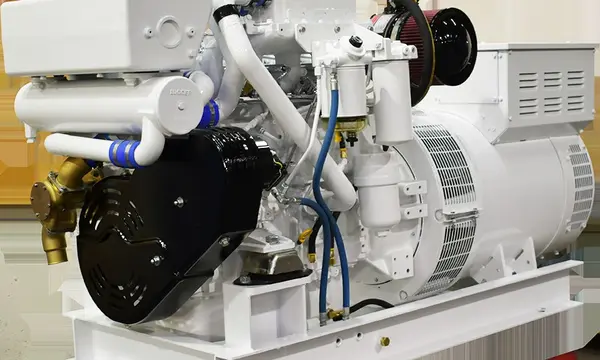
Northern Lights has expanded Diesel Marine NZ’s distributor role to cover marine generators, Lugger engines and Technicold equipment across the South Pacific.
Superyacht Guide
Continue into the wider Superyacht Guide.
Business opportunities · Superyacht Guide
Companies serving the superyacht market can discuss clearly identified advertising, sponsorship and business-profile opportunities. Commercial activity remains separate from independent editorial coverage.