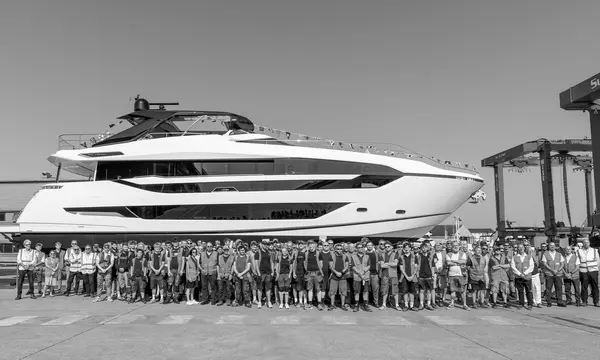
First Sunseeker Manhattan 94 Launched Ahead of Cannes World Debut
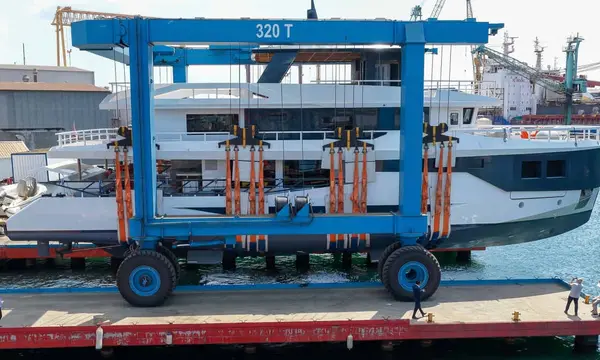
Sunseeker has launched the first Manhattan 94, formerly the 94 Yacht, ahead of its global debut at Cannes Yachting Festival 2026. The yacht now …
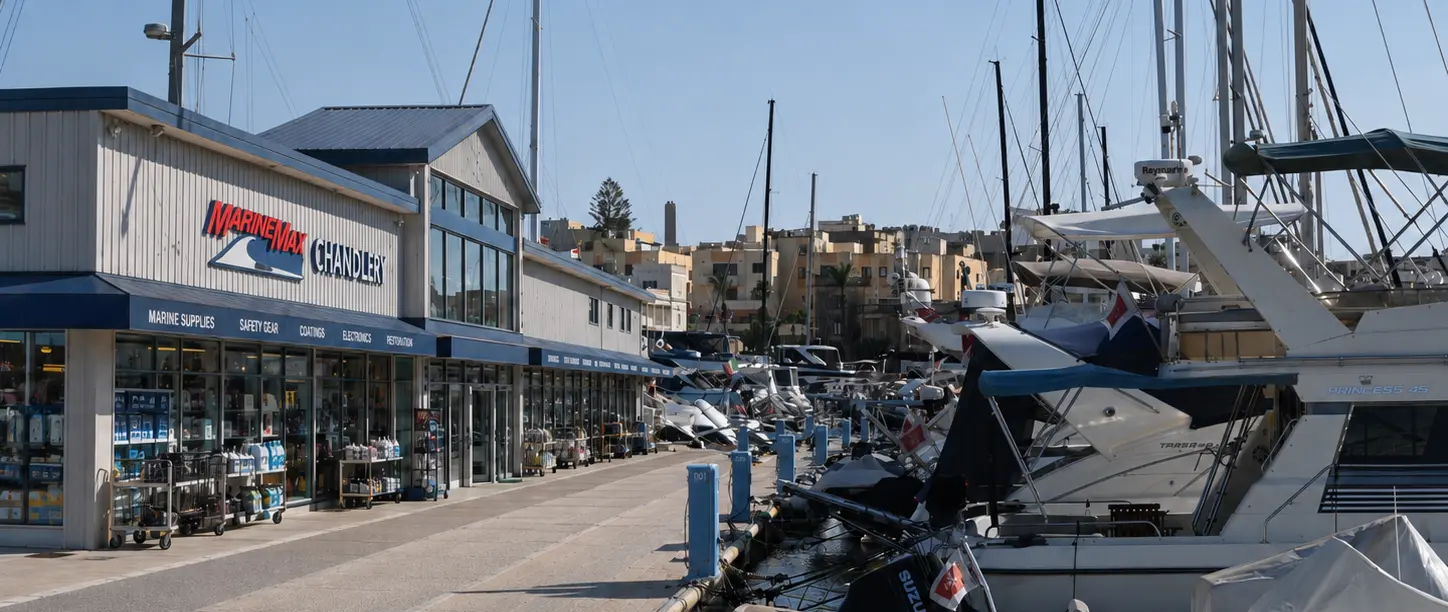
MarineMax may be best known as one of the world’s largest yacht retailers, but the reported competition to acquire the American group is about far more than selling boats.
Investment firms Blackstone, Donerail and Centerbridge are reportedly among the final bidders for the Florida-headquartered company, according to Reuters. MarineMax has a market value of around $725 million, while an earlier all-cash proposal from Donerail valued the company at approximately $1.1 billion. No transaction has yet been confirmed, and MarineMax has not publicly acknowledged that it is conducting a formal sale process.
What has attracted such significant investor interest is the breadth of the MarineMax business. The group operates more than 120 locations worldwide, including more than 70 dealerships and 65 marina and storage facilities. Its operations also extend into superyacht brokerage, management, charter, marina management and other services through businesses including IGY Marinas, Fraser and Northrop & Johnson.
The reported bidding contest therefore offers a wider insight into how institutional investors now view the yachting industry. The target is not simply a retailer exposed to the rise and fall of new-yacht sales. It is an integrated network of waterfront property, berthing capacity, customer relationships and specialist services that can generate revenue throughout the ownership cycle.
Traditional yacht retail can be highly cyclical. Sales depend on consumer confidence, financing conditions, inventory levels and owners’ willingness to make substantial discretionary purchases. A dealership-led business may therefore appear vulnerable when interest rates rise or demand for new boats weakens.
MarineMax has spent years building a broader operating platform around that retail base. Its dealerships introduce customers to the group, but those customers may subsequently require financing, insurance, maintenance, repair, storage, marina berths, brokerage, charter support and ultimately assistance selling or replacing their yachts.
That creates an opportunity to retain customers long after the initial sale. A buyer of MarineMax would consequently acquire not only physical locations and recognised brands, but also access to a large population of yacht owners whose spending continues over many years.
The value lies in capturing a greater proportion of the expenditure generated during ownership, rather than relying solely on the margin earned when a yacht first changes hands.
The most valuable part of the MarineMax proposition may ultimately be its waterfront infrastructure.
Quality marina capacity is difficult to reproduce. Suitable coastal land is limited, planning restrictions are often severe and local opposition can make new marina development slow or impossible. Existing facilities in established yachting destinations therefore benefit from a form of scarcity that is unusual in ordinary retail property.
Owners also tend to require berthing and storage regardless of whether they are currently buying a new yacht. This can make marina revenue more resilient and predictable than vessel sales alone.
A berth is also the point through which many other services can be delivered. Storage, fuel, maintenance, repair, haul-out, crew support and owner services can all be connected to the marina relationship. For an institutional owner, the marina is therefore both a property asset and a gateway to recurring marine-service income.
The wider investment market has already recognised this. Blackstone’s infrastructure arm acquired Safe Harbor Marinas in 2025 in a transaction valued at approximately $5.7 billion, while Stonepeak acquired Southern Marinas in April 2026. Reuters reported that marinas and superyacht services have attracted significant deal activity over the previous 18 months.
Blackstone’s reported interest in MarineMax is especially notable in that context. A successful acquisition would potentially add dealerships, yacht services and owner relationships to an already substantial marina investment strategy.
MarineMax’s exposure to the superyacht sector gives prospective buyers access to a market that behaves differently from mainstream recreational boating.
Through Fraser and Northrop & Johnson, MarineMax participates in brokerage, charter, yacht management and related advisory services. Through IGY Marinas, it is connected to prominent superyacht destinations and large-yacht infrastructure.
These businesses are valuable because superyachts generate complex and continuing service requirements. A yacht may require brokerage representation, charter marketing, operational management, compliance support, crew administration, technical assistance, berthing and refit coordination throughout its life.
The revenue opportunity is therefore not restricted to the original builder or seller. A service company can continue earning from the same asset as it is operated, chartered, maintained, relocated and eventually sold.
This helps explain why the current interest in MarineMax should not be viewed simply as a bet on future yacht sales. It is also a bet on the long-term expenditure generated by existing yachts and owners.
MarineMax’s structure illustrates a broader direction in the global yachting business: consolidation around integrated platforms.
Historically, yacht retail, marina ownership, brokerage, management and technical services were frequently provided by separate businesses. That fragmentation created choice, but it also meant that no single group necessarily captured the full economic value of a customer relationship.
An integrated platform can sell the yacht, provide the berth, support its operation, arrange charter, handle a future resale and introduce the owner to the next vessel.
For private-equity and infrastructure investors, this creates several potential advantages. Revenue can be diversified across sales, property and services. Customer acquisition costs can be spread across multiple transactions. Centralised technology, procurement and administration may produce efficiencies, while acquisitions can be used to expand the network into new regions.
There is also strategic value in scale. A group operating across numerous dealerships and marinas can build relationships with manufacturers, yacht owners, brokers and service suppliers that may be difficult for smaller competitors to match.
Yet integration also creates complexity. MarineMax combines businesses with different capital requirements, margins and market cycles. Retail inventory must be financed and managed, marinas require continuing investment, while brokerage and management businesses depend heavily on reputation and experienced personnel.
Any eventual buyer would therefore need to decide whether MarineMax is most valuable as a unified platform or whether some operations would perform better under a different structure.
The reported bidding process follows sustained pressure from shareholders.
Donerail began publicly pushing MarineMax to consider a sale or replace its chief executive, while other investors also called for strategic changes. Donerail later submitted a non-binding cash proposal of $35 per share, valuing MarineMax at about $1.1 billion, and subsequently increased its offer, according to Reuters.
MarineMax has made governance changes, including replacing board members, but has not publicly confirmed the reported sale process. Reuters reported that the company began formally seeking buyer interest from April 2026 and that Blackstone, Donerail and Centerbridge had progressed to the final round by July.
There remains no guarantee that an acquisition will be completed. Bidders may disagree over valuation, financing, property values, debt or the future structure of the group. MarineMax may also determine that remaining independent would create greater long-term value.
Nevertheless, the number and scale of the reported bidders demonstrate that institutional investors see something substantial within the company’s combination of assets.
A successful acquisition could become one of the most important yacht-industry transactions of recent years.
It would reinforce the idea that marinas are no longer regarded merely as operational support facilities. They are increasingly being treated as scarce infrastructure assets capable of producing recurring income and supporting wider service businesses.
It would also underline the growing investment value of companies that remain connected to owners throughout the yacht lifecycle.
For smaller yacht businesses, this trend presents both opportunities and risks. Institutional ownership may bring capital for expansion, improved facilities and more professional systems. Larger groups may also create acquisition opportunities for independent marinas, service companies and regional dealerships.
At the same time, continued consolidation could place pressure on independent operators. Large platforms may be able to offer bundled services, cross-market customers and invest more heavily in technology, marketing and infrastructure.
The result could be a more concentrated industry in which a smaller number of international groups control a growing share of the owner relationship.
The reported MarineMax bidding contest is ultimately a sign of how the economics of yachting are changing.
A yacht sale may attract the headlines, but the deeper value lies in everything that follows: where the yacht is berthed, who maintains it, who manages it, how it is chartered and who handles its eventual resale.
MarineMax has assembled businesses that participate at many of those points. That makes the group not merely a yacht retailer with marina interests, but a broad ownership-services platform built around scarce waterfront assets and wealthy customers.
Whether Blackstone, Donerail, Centerbridge or another bidder ultimately prevails, the competition itself sends a clear message. For institutional investors, the most attractive part of the yacht industry may no longer be the yacht alone. It is the infrastructure, services and long-term customer expenditure that surround it.
Reuters: Blackstone and Donerail among final bidders for MarineMax
Continue reading
Sunseeker has launched the first Manhattan 94, formerly the 94 Yacht, ahead of its global debut at Cannes Yachting Festival 2026. The yacht now …
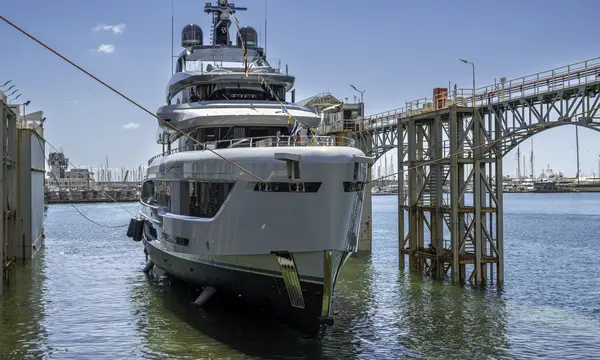
Tankoa Yachts has launched the fully custom 45m TX450 in Genoa, a sub-500GT project developed for an experienced Middle Eastern owner. Cassetta Yacht Designers …
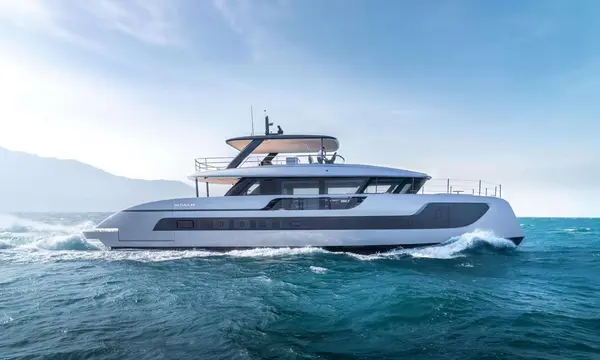
Sunreef Yachts has launched the first ULTIMA 88, bringing the largest completed model in its performance-focused ULTIMA range into the water. The 26-knot catamaran …
Soyaslan has launched the 35m motor yacht LOINTAINE, the first yacht in its Dionysos 35 series, with accessibility integrated into the design from the …
Superyacht Guide
Continue into the wider Superyacht Guide.