
MarineShift360 Makes Business Case for Lifecycle Data in Yacht Manufacturing
By Stephen Yardley · Edited by Stephen Yardley
MarineShift360 argues that lifecycle assessment can help yacht builders and suppliers identify material impacts and operational inefficiencies, subject to reliable data.
MarineShift360 is highlighting the commercial implications of lifecycle assessment for marine manufacturers as companies confront both sustainability reporting demands and pressure on margins. In an October 9, 2026 industry interview, Marine Futures founder Ollie Taylor argued that reliable product and process data can help businesses understand inefficiencies rather than treating environmental evaluation solely as a compliance exercise. The discussion comes amid persistent concern about the costs of changing materials and manufacturing routines.
The MarineShift360 platform was developed for the marine sector with the support of 11th Hour Racing and is delivered by Marine Futures. It has been used or evaluated in sectors that include sailmaking, performance craft and equipment, with names such as North Sails, SailGP, IMOCA, Williams Jet Tenders and Starboard cited in the latest reporting. Those examples show the breadth of potential applications, but do not establish quantified savings for an individual superyacht project.
A lifecycle assessment examines material inputs, processing, transport, operation and potentially disposal or recycling under a defined methodology. For a yacht component, the result can depend significantly on assumed lifespan, replacement frequency, energy sources and how much equipment is used during a service season. Comparisons are only meaningful when boundaries and methods are aligned.
The value of a common framework is that designers and procurement teams can identify the stages of manufacture that make the largest contribution to measured impacts. In some cases, an alternative manufacturing method may save energy while increasing material consumption elsewhere, making an unqualified statement about environmental benefit misleading. A transparent model makes such trade-offs easier to evaluate before a change is adopted.
Assessment results should include uncertainty as well as headline values. Supplier datasets may be incomplete, and performance at sea can differ from workshop assumptions. Independent review and clear disclosure of modelling choices help protect against overstated marketing claims, particularly when a result is used in a major yacht procurement decision.
Taylor's argument links sustainability with resilience by encouraging businesses to look for avoidable waste, manufacturing losses and repeated processes. A shipyard that understands where materials are consumed and scrapped can examine whether design modifications, more accurate cutting or improved procurement would reduce costs. Such opportunities must be tested against actual production records rather than presumed from software output.
The superyacht industry is especially challenging because custom projects may not repeat the same detailed specification. Without standardised records, a builder can struggle to compare carbon or material intensity between very different hulls. Measurements expressed per component or per functional requirement can sometimes provide more useful guidance than the total impact of vessels with radically different displacement and onboard systems.
Refit yards face a related question when deciding whether to repair or replace equipment. Extending useful service life might avoid new manufacturing but could also preserve an inefficient system with high operational consumption. A lifecycle view can help reveal the balance, provided maintenance, downtime and the actual usage profile are included.
High-quality lifecycle information depends on the companies that manufacture resins, fabrics, propulsion equipment, glazing, paint and other products. Suppliers must document process energy, material composition and transport assumptions with sufficient consistency for a yacht builder to use the figures. This can create an administrative burden, particularly for smaller specialist businesses.
A shared tool can reduce duplicated calculations, but it cannot replace primary production data or careful checking. Buyers should distinguish a full third-party-reviewed environmental product declaration from an early internal estimate. Each has a different level of assurance and is appropriate for different stages of a project.
Owners' representatives can also improve the process by establishing environmental requirements before the principal design and equipment selections have been fixed. Late requests for new materials may increase cost and delay even where the substitute is technically suitable. Early engagement allows procurement decisions to consider both performance and environmental evidence.
The platform has previously been associated with an accelerator programme examining recyclable composites and propulsion technology, illustrating a wider role in supporting product development. Its present message is broader: measured information may improve business decisions when used alongside engineering, safety and commercial evaluation. It is not a substitute for those disciplines.
The October report should be read as industry commentary on the business case for lifecycle analysis, not as the release of a new mandatory superyacht standard. Builders considering adoption should investigate data requirements, independent verification, staff time and the practical decisions the measurements would support.
For superyacht designers, shipyards and equipment manufacturers, the opportunity is to replace vague sustainability claims with comparable and documented evidence. Whether that also reduces costs will depend upon specific processes, materials and the changes made after the analysis. The development highlights an emerging expectation that environmental performance can be discussed in the same disciplined terms as weight, durability and engineering quality.
Explore
Go deeper into the yachts, companies, events and destinations directly connected to this article.
Continue reading
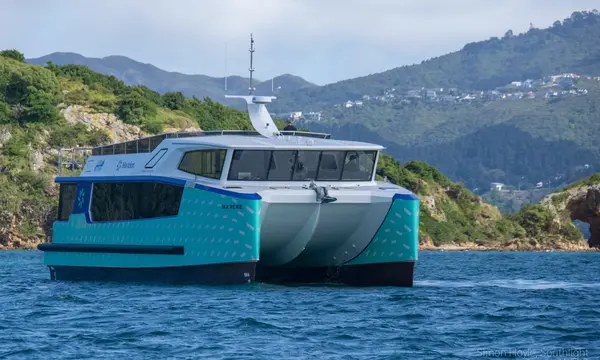
The 2026 MarineShift360 Impact Accelerator brings Gurit, nlcomp and MobyFly into a year-long programme testing marine materials, recycling and hydrofoil lifecycle impacts.
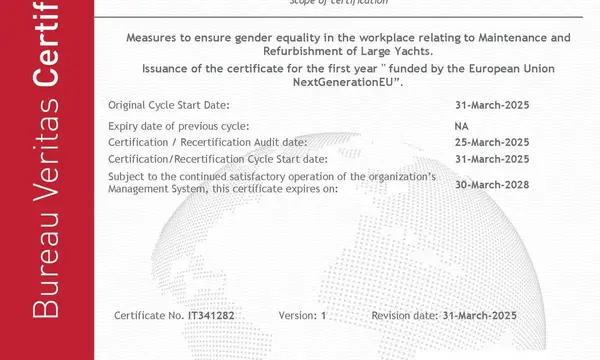
Cantiere Rossini renewed gender-equality certification in April 2026 and reported women in a quarter of its workforce and 40% of operational leadership.
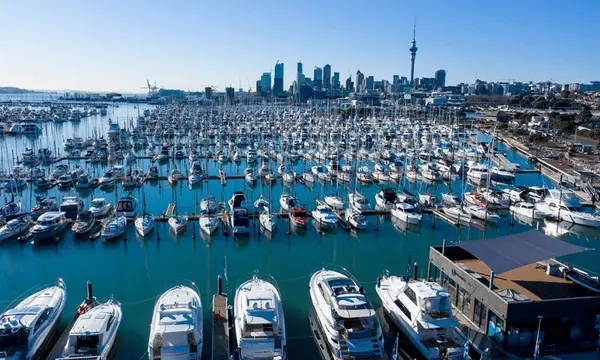
SeaKeepers South Pacific announced a July 2026 partnership with three Auckland Council marinas to widen access to citizen science and conservation programmes.
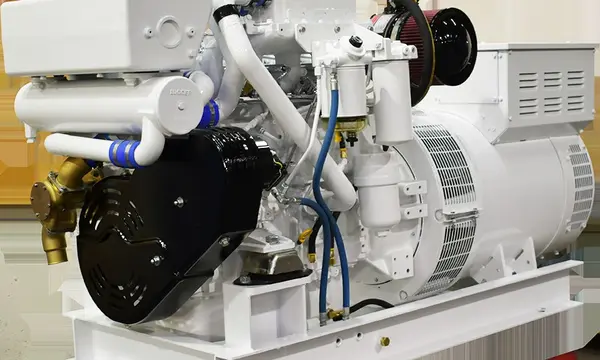
Northern Lights has expanded Diesel Marine NZ’s distributor role to cover marine generators, Lugger engines and Technicold equipment across the South Pacific.
Superyacht Guide
Continue into the wider Superyacht Guide.
Business opportunities · Superyacht Guide
Companies serving the superyacht market can discuss clearly identified advertising, sponsorship and business-profile opportunities. Commercial activity remains separate from independent editorial coverage.