dsnm Acquires NavigatX to Unite Superyacht Navigation and Bridge Hardware
Superyacht navigation specialist dsnm has acquired sister company NavigatX, bringing navigation management, passage-planning software and bridge refit support together.
The 17–19 November 2026 Metstrade exhibition in Amsterdam will feature a dedicated Superyacht Startups Area, bringing emerging companies into direct contact with owners' representatives, captains, shipyards and technical managers. The organiser's published exhibitor directory currently names seven businesses in the specialist area in Hall 8, spanning vessel management, navigation awareness, machinery monitoring, damage control, interior inventories, lighting and crew development. Yachting Ventures, which works with Metstrade on the programme, released a fuller preview in October. The approaching exhibition now offers a useful opportunity to examine what these products actually propose for large-yacht operations.
The 17–19 November 2026 Metstrade exhibition in Amsterdam will feature a dedicated Superyacht Startups Area, bringing emerging companies into direct contact with owners' representatives, captains, shipyards and technical managers. The organiser's published exhibitor directory currently names seven businesses in the specialist area in Hall 8, spanning vessel management, navigation awareness, machinery monitoring, damage control, interior inventories, lighting and crew development. Yachting Ventures, which works with Metstrade on the programme, released a fuller preview in October. The approaching exhibition now offers a useful opportunity to examine what these products actually propose for large-yacht operations.
An important verification detail is that the earlier Yachting Ventures announcement described eight participating businesses and mentioned an additional tender-tracking company, Towpro. The live Metstrade exhibitor listing reviewed for this article identifies seven names and does not show Towpro in that specific list. That discrepancy may reflect a changed lineup or a difference in the stage of publication; it does not justify assuming a confirmed eighth booth. The following company descriptions therefore distinguish the organiser's current directory from the broader promoter's earlier preview. No business is described as having demonstrated performance merely because it is scheduled to exhibit.
ZeaFarer, listed by Metstrade among the Hall 8 exhibitors, is promoting a platform intended to combine maintenance, vessel status, tasks and operational records. The proposition addresses a common problem on professionally operated yachts: information may be scattered across crew notebooks, equipment manuals, emails, spreadsheets and shore-management systems. The company describes AI-supported interaction with vessel records, allowing authorised users to seek answers based on stored equipment information. Whether such tools are reliable in practice depends on data quality, access control, software integration and the careful verification of answers.
An experienced crew can compensate for fragmented records for a time, but an unexpected engineer change or major refit can expose gaps in institutional knowledge. A single view of tasks, service history and current equipment condition could help reduce that dependency if information is maintained accurately. Software should not replace formal engineering judgement or manufacturer instructions; it should make the relevant evidence easier to find. For owners and managers considering this category, questions about exportable records, offline operation, audit trails and vendor continuity may be as important as a polished interface shown at an exhibition.
Massive Marine's announced Vision AI system uses camera imagery and maritime sensor information to support hazard detection and situational awareness. The company positions the technology as assistance for bridge teams, including in reduced visibility and darkness. Potential applications are readily understood: a yacht operating among small craft, floating objects and changing coastal traffic may benefit from an additional source of information. Yet any automated detection system must be evaluated for false alarms, missed targets, environmental limitations and the quality of sensor inputs before its practical capability can be judged.
The existence of AI-based alerts should never be confused with a transfer of watchkeeping responsibility from qualified personnel to software. Radar, visual lookout, chart information, established navigation procedures and professional judgement remain central to safe operation. Integration also matters because a system that produces ambiguous warnings can increase workload at precisely the wrong moment. Buyers should ask how alerts are prioritised, recorded and explained, and whether the manufacturer has independently documented performance. Metstrade can provide a setting for questions and demonstrations, but a show-floor presentation is not proof of suitability for every vessel.
MAIT Systems, described by the promoter as MAIT Tech, is another listed company. Its Modular Analytics and Intelligence Toolkit is intended to collect information from engines, generators and other vessel systems and combine live monitoring with historical analysis. The commercial proposition is to help engineers recognise developing conditions before they become disruptive failures. In a sophisticated engine room, however, the difficulty is rarely a complete absence of numbers. The greater challenge is connecting readings to equipment history, operating circumstances and the action taken by technicians.
Predictive language should be used with care. A trend suggesting unusual vibration or temperature may indicate an early fault, a sensor issue or a perfectly explainable difference in operating condition. The system's usefulness therefore depends on calibration, the available historical sample, engineers' interpretation and properly recorded follow-up. For owners, improved maintenance planning could reduce avoidable disruption, but there is no verified basis here for publishing a quantified reduction in breakdowns, fuel cost or crew hours attributable to MAIT. Those results would require defined trials and comparable data.
Leak Stop Gun is listed among the specialist exhibitors with portable equipment intended to help crew respond rapidly to water ingress. The attraction of a compact first-response device is clear: damage-control decisions can be time-sensitive, and equipment that can be accessed and used quickly may assist a trained team in limiting an initial problem. This does not mean that a portable sealing tool can resolve every leak, withstand every pressure or replace the vessel's engineered watertight arrangements. Its operating envelope needs to be understood before anyone relies on it in an emergency.
Training, drills, spare consumables and correct storage will influence the real-world value of such equipment. The suitability of any emergency device also depends on the opening, material, pressure, access conditions and crew's ability to work safely around the affected space. Demonstrations at Metstrade should be judged in that context. A product may be a useful addition to a well-designed emergency response plan without being a universal solution, and a purchaser should look for technical documentation and applicable approvals rather than extrapolate from a short promotional display.
Sea It, identified in the promoter's material as sea·it, approaches superyacht operations from the interior department. Its proposed software maintains shared stock records for supplies such as wines and spirits, uniforms and other onboard items. This may appear less technically demanding than bridge automation, yet inventory accuracy affects provisioning costs, guest service, handovers and the time spent reconciling stores. The practical challenge is to make recordkeeping simple enough for crew to use consistently during busy charters, while retaining the controls needed for purchasing and accountability.
A shared application could reduce reliance on a spreadsheet maintained by one crew member, but only if access rights and stock-count procedures are clear. Managers will want to know how items are categorised, how adjustments are approved, whether records can be exported and whether multiple devices can reconcile changes reliably. Yacht operations often involve limited connectivity in certain locations, so the behaviour of an application when offline deserves attention. No claim is made here that the software has achieved a specified percentage reduction in waste or inventory costs; those are questions for evidence-based customer trials.
Ambright GmbH brings a different technology to the lineup through printed lighting structures, intended to produce slim and custom-shaped illuminated surfaces. The promoter describes applications including integrated decorative lighting and backlighting for materials such as onyx. In yacht interiors, where curved surfaces, vibration, limited depth and maintenance access complicate installation, such flexibility could interest both designers and technical contractors. Performance still depends on heat management, electrical safety, serviceability and the ability to reproduce a bespoke component years after its original installation.
The Galley Table represents the human side of the programme, with a focus on crew leadership, professional progression and movement between sea-going and shore-based careers. This reflects an industry reality: even sophisticated yachts depend on stable, capable teams and thoughtful management. Mentoring and leadership frameworks can support that work, although their impact is not measured simply by attendance at a conference. A balanced technology exhibition should recognise that the effective use of new systems also requires training, responsibility and continuity among the people expected to operate them.
Metstrade places the Superyacht Startups Area in Hall 8 and also schedules pitching and networking opportunities with Yachting Ventures. Fort Insurance is named as a sponsor of the startup programme. The organiser's current directory lists Ambright, Leak Stop Gun, MAIT Systems, Massive Marine, Sea It, The Galley Table and ZeaFarer. Yachting Ventures' earlier release additionally describes Towpro, a bridge-facing tender and water-toy tracking system, but visitors should verify its latest attendance directly rather than treating an earlier announcement as a final stand allocation.
For an owner or captain, the value of this gathering is the ability to compare claims with demonstrations, ask about existing installations and inspect maintenance and support commitments. The 2026 programme signals where emerging suppliers believe demand lies: better records, more usable technical information, safety tools, inventory control and adaptable interiors. Those are credible operational problems, but the commercial success of any particular solution remains unproven by inclusion in an exhibition. Superyacht Guide will treat confirmed exhibitor lists and measured technical performance as separate forms of evidence as the show approaches.
Reporting source: original announcement; corroborating source: additional first-party or industry material. Report dated 9 November 2026. Announcements and operating plans may change; editorial interpretations are distinguished from confirmed facts.
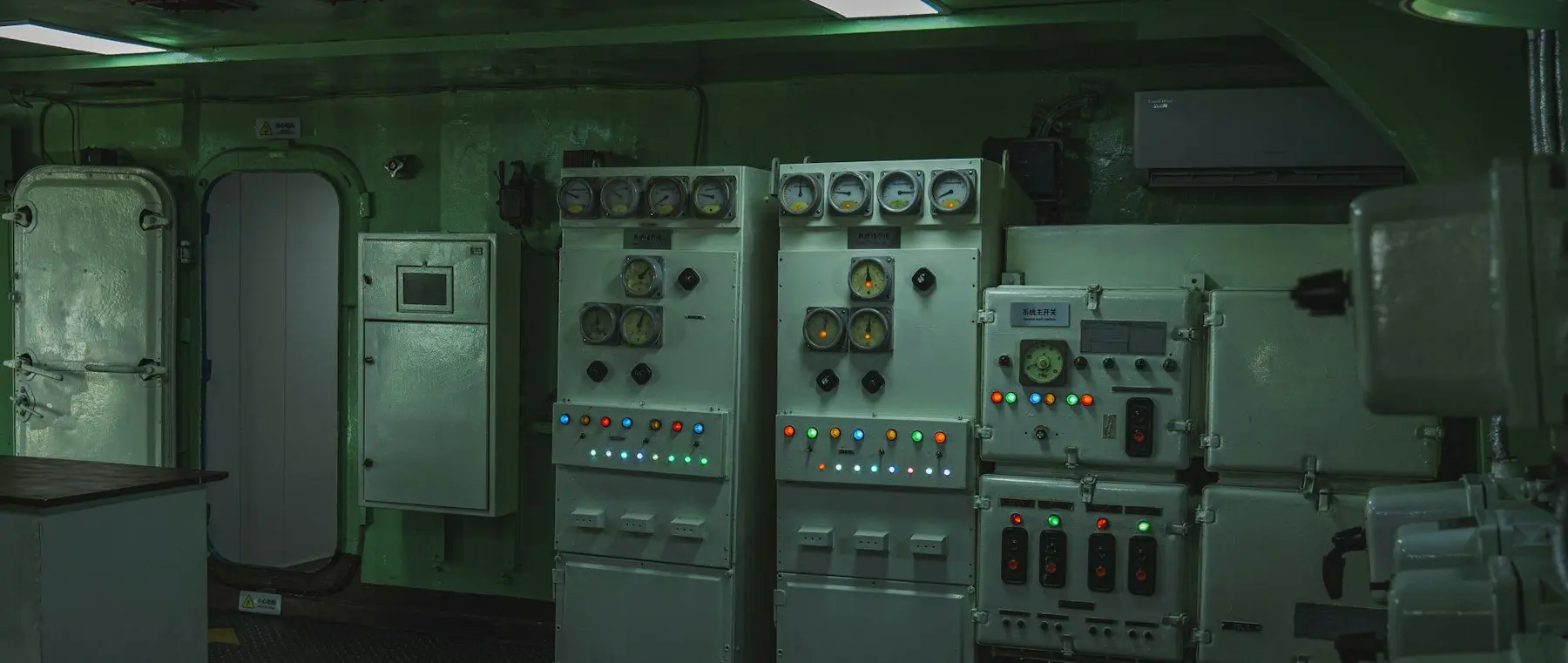
Editorial photograph: photographer and original image — Tao Yuan / Unsplash License; October 2025 shipboard command panels, illustrative only; not a Metstrade participant product or stand. Cropped and resized under the Unsplash License. Illustrative photograph only; it does not show the 2026 event or named product.
Continue reading
Superyacht navigation specialist dsnm has acquired sister company NavigatX, bringing navigation management, passage-planning software and bridge refit support together.
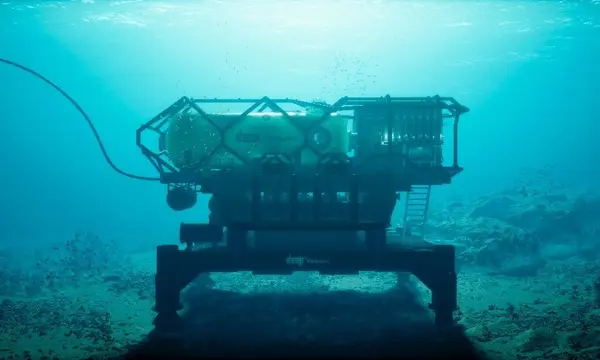
Triton Submarines provided engineering and integration assistance for DEEP's Vanguard human habitat, installed 17 metres underwater at Tennessee Reef in the Florida Keys.
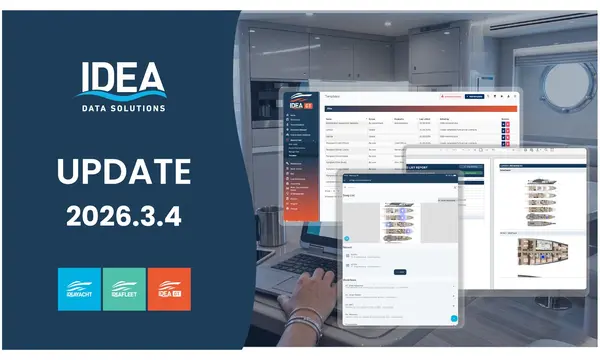
IDEA Data Solutions release 2026.3.4 introduces structured purchase and work-order wizards, crew Hours of Rest improvements and tablet-friendly yacht management software.
Bosch Engineering introduces its integrated 160hp EDM electric inboard to North American boatbuilders at IBEX, with motor, gearbox, inverter, cooling and charger assembled as …
Superyacht Guide
Continue into the wider Superyacht Guide.
Business opportunities · Superyacht Guide
Companies serving the superyacht market can discuss clearly identified advertising, sponsorship and business-profile opportunities. Commercial activity remains separate from independent editorial coverage.