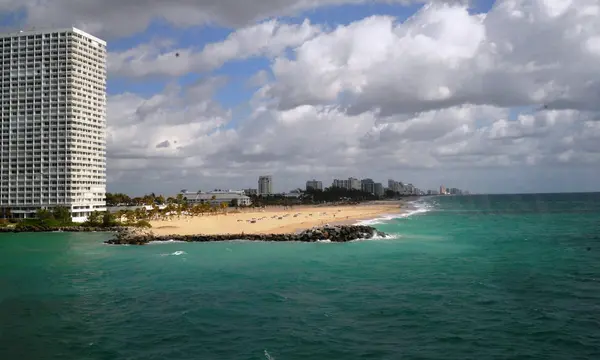
SeaKeepers Founders 2026 Draws 240 Guests and 30 Yacht Crews
SeaKeepers has published attendance and fleet participation figures for its completed Fort Lauderdale Founders gala, recognising conservation leaders and yacht crews who support marine …
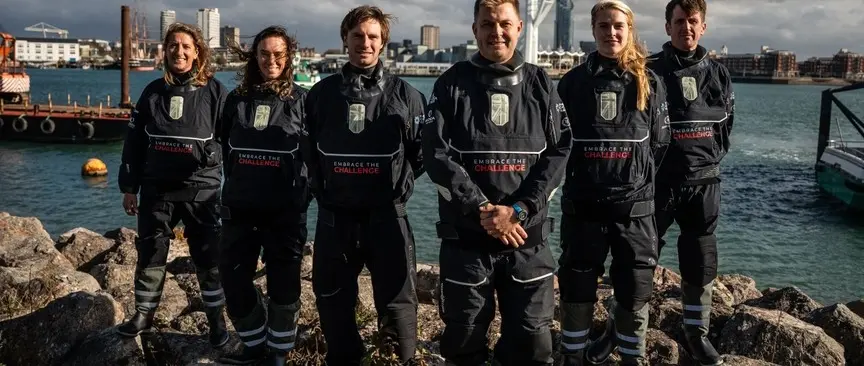
© Embrace The Challenge / The Ocean Race. Official team announcement photograph, released 24 November 2026.
Embrace The Challenge has named six international sailors, led by Oliver Heer, for the 2027 Ocean Race, with four crew members selected to compete on each leg.
Swiss skipper Oliver Heer has announced a six-person sailing squad for Embrace The Challenge ahead of The Ocean Race 2027. The official race organiser published the announcement on 24 November 2026, identifying an international group whose experience spans Olympic competition, solo offshore racing and previous round-the-world campaigns. The six sailors are Heer, Annemieke Bes, Rosalin Kuiper, Lincoln Dews, Tom Dolan and Dee Caffari. The Ocean Race is due to start in Alicante, Spain, on 17 January 2027. The news is significant not merely because the team has named well-known sailors, but because it has chosen a flexible structure: four members will be selected for each leg, allowing the campaign to adjust its crew to the demands of different stages.
A round-the-world campaign places unusual demands on human endurance and teamwork. The Embrace The Challenge announcement says four sailors will be chosen from the six-person squad for each leg. That means the named group is a pool of expertise, rather than an indication that all six people will race on board at the same moment. The selection strategy gives the skipper options when considering weather patterns, course demands, technical skills and the physical condition of individuals. It is not a guarantee that any particular combination will be used on a specific stage. Those decisions are part of the team's preparation and may be influenced by events between now and departure. A flexible plan can be valuable, but its effectiveness must be tested through training and racing.
Heer completed the Vendée Globe in 2025, becoming the first Swiss-German to finish the solo round-the-world event, according to the team's official announcement. That achievement provides experience with prolonged offshore decision-making, but leading a team requires a different form of discipline. When sailing alone, a skipper manages every task through an intensely personal routine. In a crewed campaign, decisions must be communicated clearly, responsibilities shared and watch systems managed so the boat can perform continuously. The organiser describes Heer as preparing to become the first Swiss skipper in more than three decades to compete in The Ocean Race. Such historical context adds interest, but the more important sporting question is how solo experience can be translated into reliable team performance.
Dutch sailor Annemieke Bes is identified as an Olympic silver medallist from Beijing 2008, with experience from multiple Olympic campaigns. She has also participated in earlier editions of The Ocean Race, giving her a rare combination of shorter-format high-performance sailing and extended offshore competition. These disciplines share foundations in boat handling and racing judgement, but they place different demands on a crew. Around-the-world sailing requires equipment care, weather strategy and sustained cooperation over long periods. Bes's experience may help the team bridge these worlds. No individual role for every leg has been announced here, so a responsible report should not assign her a fixed position or watch schedule that has not been confirmed by the team.
Kuiper has previous round-the-world experience with Team Malizia in The Ocean Race 2022–23 and later skippered Team Holcim-PRB to third place in The Ocean Race Europe 2025, according to the official release. These achievements can provide insight into the realities of competing on high-performance offshore yachts, where racing tactics and the management of fatigue are closely linked. Familiarity with the race environment does not eliminate the uncertainty of another campaign; boats, weather and team structures differ. Her inclusion nevertheless gives Embrace The Challenge an experienced participant who understands the demands of a professional crew working in a confined and constantly moving environment. That understanding can be as valuable as speed in an endurance event.
Australian sailor Lincoln Dews is described as the campaign's co-skipper and data analyst, with experience from The Ocean Race Atlantic and postgraduate study related to meteorology and data analytics. His role illustrates the increasing importance of using information to guide race preparation. Weather models, performance measurements and the crew's observations can be compared to identify where the boat is performing well and where changes might help. Such analysis does not convert sailing into a predictable mathematical exercise. Ocean conditions shift, and numbers need to be interpreted alongside experience on deck. Dews's continuing association with the campaign can also help retain lessons from earlier training rather than starting the planning process afresh each time the crew changes.
Irish sailor Tom Dolan won La Solitaire du Figaro in 2024 after several attempts, a result highlighted in the team's announcement. Short-handed offshore racing can foster strong habits of self-reliance, sail management and tactical concentration. Moving into a four-person racing crew creates the challenge of integrating those habits with shared manoeuvres and collective decision-making. A sailor who is highly effective alone still has to understand how to communicate and coordinate under pressure. The campaign has selected a group with different backgrounds, and the success of that combination cannot be assumed from individual records. The question is whether those diverse skills can be shaped into a consistent approach when the yacht is making rapid decisions in difficult conditions.
British sailor Dee Caffari MBE is among the six announced participants. Her career includes major offshore sailing challenges and extensive experience of ocean conditions. Knowledge gained over long passages can help a team think about resilience, preparation and the human side of performance. The crew will need to combine physical endurance with careful management of the boat, especially on a schedule that involves extended racing and the uncertainties of different ocean regions. The announcement does not specify how often each sailor will compete, and that should remain an open question until the final leg-by-leg selections are made. Caffari's inclusion is notable because it adds another perspective shaped by sustained offshore experience to the squad.
The six sailors comprise three men and three women, with professional backgrounds spanning Olympic, IMOCA, Figaro and offshore racing. The team says the balance emerged through selection for experience and fit rather than a rigid numerical target. Diversity of training can improve a group by providing alternative approaches to problems, but it can also introduce different habits that must be reconciled. Trust, clear communication and agreed procedures become essential. The official announcement emphasises teamwork and the ability to live together aboard a confined vessel. Those are not secondary qualities in round-the-world sailing. They affect whether a crew can maintain performance when conditions are uncomfortable, sleep is limited and decisions must be made quickly.
Offshore yacht racing takes place continuously, not during a limited daily competition window. A crew must balance helming, trimming, navigation, maintenance, meals and sleep while remaining alert to changing conditions. The exact watch rotations for Embrace The Challenge have not been released. Nevertheless, the four-person leg structure makes crew composition particularly significant. A boat with a smaller racing crew offers less opportunity to redistribute work when someone becomes tired or injured. Training therefore needs to address both technical manoeuvres and the routines that keep individuals effective over time. The squad announcement provides an opportunity to discuss these issues without pretending that the team has already finalised every operating procedure.
Modern offshore racing draws heavily on forecasts, routing tools and performance data. These systems provide important information, but the crew must decide when to take advantage of a favourable wind and when to protect the yacht from excessive risk. An ambitious route may be fast in one forecast yet expose the vessel to a demanding sea state or a difficult sail change. Experienced sailors develop judgement by comparing models with observations made aboard. The team's mixture of solo, team and analytical backgrounds may help with that task. This is an interpretation of the strategic challenge, not a prediction of the 2027 race or a claim to know the proprietary routing methods Embrace The Challenge intends to use.
The organiser's announcement stresses the judgement required to know when to push and when to protect the boat. High-performance offshore yachts are powerful but technically demanding, and a failure can cost more time than a cautious decision would have lost. Maintenance therefore forms part of racing strategy, even when a competitor is trying to maximise speed. Spare parts, inspection routines and systems knowledge all influence whether the boat can maintain performance through a long leg. Owners and captains of large cruising yachts will recognise the underlying principle: speed is only valuable when the vessel remains capable of completing the voyage safely. The equipment and operating constraints differ, but disciplined maintenance matters across the maritime industry.
The Ocean Race takes place in high-performance sailing yachts rather than conventional luxury superyachts, yet its lessons about crew organisation have broader maritime relevance. Professional yacht teams must balance competence, experience, rest, communication and the ability to deal with changing conditions. A racing crew's four-person structure cannot be transferred directly to a large commercial or private yacht, which has different regulatory and service obligations. The conceptual connection is still useful: a talented list of individuals does not automatically create an effective team. The command structure and ways of working are critical. The campaign's explicit emphasis on compatibility makes this a story about professional maritime leadership as well as sailing sport.
The period before the 17 January start gives the campaign an opportunity to refine equipment, practise manoeuvres and evaluate different crew combinations. The release refers to lessons from the summer training programme and The Ocean Race Atlantic, which may form part of that preparation. A publicly named roster should not be mistaken for a finished competitive configuration. Events in training, performance assessments and the realities of the final race route may influence who sails each leg. Predictions about a podium finish would be premature. A more grounded approach is to watch how the team uses the available experience, particularly the combination of technical analysis, previous around-the-world racing and high-level inshore skills.
The official Ocean Race story dated 24 November 2026 confirms the six sailors, Oliver Heer's leadership, the intended four-person selection for each leg and the scheduled Alicante start on 17 January. The accompanying organiser image is credited to Embrace The Challenge and depicts the campaign; it is not evidence of a particular leg crew already racing. No results, attendance forecasts or unpublished technical specifications are asserted in this report. For the global yacht industry, the announcement illustrates how professional teams plan for endurance, changing conditions and difficult decisions well before the starting signal. The next test will be turning the strength of an individual roster into consistency on the water.
Continue reading
SeaKeepers has published attendance and fleet participation figures for its completed Fort Lauderdale Founders gala, recognising conservation leaders and yacht crews who support marine …
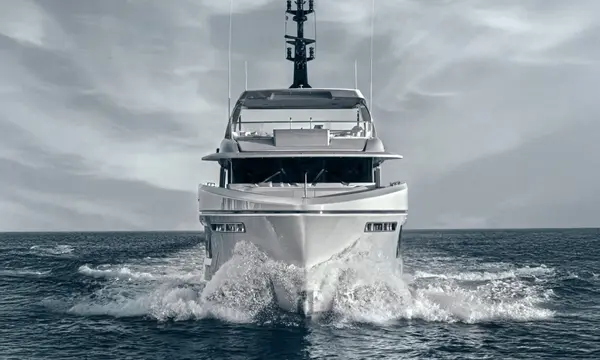
STELLAMAR's 35-metre RJ 115 design shows how expedition-grade engineering and Italian interior architecture can share one coherent owner-focused superyacht.
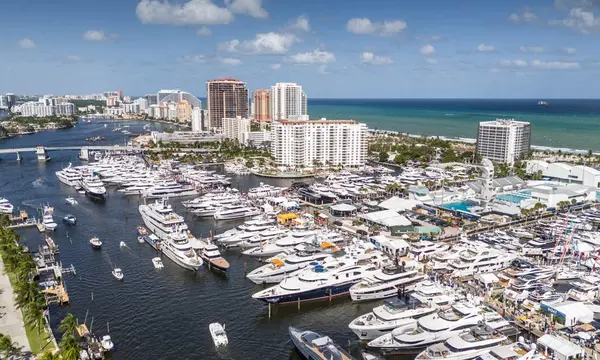
Fraser has published its October 23 Fort Lauderdale Forum programme for yacht captains, with sessions on crew welfare, regulation, insurance and safety.

Captain Whitney Reiter and Bosun Martin Dawson from 55m NEXT CHAPTER won the Northrop & Johnson crew tournament near Fort Lauderdale after more than …
Superyacht Guide
Continue into the wider Superyacht Guide.
Business opportunities · Superyacht Guide
Companies serving the superyacht market can discuss clearly identified advertising, sponsorship and business-profile opportunities. Commercial activity remains separate from independent editorial coverage.