
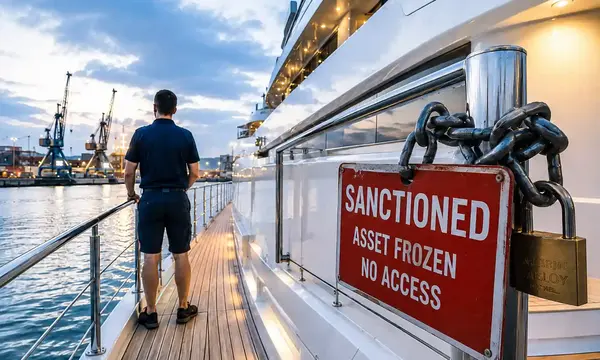
When Crew Are Caught in Sanctions: Life Aboard a Frozen Yacht
A sanctions freeze can immobilise a superyacht without making its crew sanctioned, leaving wages, contracts and daily operations caught between employment law and financial …
SeaKeepers has published attendance and fleet participation figures for its completed Fort Lauderdale Founders gala, recognising conservation leaders and yacht crews who support marine research.
The International SeaKeepers Society has reported the results of its Founders 2026 gathering, held on 29 October at The Ritz-Carlton in Fort Lauderdale during the boat show period. The organisation's account, distributed by British Marine on 5 November, says more than 240 guests attended. That information is new compared with the pre-event notices that identified the date and intended honourees. The figures describe attendance at a conservation and philanthropy event, not a count of scientific expedition participants or vessels carrying out research that evening. The distinction matters when assessing the actual contribution of the yacht community.
The post-event announcement also says representatives of more than 30 vessels joined the proceedings and that more than 60 captains, owners and crew members were present to receive recognition. These figures help put the society's DISCOVERY Fleet into focus. A yacht that contributes time, facilities or logistical assistance can support field scientists in locations where chartering a dedicated research vessel would be expensive or impractical. Yet attendance at a celebration does not automatically establish how many research days or scientific samples were generated. Such outcomes require separate project records, reports and results from the individual expeditions.
SeaKeepers uses privately owned vessels as platforms for research, conservation and educational work. The arrangement can bring scientists, conservation organisations and yacht crews together around access to marine areas, transport of personnel and practical support on the water. Participation ranges across different vessel sizes and programmes, so a 30-vessel presence at the event should not be confused with a total worldwide fleet size or a measure of yacht tonnage. For superyacht owners, the model demonstrates a possible use for an asset beyond private travel, while still requiring safe operations and an agreed scientific purpose.
There are important operational details behind that appealing idea. Scientific instruments may need electrical power, dry storage, deck space, safe deployment points and an agreed method of securing equipment underway. Researchers must work within the vessel's safety procedures, captain's authority and any applicable local permits. Guest itineraries and crew workload may create scheduling limits, particularly in the middle of a charter season. The presence of an established organisation can help coordinate suitable projects, but neither a charitable affiliation nor an attractive expedition description removes the need for technical assessment, insurance review and clear responsibilities.
SeaKeepers confirmed that Christina Lötter was honoured as its 2026 SeaKeeper of the Year. According to the event account, the recognition reflects fifteen years of support, leadership and engagement with the organisation. Her wider professional background spans more than forty years across yachtbuilding, hospitality, events, marketing and communications. The group's account credits her with helping strengthen international connections and with supporting its activities in the United Kingdom and South Africa. These are the stated grounds for the award; the announcement does not claim that she personally captained the research voyages or authored all the science undertaken through those programmes.
The significance for the yacht sector lies in the organisation required to sustain voluntary participation. Finding an available vessel is only one step; programme partners also need communications, fundraising, trusted professional relationships and coordination across countries. Lötter's recognition draws attention to that less visible infrastructure. It can be tempting to measure ocean conservation only through numbers of yachts or glamorous event photographs, but a useful long-term programme depends on scientists being able to plan and repeat work. The honour acknowledges leadership in that wider network while leaving the technical assessment of individual projects to their published evidence.
Dr Shelby Thomas received the 2026 NextGen Award. The society identifies her as founder of Ocean Rescue Alliance International and credits her with more than forty restoration initiatives involving coral reefs, seagrass, oysters and other marine habitats. The reported scale includes the deployment of more than 500 artificial reef structures and the outplanting of over 30,000 corals. Those are project activity figures attributed to the organisation, not an independent conclusion that every coral survived or that every artificial reef achieved its ecological objective. Long-term monitoring is essential if activity is to translate into demonstrated habitat recovery.
Thomas and SeaKeepers began collaborating in 2023, with joint research and monitoring expeditions examining reef restoration and fish habitat. This link is directly relevant to privately owned yachts because repeat access to particular sites can support observation over time, provided surveys are scientifically designed and properly permitted. A captain offering passage is not taking the place of a qualified ecologist, nor should a visitor assume that artificial reef placement can be conducted without authorisation. The strongest contribution may be dependable access and operating support, allowing specialists to collect comparable information and adjust their methods as conditions change.
The event also honoured Sandra Camper as its 2026 Artist of the Year. SeaKeepers describes the Swiss-born, Florida-based marine artist as drawing inspiration from scuba diving and underwater habitats. Her work gives the society another route to engage an audience that may not read technical scientific reports. Art can spark interest in reef health, biodiversity and the visual character of marine environments, especially among guests who encounter those environments through yachts and watersports. An artistic award, however, should not be presented as a scientific accreditation or evidence that a specific conservation intervention has produced measurable outcomes.
For yacht owners who collect art, the connection between visual culture and marine stewardship is potentially meaningful. A collection, an onboard exhibition or an artist's participation in a fundraiser can help bring environmental questions into conversations with guests. Responsible editorial coverage should identify the artist, the organisation's stated purpose and any financial mechanism actually disclosed. The Founders account confirms Camper's recognition and her conservation-themed work, but it does not quantify proceeds from artwork or disclose a particular funding allocation resulting from the evening. Such numbers should not be invented simply to make the story appear more commercially substantial.
The timing of Founders 2026 alongside the Fort Lauderdale International Boat Show placed the gathering near a concentration of yacht brokers, builders, owners, captains and technical businesses. A conservation organisation can use that overlap to reach people who operate vessels in diverse cruising regions. The venue reported in the post-event account was The Ritz-Carlton, Fort Lauderdale. This should not be confused with a claim that the ceremony took place aboard a particular superyacht or that all participating vessels were berthed together at one marina. The society's own event information remains the appropriate reference for organisational details.
Networking around a boat show can establish contacts but it is only the beginning of a useful contribution. A yacht owner interested in offering the vessel for research should consider timing, voyage area, crew skills, operational constraints and the scientific partner's requirements. Likewise, prospective donors should seek information on how a funded activity is managed and reported. SeaKeepers' post-event attendance figures show a significant gathering of people willing to support ocean-focused work. They do not establish that every attendee agreed to a future expedition, funded a specific restoration programme or joined the DISCOVERY Fleet.
Coral outplanting totals and the number of restoration projects are useful indicators of activity, but healthy marine ecosystems depend on outcomes that are harder to capture in a single figure. Coral survival, resilience to warming, fish recruitment, water quality and habitat condition need measurements at appropriate intervals. Vessel-supported science can contribute to those measurements through repeat visits, sampling and observational work. For superyacht owners, the strongest case for participation is therefore a project with defined scientific questions, qualified partners and a realistic plan for collecting and sharing findings, rather than a publicity opportunity alone.
There are also differences between education, advocacy, research and direct intervention. Taking young people to learn about marine ecosystems can be valuable without being equivalent to a coral restoration trial. A yacht supporting a survey may generate data even if it does not physically change the habitat. A fundraising event can support both, but it should be described as fundraising or recognition unless a more specific outcome is documented. SeaKeepers' account clearly presents its DISCOVERY Fleet as a means of supporting research and education, while the detailed scientific claims about Thomas's work are attributed to her restoration organisation.
The verified news on 7 November is that Founders 2026 has happened, more than 240 people attended, representatives of more than 30 vessels were present and more than 60 captains, owners and crew members received recognition. The account confirms the three named honourees and describes the scientific partnership behind the NextGen award. These are concrete developments after a period of advance publicity. They should be kept separate from future expedition schedules, new donations or scientific publications, none of which are established merely by the attendance numbers. Subsequent reports can examine these outcomes as they become available.
The broader value of the story is the role that private yachts can play when their operational capabilities are aligned with legitimate research needs. An owner may be able to contribute a vessel, an experienced crew or logistics in an area difficult for researchers to reach; a scientist may bring the protocols and expertise needed to make that access meaningful. Sustainable collaboration depends on both sides understanding the limits of the arrangement. SeaKeepers' annual gathering has recognised the people behind that work, while the measure of its continuing success will be the research, education and conservation results reported beyond the gala.
Original documentation: British Marine / International SeaKeepers Society. Supporting material: additional published source. This report is dated 7 November 2026. Future schedules and prices may change. Statements described as plans or claims have not been presented as completed outcomes or independently audited results.
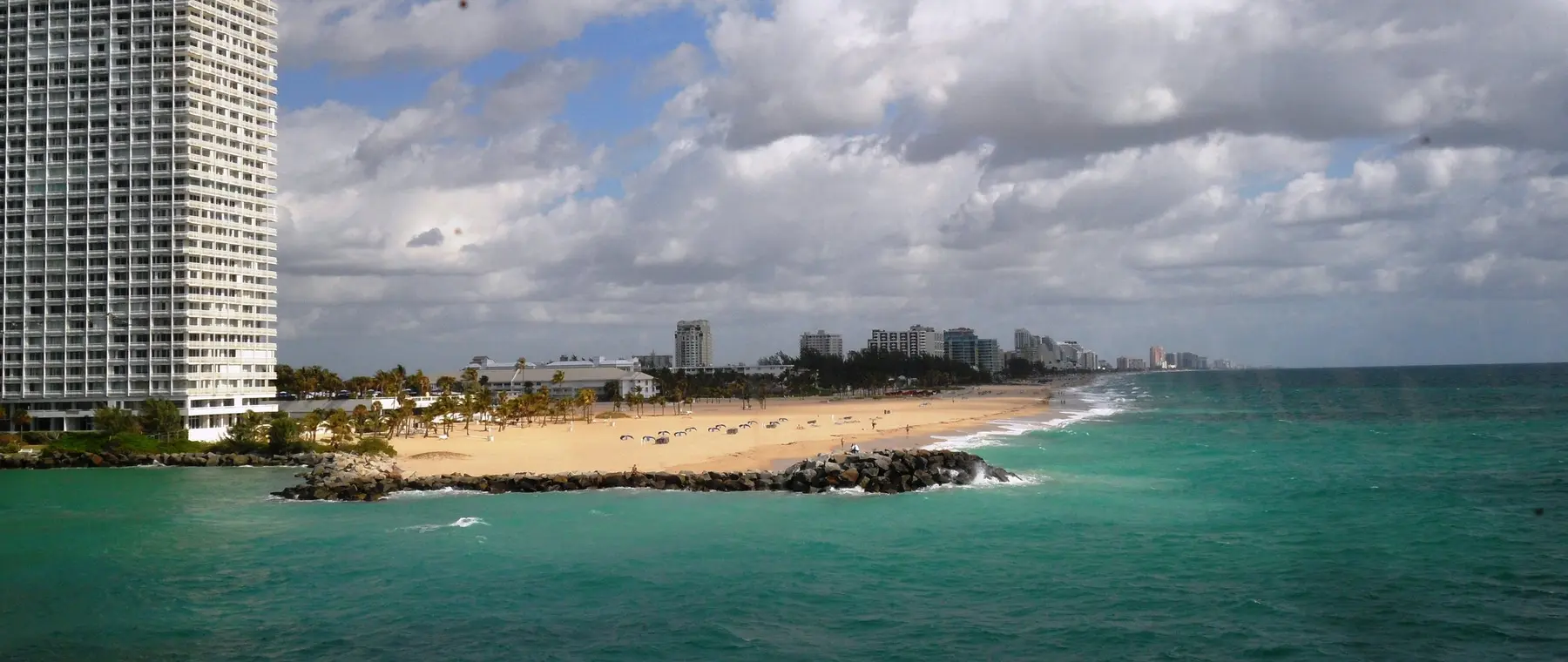
Editorial photograph: File:Fort Lauderdale Jetties on Stranahan River Strait Channel Beach Fort Lauderdale Lago Mar Beach Florida Atlantic Coast.jpg — Fort Lauderdale coastline and inlet — EgorovaSvetlana / Wikimedia Commons, CC BY-SA 4.0; cropped and resized; illustrative locality view, not a Founders gala image. Licensed under Creative Commons BY-SA 4.0. This credited illustrative photograph has been resized or cropped; it does not depict the contemporary event, property or meeting described in the report.
Continue reading
A sanctions freeze can immobilise a superyacht without making its crew sanctioned, leaving wages, contracts and daily operations caught between employment law and financial …

YachtCloud is highlighting how its ECHO system manages yacht network access, device registration and private casting across guest, crew and operational areas, aiming to …
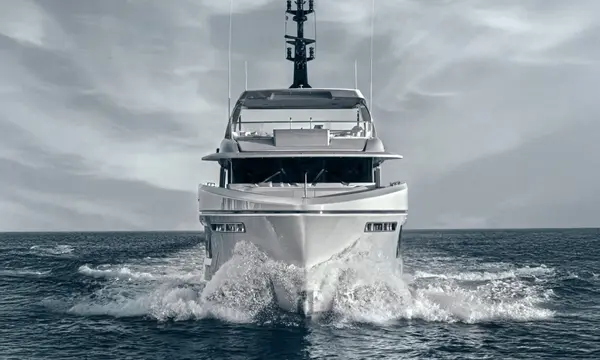
STELLAMAR's 35-metre RJ 115 design shows how expedition-grade engineering and Italian interior architecture can share one coherent owner-focused superyacht.
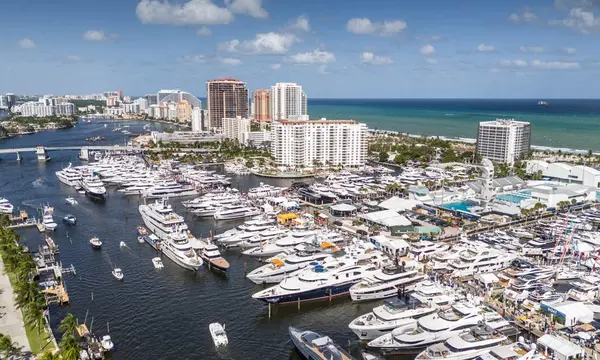
Fraser has published its October 23 Fort Lauderdale Forum programme for yacht captains, with sessions on crew welfare, regulation, insurance and safety.
Superyacht Guide
Continue into the wider Superyacht Guide.
Business opportunities · Superyacht Guide
Companies serving the superyacht market can discuss clearly identified advertising, sponsorship and business-profile opportunities. Commercial activity remains separate from independent editorial coverage.