Can You Finance a Superyacht? Yacht Loans and Marine Finance Explained
Can You Finance a Superyacht? Yacht Loans and Marine Finance Explained Yes. Private banks and specialist lenders offer yacht mortgage loans, pre-delivery finance and …
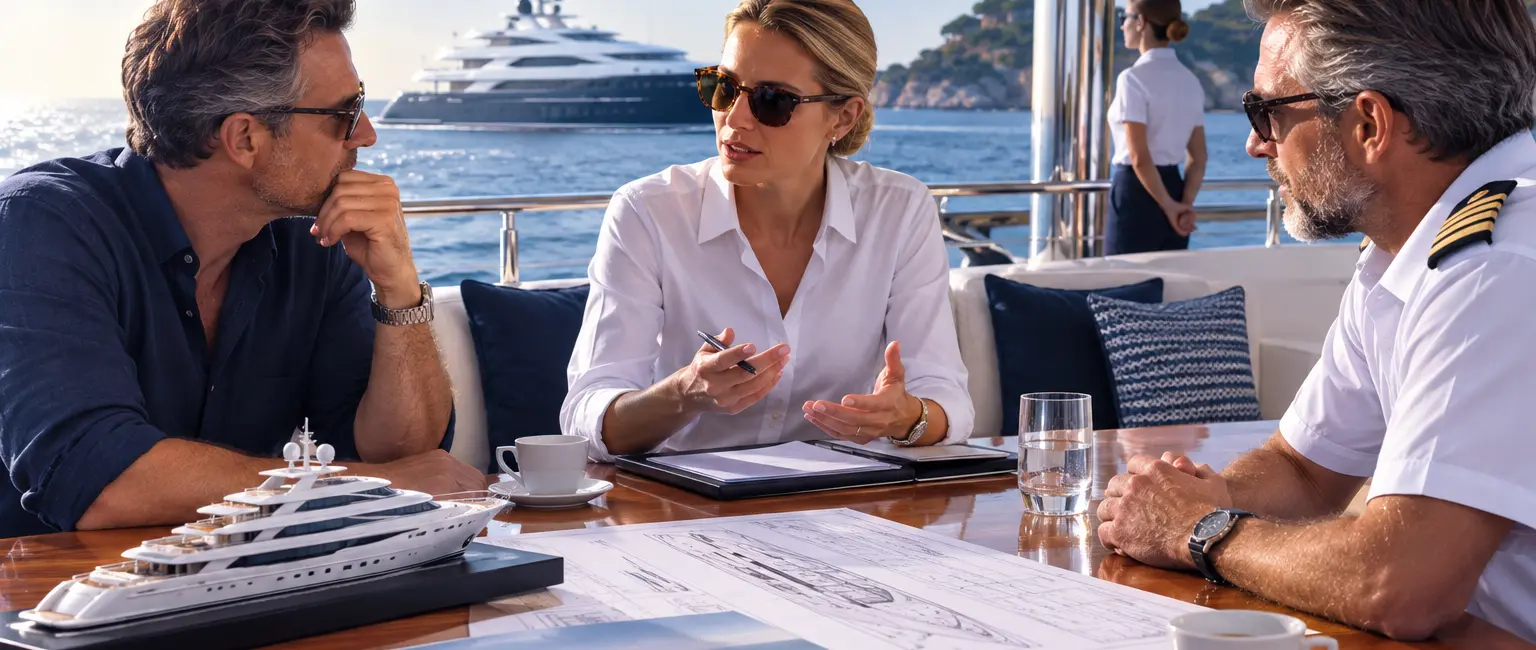
An owner’s representative protects the buyer’s interests through a superyacht purchase or build, while a yacht manager focuses on the vessel’s ongoing operation, compliance and administration.
Buying or building a superyacht surrounds an owner with professionals. There may be a broker, lawyer, surveyor, captain, naval architect, tax adviser, insurance broker, yacht manager and owner’s representative before the yacht has even changed hands. To a first-time buyer, several of those people can appear to be doing essentially the same job: giving advice, attending meetings, reviewing costs and explaining what needs to happen next.
They are not necessarily doing the same job, and the distinction matters. A buyer can commit tens or hundreds of millions of euros while assuming that somebody is protecting an interest that nobody has actually been appointed to protect. Job titles are useful, but the buyer’s real protection comes from defined responsibility, authority, independence and accountability.
The simplest distinction is that an owner’s representative is normally appointed to represent the owner through a particular transaction, construction project or refit, while a yacht manager is principally concerned with managing the yacht as an operating asset. In practice the boundary can overlap. Management companies may provide project-management and owner-representation services, while an experienced owner’s representative may remain involved after delivery. The important question is therefore not what somebody calls themselves, but what they have actually been engaged to do.
The role of the yacht owner’s representative has become increasingly professionalised. The Superyacht Builders Association, working with IAMI and the GUEST programme, established a dedicated Yacht Owner Representative Programme covering role responsibilities, new-build projects, management and compliance, and legal and administrative subjects. The programme reflects the breadth of a position that may be filled by people whose backgrounds include captaining, engineering, surveying, yacht management, brokerage and technical consultancy.
On a new build, the owner’s representative may become involved before the shipyard contract is signed and remain through design development, construction, commissioning, sea trials, acceptance, delivery and warranty. On a major refit, the representative can perform a similar function over a shorter and often more intense period. During an acquisition of an existing yacht, the representative may coordinate technical advisers, documentation, survey findings and the transition into ownership.
The yacht manager has a different centre of gravity. Yacht management is generally concerned with keeping the vessel safe, compliant, maintained, crewed, financially controlled and operational. Large management organisations commonly provide technical support, budgeting and accounting, crew administration, safety and security systems, regulatory compliance, planned maintenance and shore-side operational support. The manager may become one of the owner’s most important advisers, but that does not automatically make the manager the buyer’s independent representative in the purchase itself.
A capable owner’s representative should begin with the owner rather than with the yacht. The representative needs to understand how the yacht will actually be used, where it will operate, whether charter is contemplated, how many guests will normally be aboard, what level of technical complexity is acceptable and which aspects of the project genuinely matter to the owner. Those objectives then have to survive the pressures of design, construction, budget and schedule.
During a new build, the representative can help ensure that the specification corresponds with the contract, drawings correspond with the specification and changes are properly recorded and priced. Milestone payments should correspond with the contractual process and actual progress. Technical decisions should be considered not only for their immediate design effect but also for maintenance, crewing, reliability and future operating cost.
This is also where the owner’s representative becomes an information filter. An owner should not need to personally resolve every discussion between the shipyard, designer, engineers, captain and subcontractors. At the same time, important decisions should not disappear within a technical project team simply because they are complicated. A strong representative reduces hundreds of details into decisions the owner can understand without concealing their consequences.
The same principle applies to an existing-yacht acquisition. Survey findings can have consequences for the purchase price, insurance, future refit requirements and operating expenditure at the same time. The owner’s representative can help coordinate the specialists so that the buyer sees the combined risk rather than a collection of disconnected reports. Superyacht Guide’s earlier guide, The Superyacht Buyer’s Due Diligence Checklist Before Making an Offer, examines that wider pre-purchase process.
None of this means that an owner’s representative should replace specialist advice. The title does not automatically make somebody a marine surveyor, naval architect, lawyer, tax adviser or insurance specialist. The stronger model is often for the representative to identify what expertise is required, coordinate the relevant professionals and make sure their conclusions reach the owner in a useful form.
Once a yacht enters service, the risk profile changes. Maintenance must be planned, budgets monitored, crew employed and paid, certificates renewed, insurance requirements observed and suppliers controlled. Equipment fails, itineraries change and refits must often be planned long before machinery reaches the end of its useful life. Professional yacht management is built around managing those continuing operational demands.
The International Maritime Organization’s International Safety Management Code provides an important regulatory example of this distinction. Where the ISM Code applies, the responsible “Company” can be the shipowner or another organisation, such as a manager, that has assumed responsibility for operation of the ship. The Code requires responsibilities and authority affecting safety and pollution prevention to be defined and documented, together with the necessary shore-based support.
That responsibility can be substantial, but it is fundamentally an operational and safety-management responsibility. It does not by itself mean that the yacht manager has been appointed to negotiate the buyer’s purchase price, challenge a seller’s commercial position, question a shipyard’s contract terms or recommend that an owner abandon an acquisition.
Major yacht-management firms illustrate the operational breadth of the role. Burgess describes its yacht management service as covering operational management, technical support, crew, accounts, safety and security, with a dedicated yacht manager providing a link between the owner and the wider management team. Management can also begin well before delivery because crew structures, registration, safety systems, maintenance planning, insurance arrangements and financial controls need to exist before a new yacht becomes fully operational.
This is why a yacht manager can provide considerable protection to the owner without necessarily being the buyer’s principal advocate during the acquisition. The manager is protecting the operation, reliability, compliance and financial administration of the yacht. The owner’s representative is more likely to be protecting the owner’s position across the project or transaction.
The modern superyacht industry increasingly offers integrated services. One organisation may be able to introduce a yacht, broker the sale, provide technical services, supervise a refit, recruit crew, arrange charter and continue into long-term yacht management. There are genuine advantages to that model: information can move quickly, specialist knowledge sits within one organisation and the owner has fewer relationships to coordinate.
Integration is not automatically a conflict of interest. The difficulty begins when the owner cannot tell which role somebody is performing, whom they represent in a particular decision or how they are being paid. A brokerage business may have an economic interest in a transaction completing. A management company may hope to obtain a long-term management appointment after delivery. A technical consultant may have longstanding commercial relationships with particular yards or suppliers.
Those facts do not make the advice wrong, but they do make transparency important. The International Yacht Brokers Association’s Code of Ethics states that a member accepting employment as an agent should protect the interests of the client and should not accept compensation from more than one party without the knowledge of all parties. The principle is useful well beyond brokerage: representation, remuneration and competing interests should be explicit rather than assumed.
An independent owner’s representative should be examined with the same discipline. Buyers should understand who pays the representative, whether referral fees or commissions exist, whether there are other commercial relationships with the shipyard, broker or suppliers and whether the representative expects to obtain further work after delivery. Independence is strongest when it can be demonstrated rather than simply asserted.
For a substantial superyacht acquisition, the safest answer is usually not one person. A buyer’s broker may protect the buyer’s position in the market and negotiations where the agency relationship is clearly defined. A specialist yacht lawyer protects the contractual and legal position. A surveyor independently examines technical condition. Tax, corporate and insurance advisers deal with their respective specialist risks, while the future captain and yacht manager can test whether the proposed yacht will work operationally.
The owner’s representative can sit across those disciplines and protect the owner’s overall project interest. That potentially makes the representative the closest thing to a dedicated buyer-side guardian, but only where the representative has actually been appointed to perform that function and has sufficient competence, authority and independence.
Before making such an appointment, the buyer should establish who the representative legally represents, who pays them directly or indirectly, what decisions they are authorised to make, which matters remain with the lawyer, broker, surveyor, captain or manager, and what commercial relationships they have with other parties to the transaction. The engagement should also make clear how instructions are documented and which decisions require the owner’s personal approval.
There is another revealing test: would this adviser tell the owner to stop? A buyer already has numerous people capable of keeping a transaction or build moving. Genuine buyer protection requires somebody who can say that a price is unjustified, a contractual position is unacceptable, a variation is unreasonable, a milestone has not been achieved, a survey finding requires further investigation or the yacht simply does not suit the owner’s intended use.
The argument between owner’s representative and yacht manager becomes less important once the responsibilities are clearly defined. Some management companies have highly capable project teams able to provide owner-representation services. Some independent representatives have extensive yacht-management experience. The professions overlap because many of the skills overlap, but accountability should never become blurred.
Before a buyer commits substantial funds, there should be a written responsibility structure showing who advises on the acquisition, who negotiates, who reviews technical condition, who monitors construction or refit work, who can approve changes, who controls expenditure, who prepares the yacht for operation and who assumes continuing management responsibilities after delivery. The same principle applies to new construction, where Superyacht Guide’s guide to questions before signing a new-build contract examines the contractual controls an owner should establish before construction begins.
Clear allocation of responsibility prevents one of the most expensive failures in a complicated yacht project: everybody believing that somebody else was checking. A good owner’s representative protects the owner’s position through the transaction or project. A good yacht manager protects the yacht’s safe, efficient and professionally controlled operation. Many owners will need both, but they should know precisely where one mandate ends and the other begins.
This article is an editorial guide and not legal, tax, regulatory or investment advice. The exact responsibilities of any representative, manager or adviser depend on the engagement terms, the yacht, its intended operation and the applicable jurisdiction.
Continue reading
Can You Finance a Superyacht? Yacht Loans and Marine Finance Explained Yes. Private banks and specialist lenders offer yacht mortgage loans, pre-delivery finance and …
Choosing a superyacht flag is not a post-purchase formality. The registry can shape private or commercial use, technical compliance, crewing, finance and the wider …
Where Is the Best Place to Buy a Superyacht? There is no single best country or boat show for every buyer: the strongest market …
What Paperwork Do You Need When Buying a Superyacht? A superyacht acquisition requires far more than a bill of sale: buyers normally need a …
Superyacht Guide
Continue into the wider Superyacht Guide.