
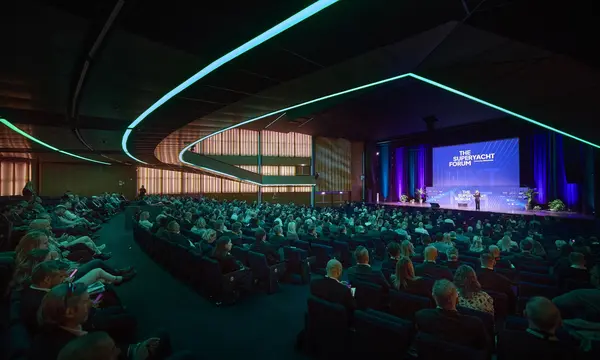
SYBAss Study Sets Growth and Capacity Agenda at Superyacht Forum Closing
The Superyacht Forum closes with a SYBAss economic study highlighting market growth, regional demand and constraints on large-yacht production capacity.
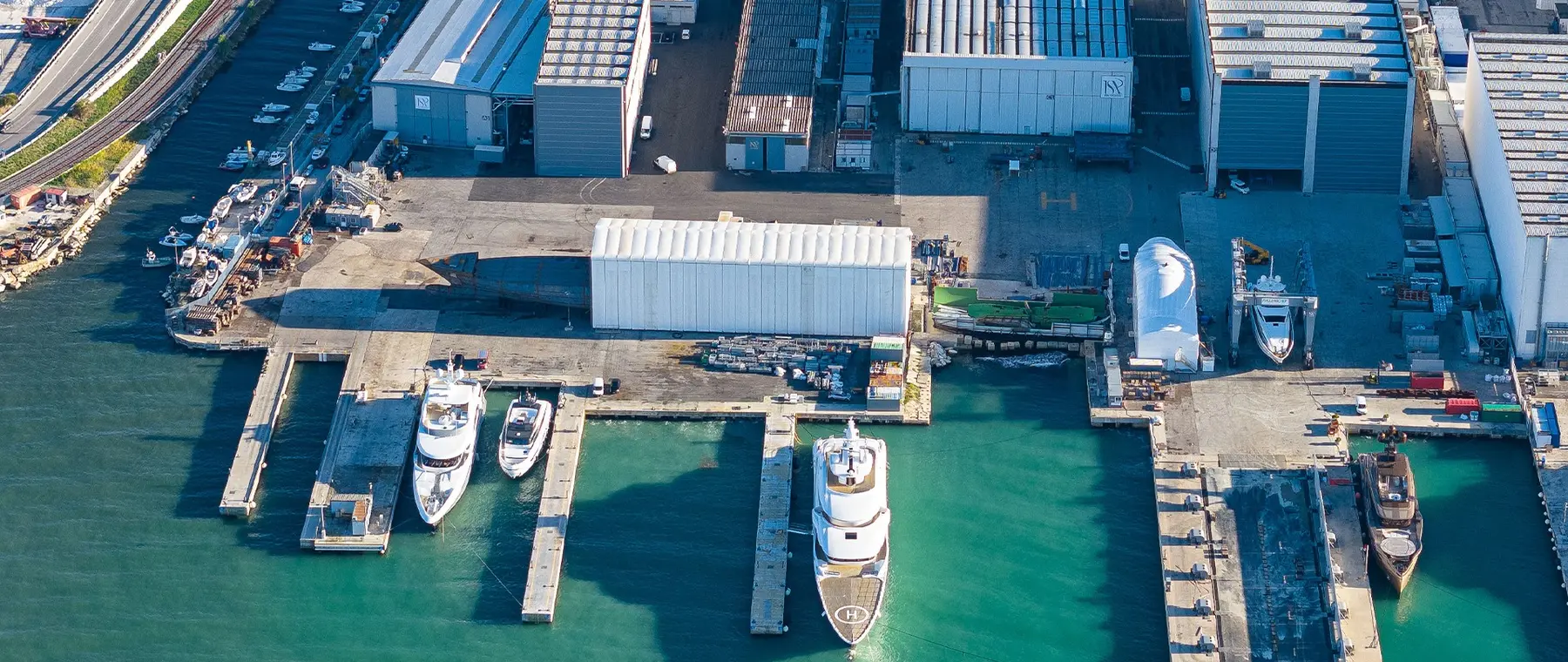
Palumbo Superyachts Ancona shipyard aerial view in November expansion press release
Palumbo Superyachts secures approval for a 30-year concession at Ancona's former Tubimar site, extending its planned large-yacht construction capacity.
Palumbo Superyachts announced on 18 November 2026 that the Central Adriatic Sea Port System Authority had approved a thirty-year concession for approximately 14,200 square metres of additional space at the former Tubimar site in Ancona. The approval is the latest identified step in the Italian shipbuilder's efforts to extend its production network and accommodate larger and more complex vessels. Its importance is not that the additional area is currently available to accommodate a new yacht. Palumbo explicitly states that the Port Authority's planned demolition and redevelopment must be completed before the new areas become available. The distinction between a concession and a working production facility is central to understanding the announcement. The concession establishes a basis for the future use of a defined area; the physical development, installation of production equipment and integration of the site with the shipyard's existing operations will determine its eventual contribution to capacity. Neither a completion date nor the cost of developing the additional Ancona facilities is specified in the release.
The former Tubimar area has also attracted attention because of expansion plans elsewhere in the Port of Ancona. Palumbo's latest announcement concerns its own concession, operations and plans rather than those of another yacht builder. Ancona hosts a substantial concentration of industrial activity related to yacht construction, maintenance and the provision of specialist services. The position of a production site within a working port influences access to the water, transport of materials and the coordination of vessel movements. Additional land may provide an opportunity to reorganise some of those activities, but its usefulness depends on how it is configured. A prospective client cannot infer the dimensions of future construction halls, the number of covered assembly positions or the lifting capabilities available from the land area alone. Those details would require a more developed description of the proposed facilities. What the shipyard has confirmed is that the concession will be used to reinforce its production capacity and support the construction of increasingly complex large yachts. The planned redevelopment is therefore a relevant consideration when examining the future supply of specialist building capacity on the Adriatic coast.
Palumbo identifies six substantial ISA projects among the construction programmes currently associated with its Ancona and Savona operations: the Gran Turismo 100m, Gran Turismo 80m, ISA Custom 73m, Gran Turismo 68m, Classic 65m and Spectre 62m. Its portfolio also encompasses Columbus and EXTRA projects and the Mondomarine brand. The listed vessels demonstrate the scale of the industrial undertaking, even though the release does not assign each project to a production hall or disclose a complete schedule of their future movements. The production arrangements required for a yacht approaching one hundred metres are considerably different from those associated with the construction of a smaller production yacht. The builder must coordinate the work of specialist suppliers, structural fabricators, engineering teams and interior contractors while retaining sufficient access to all relevant parts of the vessel. A larger order book therefore requires more than the accommodation of additional hulls. It may increase the complexity of scheduling resources and of sequencing activities within each stage of construction. The announcement describes the additional space as a way of supporting this industrial work rather than setting out a new range of yacht designs.
The production of a custom superyacht involves overlapping activities that are not identical from one vessel to the next. Structural construction, machinery installation, pipework and electrical systems, accommodation fit-out and exterior finishing may progress at different speeds according to the project. Some stages benefit from large, open working areas, while others depend on controlled environments and access for specialised contractors. An additional building position is not necessarily useful at all times if the associated assembly, storage or transport facilities are unable to support it. Palumbo emphasises flexibility across its production network as an objective of its investment programme. That flexibility can be particularly important when several steel and aluminium yachts are being built concurrently. It allows the group to consider how work may be organised between locations, although the announcement does not establish that specific construction tasks or projects will be moved. An owner commissioning a vessel should distinguish the existence of a larger production estate from a guaranteed building slot. Actual availability must be evaluated in relation to the resources required by the individual project and the obligations already undertaken by the shipyard.
The shipbuilder describes Savona as part of the same industrial network, with several ISA and Columbus projects in construction. Its account also emphasises the role of the facility in after-sales support, maintenance and refit. This pairing of new construction and continuing technical support is relevant to superyacht owners because the relationship with a builder may extend well beyond the initial handover. A vessel of this scale has an extensive inventory of machinery, specialist fittings and custom-designed elements that may require attention periodically throughout its operational life. Some work can be undertaken at appropriate facilities elsewhere, while other activities may benefit from the participation of the yard that originally managed the design or construction. The shipyard's description of Savona establishes its intended role within the group but does not specify the availability of a particular refit berth or service arrangement. Owners should evaluate actual facilities, timescales and contractual terms for their individual vessels. An integrated network may provide additional possibilities for support, but the responsibilities of each business and location still need to be understood when maintenance is planned.
Palumbo also reports that development work at its Ortona shipyard is continuing, with operations expected to commence in 2027. According to the statement, the facility will focus on the construction of large steel and aluminium yachts. This is a different project from the latest Ancona concession and should not be treated as evidence that the former Tubimar area will also be ready for yacht construction during 2027. The proposed industrial network links locations with different facilities and roles, potentially giving the shipbuilder additional options for allocating orders and managing its own resources. Such an approach requires effective coordination of engineering documentation, material logistics, quality assurance and project management. Where work progresses across more than one location, the transfer of information and the availability of compatible working practices can become as important as the transport of physical components. The release does not identify which specific yachts will be constructed at Ortona after opening or explain the proposed division of work between each yard. Those developments should become clearer as the investment proceeds.
Palumbo cites a strong order book and reports that five yachts across its product segments were launched during 2026. These are statements from the shipbuilder, not an independently audited assessment of its commercial performance. A count of launches is distinct from a count of deliveries, and the two should not be used interchangeably. Yachts that have entered the water may require further installation, commissioning, testing and regulatory acceptance before they are handed over. Similarly, a new concession does not establish how many additional vessels a company will be able to deliver in a given year. The mix of yacht sizes, the requirements of the contracts and the way construction is organised all influence the relationship between industrial space and completed projects. Prospective clients may consider the company's infrastructure investment alongside its experience with projects of comparable scale and complexity. They should also examine the arrangements governing the specific vessel, including the proposed programme, the responsibilities of the construction team and the provisions for evaluating progress. The announcement establishes a direction for development rather than providing a quantitative forecast of additional annual production.
The approval of the thirty-year concession represents an identifiable infrastructure commitment associated with Palumbo's existing Ancona production operations. The next steps involve the completion of the Port Authority's redevelopment work and the eventual use of the new area by the shipbuilder. Until a more detailed programme is available, it would be premature to assign a specific commissioning date or describe a final layout for the site. Superyacht Guide has not independently inspected the concession area or assessed the group's financial commitments. The significance of the news lies in the relationship between increasing yacht complexity and the industrial infrastructure necessary to support it. Large custom projects depend on physical production space, skilled people, specialist equipment and a supply chain capable of delivering components at the appropriate time. Palumbo's account identifies Ancona, Savona and Ortona as important parts of its strategy for accommodating that work. For the wider industry, the development is a useful example of a shipbuilder addressing production capacity through long-term investment rather than treating the construction of each yacht as an isolated undertaking.
Primary source: Palumbo Superyachts official news release, 18 November 2026.
Palumbo Superyachts / official 18 November 2026 news release. Existing Ancona shipyard shown; not a rendering of the completed concession development. Official source.
Continue reading
The Superyacht Forum closes with a SYBAss economic study highlighting market growth, regional demand and constraints on large-yacht production capacity.
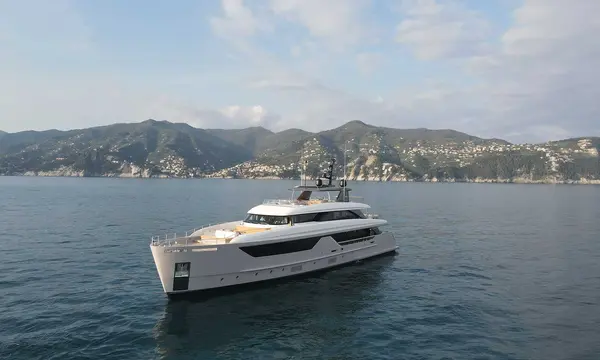
The 40.7m Sanlorenzo ANDIAMO has reported June and August 2027 Greek charter windows, with published weekly base rates of €209,000 to €239,000 plus expenses.
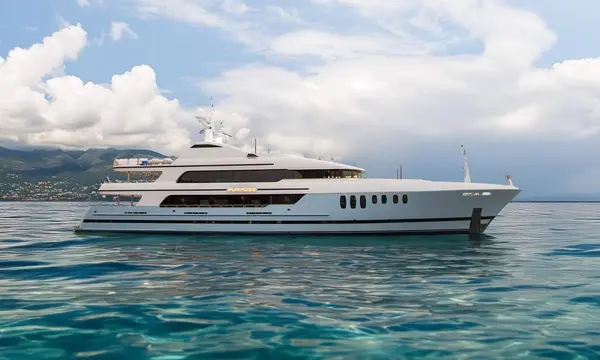
West Nautical confirms its new central agency for 55m Trinity PURPOSE, as five proposed two-week Pacific charter itineraries are outlined for 2026–2027.
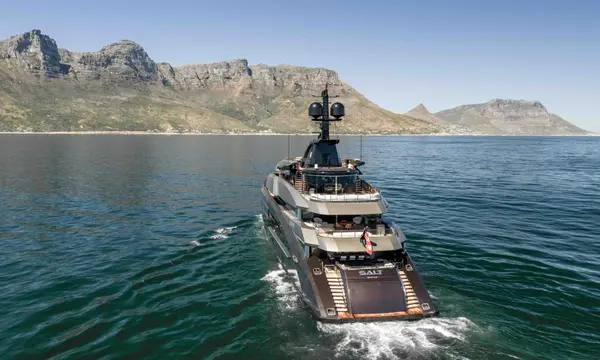
The 61.9m CRN SALT, refitted in 2026, is offering a five percent Caribbean charter incentive with a contract-signing deadline of 1 December.
Superyacht Guide
Continue into the wider Superyacht Guide.
Business opportunities · Superyacht Guide
Companies serving the superyacht market can discuss clearly identified advertising, sponsorship and business-profile opportunities. Commercial activity remains separate from independent editorial coverage.