
Marine Results Gains Unrestricted RINA Approval for Superyacht Rigging Surveys
Marine Results International has become a RINA Approved Service Supplier for mast and rigging surveys with no restriction on yacht size or rig type, …

Papillon Milano 1990 founder Luca Legnani has explained how high-end catering practices could inform hospitality aboard yachts, placing provisioning, staff coordination and food-waste prevention ahead of the final moment of service. In a report published by PressMare on 6 November 2026, Legnani described the work involved in preparing receptions and the need to understand guest preferences before ingredients are purchased. His remarks concern lessons from an established event-catering business and possible applications to the yacht sector. They do not announce that Papillon has taken over catering on any named superyacht or secured a new yacht-management contract.
Papillon Milano 1990 founder Luca Legnani has explained how high-end catering practices could inform hospitality aboard yachts, placing provisioning, staff coordination and food-waste prevention ahead of the final moment of service. In a report published by PressMare on 6 November 2026, Legnani described the work involved in preparing receptions and the need to understand guest preferences before ingredients are purchased. His remarks concern lessons from an established event-catering business and possible applications to the yacht sector. They do not announce that Papillon has taken over catering on any named superyacht or secured a new yacht-management contract.
The company's official website independently describes more than three decades of event-catering activity and publishes its approach to seasonal food, resource management and social responsibility. The new significance for yacht professionals is the operational comparison: service may appear effortless to guests, but depends on preparation, correct storage, trained people and a procurement chain that works under pressure. A superyacht has its own galley, crew arrangements and operating requirements, so methods drawn from shore-based events must be adapted rather than copied uncritically. The interview is a starting point for that conversation.
Legnani points out that a reception lasting only a few hours may require extensive work before guests arrive. Menus must be designed, products ordered and transported, equipment arranged and teams briefed. That resembles a yacht's hospitality cycle in several respects. A chief steward or chef may need to coordinate guest information, delivery slots, storage and service while the vessel's timetable continues to change. Visible service is only one part of the job, and failures in the less visible stages can affect the guest experience even when the final presentation is attractive.
There are important differences between the two settings. A land-based caterer may be able to draw upon kitchens, vehicles and local venues, whereas a yacht's galley and cold stores have finite space. A vessel may be at anchor, underway or in a port where deliveries need advance clearance. Crew numbers and working arrangements differ from event teams, and food hygiene responsibilities follow the yacht's applicable requirements. The useful lesson from the interview is the value of advance coordination, not an assumption that shore-side procedures can simply be imposed onboard without review.
The interview describes luxury as an individual experience built around guests, with culinary quality and personal attention remaining central even when a business also pursues environmental objectives. On a yacht, that can mean understanding dietary requirements, allergies, favourite dishes, meal timings and the expectations associated with different occasions. The captain and interior department need enough information to plan appropriately without treating private guest preferences as material for publicity. A well-designed provisioning list depends on the real itinerary and what the guests actually want to eat.
Preferences also change with the type of cruise. An informal family passage may need a different service rhythm from a weekend entertaining guests or a large gathering alongside. Menus that demand elaborate preparation can compete for galley space and crew time, particularly when water, power or refrigeration capacity is constrained. Good planning should therefore involve the chef, interior lead and operational decision makers before the yacht departs. A recommendation to personalise service does not justify ignoring safety, allergies, crew rest or the vessel's practical limitations.
Legnani describes Papillon's approach to menus that give considerable prominence to vegetables, grains and pulses while retaining room for animal products. The company's official sustainability page reports an approximate 80:20 balance between plant-origin and animal-origin ingredients in its broader offering. That is a statement about Papillon's own catering style, not a nutritional requirement for all yachts or proof that every meal should follow the same proportions. It is also not an independently established measurement of the environmental footprint of any particular event.
For yacht chefs, ingredient-led creativity may broaden choices without diminishing quality. Seasonal vegetables, carefully prepared grains and regional produce can contribute to a menu designed around the guests and the places being visited. But nutrition, allergies and individual preferences remain important, and provisioning in remote areas is shaped by what suppliers can reliably provide. The interview encourages a flexible approach to luxury dining; it does not establish a universal ideal menu or make a measurable claim about fuel, water or emissions savings aboard a yacht.
The most direct yacht-related advice in the interview concerns building a network of suppliers across possible ports of call. Legnani uses the example of planning around more potential destinations than the itinerary ultimately requires, so that a crew has alternatives when the route changes. That can be useful for a vessel cruising between marinas and anchorages, where weather, guest decisions, local availability or technical requirements may alter the original plan. Contact details and delivery arrangements for a wider group of ports can provide resilience without committing to unnecessary purchases.
However, a list of suppliers is only the beginning. Crews must verify quality, lead times, delivery restrictions, customs issues where relevant, refrigeration arrangements and the ability to meet specific dietary requirements. Ordering too widely can itself generate waste, so flexibility should be paired with clear approval and cancellation procedures. The interview offers a method for thinking about uncertainty, not a promise that every destination will have a complete provisioning service. Actual capacity must be checked with the operator before the yacht relies on it.
Papillon's sustainability material emphasises the prevention of surplus food through careful planning and the use of short supply chains where feasible. Its website also describes participation in Food for Good, a programme intended to connect suitable surplus from events with organisations able to recover it. The interview reinforces the priority of producing and buying an amount that matches the occasion. These are company descriptions of a shore-based programme; they should not be presented as evidence that a yacht can automatically donate food at every port or use the same arrangements internationally.
For a yacht, waste prevention starts with an accurate guest count, an understood itinerary and realistic assessments of storage and shelf life. Crew should use established food-safety practices, track perishables and avoid purchasing quantities justified solely by a desire for choice. Any disposal or redistribution of food has to comply with local requirements and the practical availability of recipients. A programme that works for a Milan event company may offer ideas, but legal, hygienic and logistical details differ at sea. The realistic objective is better planning backed by measurement and safe procedures.
Papillon's official site lists ISO 9001, ISO 14001 and ISO 20121 management-system certifications, covering quality, environmental management and sustainable event management respectively. The certifications provide context for the process-based approach Legnani discusses. They do not establish that a particular yacht, galley, chef or catering service is certified under those standards. Readers should be precise about which organisation holds a certificate, its actual scope and whether it remains current. The presence of a management system also does not replace direct inspection of delivered food and service quality.
For crew, the larger principle is traceability. Purchase instructions, delivery checks, storage temperatures, allergen information, preparation methods and waste records can help a team identify problems before they become guest-facing failures. A structured approach should remain proportionate to the yacht and its operation: paperwork that no one uses adds little value, while a clear and current procedure can help during crew rotation. The interview illustrates why reliable hospitality depends on repeatable processes rather than a one-off display of culinary skill.
The founder's discussion links quality with care for the people delivering the service. This is relevant onboard because a complex entertaining programme can concentrate pressure on the chef, interior team and deck crew, especially when arrangements change at short notice. Advance planning allows tasks to be assigned, equipment prepared and realistic service times agreed. A guest's experience is affected by coordination among departments, not just the food leaving the galley. Responsible service management should recognise the working conditions and competence of those carrying it out.
The yacht environment adds an important safety dimension. Crew may need to handle equipment in motion, maintain galley hygiene during passages and accommodate demands alongside other operational duties. A banqueting company's best practice can provide ideas, but it is the vessel's own management and competent officers who decide how work is organised. Training and staffing requirements cannot be inferred from one interview. The relevant takeaway is that quality should be built around the whole team rather than attributed entirely to the individual presenting the final plate.
The most useful outcomes of Legnani's comments can be expressed as questions: are guest preferences known in time, is the menu realistic for the itinerary, do alternative suppliers exist, are storage limitations understood and is the work divided clearly among trained crew? These questions connect hospitality with yacht management. They are applicable without pretending that Papillon has published a new mandatory standard or that its procedures are already in use on a particular vessel. Captains and managers should adapt general ideas to the vessel's flag, operating profile and established safety processes.
The recent interview broadens the discussion of superyacht luxury beyond presentation and towards the systems that make good service possible. Papillon's publicly described catering experience offers a source of practical thinking, particularly on purchasing, seasonality and waste prevention. It remains a shore-based company's perspective, not an audited assessment of the international yacht catering market. Further value would come from documented onboard case studies, interviews with working yacht chefs and measurable evidence of what changes are effective at sea. For now, the news is a concrete professional discussion with clearly defined limits.
First-hand published interview: 6 November 2026 interview; corroborating company sustainability disclosures: additional first-party or industry material. Report dated 9 November 2026. Announcements and operating plans may change; editorial interpretations are distinguished from confirmed facts.
Editorial photograph: photographer and original image — Madeline Liu / Unsplash License; illustrative March 2026 restaurant table setting, not Papillon catering or an onboard yacht reception. Cropped and resized under the Unsplash License. Illustrative photograph only; it does not show the 2026 event or named product.
Continue reading
Marine Results International has become a RINA Approved Service Supplier for mast and rigging surveys with no restriction on yacht size or rig type, …

How owner deposits and stage payments help fund superyacht construction, why the model carries risk and what real shipyard cases teach buyers.
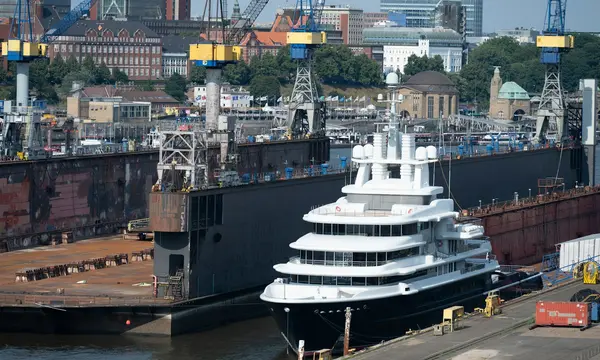
Oceanco has reported that the 72-metre expedition support yacht Indratus has begun sea trials following an extensive refit at its Zwijndrecht facilities in the …
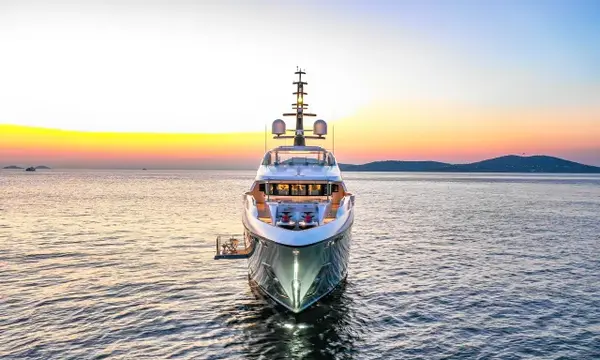
Blue Oceans Yachting has confirmed the sale of the 47.4-metre Bilgin MOONRAKER, with Ami Griffith Ira representing the buyer and IKONIC Yachts representing the …
Superyacht Guide
Continue into the wider Superyacht Guide.
Business opportunities · Superyacht Guide
Companies serving the superyacht market can discuss clearly identified advertising, sponsorship and business-profile opportunities. Commercial activity remains separate from independent editorial coverage.