Company
Rolls-Royce Power Systems
Explore the company profile and related Superyacht Guide coverage.
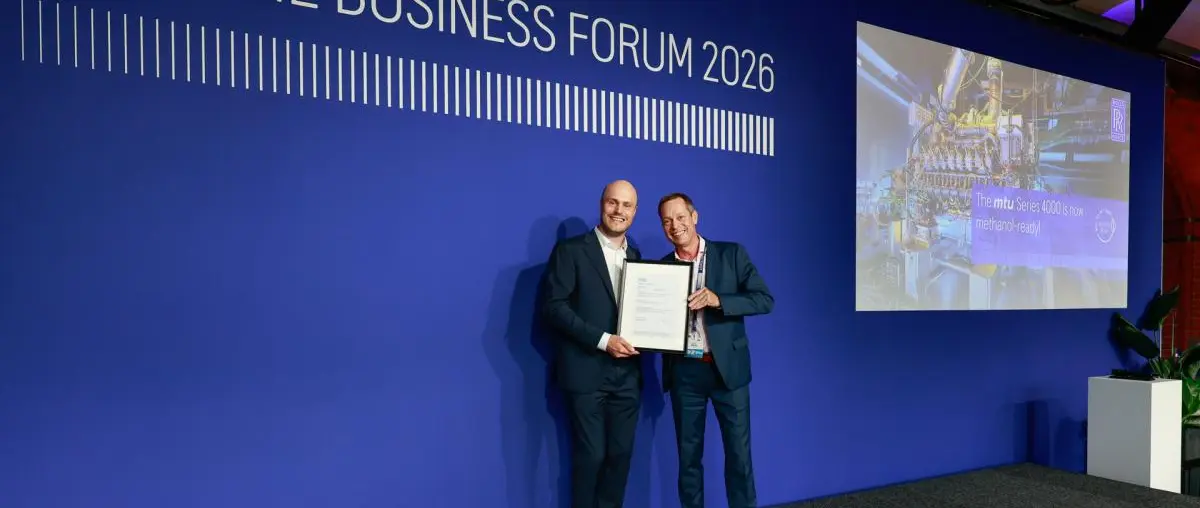
Rolls-Royce has secured DNV Methanol Readiness for current mtu Series 4000 marine engines after more than 5,000 hours of methanol testing, preserving a future dual-fuel conversion route for mega yachts.
Rolls-Royce Power Systems has secured a DNV Methanol Readiness Certificate for its current mtu Series 4000 marine engines, giving shipyards and owners a defined route toward future dual-fuel operation. The certification covers the technological concept needed to allow newly built propulsion systems to be converted later for methanol use rather than forcing an immediate fuel choice at the newbuild stage.
The announcement is particularly relevant to the large-yacht sector because Rolls-Royce explicitly identifies mega yachts among the applications it expects to benefit from the technology. For owners planning vessels with long operating lives, the ability to specify a propulsion platform today while preserving a later alternative-fuel pathway could become an important part of machinery-selection and residual-value decisions.
Rolls-Royce says it has completed and analysed more than 5,000 operating hours using methanol in both single-fuel and dual-fuel modes across its test facilities. That work follows a 2025 test in Friedrichshafen in which the company ran what it described as the world's first high-speed marine engine powered exclusively by methanol.
The DNV certificate does not mean every current Series 4000 installation can simply switch fuel without engineering work, but it confirms the underlying retrofit concept for newly built systems prepared around that pathway. In practice, the value is the option to defer a major fuel decision until green methanol availability, bunkering infrastructure and operating economics are clearer.
Large yachts can remain in service for decades, while propulsion technology and emissions rules can change substantially during that time. Designing machinery spaces, fuel systems and engine architecture around future conversion can therefore reduce the risk that a new yacht becomes locked into one fuel strategy before the market has settled.
Rolls-Royce says green methanol can deliver significantly lower nitrogen-oxide and particulate emissions than diesel and a lower well-to-wake carbon footprint when the fuel is produced sustainably. The actual lifecycle benefit will depend on how the methanol is made and supplied, so owners will still need to distinguish renewable methanol from fossil-derived alternatives when assessing emissions claims.
The methanol programme sits alongside Rolls-Royce work on other lower-carbon fuels rather than replacing them. The company has already approved key mtu engine series for hydrotreated vegetable oil and has also completed laboratory testing of renewable synthetic e-diesel, giving operators several possible routes depending on vessel profile and fuel availability.
For yacht designers, that broader approach points toward machinery rooms designed around flexibility rather than a single technology. Batteries, variable-speed generation, conventional diesel, HVO and future methanol capability can all form parts of a system architecture, with the optimum combination depending on hotel loads, range, cruising pattern and the owner's tolerance for complexity.
The immediate significance of the DNV certificate is therefore planning certainty rather than the arrival of a mass-market methanol yacht engine tomorrow. Rolls-Royce says the retrofit route is intended to give operators confidence that Series 4000 propulsion selected now can be prepared for future conversion once methanol is sufficiently available.
That distinction matters in the superyacht market, where propulsion decisions are made years before delivery and vessels may subsequently operate worldwide. Methanol readiness gives owners and shipyards another option to consider at specification stage without assuming that global yacht bunkering infrastructure will develop at the same pace in every cruising region.
Explore
Go deeper into the yachts, companies, events and destinations directly connected to this article.
Company
Explore the company profile and related Superyacht Guide coverage.
Continue reading

Rolls-Royce has expanded its mtu yacht portfolio with variable-speed Series 2000 gensets and a new IMO Tier III SCR system. The company claims up …
IMO uses a carbon conversion factor of 3.206 tonnes of CO₂ for each tonne of diesel or gas oil consumed. It is a useful …

Corvus Energy launches Blue Whale NxtGen Power, a high-power LFP marine battery system developed with BYD Energy Storage for demanding vessel applications.
Intellian has given its new GMDSS Console a European debut at SMM while also showing the 65cm VS60 ViaSat-3 terminal and OneWeb maritime flat …
Superyacht Guide
Continue into the wider Superyacht Guide.