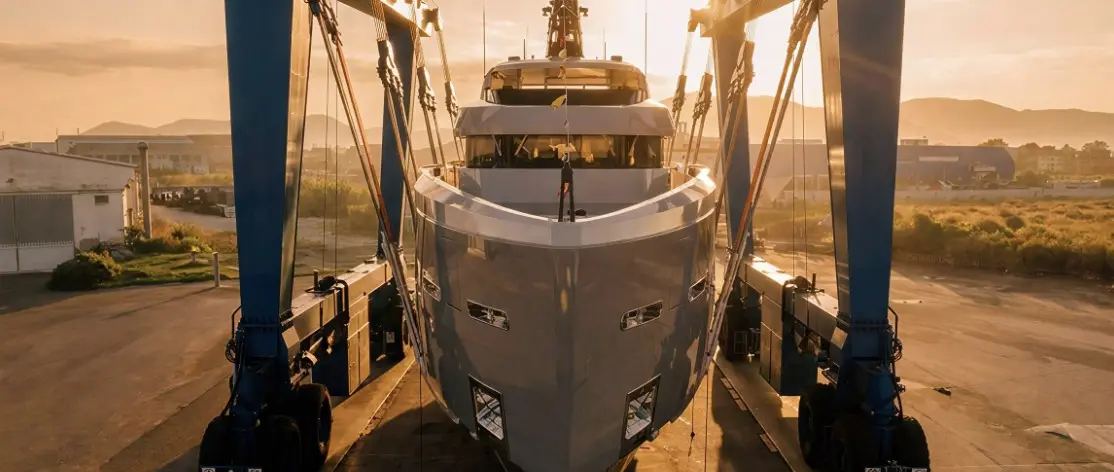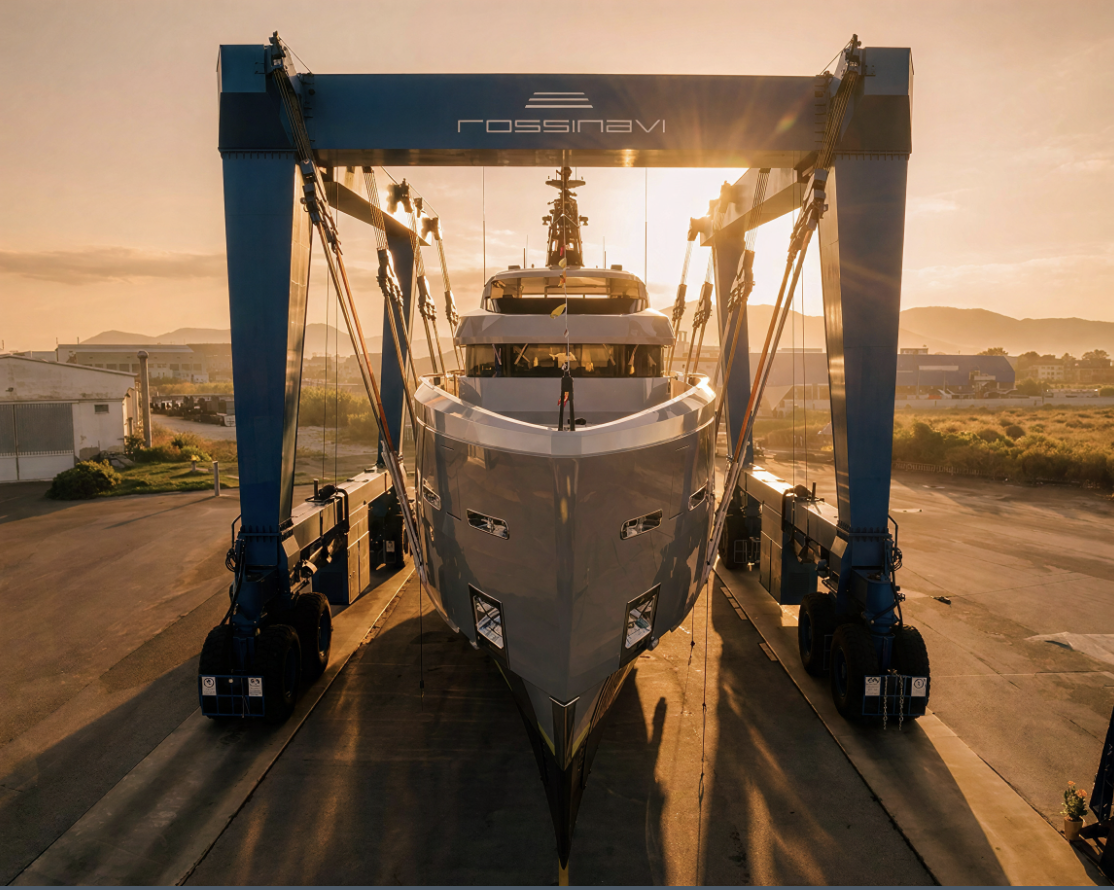
Rossinavi SEAZENS at launch in Viareggio, 12 November 2026 — official shipyard press photograph

News

Rossinavi Launches 47.5m SEAZENS as an Adventure Yacht Designed Around Tenders and Exploration

Nov. 13, 2026 Launch

Rossinavi SEAZENS at launch in Viareggio, 12 November 2026 — official shipyard press photograph

Rossinavi launches the 47.5m SEAZENS at Viareggio, combining a steel-hull adventure platform, flexible guest accommodation and specialist tender-handling areas.

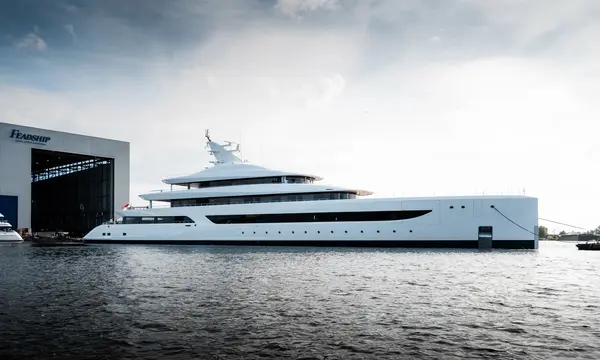
A launch that begins with the owner's activities Rossinavi has launched the 47.5-metre motor yacht SEAZENS in Viareggio, presenting the former Project Berserk 47 as its first purpose-conceived adventure yacht. The launch was reported on 12 November 2026 in a detailed shipyard announcement distributed by PressMare. Rather than describing a conventional Mediterranean pleasure yacht with a few additional toys, the project puts tender deployment, equipment storage and changing onboard uses close to the centre of the design. Its principal dimensions place SEAZENS firmly in the superyacht category. The yacht has a steel hull, aluminium superstructure and a reported volume below 500 GT, an important design constraint for a vessel intended to combine substantial guest facilities with expedition-style equipment.

The team behind the custom platform The exterior design comes from Rossinavi, with naval architecture attributed to Arrabito Naval Architects. The Touch Studio developed the interiors, while Italian Yacht Group acted as the owner's representative throughout the project. These responsibilities are distinct. An exterior designer establishes the visual and functional arrangement; a naval architect examines the underwater form, stability and structural performance; the interior team interprets how guests occupy and experience the spaces. Owner representation helps coordinate expectations and information between the client and the build team. A launch confirms that the yacht has reached a major physical milestone, but does not by itself certify final delivery, complete trials or acceptance by the owner. Those stages should be reported separately when independently confirmed.

Adventure means more than rugged styling SEAZENS has a striking, angular profile, a near-vertical bow and a restrained, purposeful exterior language. Those aesthetic decisions communicate intent, but the more substantive test of an adventure yacht is what its owner can actually do when far from a familiar marina. Equipment must be stowed securely, launched safely and maintained without obstructing guest circulation. The yacht's draft is reported at less than three metres, potentially widening the choice of anchorages compared with deeper-draught vessels, while not removing the need for proper hydrographic planning. A vessel's design can support remote cruising, but safe access ultimately depends on water depth, local conditions, charts, weather, operating procedures and the captain's judgement.

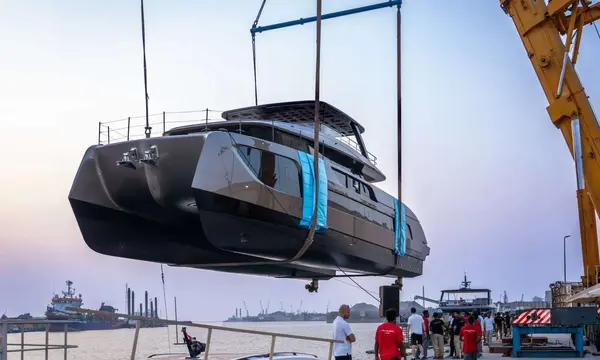
Two unusually substantial tenders Specialist coverage of the launch identifies dedicated capacity for tenders of approximately 11.3 and 6.4 metres, equivalent to the 37-foot and 21-foot units mentioned in the announcement. This is a meaningful part of the deck-design brief. A larger tender can enable longer transfers or specialised outings, while a smaller craft may be convenient for exploring confined coastlines or moving equipment and guests. It would be inaccurate to assume the tenders are all supplied as part of the vessel's final inventory without a confirmed specification. More importantly, tender dimensions alone do not indicate whether the equipment can be launched in challenging seas. Weight, lifting geometry, crew training and operational weather limits matter as much as the available deck footprint.

A concealed crane changes the main deck The extended main deck is designed to accommodate equipment while retaining the ability to serve as a social space. Reported design details include a concealed crane system associated with the tender-handling area. The concept is to hide the lifting equipment beneath a flush teak surface when it is not needed, permitting the space to be used for other activities. Industry reporting describes a capacity of up to six tonnes for the relevant crane. An owner evaluating a comparable arrangement should ask how the equipment is serviced, where its controls are located and how the deck is protected when loads are in motion. Concealment can improve aesthetics and usability, but it does not eliminate engineering or crew-safety requirements.

Making a working deck hospitable For an adventure yacht, the deck may alternate between operational and leisure roles within the same day. Tenders may need to be launched early for diving, fishing or coastal exploration, before the area is reset for guests returning to the yacht. That transformation requires sufficient stowage for loose furniture, clear lifting routes and appropriate separation of guests from machinery. The advantage is flexibility, not the ability to carry out every function simultaneously. A successful layout allows crew to carry out high-risk work efficiently without turning the guest's entire day into a logistical interruption. SEAZENS offers an interesting example of this planning challenge because equipment access appears to be a defining feature rather than a late addition.

Interior design looks to the natural world The Touch Studio's interior approach uses organic forms, warm timber finishes, natural stone and textiles to soften the yacht's more assertive exterior character. Launch descriptions identify a hand-painted pine-tree motif on silk wallpaper in the main saloon, bringing a distinct visual reference to nature inside the vessel. Other details include a sculptural staircase finished in deep blue and painted koi imagery. Such features can give an interior a recognisable identity without resorting to the same generic luxury palette used on many yachts. They are also materials that require expert care at sea, where movement, humidity, sunlight and cleaning routines can affect delicate finishes. A design succeeds over time when the owner enjoys it and the crew can maintain it.

Five cabins with different arrangements Reports of the accommodation describe five guest cabins and a principal owner's suite on the main deck. The lower-deck guest arrangement is intended to be flexible: two cabins can be combined into a larger VIP area, with adjustments to walls and furniture supporting different parties. Some accounts report ten guests, others eleven, so the final certified maximum should be confirmed against the delivered accommodation plan rather than inferred from publicity. Flexibility is valuable for families who travel with different groups, but partitions, sound insulation, accessibility and escape routes all need to work in every permitted configuration. A marketing description of convertible cabins does not establish that every furniture arrangement can be changed instantly or without crew intervention.

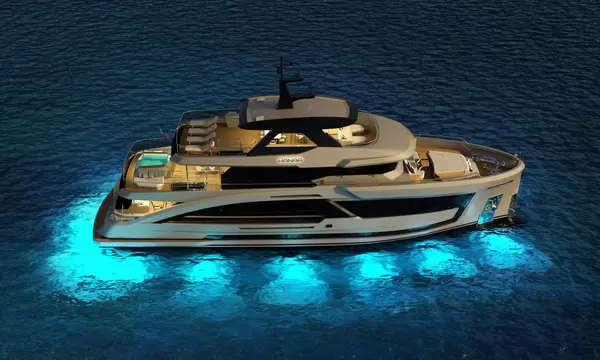
Wellness facilities are part of the operating brief SEAZENS is reported to incorporate an indoor beach-club area with a gym, sauna, shower and direct connection to the water via a swim platform and opening side platforms. The yacht's flybridge also has a spa-pool feature. These amenities suggest that the owner expects extensive time at anchor as well as active excursions ashore. The relevant engineering details extend beyond appearance: humidity management, ventilation, drainage, safety signage and maintenance access influence how reliably a beach club operates. A sauna or wet area onboard is not simply a room installed in a conventional building. It must work safely within a moving marine environment where vibration, corrosion and the consequences of a water leak differ significantly from those on land.

Upper decks combine shelter and visibility The upper deck reportedly has both open and enclosed lounge areas, with glazing and sliding openings arranged to take advantage of views. The sundeck combines alfresco dining with shelter from the wind, while the forward area includes a pool and space for sunbathing. These are familiar superyacht comforts, but the details are worth examining on an exploration-oriented vessel. A yacht capable of venturing farther afield must offer somewhere pleasant to spend time when conditions are not ideal. Designers must balance panoramic glazing with sun exposure, motion comfort and thermal performance. Guest access to attractive open decks will vary with the captain's assessment of weather and sea state, regardless of how generous the arrangement looks in images.

Range claims need operational context Industry reports associate SEAZENS with a long-range design philosophy and publish estimated performance figures, including a cruising profile centred on moderate speeds. Such information is useful as an indication of purpose, but final real-world range depends on displacement, sea conditions, hull condition, auxiliary loads and reserves. The shipyard's final delivered technical specification should take precedence over preliminary figures or estimates circulating around a launch. Owners assessing a similar yacht should examine fuel endurance under different generator and propulsion loads, not just the most flattering single-number range. Remote cruising also involves food, water, waste capacity, medical arrangements, communications and local supply constraints, none of which can be captured in a headline nautical-mile figure.

What the launch tells the market The launch is evidence of continued demand for custom yachts that blend leisure and exploration rather than treating them as opposing design categories. Rossinavi has given SEAZENS a substantial tender and activity capability without abandoning dramatic interior spaces, onboard wellness or private guest accommodation. The result may be especially relevant to owners whose plans change from season to season, because adaptable spaces can matter more than a long list of fixed features. That proposition should still be tested against the yacht's delivered performance and how the owner uses it. The launch announcement does not reveal the contract price, the owner's identity or a firm delivery date, and those details should not be invented.

A launch, not yet an operating history At this stage the verified event is the launch at Viareggio of a 47.5-metre custom yacht previously known as Project Berserk 47. The designer credits, construction materials, under-500-GT positioning and principal onboard features are reported in the release distributed on 12 November. Trials, final regulatory documentation and subsequent delivery remain separate milestones. For the superyacht sector, SEAZENS is a useful illustration of how much planning lies behind a truly activity-led yacht: tender logistics, adaptable accommodation and comfortable guest life must be designed together rather than solved one by one. Its future voyages will show how those ambitions translate from launch specifications to practical ownership.

**Primary source:** Rossinavi launch announcement as distributed by PressMare on 12 November 2026. Photography supplied and credited to Rossinavi. Other published specifications are identified as reported rather than certified.

Primary source: Rossinavi launch statement via PressMare.

Photo: Rossinavi, as credited in the 12 November 2026 launch press coverage. Official press photograph.

Photo licence and source

Photo: Rossinavi, as credited in the 12 November 2026 launch press coverage.

Continue reading

All news

Superyacht Guide

Explore the superyacht world

Continue into the wider Superyacht Guide.

Business opportunities · Superyacht Guide

Reach the superyacht industry audience

Companies serving the superyacht market can discuss clearly identified advertising, sponsorship and business-profile opportunities. Commercial activity remains separate from independent editorial coverage.