Inside the 25.5m Sanlorenzo SHE Heritage Yacht
By Superyacht Guide Newsroom · Edited by Superyacht Guide Newsroom
Inside the 25.5m Sanlorenzo SHE Heritage Yacht | Original cleared SYG Nov25 batch10 she
A closer look at Sanlorenzo’s 25.5m SHE reveals heritage-inspired design, contemporary guest accommodation and a Volvo Penta hybrid IPS propulsion system.
Sanlorenzo has offered an extended look at the interior approach of its 25.5-metre SHE motor yacht, a heritage-inspired design introduced to the public at the 2026 Cannes Yachting Festival. A November report by SuperYacht Times describes newly presented interior imagery and identifies Lissoni & Partners as the interior design team. The yacht's debut itself occurred in September, so this is an examination of its accommodation and design philosophy rather than another report of a launch. The distinction matters when a successful new model generates several consecutive stories about drawings, premières, delivery and later photographs.
SHE represents an attempt to combine the proportions of classic Italian motor yachts with systems that would not have been available to their original designers. The builder describes a design inspired by the elegance of the 1960s, with a contemporary layout and a hybrid propulsion installation. That mix invites scrutiny beyond the novelty of the exterior. Owners must ask how much accommodation is actually available, how the spaces connect, how many people can live aboard and whether the machinery arrangement supports the intended cruising pattern. These details are more useful than general claims that the yacht is timeless.
Sanlorenzo credits Zuccon International Project with SHE's exterior and Lissoni & Partners with its interior. The builders' published dimensions are 25.5 metres in overall length, 22.9 metres for the hull and 6.5 metres of maximum beam. The low, relatively restrained profile is intended to evoke a classic yacht rather than the increasingly layered geometry associated with some larger contemporary vessels. That identity is an important part of why the project is notable, but it does not mean the underlying engineering was copied from historical craft or that every visual reference represents an actual feature of a 1960s boat.
Classic proportions present modern designers with genuine constraints. Windows, covered deck areas, the shape of the superstructure and the routes between interior and exterior spaces must accommodate safety and comfort without destroying the desired profile. A design office also has to make room for machinery, ventilation, service access, insulation and practical onboard storage. Those needs can be difficult to reconcile with the light, uncluttered appearance favoured in published photographs. The achievement to assess is not whether every surface looks historic, but whether the yacht makes its styling coherent with use over many years.
The builder describes the interior as a reinterpretation of traditional Italian yachting codes using contemporary spatial organisation. Public photographs show a deliberately coordinated relationship between design surfaces, light and views outward, while the more detailed as-built equipment inventory remains a matter for the owner and builder. The description supports discussion of design intent, not claims about specific furniture, wood species, artwork or custom items that have not been confirmed. Sanlorenzo has an established practice of working with recognised designers, and SHE extends that approach to a vessel whose identity depends particularly strongly on restraint.
Owners considering a 25-metre yacht frequently face difficult trade-offs in cabin volume, saloon use and the physical distance between crew working areas and guest accommodation. An interior that feels spacious when photographed may function very differently when the yacht is fully occupied or underway. Storage, sound insulation, headroom and the serviceability of installed equipment should be evaluated in person. In SHE's case, the builder's published figures give a useful boundary for expectations: guest accommodation is for six people and crew accommodation for three. Those limits should not be replaced with speculative larger capacities.
According to Sanlorenzo, SHE introduces the builder's first use of Volvo Penta's IPS hybrid system. The published equipment schedule pairs two Volvo Penta D13-based diesel units rated at approximately 1,000 horsepower each with two 160kW electric motors. The company states a maximum speed of 20 knots, full-electric maximum speed of 11 knots and a full-electric cruising speed of seven knots. These are manufacturer data for the SHE model and need to be treated as such. They do not establish the endurance of any particular battery charge, the absence of emissions over an entire voyage or independent verification of total lifecycle impact.
Hybrid systems allow different power sources to operate in different circumstances, but assessing their practical advantage requires complete information. Batteries must be charged, generators may operate, and hotel loads for air conditioning, lighting and hotel services continue whether or not the propellers are driven by electric motors. Owners should request the system's operating modes, safety documentation, charging requirements, service arrangements and verified consumption curves. Published maximum electric speed is not the same thing as an unlimited silent range. The operational value lies in matching the technology to real cruising habits and maintaining the equipment over time.
The accommodation specification lists six guests and three crew. This is a more restrained arrangement than yachts of similar overall length that market a larger cabin count. It may suit an owner seeking private cruising with family or close friends, while owners planning extensive guest entertainment or commercial charter would need to review whether the available space supports that use. The numbers should also be reconciled with official flag and class requirements before making assumptions about permitted passengers. The publicly provided accommodation totals do not, by themselves, establish every cabin type or the exact working schedule for crew.
Day-to-day comfort depends on the practical relationship between accommodation, living spaces and technical functions. On a compact superyacht, crew may need to move between bridge, galley, tenders and guest areas without the separation that a much larger yacht can provide. Owners should understand these routes before assuming that a photograph represents the whole experience. The balance between guest luxury and real service arrangements is central to responsible design. SHE's interest lies in the attempt to give the smaller yacht a distinct, coherent character without ignoring the requirements of contemporary operation.
Sanlorenzo lists fuel capacity of 5,350 litres and freshwater capacity of 1,400 litres. These numbers contribute to understanding potential cruising arrangements but must not be turned into a claimed nautical-mile range without verified consumption, hotel load and reserve assumptions. A yacht with hybrid propulsion can behave differently across speeds and operating modes, and owners need to know whether shore power, generators or propulsion batteries will supply the main hotel loads at anchor. The actual range in different conditions is a practical matter for the owner's master and technical team, rather than something a promotional number alone can guarantee.
The same caution applies to advertised cruising speeds. A stated 17-knot speed in a builder's table is useful for comparison, but it does not account for sea state, tank loading, maintenance and passage planning. The owner should also examine draught limitations, berth dimensions and equipment access when choosing destinations. The appeal of heritage styling is often the freedom to enjoy calm, considered cruising, but that ideal depends on careful operational preparation. A yacht can have a distinctive aesthetic and still require rigorous technical support, especially where diesel, electrical, cooling and control systems interact.
SHE offers Sanlorenzo a design language distinct from the increasingly popular angular or high-volume superyacht profile. Its identity is connected with traditional Italian yacht culture, yet the builder has chosen to integrate propulsion technology associated with current efficiency goals. It remains important not to suggest that a first application of a hybrid system automatically proves lower overall lifecycle emissions. The relevant evidence would include energy use across a representative operating year, fuel consumption, maintenance requirements, battery replacement and the electricity source used for charging. Public information is sufficient to describe the installed system, not to assign a universal environmental score.
The project is also a useful example of how a major builder can revisit historical proportions without literally reproducing an older vessel. Zuccon's exterior role and Lissoni's interiors are part of a coordinated design proposition rather than separate decorative labels. Buyers may value this consistency because an owner can feel the same design intent in the exterior silhouette and interior living spaces. Whether the model achieves that ambition in routine use will become clearer through service experience, owner reports and detailed independent inspections. Those later findings should be treated as distinct evidence from the model's introductory materials.
Additional interior photography gives prospective owners more information than early renderings, particularly about the relationship between light, surfaces and circulation. It does not eliminate the need for drawings, a complete specification and physical inspection. The yacht was already unveiled earlier in 2026, and there is no basis to claim a newly signed sale or fresh delivery solely because more of its interior has been shown. Future reporting should focus on confirmed updates, such as subsequent unit deliveries, independently documented performance and technical changes announced by the builder rather than repeatedly presenting the same model as an entirely new launch.
For now, the important facts are the 25.5-metre size, the heritage-influenced exterior, Lissoni & Partners' interior role, six-guest accommodation and the combination of Volvo Penta diesel engines with electric drives. Together they define a vessel aimed at owners who value restraint as much as conspicuous size. SHE's new interior presentation adds useful context to that proposition. The most credible assessment keeps the artistic intention in view while distinguishing published specifications from unverified experience or assumed operating results.
Primary source: Sanlorenzo official SHE product, design and hybrid propulsion specification.
Further information: SuperYacht Times, November 2026 interior-photo report on Sanlorenzo SHE.
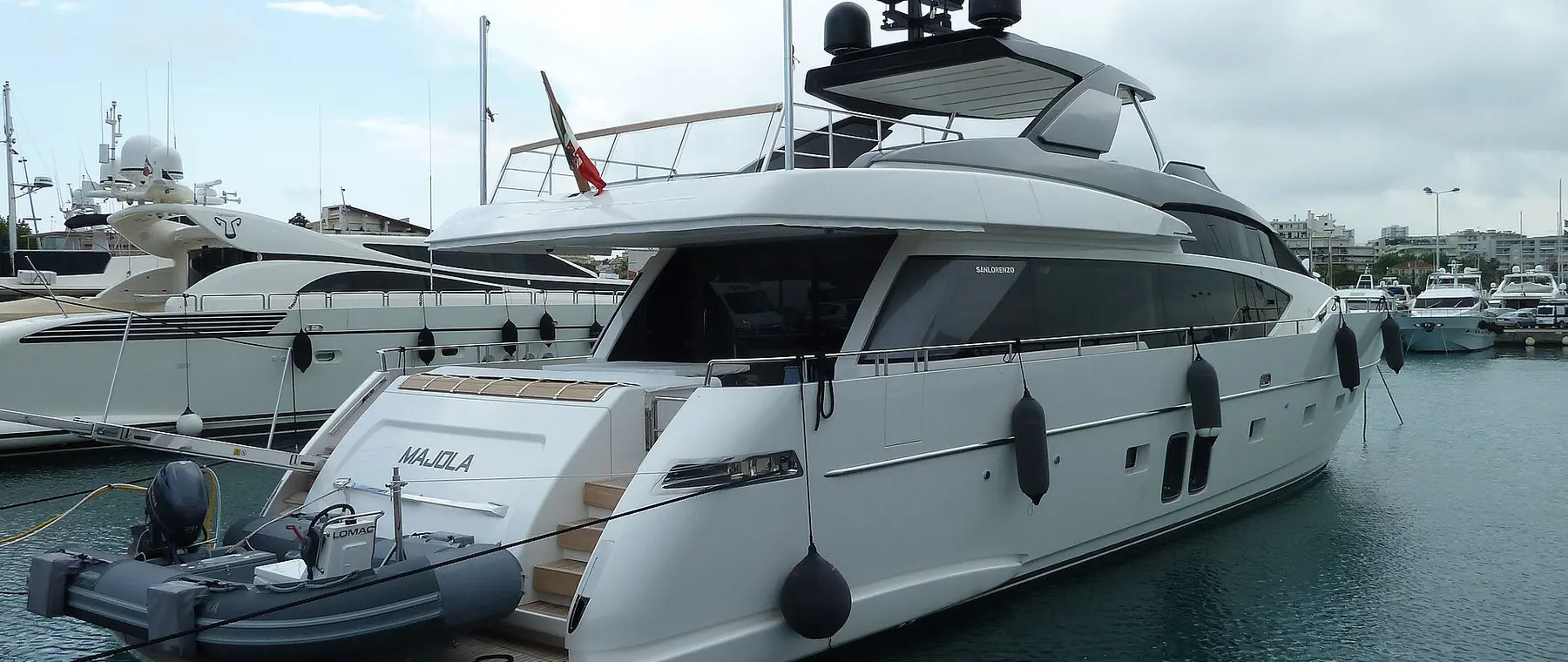
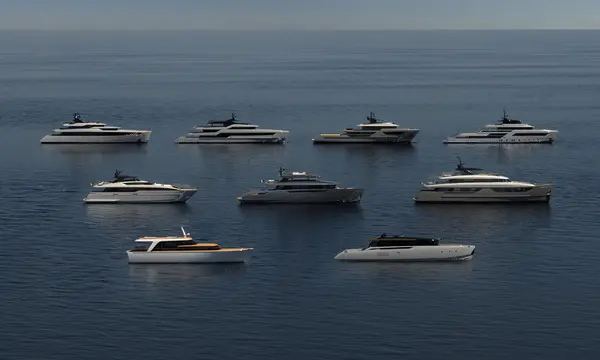
Licensed archival photograph of another Sanlorenzo yacht, not the heritage-model SHE or its interior. Photo: Abxbay; CC BY-SA 4.0 via Wikimedia Commons. Resized for web. Official source.
Explore
Go deeper into the yachts, companies, events and destinations directly connected to this article.
Continue reading
Dixon Yacht Design’s 48.27m Project OXO combines integrated solar generation, hybrid-ready propulsion and a 16-knot aluminium platform with interiors by Design Unlimited.
RMK Yachts has revealed the 55m ARCANE ERA, a 499 GT steel-and-aluminium expedition concept by Espen Øino with IPS propulsion and a 5,000nm eco-range …
Sanlorenzo’s 25.5-metre SHE has made her world premiere at the Cannes Yachting Festival 2026. The Heritage model combines 1960s-inspired Italian styling with Volvo Penta …
Sanlorenzo has presented 74Steel Virtuosity as a highly customised flagship project shaped by owner collaboration.
Superyacht Guide
Continue into the wider Superyacht Guide.
Business opportunities · Superyacht Guide
Companies serving the superyacht market can discuss clearly identified advertising, sponsorship and business-profile opportunities. Commercial activity remains separate from independent editorial coverage.

