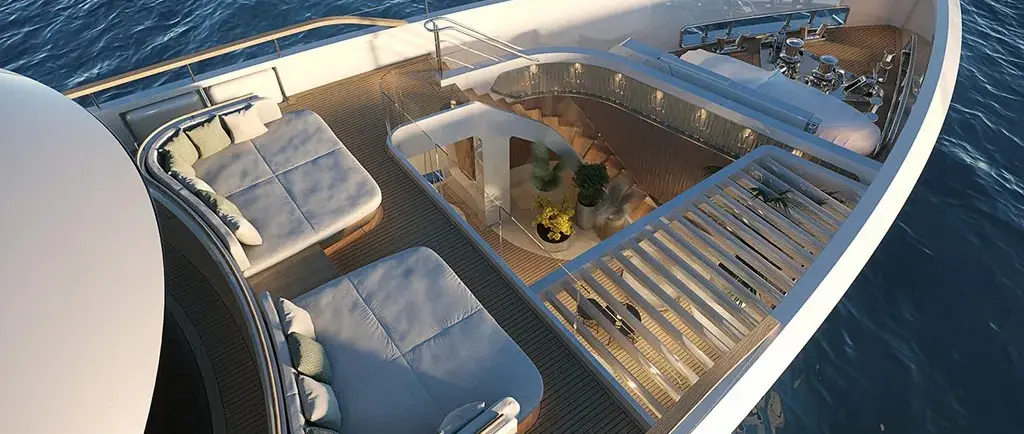
Sirena 42M Combines Fast Displacement Hull with Hull Vane Technology
By Stephen Yardley · Edited by Stephen Yardley
Image: Hull Vane BV / METSTRADE
Technical details of the launched 42.2m Sirena flagship reveal a Van Oossanen fast-displacement hull paired with a passive Hull Vane to manage resistance and seakeeping.
Sirena Marine's first 42.2-metre steel-and-aluminium superyacht made its world debut at the Monaco Yacht Show in September 2026, but an engineering update published by Hull Vane BV highlights a less obvious feature beneath the surface. The yacht pairs Van Oossanen Naval Architects' Fast Displacement Hull Form with an integrated Hull Vane device designed to influence the wave system around the stern. The combination is intended to reduce resistance and improve comfort during extended cruising.
The Sirena 42M was launched in July and subsequently presented in Monaco, so the September technical disclosure is not a new launch, order or handover. Its significance is to explain how hull-form development and appendage design have been connected in a finished 433GT platform. Buyers interested in long-range capability have reason to look beyond published range numbers toward the engineering measures intended to produce them.
A Hull Vane is a submerged hydrofoil-like appendage normally mounted toward the stern. As the hull travels through the water, the device generates hydrodynamic forces that can change trim and the pattern of waves created by the vessel. Under appropriate conditions it may reduce total resistance, although the actual benefit depends on speed, hull geometry, displacement and installation. It is not a propulsion system or a source of free power.
A large yacht moves through several operating regimes in the course of a season. Efficient cruising, manoeuvring at low speed and travelling in disturbed seas place different demands on the hull. The design team must optimise around the duty cycle the owner actually expects. A device that works well at one speed may produce a different result at another, making model testing and later sea-trial evidence essential.
Van Oossanen's Fast Displacement Hull Form approach is associated with balancing resistance and seakeeping over a wider speed range than a conventional high-speed planing hull. For a yacht intended to travel significant distances, efficiency at cruising speed can be more useful than achieving an unusually high peak speed. The 42M's technical brief therefore focuses on range, internal volume and quiet operation rather than competing with fast open sports yachts.
Lower resistance can reduce the mechanical power required to maintain a particular speed, potentially lowering fuel consumption and vibration. Yet hotel loads, generator operation, shore-power availability and tender activity form additional parts of the energy picture. Owners should ask whether any published efficiency claim is measured at the propeller, for total vessel fuel burn or over an annual operating cycle.
An appendage installed close to the stern affects more than a single laboratory resistance number. Naval architects must evaluate propeller flow, vibration, maintenance access and the way forces enter the supporting structure. The material and attachment arrangement also need a corrosion-management plan. A carefully optimised system should not make everyday maintenance or dry-docking unnecessarily difficult.
The Sirena package was incorporated into the design rather than bolted on to a completed vessel as an afterthought. This matters because structural details, equipment clearances and hydrodynamic interactions can be considered in parallel. A future owner who changes major equipment or adds substantial weight may alter the trim assumptions underlying the original optimisation.
Sirena's 42M features exterior styling by Luca Vallebona and interiors by Hot Lab, part of The Viken Group. It provides a principal suite with a distinctive forward private patio option, broad entertaining areas and a beach club with opening bulwarks. The steel hull and aluminium superstructure support an accommodation plan on a vessel with approximately 433 gross tonnes of enclosed volume.
A yacht's living arrangement and engineering cannot be separated. Large terraces, glazing and guest amenities create structural and electrical demands that influence the overall weight balance. A passive underwater device may help manage resistance, but the largest improvements often come from many compatible decisions made early in design: sensible machinery power, restrained weight growth and space planning that avoids unnecessary complexity.
Sirena Marine had built its international reputation largely on series-produced composite motor yachts before extending into a 42-metre steel platform. This step requires different production disciplines, structural fabrication skills and long-duration project management. The launch and subsequent sale of the first 42M are industrial milestones, while the collaboration with specialist naval architects demonstrates the yard's intention to compete on technical content as well as interior space.
The design team combines an international mix of organisations: Van Oossanen for naval architecture, Hull Vane for the appendage technology, Eureka Yachts for detailed engineering, Hot Lab for interiors and Vallebona for styling. The builder remains responsible for integrating these decisions during construction. No individual specialist can independently guarantee the behaviour of the finished yacht without coordinated testing.
Yacht specification sheets commonly quote range at a defined cruising speed, but range may be affected by weather, fouling, hotel power demand, tender use, tank reserves and loading. A claim of hydrodynamic efficiency should ideally be supported by predicted-versus-measured resistance, fuel-flow records and noise results obtained during controlled trials. The September Hull Vane announcement explains a design choice; it does not provide independently audited annual fuel savings.
A future operator can improve results by maintaining a clean hull and appendages, keeping machinery correctly tuned and planning passages around conditions rather than treating published maximum range as an absolute. Crew training in speed management and energy monitoring can turn good engineering into lower operating demand in practice.
The Sirena 42M brings together a high-volume semi-custom yacht and an underwater feature more familiar to naval-architecture specialists than to guests. Its debut gives potential owners a physical reference, while the Hull Vane disclosure adds information that cannot be assessed by walking through a saloon. The design presents a useful case of efficiency technology being considered alongside owner comfort.
Future data from actual operation will establish how well the combination performs over different seasons. The confirmed development is the integration of a Fast Displacement Hull Form with a Hull Vane on a launched 42.2-metre yacht. The wider industry lesson is that gains in range and comfort are increasingly found through the patient coordination of hull design, appendages and onboard loads rather than one spectacular equipment announcement.
Explore
Go deeper into the yachts, companies, events and destinations directly connected to this article.
Continue reading
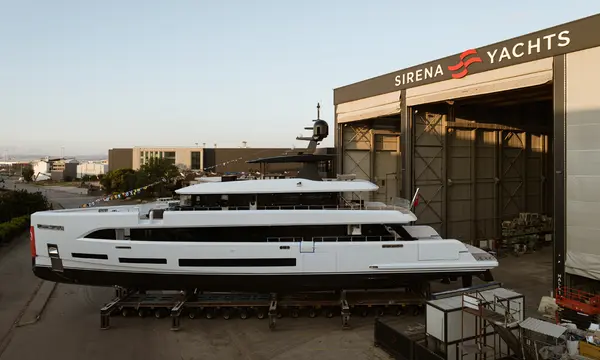
Sirena Marine will present its first 42.23m steel-and-aluminium superyacht at Monaco Yacht Show 2026, marking the public world premiere of the 433 GT flagship.
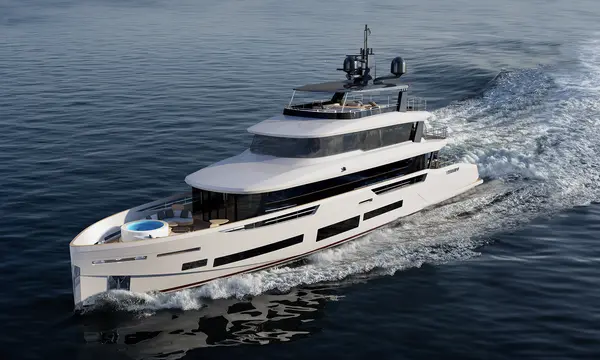
Sirena Yachts has unveiled IKIGAI, the first 36m Sirena 118, at Cannes Yachting Festival 2026. The new flagship combines Germán Frers naval architecture, Sirena …

Sirena Yachts has appointed Ensar Çabuk to lead its US operations, with long-serving US chief Constantinos K. Constantinou moving into a senior advisory role …
Sirena Marine has launched the first Sirena Superyachts 42M, marking the Turkish builder's entry into steel-and-aluminium superyacht construction ahead of the yacht's Monaco debut.
Superyacht Guide
Continue into the wider Superyacht Guide.
Business opportunities · Superyacht Guide
Companies serving the superyacht market can discuss clearly identified advertising, sponsorship and business-profile opportunities. Commercial activity remains separate from independent editorial coverage.