Destination
United States Virgin Islands
Explore destination information and related yachting coverage.
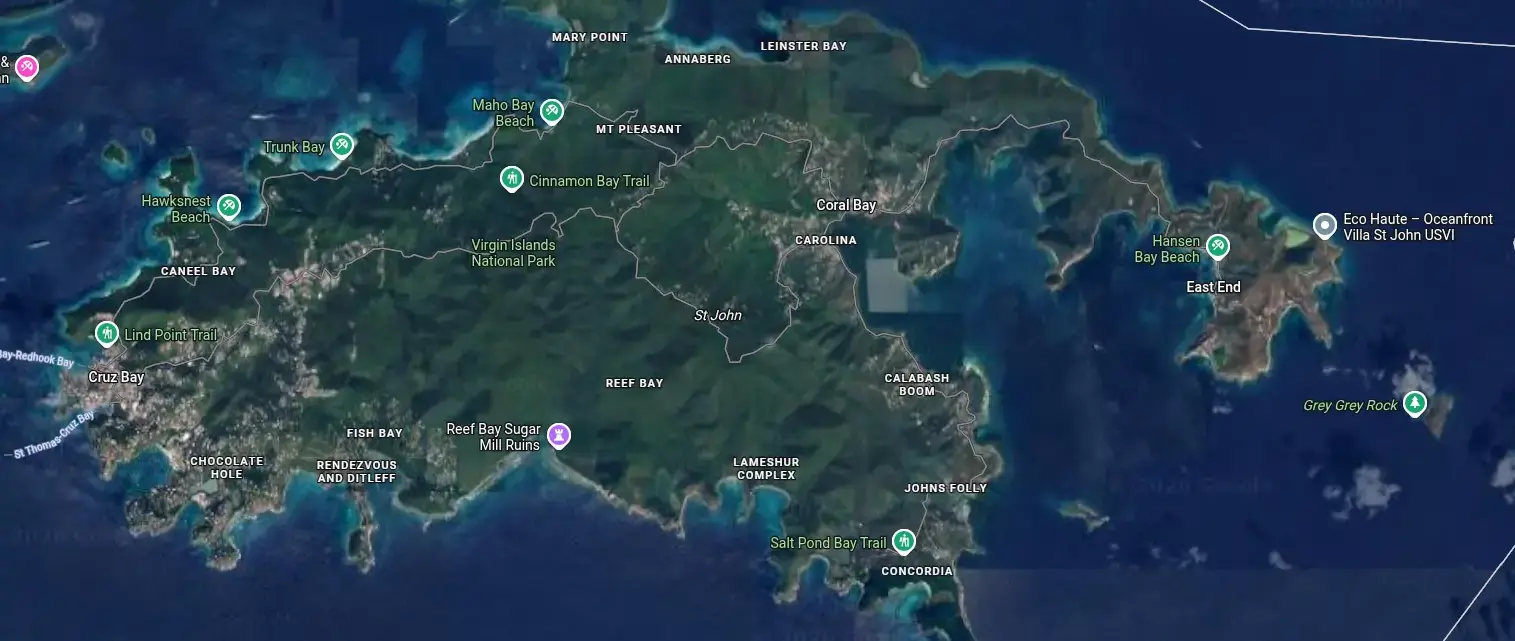
A federal lawsuit is challenging approvals for the long-planned Summer’s End Marina in Coral Bay, St. John. The dispute places a proposed 127-vessel marina development capable of receiving large yachts back at the centre of a long-running debate over marina infrastructure and environmental protection in the U.S. Virgin Islands.
Plans for a major new marina in Coral Bay, St. John, have entered another legal battle after community groups and a local resident filed a federal lawsuit challenging approvals issued by the U.S. Army Corps of Engineers. The case concerns the proposed Summer’s End Marina, also promoted as the St. John Marina and Yacht Club at Summer’s End, a development intended to provide the island with its first full-scale marina facility.
The U.S. Army Corps of Engineers announced in May that it had issued a permit allowing construction of the marina within Coral Harbor. The approved plan comprises 115 fixed-dock slips and a further 12 single moorings, creating capacity for 127 vessels ranging from approximately 30 feet to more than 160 feet in length.
That makes the dispute relevant well beyond the local boating community. A marina capable of receiving yachts approaching 50 metres would add meaningful large-yacht infrastructure to an island that sits within one of the Caribbean's most established cruising regions but currently lacks a comparable marina facility.
The federal case was filed in the U.S. District Court for the District of the Virgin Islands by David Silverman, Save Coral Bay Inc. and the Coral Bay Community Council. The defendants include the U.S. Army Corps of Engineers and several Corps officials associated with the permitting process.
The plaintiffs are asking the court to overturn the federal approvals and prevent work from proceeding until what they consider lawful new approvals have been obtained. Their complaint raises claims concerning the federal environmental and administrative review process and challenges the legal basis on which the marina approvals were granted.
Those are allegations that will now have to be tested through the federal court process rather than established facts about wrongdoing by the Army Corps or developer. The distinction is important because the Corps has already concluded that the project can proceed subject to the conditions and mitigation measures contained within its permit.
The litigation therefore creates two competing positions around the same project. Federal regulators have authorised construction under specified environmental conditions, while the plaintiffs argue that deficiencies in the underlying approval process mean those authorisations should be set aside.
The Army Corps describes the approved project as a 67,833-square-foot fixed-dock marina with berths for vessels of different sizes. Its 115 slips would be supplemented by 12 moorings southeast of the main development, while a boardwalk and associated shore facilities form part of the wider scheme.
The developer's project material positions the marina as a full-service destination for vessels ranging from smaller recreational boats to large yachts. Proposed facilities include shore power, potable water, wastewater pump-out, fuel, security, provisioning, restaurants, retail, crew facilities and support for customs and border-processing requirements.
For visiting large yachts, the ability to complete formalities, provision, refuel and access shore services from one location could materially change the practicality of using St. John as more than an anchorage. The island lies between established yacht centres in the U.S. and British Virgin Islands, making its lack of a substantial marina particularly noticeable within the regional cruising network.
The project has consequently been presented by its developer as infrastructure intended to capture economic activity that currently moves elsewhere. Superyacht calls generate spending through fuel, provisioning, engineering, transport, crew requirements and hospitality, but that expenditure is difficult to retain locally when suitable berthing and supporting services are unavailable.
Coral Bay is also an environmentally sensitive location, which explains why the proposed marina has remained controversial for more than a decade. The federal approval includes a series of mitigation measures intended to reduce or compensate for impacts associated with construction and operation.
According to the Army Corps, these include relocating four Solenastrea bournoni coral colonies and outplanting 3,000 coral specimens. The approved measures also call for 300 red mangrove seedlings to be planted, seven informational buoys to be installed and stormwater-management features to be maintained onshore.
Waste-management requirements are also incorporated into the project, including pump-out or disposal facilities. Those measures reflect the particular challenge of developing modern marina infrastructure in a harbour where coral, mangroves, seagrass and coastal habitat are central to both the environment and the character of the destination.
The plaintiffs dispute whether the environmental review and mitigation process was legally sufficient. Their case argues that aspects of the federal approval process did not adequately address the environmental consequences of the proposed marina and seeks judicial review of those decisions.
The developers and federal regulators have taken a different position, with the permit proceeding after a review process extending over many years. The court will now be asked to decide whether the approvals satisfy the relevant statutory and administrative requirements rather than simply whether building a marina in Coral Bay is desirable.
The Summer’s End proposal is not a new development prompted by the recent growth of the superyacht market. Plans for a marina in Coral Bay have been moving through applications, redesigns, environmental reviews and legal challenges for more than a decade.
That history has resulted in significant changes to the scheme. Earlier iterations contemplated a larger number of berths, while the federal project ultimately authorised in 2026 contains 115 slips and 12 moorings, with additional environmental mitigation built into the approval.
The prolonged process illustrates one of the central difficulties facing new superyacht-marina developments around the world. The places most attractive to yacht owners are often environmentally sensitive coastal locations where adding berths, fuel infrastructure, utilities and shore facilities inevitably brings development objectives into conflict with conservation concerns.
Those tensions are particularly acute on small islands. A new marina can create employment, marine-service demand and visitor expenditure, but its physical footprint may also have consequences for established anchorages, coastal ecosystems and communities whose economy and identity depend on the existing character of the harbour.
St. John's location makes the outcome commercially significant. The Virgin Islands sit on one of the Caribbean's best-established yacht routes, with nearby islands already supporting extensive charter, marina and marine-service activity.
Large yachts can readily cruise between the U.S. Virgin Islands and the British Virgin Islands, but the distribution of infrastructure across the islands remains uneven. Creating a marina capable of receiving yachts above 40 metres in Coral Bay could therefore alter where vessels berth, provision and spend during an itinerary through the region.
The development would not compete on scale with the largest purpose-built superyacht facilities in the Mediterranean or newer Middle Eastern destinations. Its importance would instead come from filling a specific infrastructure gap within an already mature Caribbean cruising market.
For captains, the value of a new marina ultimately depends on operational reliability rather than simply the number of berths. Depth, manoeuvring space, weather protection, fuel, electricity, waste management, security, customs procedures and the surrounding technical network all determine whether a nominally superyacht-capable marina becomes a practical regular stop for the international fleet.
The Army Corps permit had appeared to move the Summer’s End project substantially closer to construction after years of regulatory delay. The federal lawsuit now introduces another significant uncertainty over when, and potentially whether, the approved marina can proceed in its current form.
Summer’s End Group has continued to present the project as moving toward development and has emphasised the range of services intended for the completed facility. The developer also points to the environmental requirements attached to the federal approval as part of its case that the marina can be delivered alongside measures intended to protect Coral Bay.
Opponents remain unconvinced that the project and its permitting process adequately protect the harbour. Their federal challenge seeks judicial intervention against the contested approvals and a new review process before the marina is permitted to proceed.
The immediate question is therefore procedural as much as commercial. Litigation can affect financing, construction timing and the willingness of contractors and investors to commit to a project while its regulatory status remains contested, even before a court reaches the underlying merits of the case.
For the wider superyacht industry, the Coral Bay case illustrates why expanding marina capacity can be considerably more complicated than identifying demand for larger berths. Coastal infrastructure projects increasingly have to reconcile economic development with habitat protection, public access, climate resilience and extensive environmental regulation.
That does not mean new marinas cannot be built in sensitive areas, but it increases the importance of the evidence behind every stage of a project. Environmental assessments, local permits, federal authorisations, mitigation calculations and public consultation can ultimately become as important to whether a marina opens as its engineering or financing.
The Summer’s End Marina has already spent more than a decade navigating that process. Receiving federal approval in 2026 appeared to mark a major step toward construction, but the new lawsuit shows that a permit is not always the end of a project's regulatory journey.
For St. John, the stakes extend beyond whether another marina appears on the Caribbean map. The dispute is now testing whether the island can add infrastructure capable of attracting and servicing larger yachts while satisfying the environmental and legal standards required for development in one of its most closely watched coastal areas.
Explore
Go deeper into the yachts, companies, events and destinations directly connected to this article.
Destination
Explore destination information and related yachting coverage.
Continue reading

Hill Robinson appoints Claire Borel as senior charter manager in Monaco, bringing seven years of charter expertise to its owner, captain and crew operations.

MYSEA and Motor Racing Legends bring historic motorsport enthusiasts closer to yacht charter, including a Mediterranean discovery experience aboard the 115ft Sunseeker FLEUR.
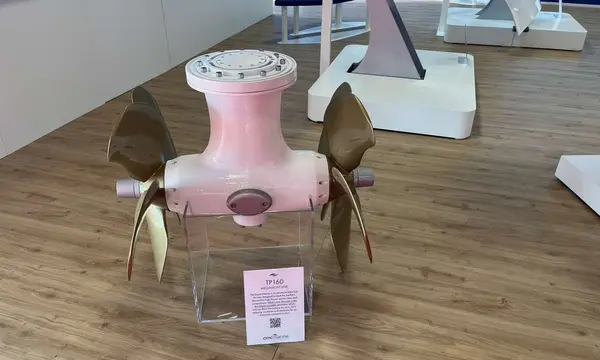
CMC Marine has provided new technical detail on the energy-management architecture behind its electric stabilisers and thrusters, explaining how capacitor storage can reduce abrupt …

New Zealand's Oceania Marine says its participation in the 2026 Monaco Yacht Show helped promote Asia-Pacific cruising and the region's specialist refit capability to …
Superyacht Guide
Continue into the wider Superyacht Guide.
Business opportunities · Superyacht Guide
Companies serving the superyacht market can discuss clearly identified advertising, sponsorship and business-profile opportunities. Commercial activity remains separate from independent editorial coverage.