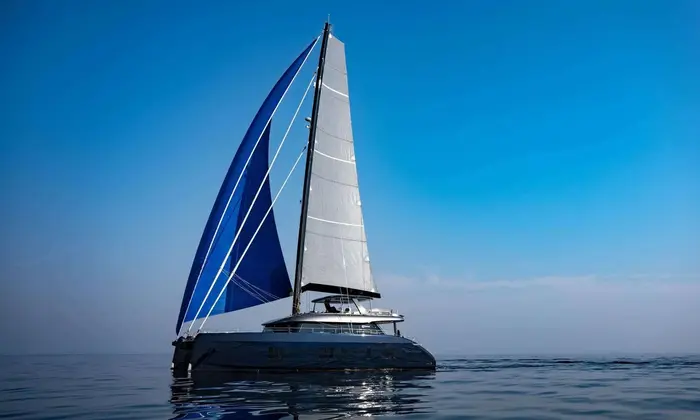
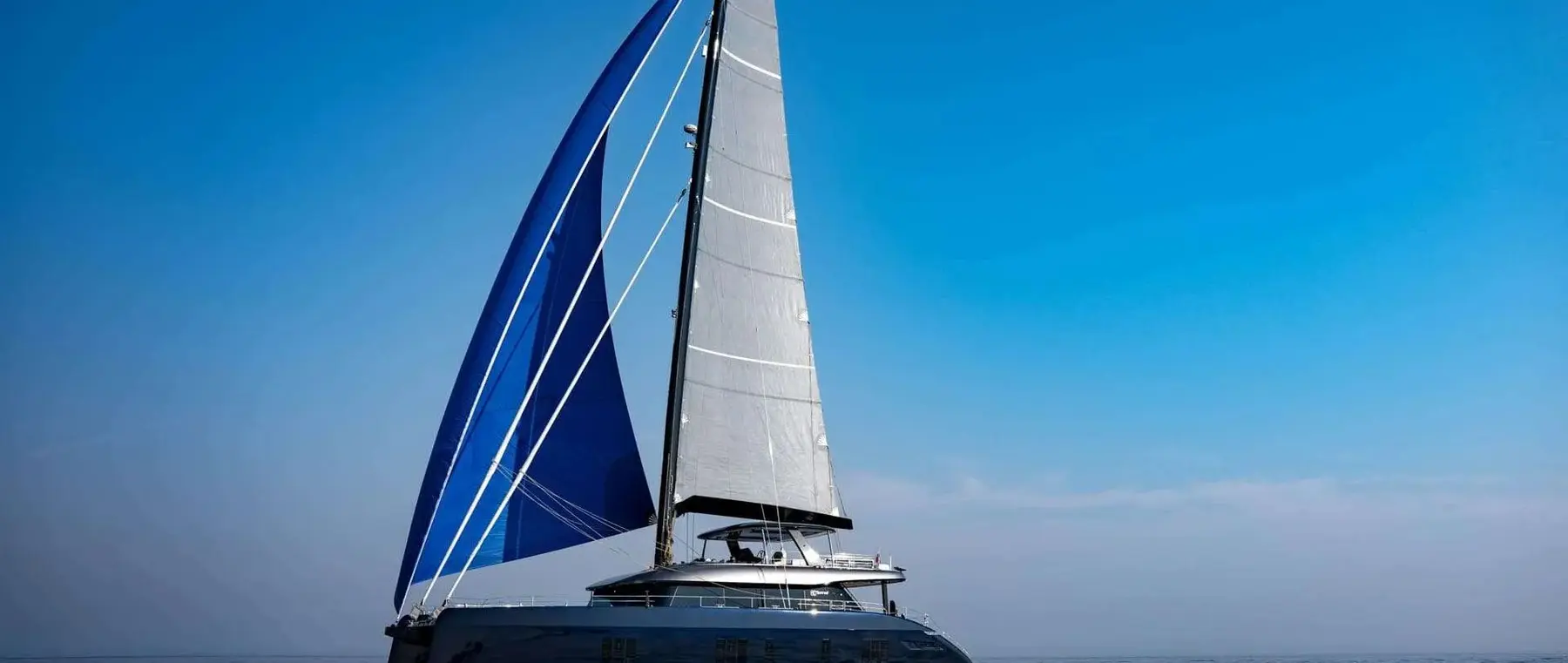
Source: https://sunreef-yachts.com/en/launched/sunreef-80-ahava/ | Copyright Sunreef Yachts | official PR editorial photograph | SHA256 78fa96c22de005c6d092aadde6e04b00ae708c099b278c80c20bf02c866cba96
Sunreef 80 AHAVA is a 2025 sailing catamaran with warm walnut interiors, guest privacy and a wide stern. View the 24.4m yacht in its original builder profile.
AHAVA belongs to the 2025 group of Sunreef 80 sailing catamarans, a family whose broad hull platform offers unusual living space in the approximately 24.4-metre category. The builder's official portrait describes a yacht with a deliberately warm, retro-influenced interior, extensive glazing and guest spaces arranged for comfortable private cruising. Sunreef's August 2025 promotional correspondence drew attention to AHAVA specifically, making it possible to distinguish this launched vessel from generic advertisements for the Sunreef 80 model.
The Sunreef 80 has become a recognizable example of the modern luxury sailing multihull. Its design combines two hulls with a broad main deck and large interior spaces, allowing the yard to create different cabin and service arrangements for individual owners. AHAVA's identity rests on the name, 2025 build year, official photographs and detailed interior programme. Those identifiers are more reliable than model designation alone when several yachts share the same construction platform.
Sunreef's launched-yacht archive provides direct builder confirmation. The shipyard's original newsletter of 14 August 2025 helps establish the date at which its profile was being actively circulated. The historical context is important: a 2025 article about a yacht's first public presentation should not be made to look like a new 2026 launch simply because the email is processed much later.
The main saloon of AHAVA uses the combination of warm walnut tones and soft, neutral materials to create an atmosphere described by the builder as retro-chic. The point is not to reproduce a historical interior exactly, but to bring a sense of texture and familiarity to a modern catamaran. Large windows allow the changing colour of the water and light to remain an important element, while the furniture and decorative details provide a more consistent backdrop.
The effect depends on more than the individual materials chosen. The height and placement of seating, routes through the room, location of the dining table and amount of natural light all influence whether the saloon feels balanced. A wide catamaran can accommodate several social functions on one level, but that makes careful planning essential if the interior is to feel like a home rather than a hotel lobby.
Sunreef identifies a dedicated dining area opposite the saloon seating. Its position supports a fluid change from informal conversation to a more structured meal, without requiring guests to move to a different deck. Such flexibility can be especially useful during long voyages when people spend many hours aboard and prefer a choice of spaces with different moods.
A dining arrangement at sea must also work in imperfect conditions. Table surfaces, storage, passage widths and access for crew affect how comfortably a meal is served underway or at anchor. A yacht's most successful interiors combine generous views with practical details that may go unnoticed in promotional photographs. AHAVA's broad platform creates room for those choices, although the source does not provide private engineering drawings or a full furniture inventory.
The builder describes a generous owner's suite and additional guest cabins, designed around privacy and a connection to the exterior. The separation of spaces across two hulls can be useful for controlling circulation and creating distinct accommodation zones. The layout is one of the characteristic attractions of a luxury catamaran, but every individual yacht needs its own verified cabin arrangement.
AHAVA's official profile also mentions a galley-down configuration. Placing the galley below the main saloon changes the balance between guest and crew space on the main deck. It can preserve a quieter visual environment in the central saloon while providing a dedicated working area for meal preparation. This is an arrangement choice, not automatically a better solution for every crew or owner.
The public information includes separate crew quarters for four. That is a useful reminder that even a relatively compact superyacht needs a well-organized working team if guests expect full service and frequent sailing activity. Crew movement, service access, watchkeeping, maintenance and the handling of sails all have to fit around the guest programme.
The presence of crew quarters is not proof of who is currently aboard or how the yacht is registered for commercial activity. A vessel's actual crew complement can vary with its flag, programme and certification. The best editorial account describes the spaces designed for personnel without inventing private employment information or a current charter staffing roster.
The Sunreef 80 is fundamentally a sailing catamaran, and that distinction shapes its character. Its rig, deck layout, winches and sail-handling systems have to coexist with extensive guest facilities. The aft cockpit and foredeck are important leisure spaces, but they are also parts of a working sailing vessel. Guests may enjoy the relative quiet of travel under sail, while crew remain responsible for safe rig operation and watchkeeping.
Sailing performance depends on wind direction, sea state, sail condition, load and trim. The mere presence of a large sail plan does not justify a precise speed claim for a particular voyage. The original AHAVA source gives a compelling picture of life aboard but should not be treated as a substitute for verified performance trials or a current skipper's operating information.
AHAVA's aft cockpit is arranged as a place for dining and quiet time near the water. It is sheltered by the structure above while retaining an open relationship with the sea. That type of space can become the centre of guest life in warm climates, allowing a party to remain together without occupying the main saloon throughout the day.
The large beam makes it possible to separate circulation from lounging areas, but crew still need clear access during tender movements and when docking. Exterior furniture must be secured when conditions deteriorate. A photograph taken in calm water is an invitation to imagine life aboard, not a representation of every environment in which the yacht may operate.
The Sunreef design approach emphasizes the stern as an extension of the living space. Platforms and steps link the cockpit to the water and can be used for swimming, boarding tenders and watersports when conditions permit. On a broad multihull, that area may be wider than guests would expect from the yacht's overall length.
These features still have operational limits. A catamaran's stern can be affected by swell, and people using the water must be supervised appropriately. The exact arrangement of toys or small craft aboard AHAVA should not be assumed from the generic Sunreef model catalogue. The builder's confirmed yacht-specific photographs and descriptions are the reliable basis for a public record.
Sunreef's photography shows extensive glazing around the saloon, framing the horizon from within the vessel. Natural light is valuable in making a large central space feel open, but it also places demands on temperature management, glare control and privacy. The chosen interior palette can help moderate those effects visually, while technical systems must handle them in practice.
A yacht that cruises in strong sunlight may need shading and controlled ventilation even when its windows are an important part of the design. Such considerations belong to the less visible side of luxury. The most successful large multihulls feel airy and comfortable because the architectural and technical arrangements work together rather than because they contain the greatest possible area of glass.
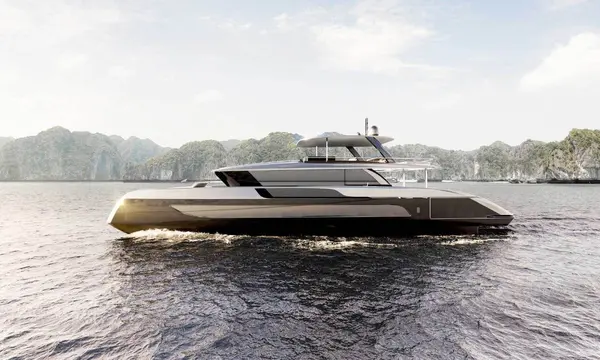
AHAVA should not be confused with similarly sized Sunreef 80 vessels that appear in older newsletters or fleet lists. The completed 2025 yacht has a dedicated launched-vessel page and an official photographic gallery. The photograph selected for Superyacht Guide was obtained directly from that Sunreef-owned page, recorded with its checksum, and labelled as a photograph of AHAVA rather than a model illustration.
Other sources may describe charter operations or commercial availability, but those claims can change independently of the yacht's identity. A current charter rate, if it exists, belongs in a dated broker or operator record and should not be inferred from a builder's historical lifestyle piece. The stable facts are the shipyard, name, broad dimensions, launch year and publicly documented accommodation approach.
A builder may publish many newsletters celebrating the same model family, and a newsroom might be tempted to reuse a single generic Sunreef 80 page for every announcement. That would obscure the differences that owners and readers care about. AHAVA's interior style, crew arrangement and chosen layout make her distinctive, while her exact hull identity separates her from other Sunreef 80s built in the same period.
For Superyacht Guide, the correct result is one individual yacht record with the official image, builder link and original press correspondence. It can be enriched when verified new information becomes available, without losing the underlying build history. The 2025 AHAVA story is therefore best treated as a detailed yacht profile rather than a supposed breaking launch in November 2026.
Original sources and editorial note: Sunreef Yachts original newsletter SYMS email 629, dated 14 August 2025; Sunreef 80 AHAVA official launched-yacht profile. Hero photo © Sunreef Yachts. This is a retrospective profile of an individual sailing catamaran; no current charter or sale availability has been inferred.
Explore
Go deeper into the yachts, companies, events and destinations directly connected to this article.
Continue reading
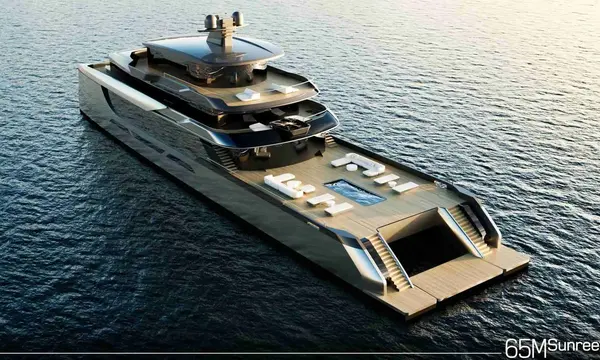
Sunreef reveals a 65m, 1,800GT Explorer catamaran concept with seven suites, an owner deck and expedition amenities. A sourced look at its design, not …
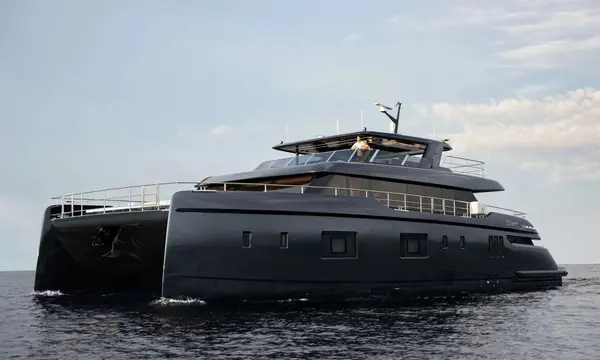
Explore the 28.63m Sunreef 100 Power PETITE BELLE, with a 13.5m beam, contemporary guest accommodation, quiet-night battery power and a wide Ocean Lounge.
Paramount Yachts has announced its first US sale of a Sunreef ULTIMA 88 to a Florida family. The in-build 26.8-metre power catamaran is scheduled …

Sunreef Yachts has announced an ULTIMA 88 order for Lionel Messi, with the yacht under construction in the UAE and intended for the MIM …
Superyacht Guide
Continue into the wider Superyacht Guide.
Business opportunities · Superyacht Guide
Companies serving the superyacht market can discuss clearly identified advertising, sponsorship and business-profile opportunities. Commercial activity remains separate from independent editorial coverage.