
Feadship Opens Private Archives for New Assouline Ultimate Collection Book
Feadship has collaborated with Assouline on a new Ultimate Collection volume drawing on private archives to document the builder’s heritage and working culture.
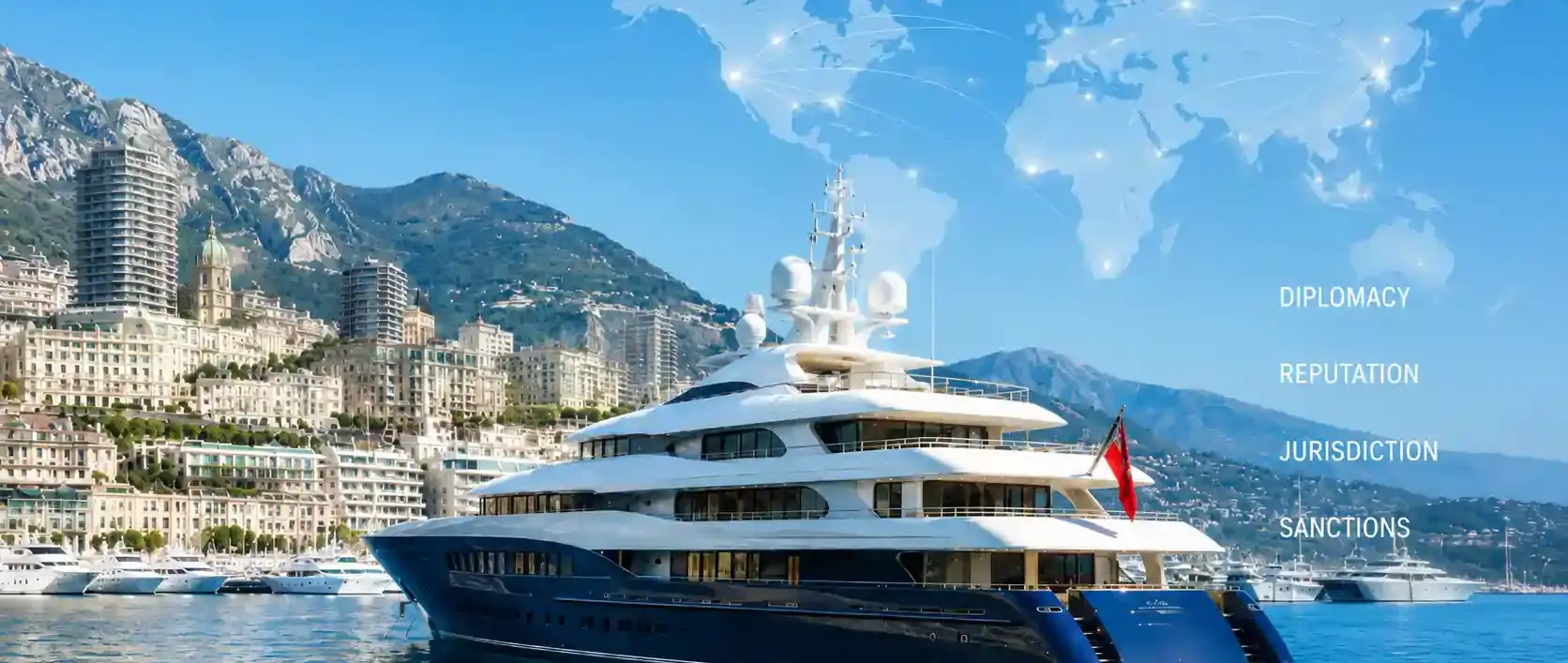
Superyachts are unusually visible forms of private wealth, so where they berth can carry reputational as well as legal significance. Soft power begins with attraction, while sanctions, detention and seizure show the harder edge of state authority.
A superyacht is private property, but it is rarely invisible. Its size, design, flag, itinerary and berth can make it a highly legible symbol of wealth in a way that a portfolio, trust or private company is not. That visibility helps explain why governments, regulators and the public may pay attention when exceptionally wealthy people choose to spend time in a particular jurisdiction, even though a port call by itself proves nothing about political allegiance, ownership or state endorsement.
The political significance is easy to overstate, so the distinction matters. A yacht entering a prestigious harbour can contribute to the image of a place as secure, attractive and connected to global wealth, while the same vessel can become a legal or reputational problem if sanctions, ownership questions or security concerns attach to it. The useful question is therefore not whether every superyacht is an instrument of diplomacy, but why such conspicuous mobile assets can acquire political meaning when they move between jurisdictions.
Joseph Nye’s concept of soft power is about obtaining preferred outcomes through attraction and persuasion rather than coercion or payment. Applied carefully to the superyacht world, that does not mean a government “uses” every wealthy visitor as a diplomatic asset. It means that a place able to attract internationally prominent private wealth can benefit reputationally from being seen as safe, sophisticated, well connected and desirable, particularly when that visibility reinforces an existing image of prestige or access.
Superyachts intensify that effect because they are unusually public forms of private wealth. A large yacht alongside is visible to residents, tourists, local media and other owners; its presence can suggest that the destination offers the infrastructure, security, services and social environment required by people with extraordinary mobility. Yet attraction is not endorsement: the fact that a billionaire or other wealthy owner chooses a port does not establish that the state approves of that person, shares their politics or even knows the full beneficial-ownership structure behind the vessel.
The distinction becomes especially important when sanctions enter the story. Asset freezes, detention and seizure are coercive state measures, not soft power, and they should not be described as such. What they do show is why a yacht’s physical location matters: a globally mobile asset can move from a setting where it is primarily a symbol of private wealth into one where local law, international cooperation and state enforcement become decisive.
The multinational Russian Elites, Proxies, and Oligarchs Task Force documented coordinated action across jurisdictions against high-value assets, including yachts. That hard-power response sits alongside the softer reputational question because the same visibility that makes a superyacht useful as a symbol of prestige also makes it difficult to ignore once the vessel becomes politically or legally sensitive. The two ideas should remain separate: attraction can enhance a place’s image, while enforcement demonstrates the authority of the state once legal thresholds are crossed.
For a state or destination, the arrival of conspicuous private wealth can carry meaning beyond the direct spending associated with a visit. It can reinforce perceptions of security, connectivity, discretion, infrastructure and access to international networks, all of which fit more comfortably within the language of attraction than coercion. A yacht is especially potent as a symbol because it is mobile: the owner usually has alternatives, so choosing one jurisdiction over another can appear to validate the qualities that destination wants to project.
That does not make a berth a diplomatic endorsement, and it does not mean governments systematically track every movement of wealthy owners. Mooring choices are driven by weather, cruising grounds, events, maintenance, privacy, family plans and many other practical considerations. The political signal is therefore indirect and cumulative: repeated choices by highly mobile wealth may shape perceptions of a place, but they cannot be read as a reliable statement of motive from any individual owner.
The 106.1-metre Amadea provides a clear example of location becoming operationally important. According to the U.S. Department of Justice, Fijian law enforcement seized the yacht in Fiji in May 2022 following a U.S. mutual legal assistance request and seizure warrant. Whatever wider political symbolism observers attached to the vessel, the legal mechanism depended on the yacht being physically within a jurisdiction able to act through formal cooperation.
The 77.7-metre Tango and 59-metre Phi underline the same point in different ways. U.S. authorities recorded Tango being frozen in Spain in April 2022 through Spanish judicial action and a U.S. request for assistance, while the UK government records Phi being detained in March 2022 under its Russia sanctions regulations and notes that the owner identified in those proceedings was not a designated person at the time. These cases belong to the hard-power side of the analysis, but they demonstrate why physical location can suddenly make a privately owned yacht relevant to state authority.
It would be wrong to treat yacht movements as a map of political loyalties. A single call cannot establish why an owner chose a destination, whether the state welcomed that individual for political reasons or whether the person most visible around the yacht is its beneficial owner. Physical possession and public association are not substitutes for verified ownership, just as a marina reservation is not evidence of diplomatic alignment.
What states can reasonably notice is the broader reputational signal created when highly mobile private wealth repeatedly chooses, avoids or becomes constrained by particular jurisdictions. In Nye’s sense, attraction remains the soft-power element: a place gains when people with many alternatives voluntarily regard it as desirable. The moment authorities compel, freeze, detain or seize, the analysis changes from attraction to coercion, and that boundary is exactly why superyachts are politically revealing—highly visible assets that can show, in the same harbour, both the appeal of a jurisdiction and the reach of the state behind it.
Continue reading
Feadship has collaborated with Assouline on a new Ultimate Collection volume drawing on private archives to document the builder’s heritage and working culture.
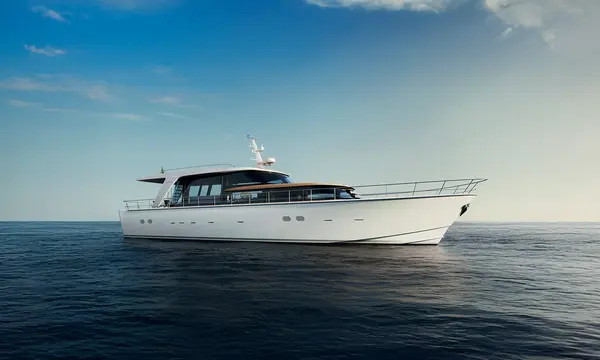
Sanlorenzo unveils SHE, a tribute to timeless elegance where heritage meets innovation Sanlorenzo introduces SHE, a unique 25.5-metre project that reinterprets the Maison’s heritage …
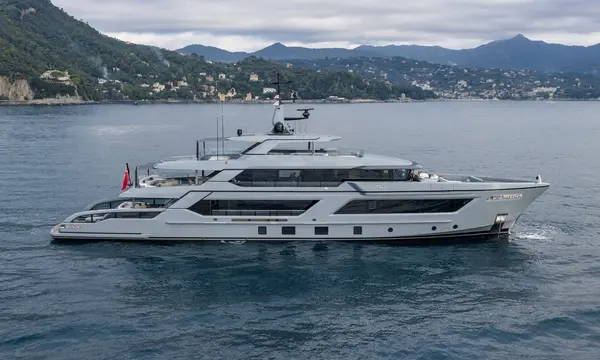
Double triumph at the Boat International Design & Innovation Awards 02.02.2026 Double triumph at the Boat International Design & Innovation Awards Double triumph at …
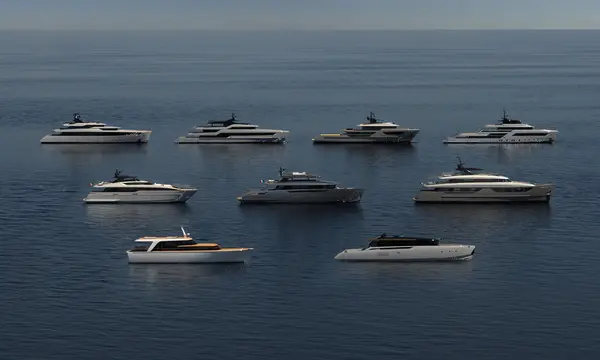
Sanlorenzo’s official news and events area highlights current superyacht innovation, launches and brand activity.
Superyacht Guide
Continue into the wider Superyacht Guide.
Business opportunities · Superyacht Guide
Companies serving the superyacht market can discuss clearly identified advertising, sponsorship and business-profile opportunities. Commercial activity remains separate from independent editorial coverage.