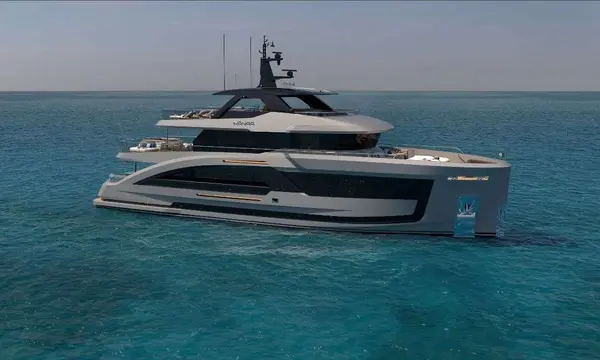
Antonini Navi Appoints Denison for US and Mexico Superyacht Representation
Italian custom yachtbuilder Antonini Navi has named Denison Yachting its exclusive representative for the United States and Mexico, focusing on four projects.
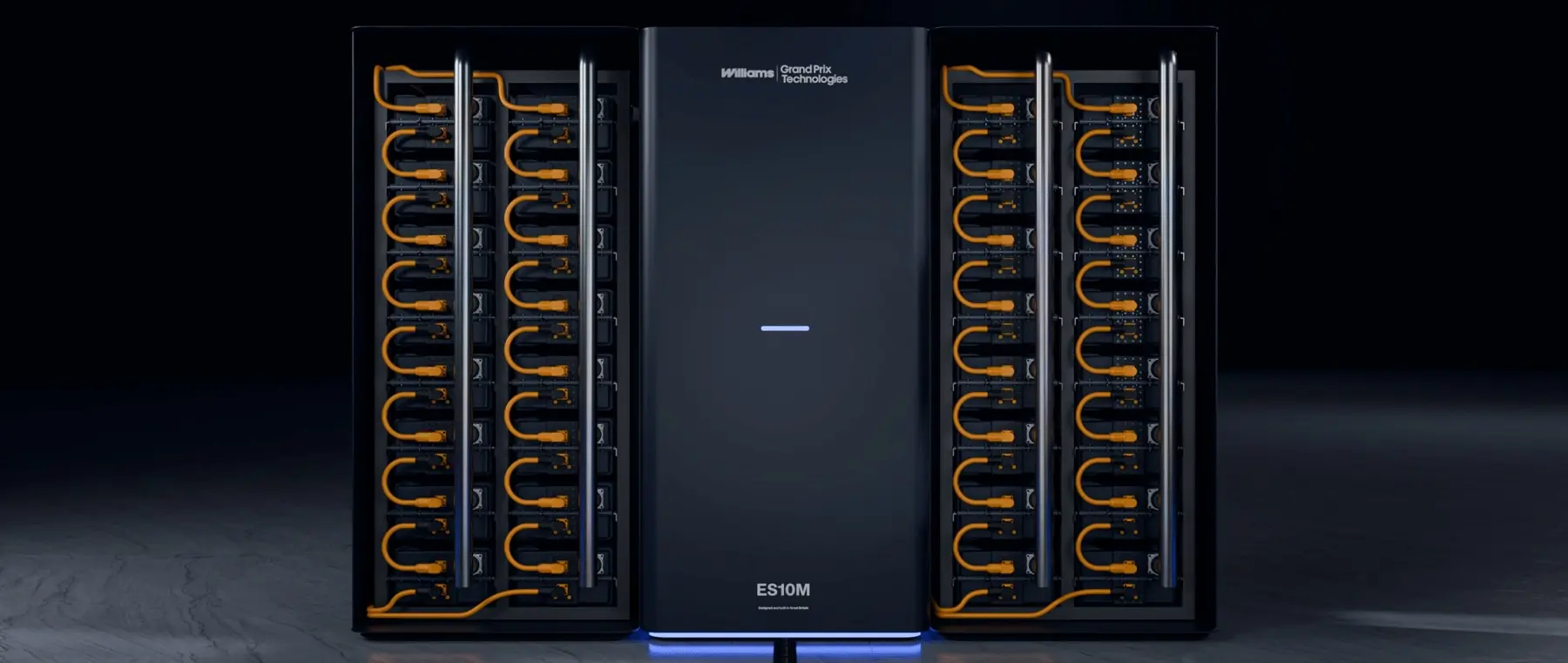
Unipart has announced a new manufacturing partnership with Williams Grand Prix Technologies to support production of the ES10M modular marine battery system for demanding vessel and defence applications.
Unipart and Williams Grand Prix Technologies have announced a strategic partnership aimed at translating high-performance battery engineering into a scalable manufacturing operation. Their 22 October 2026 agreement focuses on demanding marine and defence applications and includes production support for the ES10M marine energy-storage system already developed by Williams.
The distinction from the ES10M's earlier product announcement is important. Williams has already introduced the underlying marine battery architecture; the new development concerns how that technology can move from an advanced design and prototype programme into repeatable industrial supply. For superyacht builders and refit specialists, manufacturing capacity and support arrangements can affect the viability of a system as much as headline battery performance.
Unipart says its contribution will come from extensive manufacturing and supply-chain operations, including existing large-scale battery-production capability. Williams Grand Prix Technologies brings a design background rooted in motorsport, specialist energy systems and software that uses physical models to interpret system behaviour.
The ES10M is described by the companies as a modular, high-performance battery system developed for marine duties where compact energy storage and dependable operation are critical. The partnership is intended to provide a complete route from advanced engineering through the disciplines required for repeatable production. It should not be interpreted as a statement that the battery is immediately available in unlimited volume or that every shipyard has an approved integration package.
For naval architects considering battery-assisted propulsion, auxiliary power or quiet operation at anchor, an industrial manufacturing partner may make long-term supply and service planning easier. Yet a yacht's actual installation still depends on system sizing, class approval, integration with propulsion controls and the vessel's wider electrical design.
Williams Grand Prix Technologies is based alongside the Williams Formula 1 team in Grove, Oxfordshire, and applies high-performance engineering methods to sectors beyond racing. Those methods include modelling system loads, controlling battery behaviour and evaluating safety-critical operating conditions. Unipart, meanwhile, points to its production and logistics experience as the complementary ingredient.
The companies describe a common challenge: specialist battery products can be highly capable in development but difficult to manufacture consistently at scale. Materials, quality control, traceability, component supply and inspection processes must remain consistent as production grows. In a marine application, a failure may affect a vessel far from its home port, making careful manufacturing control particularly valuable.
The announcement references the relationship established through Hyperbat, a battery-production business that came under full Unipart ownership earlier in 2026. That history provides context for the new agreement, but it does not establish the location, capacity or delivery schedule of a dedicated ES10M production line. Those operational details were not quantified in the announcement.
Superyacht electrical architecture is increasingly complex. Large vessels may use battery banks for hotel loads, peak-power management, hybrid propulsion support or periods of quieter operation in port and at anchor. The design challenge is not simply installing more battery capacity; it is integrating energy storage with generators, switchboards, cooling, safety systems and crew procedures.
A modular battery product offers designers a potential advantage because capacity can be configured around the space and energy demand available. However, the number of modules, operating voltage and cooling arrangements must be engineered for the yacht, and a larger installation will require a corresponding approach to compartmentation, firefighting provisions and maintenance access.
Owners considering a refit should therefore begin with an electrical-load study and a review of the vessel's machinery spaces. An attractive energy-density figure cannot on its own determine whether conversion is feasible, how long a generator can remain offline or whether the battery system provides a credible return on investment.
Beyond physical battery hardware, Williams highlights physics-informed machine learning as part of its engineering offer. Such systems seek to combine sensor data with physical understanding of the equipment, potentially improving insight into battery condition, performance and future maintenance needs. Unipart's role is presented as supporting production of the engineered solution, not as independently verifying a particular performance improvement.
For a yacht crew, the practical value would lie in useful diagnostics that can be interpreted within an established safety procedure. Alerts, shutdowns and remote monitoring do not eliminate the need for inspections, trained engineers or clear emergency responses. Any installation must satisfy relevant class and flag requirements, and approval should be confirmed for the particular vessel rather than assumed from general marketing language.
The companies frame their work around the reliability demands of marine and defence operators. That gives the announcement relevance to high-end yachting, where system failures may be difficult to resolve quickly during remote cruising and where a battery installation must coexist with long-established engine-room systems.
Unipart and Williams have not disclosed a contract value, production-volume target, first-delivery date or comprehensive ES10M installation price in the 22 October release. Nor have they announced a named superyacht installation arising from the new partnership. Those omissions are important when distinguishing an industrial agreement from confirmed vessel orders.
Shipyards will want to know which engineering and production activities sit with each partner, how warranty and after-sales responsibility will be allocated, and what documentation will support integration. A refit owner will also need to consider the disruption involved in installing modules, protecting crew access and upgrading other electrical equipment.
Even without those answers, the announcement marks a meaningful step in the supply-chain side of marine electrification. Williams has a defined battery platform; Unipart brings production experience that could help make the platform more accessible to customers who need a reliable, supportable system over many years at sea.
The release establishes the existence and intended scope of the partnership, not a proven reduction in yacht fuel consumption. Any such savings will depend on the way each vessel operates, how its generators and propulsion are configured, and the performance measured after an installation is commissioned.
Continue reading
Italian custom yachtbuilder Antonini Navi has named Denison Yachting its exclusive representative for the United States and Mexico, focusing on four projects.
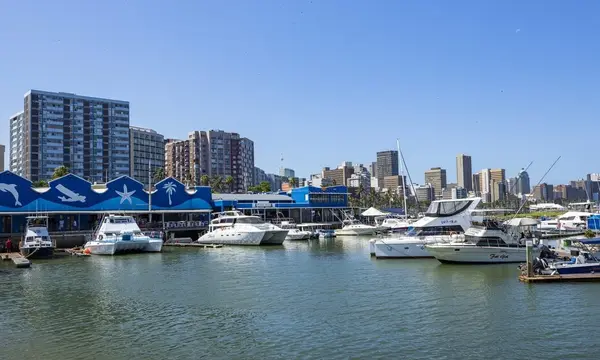
South Africa says Durban's proposed superyacht precinct could attract R1.9bn in investment and target more than 2,500 jobs by 2030, with an industry symposium …
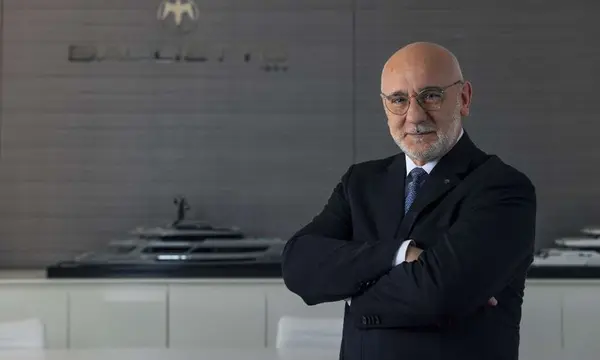
Baglietto has confirmed a binding offer targeting the La Spezia assets of The Italian Sea Group, joining another publicly identified shipyard bidder in a …
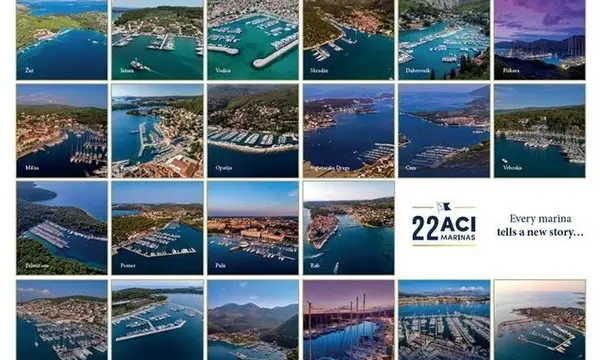
Croatia has extended concession rights across ACI’s marina chain through 2058, offering a longer planning horizon for facilities used by visiting yachts and leisure …
Superyacht Guide
Continue into the wider Superyacht Guide.
Business opportunities · Superyacht Guide
Companies serving the superyacht market can discuss clearly identified advertising, sponsorship and business-profile opportunities. Commercial activity remains separate from independent editorial coverage.