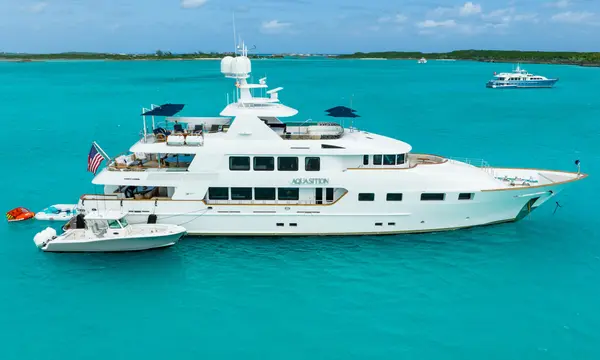
TWW Confirms AQUASITION and DAKOTA for Antigua Charter Show 2026
TWW Yachts identifies 43.3m AQUASITION and 38.9m DAKOTA for the 2026 Antigua Charter Yacht Show; their layouts and published charter rates tell different stories.
Miguel A Amutio / Unsplash License; shipyard with vessels and cranes, illustrative industrial scene; not Hakvoort, Soprano or the Amsterdam survey
Following the 2026 RefitX seminars at Fort Lauderdale, industry participants including Derecktor Shipyards and Safe Harbor have highlighted skilled-worker training and retention as crucial constraints on US superyacht refit capacity.
The discussion at the Fort Lauderdale International Boat Show's 2026 RefitX seminar series has moved beyond whether the United States possesses capable shipyards to the harder question of whether those yards can recruit, train and retain enough skilled workers for increasingly complex superyacht refits. The show's official programme brought together representatives of Derecktor Shipyards, Safe Harbor, Bradford Marine, designers, engineers and other industry participants. Subsequent first-hand reporting published on 6 November placed workforce development at the centre of the debate.
That is a consequential distinction for the large-yacht sector. A facility may have suitable berths, lifting equipment and a technically ambitious project plan, yet still struggle to meet an owner's target schedule if experienced welders, pipefitters, electricians, coating specialists, joiners or project managers are unavailable at the critical stage. Building additional hard infrastructure alone does not guarantee that the corresponding specialist labour can be supplied.
RefitX is intended to develop into a dedicated conference and exhibition alongside the 2027 Fort Lauderdale International Boat Show. At the 2026 show, the organisers presented a programme of discussions covering project management, South Florida's capacity, domestic refit competitiveness and the rationale for a new sector-focused event. Those sessions were not themselves the full 2027 exhibition. They were a precursor intended to surface practical questions among the yards, owners' representatives and suppliers who will be asked to participate.
SuperYacht Guide previously covered the announcement of RefitX 2027 and its proposed conference format. The new development for this report is the substance of the completed October sessions as discussed in reporting issued on 6 November, particularly the constraints on workforce development. Keeping the two stages separate avoids treating a future event announcement as if it were a fresh outcome from a panel that had already taken place.
The official FLIBS programme lists a 29 October discussion on whether South Florida can keep pace with a refit boom. The announced topics included yard capacity, infrastructure investment, skilled labour, permitting, technology and the economic effects of attracting complex projects. Participants listed by the organiser included Safe Harbor's Tim Sargent, John Kelly of Bradford Marine and Duncan Smith of Smith Advocacy Group. A separate discussion examined what could make intensive American yacht refits more competitive against work undertaken overseas.
In firsthand coverage of the discussions, SuperYacht Times reported Derecktor chief commercial officer Joel Shine's concern about the challenge of developing the next generation of shipyard workers. The report also described Safe Harbor's efforts to bring experienced service personnel into training roles. Those remarks should be understood as participants' assessments of industry conditions, not as an independently audited national count of vacant jobs or a guarantee of any specific future labour shortage.
Training a specialist shipyard workforce is not the same as hiring people for a short seasonal exhibition. A refit may require a person to work safely around pressure systems, high-voltage installations, cranes, confined spaces, marine coatings and vessel structures that are unfamiliar even to a skilled worker from another trade. Experienced supervision is essential. Knowledge gained on one yacht can be highly valuable on the next, but the learning process cannot be compressed without considering safety and quality.
A second problem is mobility. Many technicians and subcontractors work across companies or ports, especially where several yards compete for similar skills. Mobility offers flexibility to individual workers, but it can complicate a yard's decision to pay for long-term training if people are likely to move before that investment bears fruit. The commercial response may involve better career paths, consistent work planning and cooperative training arrangements rather than assuming that pay alone solves every retention issue.
For a yacht owner, the direct consequence of an understaffed or overstretched yard is uncertainty. A contract may specify an expected completion date, but a delayed electrical installation or surface-preparation operation can prevent other contractors from starting. The effect is particularly acute when the yacht has a planned charter season, a survey deadline, a delivery commitment or a narrow window for travel between regions.
The show's separate session on the perfect refit addressed early planning, scope changes, procurement, communications and contingency budgets. These subjects are closely connected to workforce availability. When major decisions are made after demolition or inspection begins, the yard may have to reschedule specialists already allocated to other vessels. An owner can reduce that risk by agreeing a clear work scope, selecting decision-makers and understanding which tasks have long lead times before the vessel enters the facility.
A useful work plan distinguishes fixed critical-path activities from optional upgrades that can be moved if time becomes constrained. It also identifies work that may reveal hidden conditions after panels, machinery or coatings are removed. None of these measures eliminates uncertainty, but they allow the captain, manager, surveyor, designer and yard to discuss consequences before an apparently small change consumes a disproportionate amount of time.
The capacity debate should therefore be read as more than a contest over the number of dry-dock slots. A yacht occupying a berth may require teams with different qualifications at different periods. Yard capacity is a combination of physical infrastructure, skilled labour, project management, subcontractor availability, equipment and the permissions needed to perform the work. A vessel's overall length is only one input into that calculation.
Another official FLIBS seminar considered why major American yachts still sometimes travel overseas for intensive transformation. The programme acknowledged that the United States has experienced designers, yards and technical specialists while asking what is required to keep a larger share of complex projects at home. That framing is not proof that overseas yards are inherently better or cheaper, nor that all US projects are being lost to Europe. Individual owner decisions depend on the location of the yacht, technical scope, scheduling, regulatory matters, labour availability and the capability of the particular contractor.
A major refit may require changes to structure, machinery, interior arrangements, paintwork or safety systems. Some tasks are readily performed by a broad network of contractors, while others depend on rare expertise or certified facilities. Owners and managers should be cautious about broad national comparisons that ignore these differences. The relevant commercial question is which yard, with which verified resources and subcontractors, can execute the agreed work at the required standard.
A strong local capability can reduce positioning voyages and make owner oversight easier when a yacht is based in the region. But it can also be sensible to travel to a specialist yard if that facility has the right experience and availability. A training strategy is valuable because it increases future choice rather than obliging owners to make all refit decisions domestically.
Industry efforts to develop a workforce face two linked demands: new entrants need practical pathways into the trades, and experienced supervisors must have time to teach them. When yards are busy, senior craftspeople are often needed immediately on projects. Removing them from production to train recruits has a short-term cost, even if it supports a healthier business over several years.
Training also needs to reflect the mix of work carried out by a modern large-yacht refit yard. Traditional metalwork and mechanical skills remain important, but owners increasingly ask for work involving power management, communications, navigation systems, specialist automation and sophisticated hotel services. Workers do not necessarily have to master every discipline, yet they need to understand how their tasks interact with other systems and which work requires specialist certification.
The FLIBS debates show why one company cannot solve the entire problem. Educators, trade bodies, yards, contractors, insurers, owners' teams and regulators all influence the skills pipeline. Some measures, such as apprenticeships or mentoring, require sustained local cooperation; others concern national policy and funding. The panel discussions do not establish that any particular programme has already delivered a measurable increase in qualified staff. Those results would need to be reported later with evidence.
For equipment suppliers, workforce shortages can affect installation and after-sales support as much as fabrication. A component may be available for purchase but unusable until a certified technician can fit, commission and test it. Planning across a yacht's vendors becomes especially important when machinery or digital systems are being integrated into an existing vessel with incomplete documentation.
The issue also reaches beyond the shipyard. Captains and yacht managers have to organise surveys, crew arrangements, guest or charter commitments and the subsequent return to service. Refits that overrun can have costs outside the yard invoice, including changes to positioning, berthing and insurance arrangements. Those costs should be evaluated in a project budget where relevant, not inferred from a general industry article as a fixed percentage of every refit.
A dedicated RefitX event could offer a forum for tracking these practical concerns, but its commercial impact remains prospective. The success of a conference should eventually be measured by the quality of participation, technical exchange and demonstrable industry outcomes, not merely by the number of presentations on its opening programme.
The confirmed facts are that FLIBS held RefitX preview seminars in late October, that the official programme placed labour and capacity on the agenda, and that firsthand post-event reporting described senior industry participants treating workforce training and retention as central challenges. The November reporting is a development in the industry's public assessment of the problem; it is not a fresh announcement of a new yard opening, government grant or solved shortage.
For owners choosing a refit facility, the practical question is whether a yard can demonstrate the people, specialist facilities, realistic timetable and management discipline needed for the particular vessel. For the American industry, the longer-term question is how to grow those capabilities while making skilled marine trades attractive careers. That is the issue highlighted by the completed RefitX discussions, and it deserves attention beyond the show calendar.
Continue reading
TWW Yachts identifies 43.3m AQUASITION and 38.9m DAKOTA for the 2026 Antigua Charter Yacht Show; their layouts and published charter rates tell different stories.

Organisers say more than 70 yachts have registered for December's Antigua Charter Yacht Show and highlight ALTA, ASAHI, GALENE, LEMON TREE and LULUS.

Bernard Gallay has announced a 5% charter-fee incentive for the first confirmed January or February 2027 booking aboard the rebuilt 28.8m sailing yacht FREE …
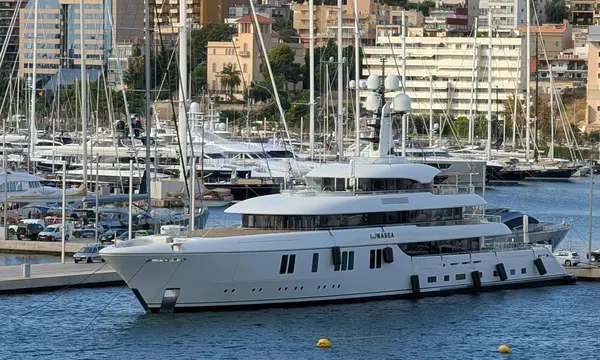
IYC is marketing the 61-metre Royal Hakvoort yacht TOP FIVE II for Bahamas charters from November 2026, with indicative weekly rates of $600,000–$650,000 plus …
Superyacht Guide
Continue into the wider Superyacht Guide.
Business opportunities · Superyacht Guide
Companies serving the superyacht market can discuss clearly identified advertising, sponsorship and business-profile opportunities. Commercial activity remains separate from independent editorial coverage.