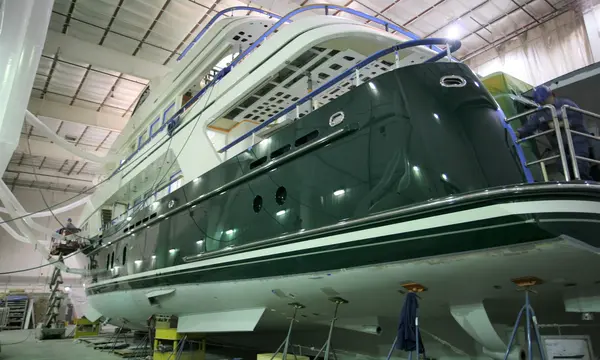
US Shipyard Grants Back Delta Marine Lift and Burger Yacht Engineering
MARAD's 2026 shipyard awards provide $1.509m toward a 620-ton Travelift at Delta Marine and $568,720 for digital engineering systems at Burger Boat Company.
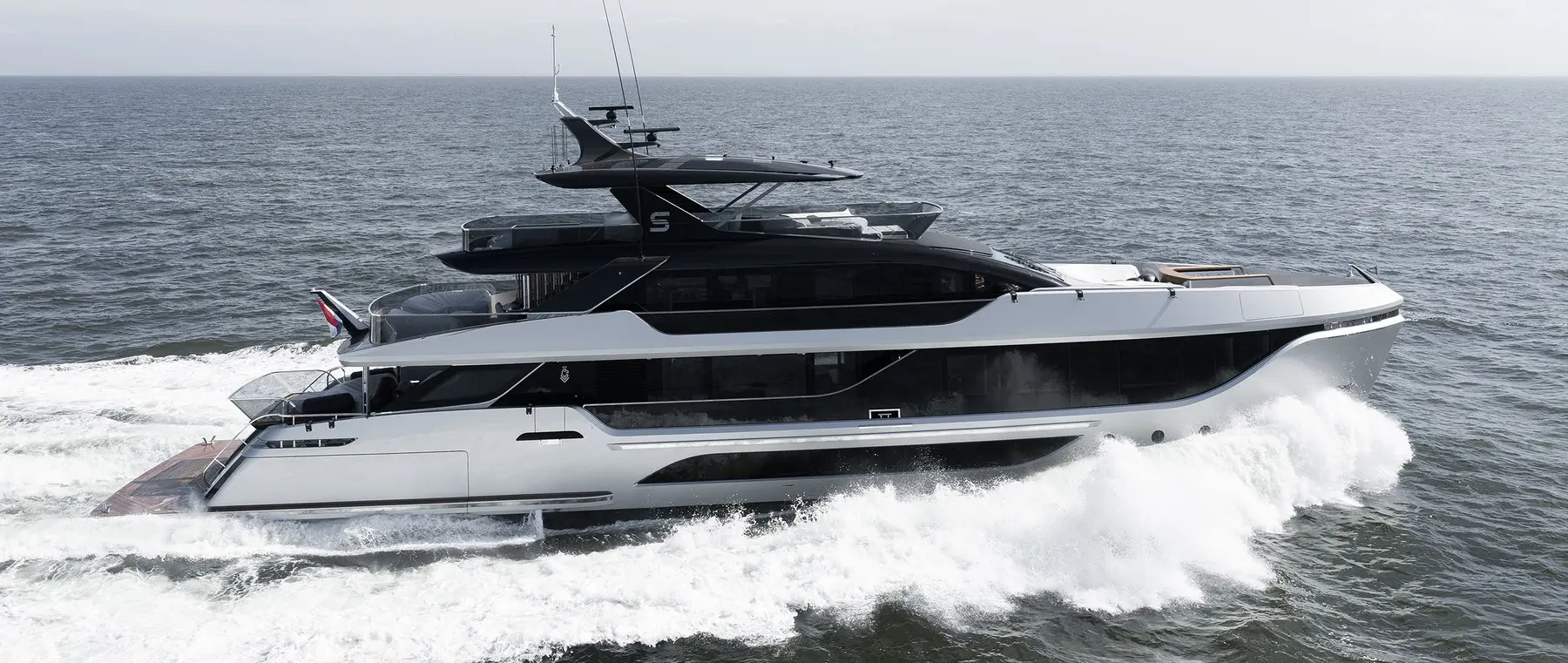
An examination of Van der Valk's 39.92-metre Shine, delivered in 2026 with a bespoke aluminium hull, fast-displacement engineering and interiors by Cristiano Gatto Design.
At 39.92 metres, MY Shine demonstrates how a relatively small specialist shipyard can approach the expectations normally associated with far larger custom superyachts. The 2026-built aluminium motor yacht, originally developed under the name Project EVO, is the largest Van der Valk vessel to date by length and volume. Her final character reflects repeated exchanges between experienced owners, designers and engineers, rather than simply adopting a standard hull with a different interior. Van der Valk’s published specification identifies an 8.52-metre beam, 2.30-metre draft and an ocean-going fast-displacement form, dimensions which reveal both her ambitious scope and some of the constraints shaping her development.
Shine’s exterior was developed through a team spanning SFG Yacht Design, Fancy by Dada and Cristiano Gatto Design, with Diana Yacht Design and Ginton Naval Architects contributing engineering and naval architecture. The project began as a smaller concept, around 36 metres, before evolving into the present 40-metre vessel. That change is significant because increasing length is not simply a matter of extending rooms: accommodation, machinery spaces, crew circulation, structural strength and seakeeping all have to be revisited. The completed boat therefore illustrates the often overlooked coordination required to produce a genuinely bespoke superyacht.
The family-run yard launched Shine in Waalwijk in March 2026, began sea trials in the spring and subsequently confirmed her delivery to the owners. These milestones have already happened; the principal story now is what they reveal about Van der Valk’s custom-building capability. Promotional descriptions often concentrate on the yacht’s shape, but an owner commissioning a one-off vessel must also judge the process through which design ambitions become practical, serviceable and seaworthy machinery. Shine is a useful case study precisely because she places complicated engineering behind a clean, low-profile exterior.
The builder lists a round-bilge, fast-displacement hull developed by Ginton Naval Architects and made in marine-grade aluminium. Twin MTU 16V2000M97L engines are quoted at 1,939kW each, with a published maximum speed of 24 knots. These are builder specifications rather than independent performance measurements for every possible sea state or loading condition. Nevertheless, the power and hull form indicate an owner who wanted a substantial private yacht without relinquishing the ability to cover useful distances at comparatively brisk speeds when conditions permit.
A beam restriction was one of the early technical challenges. The builders were working around canal-lock limitations, an apparently mundane consideration that influences the entire naval-architecture package. The yacht’s official specification gives a beam of 8.52 metres, and the press material explains how close attention to the hull and rudder geometry supported the design. Outboard-placed rudders were used to help improve shaft angles and vibration characteristics. For guests, the benefit sought is not a striking drawing but a quieter, more comfortable experience when the machinery is running.
Shine also demonstrates how a modern transom can become one of the most complex structures aboard. The aft area integrates a transforming swim platform, transom door and two fold-down balconies alongside major glazing and interconnected interior spaces. Each feature introduces mechanical, hydraulic, watertight and maintenance considerations. On a 40-metre yacht, these devices must operate predictably and remain accessible for inspection even though the finished guest environment is intended to feel uncomplicated. It is exactly this contrast between visible ease and hidden complexity that makes the project interesting from a build-quality perspective.
Van der Valk says the interior incorporates approximately 78 different materials, including ebony timber, fine leather and individually designed furniture. Such variety can produce enormous visual richness, but it creates a demanding programme for procurement, fabrication, installation and future maintenance. Finishes must also coexist with the movement, humidity and temperature changes of a working vessel. Cristiano Gatto Design's involvement in both the broader design evolution and the interior helped maintain a coherent identity across spaces developed by different specialists.
Custom furniture makes the distinction between a production model and a bespoke project particularly clear. Furniture on a yacht cannot be considered only as a decorative object; its weight, fixing points, clearances, movement under way and access for repair must all be addressed. The more individual a fitting becomes, the harder it can be to replace quickly when cruising far from its original makers. Experienced owners are therefore likely to value the ability of shipyard carpenters and contractors to document work accurately as much as the richness of the finished pieces.
Large windows and opening deck elements have obvious lifestyle value, connecting interior rooms with light and the surrounding sea. Yet the integration of such features must balance structural loads, watertight integrity, privacy and the need to remain comfortable while moving. Shine’s design brings these competing priorities into one compact, muscular profile. The most valuable test of that design is not whether each component looks impressive at the quay but whether the crew and guests find the spaces intuitively usable during the ordinary course of cruising.
Fuel capacity is listed at 26,790 litres and fresh water at 6,420 litres, figures that provide some context for the yacht's operational ambition but not a confirmed range. Cruising endurance depends on speed, load, weather and auxiliary demand, and an owner should never turn tank figures into a precise passage promise without validated consumption data. The published 300-tonne displacement likewise needs to be understood within a full loading condition. These measurements form the basis for proper technical conversations with naval architects, captains and surveyors, rather than a substitute for them.
Shine was conceived with close attention to an owner who likes to remain personally involved in operating boats. That desire introduces a delicate balance at this size: the technical platform is substantial, yet human-scale handling and clear sightlines remain important. Automated systems and crew support may ease operations, but regulatory manning, training and insurance requirements still apply. An owner considering a comparable commission should make decisions about control stations, tender handling, maintenance access and redundancy at the design stage, before interior joinery starts to hide the underlying machinery.
The most convincing conclusion from Shine is that bespoke design is less about adding features than about reconciling competing demands. The owners wanted a particular visual style, detailed interior identity and convincing performance in a yacht large enough to feel luxurious but compact enough to retain a personal character. Van der Valk has turned those ambitions into a delivered 2026 vessel, with engineering from several specialist partners. For the wider superyacht sector, Shine is a reminder that the ingenuity of a custom build often resides in decisions passengers never notice, provided the yacht works as intended.
Continue reading
MARAD's 2026 shipyard awards provide $1.509m toward a 620-ton Travelift at Delta Marine and $568,720 for digital engineering systems at Burger Boat Company.
Malta-based Melita Marine Group has started construction on a waterfront facility for captains and crew during yacht refits, with a gym, sauna, shared social …

An IYC and SuperYacht Times panel at Monaco Yacht Show 2026 examined how crew rest, staffing, mental wellbeing and working culture affect the guest …
Fraser has published its October 23 Fort Lauderdale Forum programme for yacht captains, with sessions on crew welfare, regulation, insurance and safety.
Superyacht Guide
Continue into the wider Superyacht Guide.
Business opportunities · Superyacht Guide
Companies serving the superyacht market can discuss clearly identified advertising, sponsorship and business-profile opportunities. Commercial activity remains separate from independent editorial coverage.