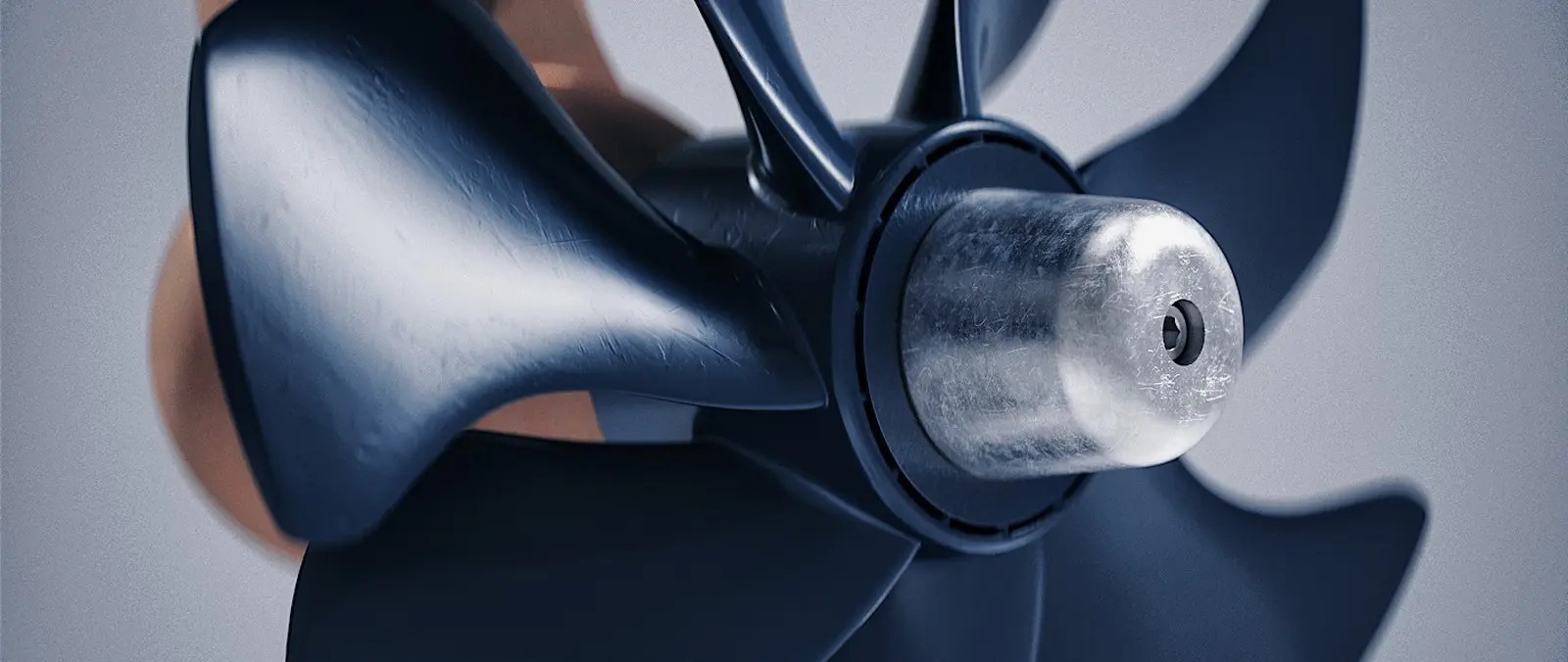
VETUS Launches BOW PRO 300 Thrusters for Yachts up to 30 Metres
By Stephen Yardley · Edited by Stephen Yardley
VETUS introduces BOW PRO Boosted 300 bow thrusters with 285–320 kgf output, brushless motors and 24V-to-48V charging for yachts up to 30m.
VETUS has introduced three high-output models in its BOW PRO Boosted series, bringing its advanced electric bow-thruster technology into a 300-millimetre tunnel size. The Dutch marine equipment manufacturer identifies the BOWB285, BOWB300 and BOWB320 as its most powerful BOW PRO thrusters so far. It says the new units are intended for vessels up to about 30 metres, placing their upper application range within the smaller end of the superyacht fleet.
This is an equipment announcement, not a claim that every 30-metre yacht can use one of the new thrusters. Actual suitability depends on windage, displacement, tunnel position, electrical integration and the owner's operating profile. A technical review is necessary before a builder or refit yard selects a thruster for an individual yacht.
The manufacturer quotes thrust outputs of 285, 300 and 320 kilogram-force for the three models. It describes the range as providing approximately forty percent more output in this tunnel class and assigns electrical power ratings from 17.5 to 18.7 kilowatts. These are nominal product specifications; real-world boat control depends on installation geometry, immersion, current conditions and the duration of manoeuvring.
At a crowded marina, a proportional bow thruster is useful not just for its maximum sideways force but for controllability at low demand. Smooth changes in thrust can help a captain avoid abrupt movement when close to pontoons, other vessels or quay installations. Bow-thruster performance must still be coordinated with the rudders, stern thruster, main propulsion and available crew assistance.
One of the BOW PRO Boosted range's distinctive features is internal DC-to-DC charging. VETUS says the new 48-volt thruster battery bank can be charged through a 24-volt supply using an integrated three-stage charging process. The thruster controller therefore contributes to battery management when no manoeuvring command is being issued, rather than leaving the installation solely dependent on an external charger.
The electrical architecture needs to be designed carefully. Cable length, protection devices, ventilation and battery location affect safety and operating reliability. A 24-volt charging connection should not be mistaken for a promise that the full high-power thruster can be operated directly from any existing 24-volt yacht supply without the specified 48-volt battery installation.
VETUS highlights maintenance-free brushless motors and proprietary control electronics as the foundations of the range's quiet running and long operating period. Conventional thrusters can be limited by motor heating or control protection during repeated docking attempts; VETUS says its boosted system is designed to reduce those interruptions through active heat management and more efficient motor control.
The claimed extended runtime remains subject to the battery energy available, the installation and operating conditions. A captain should not interpret the promotional language as permission to run a thruster indefinitely regardless of electrical capacity or ambient temperature. Commissioning records should document the expected duty cycle and the controls used to alert crew to reduced performance or an abnormal state.
The new series supports VETUS proportional control panels, including paddle and joystick formats and a two-thruster arrangement where suitable. Communication through the company's V-CAN interface also supports integration with compatible docking-control components. This reduces the need for an entirely new control philosophy when a yacht already uses the supported equipment.
System compatibility should be established from the precise part numbers and current firmware requirements rather than assumed from a shared brand. For a refit, the existing helm wiring, battery systems and any third-party docking controls should be reviewed before the installation contract is signed. A professional handover should include fault responses, emergency isolation and crew familiarisation.
VETUS gives the BOW PRO family a broad vessel range from roughly eight to 30 metres. For Superyacht Guide, the significant applications are the uppermost lengths where yacht owners require marina manoeuvring performance without taking space away from accommodation or other machinery. A 26-to-30-metre yacht can have substantial windage, especially when fitted with broad superstructures and high freeboard.
Naval architects and builders must balance thruster tunnel size against hull strength, internal access, water flow and noise transmission into accommodation. The smallest suitable engine room or forward technical space may influence design decisions as much as the advertised maximum thrust. A late-stage refit can be more involved than a newbuild installation because cutting a tunnel requires survey and structural approval.
VETUS states that the 300 series increases the BOW PRO family to 22 models and that work on 400-millimetre tunnel versions is continuing. Those larger units have been described as forthcoming, not as products already delivered and installed. Prospective buyers should obtain the latest confirmed availability and approval documentation directly from the manufacturer or authorised network.
The company is based near Rotterdam and supplies engines, thrusters, generators and other onboard equipment through an international distribution organisation. It developed the boosted technology within its broader electrical-control programme, but every yacht should have its own installation specification, electrical drawing and maintenance instructions. For captains, the practical benefit will be reliable low-speed control supported by correctly maintained power systems and trained crew.
Explore
Go deeper into the yachts, companies, events and destinations directly connected to this article.
Continue reading

Frigomar has introduced its CU210VFDT chiller with 210,000 BTU/h capacity, a titanium seawater exchanger and the same compact dimensions as its 180,000 BTU unit.
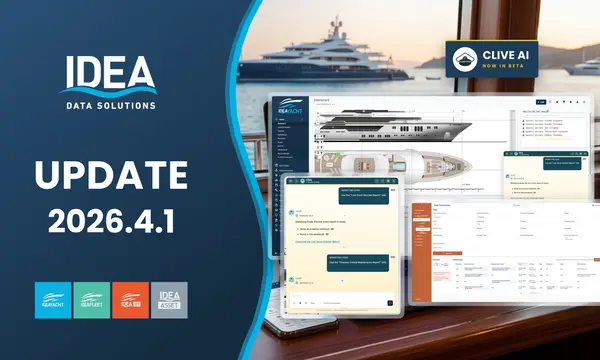
IDEA Data Solutions details release 2026.4.1 for yacht operations, including limited CLIVE AI testing and improvements to purchasing, maintenance and fleet views.
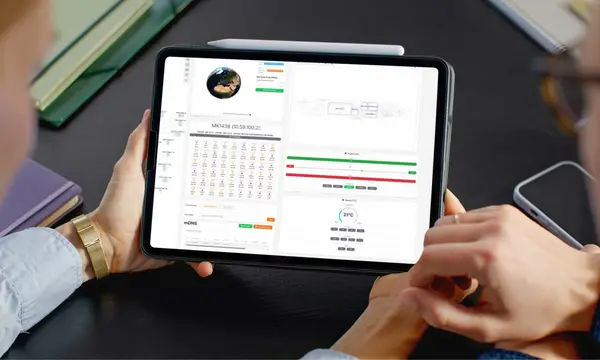
Videoworks explains AVIT Panel, an overlay system that connects existing onboard digital equipment to configurable views for captains and technical teams.
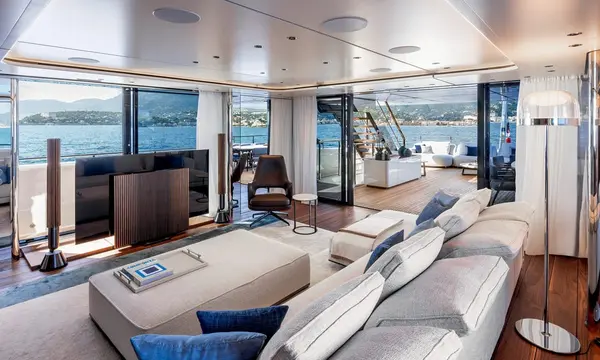
Videoworks explains its bespoke Bang & Olufsen systems on two Custom Line superyachts, naming the hardware used and the integration work carried out.
Superyacht Guide
Continue into the wider Superyacht Guide.
Business opportunities · Superyacht Guide
Companies serving the superyacht market can discuss clearly identified advertising, sponsorship and business-profile opportunities. Commercial activity remains separate from independent editorial coverage.