Viareggio Port Plan Tests Superyacht Yard Expansion
By Stephen Yardley · Edited by Stephen Yardley
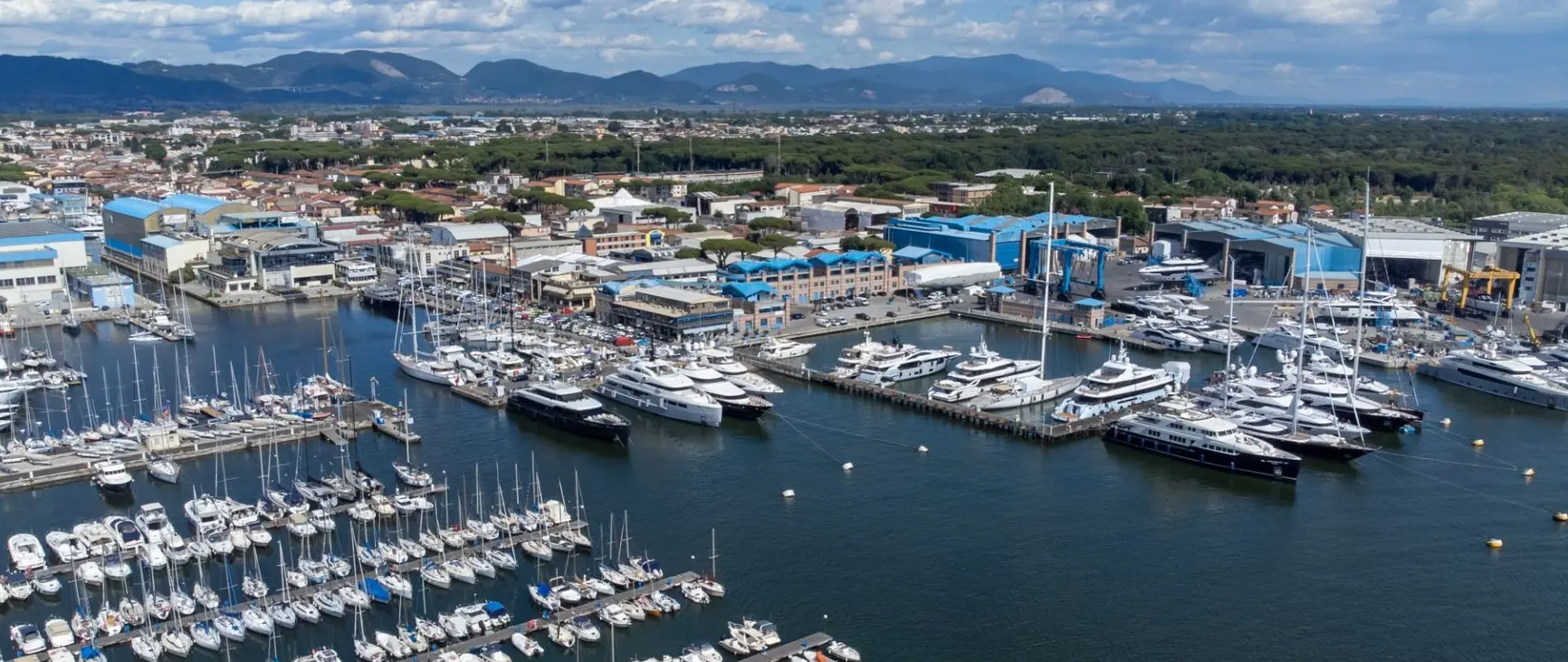
Viareggio's port redevelopment plan advances towards its final planning phase as superyacht yards seek taller production halls, additional work space and safer road access.
Viareggio's long-running port redevelopment programme has entered another planning stage, with Tuscany's regional port authority and the municipal administration discussing the final phase of a broader plan for the historic shipbuilding centre. A 13 October 2026 report by the maritime publication PressMare says the process remains unfinished and that substantive observations are expected during 2027, leaving important questions unresolved for superyacht builders and repair businesses.
The key issue is not whether a new superyacht yard has already opened. It is whether Viareggio's physical infrastructure will be able to accommodate the taller construction halls, production areas and safer access routes needed by increasingly complex large-yacht projects. The proposals are under discussion; approval, funding, construction timetables and the eventual engineering configuration should not be treated as settled facts.
PressMare identifies the height of existing shipbuilding halls as a central concern. It reports a current limit of approximately 15 metres and discusses requests that could raise permitted structures towards 25 metres, subject to resolving the competing needs of the port and city. Those figures concern industrial buildings, not a new legal length limit for the yachts themselves.
Large yachts can require high internal clearances for hull and superstructure work, overhead lifting equipment, ventilation, scaffolding and protected paint operations. An inability to enclose the full height of a project can fragment the work between sheds or sites, introduce additional movements and complicate environmental control during finishing.
The report quotes port authority representative Massimo Lucchesi discussing a possible alternative in which a dry dock might allow construction or repair work to sit lower relative to existing buildings. That is presented as an option to consider rather than a confirmed facility with a defined size, engineering design or delivery contract.
Dry docks can provide advantages for underwater hull access and docking large vessels, but their suitability depends on dimensions, seabed conditions, water-control engineering and local environmental constraints. A lower working level does not automatically resolve every height, access or logistical challenge, and no completed feasibility result is reported for this proposed arrangement.
The latest discussion also concerns the division of working areas within the port, with attention to production and refit activities. A superyacht ecosystem depends on more than a launch basin: outfitting halls, specialist subcontractors, stores, component movements and temporary holding areas must be arranged around the vessels under construction.
As yacht dimensions and complexity increase, a yard must be able to move mechanical equipment and materials safely between workshops and hulls. Insufficient land or poorly linked sites can add transport time and create bottlenecks. Those constraints affect contractors, painters and marine engineers as well as the headline builder.
Viareggio's port approaches are a further point of debate. According to PressMare, heavy vehicles travelling along Via Coppino share a busy corridor with cyclists, pedestrians and local hospitality premises. The potential safety and operational conflict has remained difficult to solve despite years of discussion.
The report mentions plans for a new Via del Mare connection between the wider road network and port area, but says this remains a proposal. Large yacht equipment arrives in heavy and sometimes oversized loads, so safe vehicle routing is a real operational issue. It would nevertheless be misleading to announce a new completed access road on the basis of a planning discussion.
Some shipyard work has reportedly been shifted to the Navicelli area near Pisa as businesses adapt to constraints in Viareggio. The move illustrates how Tuscany's yacht-building economy can function across linked industrial locations rather than exclusively from a single waterfront address.
Distributing work between sites can preserve production opportunities, but it also introduces transport and coordination requirements. The choices depend on hull dimensions, available facilities, subcontractor proximity and access to launching infrastructure. Operators considering an investment should assess the network as a whole, rather than assume every job can be completed within the Viareggio port perimeter.
Tuscany's official regional description confirms that its port authority has planning, maintenance, concession and infrastructure responsibilities in Viareggio and other regional ports, including Marina di Campo, Porto Santo Stefano and Giglio. This institutional remit helps explain why a new port plan must reconcile industrial needs with navigation, other port users and the wider city.
Regional planning decisions involve public procedures and legal constraints, and the official framework is not itself proof that a particular proposed shed height or dry dock has been authorised. Superyacht businesses should distinguish an authority's powers from an adopted plan, and an adopted plan from actual construction on site.
For shipyards, the near-term questions concern developable space, building heights, access for large equipment and what infrastructure can realistically be delivered. For yacht managers planning winter repairs, yard capacity and the certainty of the available facilities can matter as much as a competitive quotation.
Captains booking refits require dependable docking windows, a clear scope of work and an understanding of environmental or access restrictions. A proposed port expansion does not automatically create additional berths for the next season; bookings should continue to be based on existing confirmed capacity until operators announce operational changes.
The reported timetable points to a stage for observations in 2027 rather than a finished project opening next year. Further technical submissions, planning decisions, financing and construction would be separate milestones, and the article does not establish dates or budgets for new shipbuilding structures.
For now, the verified development is renewed discussion between the regional port authority and Viareggio on the final phase of a long-running port plan. The unresolved questions—industrial hall height, production space, a possible dry dock and road access—will determine whether the historic large-yacht centre can adapt its facilities to future projects.
Explore
Go deeper into the yachts, companies, events and destinations directly connected to this article.
Continue reading
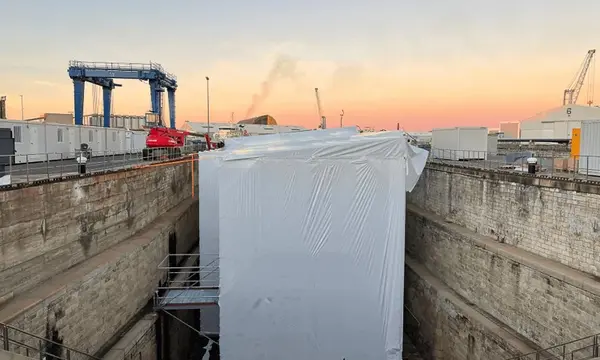
IMM's June 2026 takeover of operations at Atlantic Refit Center adds large-superyacht dry docks and technical facilities in La Rochelle to its Caribbean support …
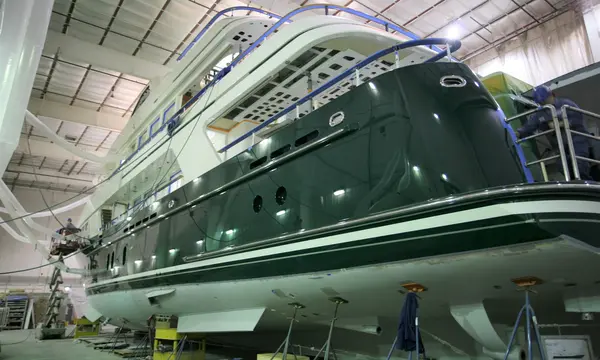
MARAD's 2026 shipyard awards provide $1.509m toward a 620-ton Travelift at Delta Marine and $568,720 for digital engineering systems at Burger Boat Company.

Palumbo's 13,049-square-metre Ortona concession will support larger steel and aluminium superyacht construction as the Italian group works toward 2027 operations.
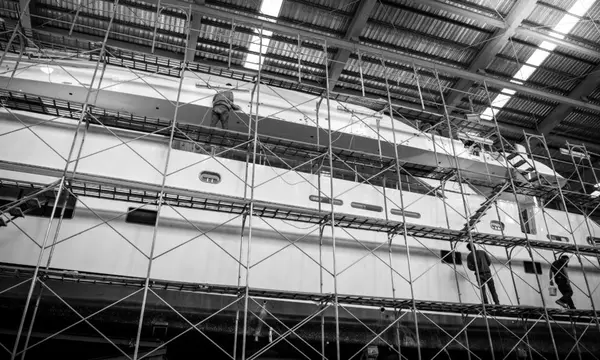
Turkish superyacht builder Mengi Yay has joined the international Superyacht Builders Association, with custom projects underway between 45 and over 60m.
Superyacht Guide
Continue into the wider Superyacht Guide.
Business opportunities · Superyacht Guide
Companies serving the superyacht market can discuss clearly identified advertising, sponsorship and business-profile opportunities. Commercial activity remains separate from independent editorial coverage.