A superyacht is defined by more than appearance or luxury. We examine the 24-metre threshold, the importance of a vessel’s purpose, and why explorer and expedition yachts remain within the superyacht fleet.
Two large yachts can look completely different and still belong to the same superyacht fleet. One may be shaped around terraces, glazing and Mediterranean entertaining, while another may carry cranes, expedition tenders, large stores and the visual language of a working ship.
That apparent contradiction disappears once the terminology is separated properly. Superyacht describes the vessel’s broad identity and use, while terms such as explorer yacht, expedition yacht, motor yacht and sailing yacht describe particular types or capabilities within that broader category.
“Superyacht” is principally an industry term rather than a universal vessel class defined identically by every flag state, regulator, class society, insurer, broker or marina. Maritime rules instead work with more precise concepts such as pleasure vessel, commercial yacht, passenger limits, gross tonnage, load line length and the vessel’s intended operation.
The familiar 24-metre threshold nevertheless has a strong regulatory foundation. Part A of the Red Ensign Group Yacht Code applies to yachts of 24 metres and over in load line length that are in commercial use for sport or pleasure, carry no cargo and carry no more than 12 passengers, which helps explain why 24 metres became an important practical dividing line in the large-yacht sector.
Question Practical answer Is “superyacht” one universal legal vessel class?No. The term is widely used by the industry, but legal definitions depend on jurisdiction and operation. Is 24 metres commonly used as a practical threshold?Yes. It also aligns with an important large-yacht regulatory boundary, although regulatory load line length and editorial LOA are not identical measurements. Can a superyacht be privately operated?Yes. Private ownership does not prevent a vessel from being a superyacht. Can a superyacht be commercially chartered?Yes. Many superyachts operate commercially for charter under the rules applicable to their flag and operation. Can a superyacht be an explorer or expedition yacht?Yes. Explorer and expedition describe capability and intended cruising profile rather than a separate alternative to being a superyacht.
For Superyacht Guide, the clearest practical definition is a large recreational yacht, generally 24 metres LOA or more, whose principal contemporary purpose is private, charter or luxury guest use. Size matters, but purpose, configuration and operating model matter as well, because a 70-metre research ship and a 70-metre private yacht are not the same kind of vessel simply because their lengths are similar.
Professional crew, substantial guest accommodation, complex engineering and significant operating requirements are common characteristics rather than a checklist that every yacht must satisfy in exactly the same way. A large sailing yacht can therefore sit comfortably beside a displacement motor yacht or an expedition vessel within the same broad superyacht category.
An explorer yacht is not a category that sits outside superyachting. It is a type of superyacht designed or substantially equipped for greater range, autonomy and operation away from conventional yachting infrastructure, so the word “explorer” describes what the yacht is designed to do rather than cancelling its yacht identity.
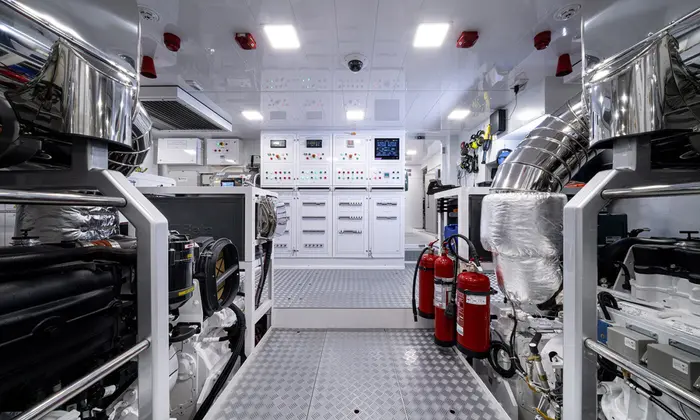
Cantiere delle Marche’s own description of explorer-yacht characteristics illustrates the distinction clearly. The builder highlights robust construction, seaworthiness, redundant equipment, large machinery spaces, ease of maintenance, substantial tenders, exploration equipment, ocean-crossing range and efficient fuel use, all while continuing to describe these vessels as yachts intended for owners and guests.
None of those features is individually required before a yacht may be called an explorer, and explorer does not automatically mean polar capable. A vessel can be a genuine long-range explorer because it is designed for sustained self-sufficient cruising even if its owner never intends to visit Antarctica or operate in ice.
The easiest way to understand the terminology is to separate broad category from vessel type. A 70-metre vessel can simultaneously be a superyacht, a motor yacht and an explorer yacht because those descriptions refer to different aspects of the same vessel.
Term What it describes SuperyachtThe vessel’s broad yacht identity, scale and private, charter or guest-oriented purpose. Motor yachtThe primary propulsion and general configuration. Sailing yachtA yacht whose sailing rig is fundamental to its design and operation. Explorer yachtLong-range, autonomous and often more robust cruising capability. Expedition yachtA yacht with a particularly strong emphasis on remote operation, exploration and specialist equipment. Converted yachtA vessel that began life in another role but has subsequently been substantially converted to yacht use.
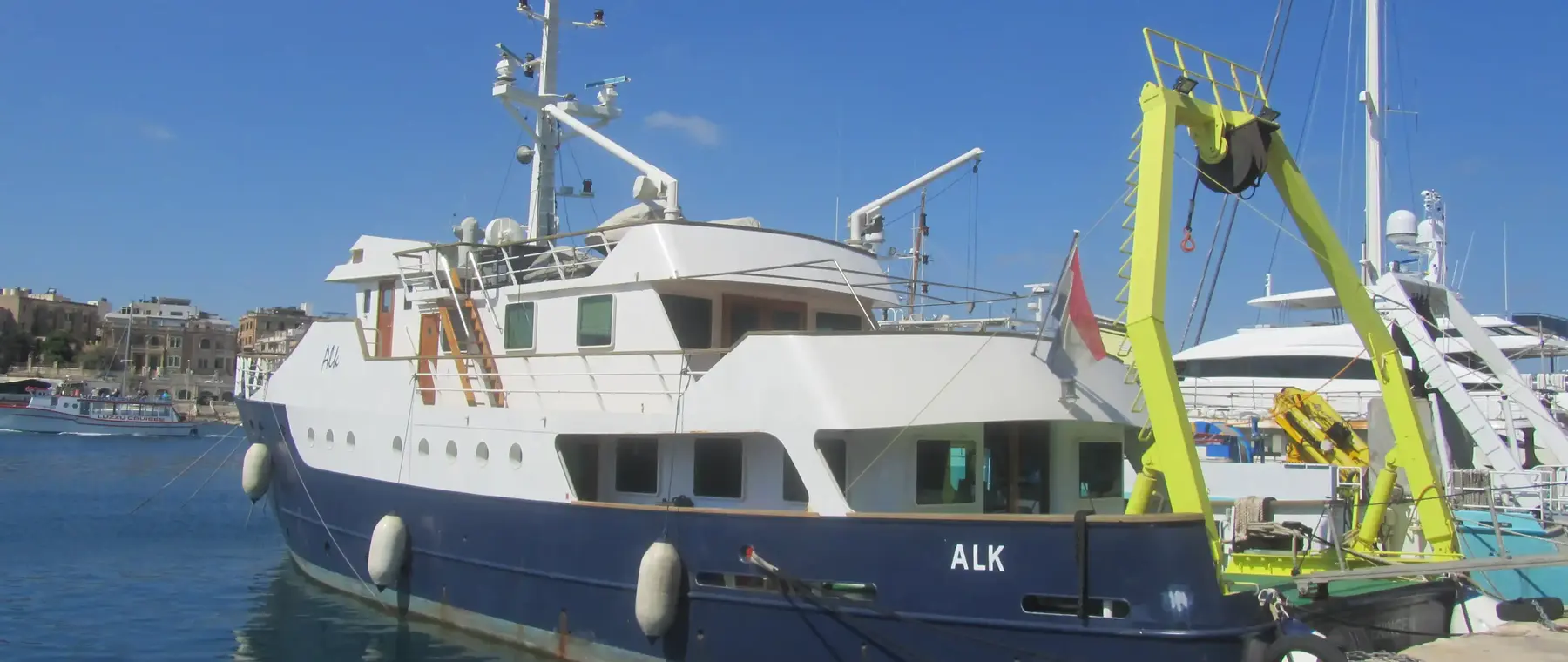
The more difficult cases appear where explorer yachts borrow heavily from commercial, offshore or research-vessel design, or where a yacht was originally built for another purpose. Appearance alone is a poor test because the same high bow, large aft working deck, crane capacity and robust steel construction can be useful on both a commercial vessel and a privately operated explorer yacht.
The stronger question is what the vessel is now principally designed, configured and operated to do. A former commercial vessel can become a yacht after a genuine conversion, while a purpose-built oceanographic ship does not become a superyacht merely because it has comfortable accommodation or carries high-value equipment.
Vessel Superyacht? Reason 70m private explorer yachtYesIts principal role is yacht use, with long-range capability added. 55m charter expedition yachtYesIt remains a guest-oriented commercial yacht despite an expedition programme. 80m commercial vessel substantially converted to private yacht usePotentiallyContemporary configuration, certification and actual use can establish a new yacht identity. 75m dedicated oceanographic research vesselNo, not by defaultScientific research rather than yachting is its principal function. 70m offshore support vesselNoIts primary role is industrial or commercial work. 100m expedition cruise shipNoIt operates fundamentally as a passenger ship rather than a yacht.
Modern explorer yachts can support serious science without ceasing to be yachts. Laboratories, sonar, remotely operated vehicles, dive systems, submersibles and visiting researchers may all form part of an owner’s programme, but the presence of scientific equipment does not by itself determine the vessel’s fundamental classification.
The distinction is whether research is an additional mission conducted from a yacht or whether the ship exists principally as an institutional or commercial research platform. This matters increasingly at the upper end of the explorer market, where private yachts can possess endurance and technical equipment comparable with specialist working vessels while still retaining a private or guest-focused yacht identity.
It is also misleading to regard an explorer yacht as somehow less of a superyacht because it gives more space to machinery, stores, tenders and working decks. Combining remote-operating capability with the accommodation, quietness, climate control, service standards and privacy expected aboard a large yacht can make the engineering problem more demanding rather than less sophisticated.
Cantiere delle Marche’s 35-metre Stellamar provides a useful example of the overlap. The builder describes the steel-hulled RJ115 as an explorer yacht combining expedition-vessel capability with superyacht comfort, and states a transoceanic range of about 5,500 nautical miles at economical speed.
For editorial and database purposes, Superyacht Guide treats superyacht as the broad parent category and then describes a vessel more precisely according to its propulsion, design history and intended capability. This avoids creating a false choice between “superyacht” and “explorer yacht” when an explorer is normally one branch of the larger superyacht fleet.
These descriptions can overlap, so a converted commercial vessel may later also qualify as an explorer yacht while remaining part of the superyacht fleet. The same principle explains why a sailing yacht does not stop being a superyacht simply because its propulsion and operating character differ from those of a conventional motor yacht.
Length provides a practical boundary and engineering tells us a great deal about capability, but the vessel’s principal contemporary purpose remains the strongest discriminator. A superyacht is fundamentally a yacht used for private, charter or recreational guest activity, even when its programme includes ocean crossings, remote cruising or genuine scientific work.
An explorer yacht takes that yacht concept farther from established infrastructure by increasing range, autonomy and operational capability. It is therefore not an exception to the definition of a superyacht but one of the clearest examples of how broad the modern superyacht category has become.
Readers looking for the broader terminology can also see What is a Superyacht? and Definition of a Superyacht. For the scale of the current fleet in practice, the Largest Superyachts in the World rankings provide a live database view of the biggest qualifying yachts.
The regulatory distinction in this article is grounded in the Red Ensign Group Yacht Code, including the scope of Part A for qualifying yachts of 24 metres and over in load line length. Explorer-yacht characteristics and the Stellamar example are drawn from official Cantiere delle Marche material describing its explorer philosophy, technical features and long-range capability.
Explore
Go deeper into the yachts, companies, events and destinations directly connected to this article.

Continue reading
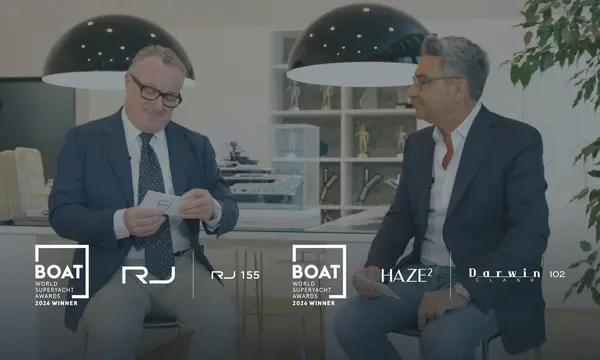
Cantiere delle Marche has marked World Superyacht Awards recognition for explorer yachts RJ and Haze2, highlighting two different approaches within its fleet.
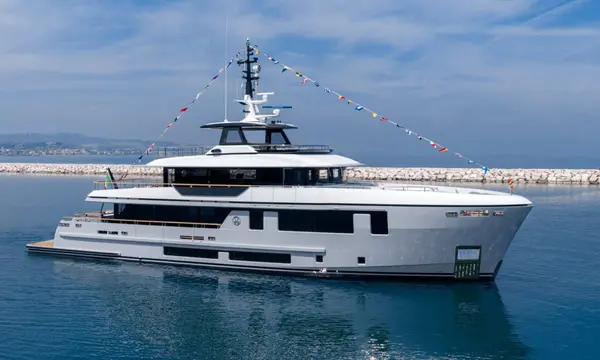
Cantiere delle Marche launches the Deep Blue 115 Octopus 30.04.2026 Cantiere delle Marche launches the Deep Blue 115 Octopus Cantiere delle Marche launches the …
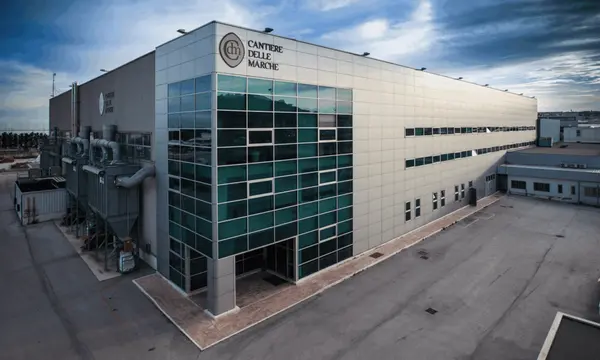
Cantiere delle Marche completes shareholder transition 29.04.2026 Cantiere delle Marche completes shareholder transition Cantiere delle Marche completes shareholder transition: CLP2 becomes majority shareholder as …
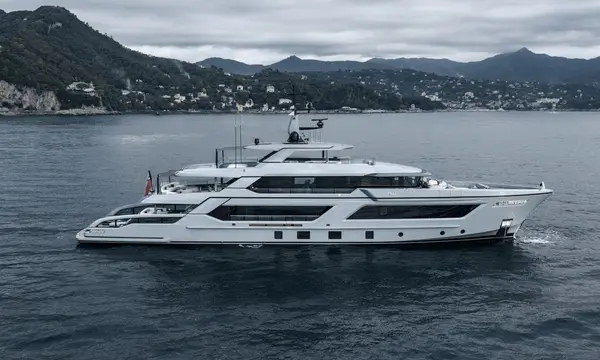
Cantiere delle Marche Pre-Owned Division completes off-market sale of award-winning M/Y RJ 08.04.2026 Cantiere delle Marche Pre-Owned Division completes off-market sale of award-winning M/Y …
Superyacht Guide
Continue into the wider Superyacht Guide.
Business opportunities · Superyacht Guide
Companies serving the superyacht market can discuss clearly identified advertising, sponsorship and business-profile opportunities. Commercial activity remains separate from independent editorial coverage.