Yacht Racing Forum Reports 255 Delegates at Amsterdam Closing
By Superyacht Guide Newsroom · Edited by Superyacht Guide Newsroom
Yacht Racing Forum Reports 255 Delegates at Amsterdam Closing — SYG 25 Nov 2026 News batch 06
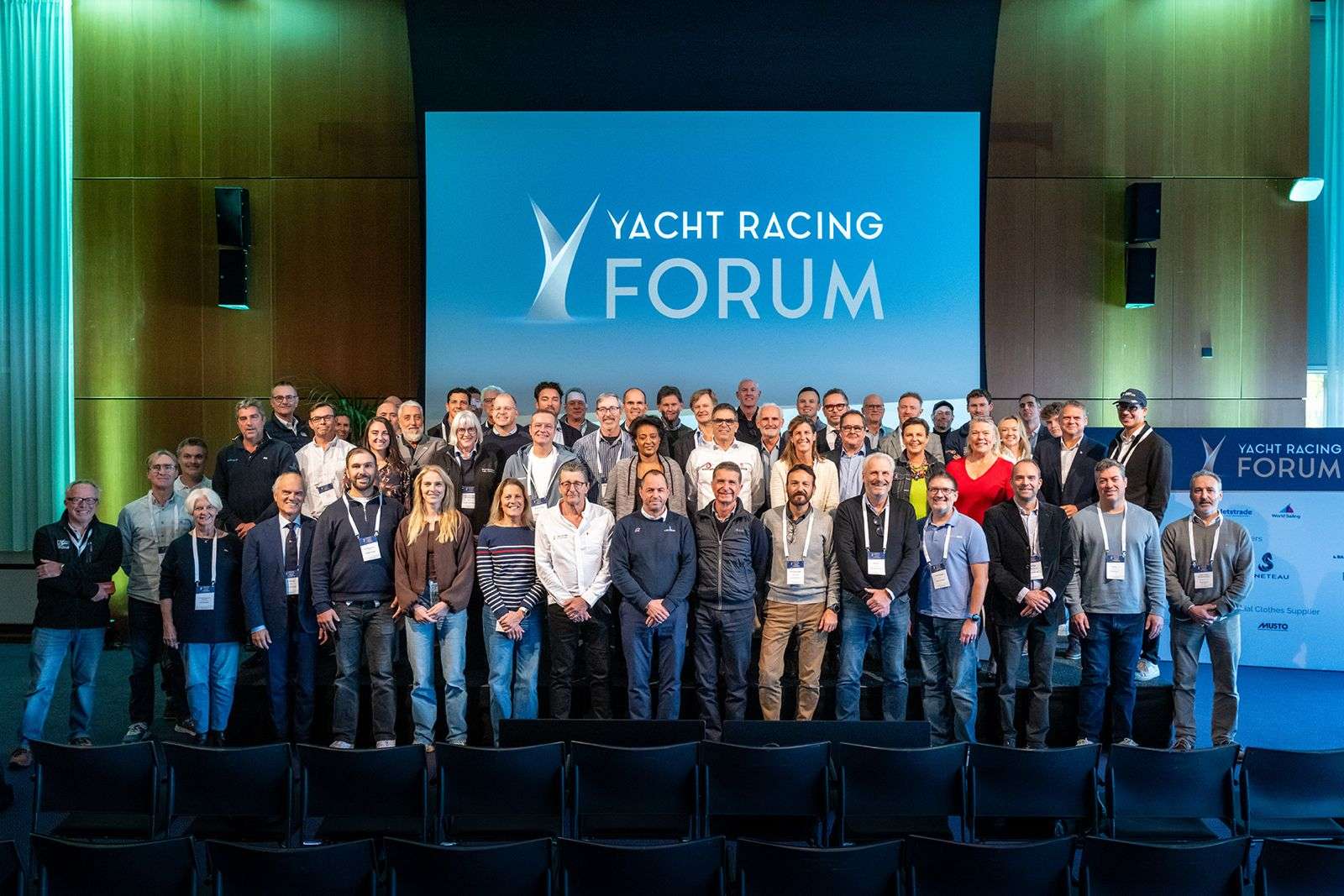
The 16th Yacht Racing Forum concludes in Amsterdam with 255 delegates from 26 countries, exploring high-performance sailing, industry innovation and participation.
The sixteenth Yacht Racing Forum concluded in Amsterdam on 20 November 2026 after gathering 255 delegates from 26 countries, according to an event report published on 23 November. Its programme brought together professional sailors, sailing organisations, technical designers, commercial partners and event organisers to discuss the direction of competitive sailing. These new attendance figures and accounts of the completed sessions distinguish the report from advance announcements about the conference timetable. The venue was associated with METSTRADE, although the Yacht Racing Forum required separate registration.
The relevance to the wider yacht industry lies in how top-level racing influences materials, sail handling, engineering, crew training and the visibility of sailing itself. Not every class of racing yacht is a superyacht, and a technical approach developed for a small competition boat may not translate directly to a large vessel. Nevertheless, the presence of projects such as the Baltic 111 Raven illustrates the connection between ambitious performance sailing and larger professionally operated yachts. The November conference offered a setting for examining that relationship rather than announcing one specific new yacht contract.
The organisers' account identifies 255 delegates drawn from 26 countries. Those figures describe attendance at the forum, not the entire METSTRADE exhibition. They indicate an internationally focused gathering but should not be inflated into a claim about total industry participation at the boat show. The conference took place over two days and included senior figures from companies, governing organisations and major yacht races.
Different segments of the industry have different reasons to attend. A sailmaker may be interested in materials and handling systems, an event organiser in sponsorship economics, and a yacht designer in hydrodynamic or aerodynamic ideas. Larger yacht builders may follow the same technical developments while placing greater emphasis on comfort, reliability and long-term service. The attendance figures provide a factual record of the meeting, but they do not establish how many delegates represented each particular company type or how many new contracts resulted.
Sam Watson, chief executive of North Technology Group, opened the conference with a keynote centred on making sailing more approachable and attractive to the next generation. His question was not simply how to improve racing performance, but how events and organisations could create a welcoming experience that would encourage newcomers to return. The account frames this as a strategic challenge for the sport rather than a specific product announcement by the company.
For the yacht industry, participation and visibility can have a long-term connection with recruitment and commercial activity. Young sailors may eventually become designers, engineers, crew members or industry customers. Yet participation in amateur or professional sailing does not automatically lead to a career in superyachts. It is more accurate to say that a healthy sailing culture can contribute to a broader pool of interest and technical knowledge. The forum discussed these possibilities without offering a quantified prediction of future workforce numbers.
A discussion involving representatives of European Boating Industry, ICOMIA, The Magenta Project and 11th Hour Racing examined changing economic conditions, audience development and sustainable business models. These organisations approach the maritime world from different positions, including industry representation, participation and environmental programmes. Their involvement shows why a racing forum can attract commercial and social questions alongside pure sporting strategy.
The challenges of inclusion and accessibility cannot be resolved through a single conference. They depend on sailing clubs, educational opportunities, financial barriers, recruitment practices and long-term support. A future yacht engineer may enter the sector through a vocational route rather than competition sailing. Similarly, the owners of large yachts may support racing for recreation, sponsorship or philanthropy. The discussion is relevant because it recognises that the sport needs stronger connections with people beyond an established group of insiders.
Dawn Riley, a veteran of America's Cup and Whitbread Round the World Race campaigns, spoke about her career and the importance of recognising opportunities and developing confidence. Her participation added a personal perspective to the broader conversation about attracting talent. The forum report describes her encouraging younger participants to take an active role in pursuing opportunities and facing professional challenges.
These remarks are not a new appointment, a yacht sale or an announcement of a future campaign. They form part of the proceedings of the completed November event. The experience of established sailors can be useful to designers and crew who are developing careers in a technically demanding field. Yet no single career path can serve as a universal template. The value of this session is the direct exchange between an experienced competitor and an audience thinking about the industry's next generation.
The conference included an update from Richard Brisius, chairman of The Ocean Race, ahead of its planned start from Alicante on 17 January 2027. Major offshore races offer a platform for advances in reliability, meteorology, navigation and human performance. They also depend on complex logistics and commercial agreements behind the visible racing. The update is a conference presentation about an upcoming event, not evidence that every team has confirmed its final crew or financial package.
For large-yacht owners, racing can provide useful lessons in route planning and equipment management, but the operating priorities of a long-range cruising yacht differ markedly from those of a competitive offshore boat. The decision to carry additional fuel, maintain reserve systems or prioritise guest comfort can lead to very different design solutions. The forum brought these worlds into contact through discussion while preserving their distinctive technical and sporting objectives.
Among the organisations represented in the event account were Yacht Club Costa Smeralda, Barcolana, ClubSwan Racing and We Are Foiling. The Italian presence reflects the country's contribution to sailing events, yacht building and marine services. Each organisation operates with its own audience and programme, from established regattas to specialised competition and foil-focused activity.
Their participation should not be mistaken for a joint commercial agreement or an announced merger of events. The forum provided a shared stage for comparing approaches to audience engagement, event organisation and future competition. For builders and suppliers, the conversations can help clarify where new racing programmes might create demand for equipment or expertise. However, there is no verified count of orders generated by these presentations. The confirmed contribution lies in the exchange of ideas reported after the conference.
Technical presentations included Ferrari Hypersail, the Baltic 111 Raven, the Mach 50 Palanad 4 and the foiling Mini 6.50 Resolve. These represent different approaches and sizes, spanning experimental competition design and a large high-performance sailing yacht. Their inclusion demonstrates the breadth of the forum's technical agenda. It does not mean that every innovation presented is commercially available or suited to conventional superyachts.
Baltic 111 Raven is particularly relevant to larger-yacht readers because the project combines an unusually ambitious sailing-performance focus with the engineering demands of a yacht exceeding thirty metres. Modern materials and foil or appendage concepts can create opportunities for performance while introducing requirements for inspection, repair and specialist handling. A feature discussed on a racing yacht may be technically informative without providing a ready-made specification for an owner seeking comfortable long-distance travel.
The report also describes discussion of how advances in competitive sailing might contribute to lower-emission maritime transport. Racing has long been a setting for experiments in materials, control systems and aerodynamics. Those developments can influence wider marine engineering, but transferring an idea to a commercial vessel requires evaluating durability, cost, maintainability and rules. A system that performs well under race conditions may need substantial adaptation for a service life measured in many years.
The idea of transferring knowledge across vessel categories is worth following because the superyacht industry also seeks better energy management and more efficient operation. Still, the conference report does not claim that any single project has delivered a measured reduction in emissions across the commercial fleet. Those results would require independent trials and transparent comparisons. The forum discussed opportunities and directions rather than publishing a definitive technical certification for all technologies presented.
Large races and sailing gatherings depend on sponsorship, media, venues and the continuing interest of sailors and spectators. Attracting new audiences can influence commercial support, but the relationship is not automatic. The forum's sessions reportedly explored how events can become financially sustainable while retaining sporting identity. This is a challenge familiar to many niche industries whose activities are expensive to stage and whose communities span several countries.
A yacht-industry company considering sponsorship may examine whether a racing event reaches the customers, staff or partners it hopes to engage. Others may support participation because of cultural or educational benefits. The conference programme did not publish a single commercial model suitable for every organiser. Its significance lies in making these issues part of a public discussion involving both industry and sporting voices. The event should be judged by the decisions and collaborations that follow, rather than assuming an immediate financial return from attendance.
A conference can highlight technologies and foster relationships, but its proceedings are not the same as legally binding contracts. The new factual additions reported on 23 November are that the two-day forum concluded on 20 November, drew 255 delegates from 26 countries, and included identifiable presentations on the future of participation, event economics and technical innovation. These details provide a retrospective record, distinct from a pre-conference schedule.
Superyacht Guide's focus is on those completed-event findings and their relevance to larger sailing yachts and the marine supply chain. Claims about the number of new yacht orders, sponsorship deals or technologies adopted as a direct consequence would require separate sources. The responsible conclusion is that an international sailing forum brought performance development and industry strategy into the same conversation. Its longer-term importance will depend on which of the ideas become documented projects or measurable improvements.
Primary source: PressMare 23 November 2026 retrospective of the completed Yacht Racing Forum.
PressMare event photograph illustrating the 2026 Yacht Racing Forum in Amsterdam; © PressMare and original photographer. Official source.
Explore
Go deeper into the yachts, companies, events and destinations directly connected to this article.
Continue reading

Ferretti Group presented 41 yachts and five world premieres at its 2026 Private Preview at Yacht Club de Monaco ahead of the autumn boat-show …
Royal Huisman reported that Aquarius received recognition at the BOAT Design & Innovation Awards, strengthening the 65-metre ketch’s profile as a major recent sailing …
From 24 to 27 September, the Monaco Yacht Show will once again host the Yacht Design & Innovation Hub – a space where design …
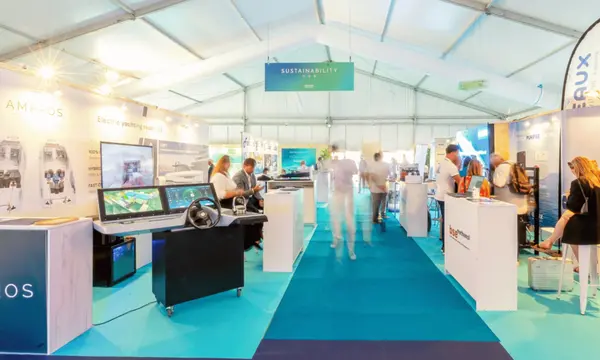
The Monaco Yacht Show highlights its dedication to sustainability with the Sustainability Hub, a true incubator of eco-innovations poised to advance the superyacht industry.
Superyacht Guide
Continue into the wider Superyacht Guide.
Business opportunities · Superyacht Guide
Companies serving the superyacht market can discuss clearly identified advertising, sponsorship and business-profile opportunities. Commercial activity remains separate from independent editorial coverage.