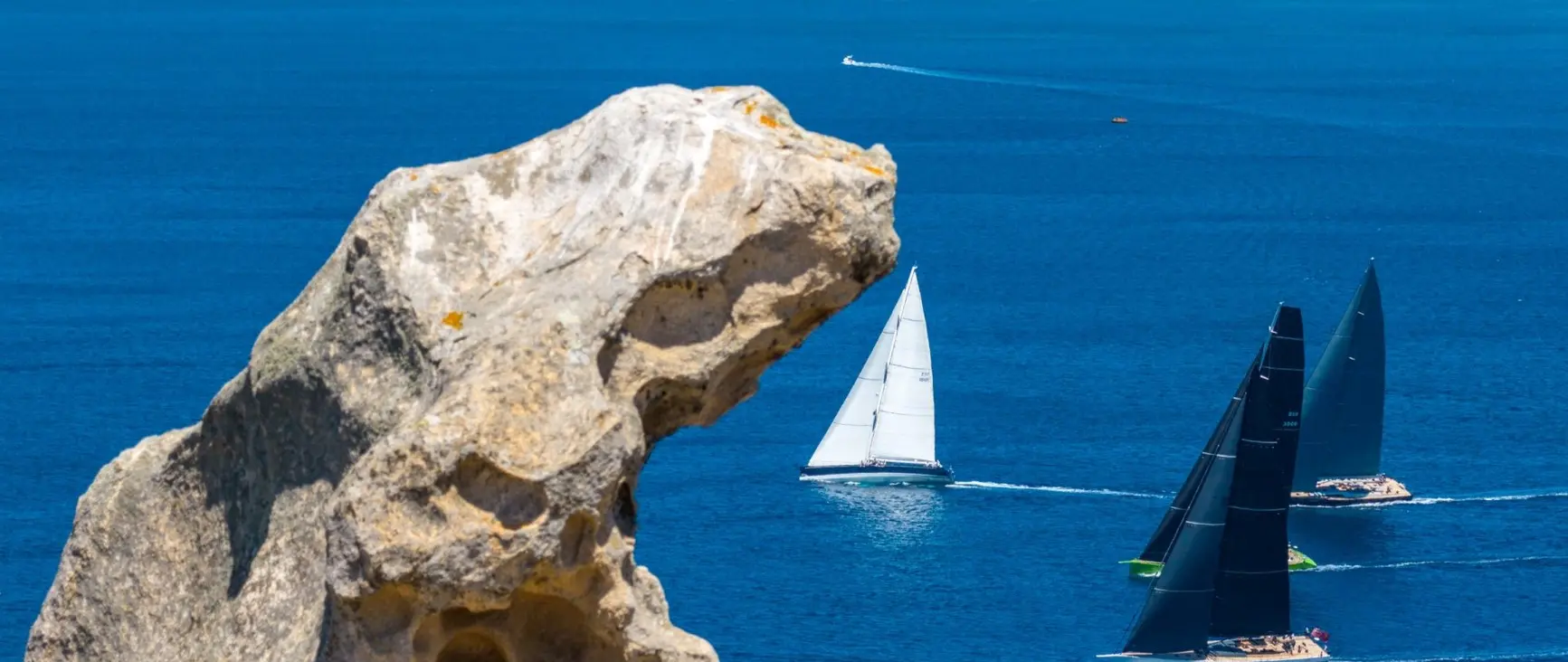
YCCS official archive photograph of sailing yachts racing at Porto Cervo

News

YCCS Opens Entries for 2027 Superyacht Regatta in Porto Cervo

Nov. 12, 2026 Event

YCCS official archive photograph of sailing yachts racing at Porto Cervo

Yacht Club Costa Smeralda has opened entries for its 25–29 May 2027 Superyacht Regatta, with Southern Wind, J Class and multihull programmes and an April deadline.

Regatta news, 12 November 2026. Yacht Club Costa Smeralda opened registration on 10 November for the 2027 event. This is an entry-opening report, not coverage of races that have already taken place or a confirmed list of competitors.

Entries open for the next Porto Cervo superyacht gathering Yacht Club Costa Smeralda has opened registration for the 2027 YCCS Superyacht Regatta, scheduled from 25 to 29 May in Porto Cervo. Its 10 November announcement places the event at the start of the Mediterranean sailing-superyacht race season and confirms that the programme will include the Southern Wind Rendezvous & Trophy, dedicated opportunities for J Class yachts and multihulls, and a conventional superyacht racing division. The event will coincide with the club's 60th anniversary year, creating a notable setting for owners who value racing, coastal cruising and the social experience of a regatta. Entry opening is the actual development reported here. It is not proof that a particular yacht has registered, that the fleet is final or that a given day's racing will proceed in all weather. Prospective competitors should read the Preliminary Notice of Race, review their equipment and speak directly to the organisers before committing crew, travel or shipping arrangements.

Five days on the calendar, four scheduled days of racing The club lists the overall regatta dates as 25–29 May 2027. Racing is scheduled over four days, Wednesday 26 through Saturday 29 May, on coastal courses around the Costa Smeralda and the La Maddalena Archipelago. That distinction matters for an owner arranging a busy cruising itinerary. The opening day may involve administrative and social activity, while actual racing days demand much more from captain, navigator, racing crew and shore team. The published programme is preliminary and should not be treated as a final notice or sailing instructions. Conditions, safety decisions and the appropriate course for each class can change nearer the start. Owners should avoid assuming a fixed departure time or an exact circumnavigation of any island on the basis of a promotional summary. The official regatta documents are the authoritative reference once they are issued and should be checked again before each planned racing session.

Eighty feet sets the superyacht entry floor YCCS says the conventional superyacht division is open to sailing yachts at least 80 feet long, equivalent to approximately 24.4 metres. That makes the core racing class directly relevant to Superyacht Guide's 24-metre-plus readership. The organiser separately allows J Class yachts and multihulls of at least 50 feet, a broader eligibility arrangement which does not mean every smaller entrant should be reported as a 24-metre-plus superyacht. Categories, eligibility and scoring systems are determined by the race documents rather than a website's editorial boundaries. Owners should confirm the measurement conventions that apply to their yacht and understand which certificates are required. Length alone does not establish competitiveness or which start group will be appropriate. Performance, rig configuration and the characteristics of each boat influence the event's class decisions. The correct place to resolve a borderline entry question is with the organising authority and the formal regulations.

The J Class receives its own racing framework The return of J Class yachts is a particular attraction for those interested in historic racing design and the disciplined choreography of large sailing crews. The announcement says J Class entries will sail on a dedicated course with their own ranking and may complete up to seven races during the four-day period. Unlike some of the longer coastal sailing-superyacht courses, a sequence of shorter races can place substantial emphasis on starts, sail changes and manoeuvring consistency. Yet it would be premature to forecast the number of entries or to name likely winners. The club has opened registration, and the eventual J Class fleet will depend on the owners' plans and the official eligibility process. A regatta's distinctive atmosphere comes from the combination of heritage, contemporary preparation and experienced crew work; none of those qualities exempts a yacht from the normal requirements of safe operations, maintenance and technical scrutiny before racing.

Multihulls return as a distinct competition Multihull sailing yachts are also welcomed, with a minimum length of 50 feet and a separate classification and course arrangement in the organiser's summary. These vessels can differ substantially from monohulls in acceleration, stability characteristics, manoeuvring and bridge or helm visibility. The result is a class that may be visually striking and operationally interesting without being directly comparable to a conventional displacement sailing superyacht. Owners should review the eligibility criteria and relevant safety rules for their particular multihull, rather than assume the procedures designed around a large monohull are automatically sufficient. YCCS says the multihull fleet starts will be organised in a fleet-start format, distinct from the staggered starts used by the standard superyacht divisions. Knowing those differences early can help crew plan timing, communications and practice. The organisers, not a publicity preview, will determine the precise rules and order for each racing day.

Southern Wind owners have two different options The Southern Wind Rendezvous & Trophy returns in its 21st edition as an integral part of the regatta. Owners can choose to join the competitive sailing-superyacht classes or take part in a more relaxed rendezvous format around the La Maddalena Archipelago. The latter is described as informal cruising without an official ranking. This distinction offers different kinds of participation under the same event umbrella. An owner keen to compete may want a dedicated race crew, specialist sail preparation and a measured performance plan; another may prefer a shared cruising experience with other owners without the demands of a scored result. Neither choice should be portrayed as inherently more prestigious or technically demanding in every respect. Even informal group sailing needs navigation planning, weather assessment and adherence to local requirements. The appeal is the flexibility to decide how the event fits the owner's reasons for using the yacht.

Staggered starts help accommodate different yachts For the superyacht and Southern Wind rendezvous divisions, the club plans individual staggered starts, while J Class yachts and multihulls are expected to use fleet starts. Staggering starts can help separate vessels with very different dimensions, handling characteristics and speed potential, although it does not remove the need for careful lookout, communication and tactical judgement. A very large sailing yacht carries considerable inertia and a sail plan that can require coordinated action by many crew members. Racing makes those realities more visible. Owners considering their first event should review who holds responsibility for helming, navigation, sail handling, weather decisions and overall vessel command. A professional racing adviser may be helpful, but the yacht's ordinary safety management and legal duties do not disappear when experienced regatta specialists join the crew. The final sailing instructions should be read by the entire operational team.

Preparation starts months before the first gun Large sailing yachts rarely become competitive simply by arriving at Porto Cervo with a clean deck. Preparation may include checking standing and running rigging, reviewing sail inventories, validating rating documents, verifying insurance and assembling a crew with the necessary roles. The practical time required depends on the yacht and its most recent racing experience. A boat that has spent a season cruising with a small regular crew may need additional training before performing demanding manoeuvres under race pressure. The manager should also consider accommodation for extra personnel, provisioning, spares and tender logistics. For a yacht carrying guests, decisions about their participation and safety need to be made well in advance. The official entry announcement gives the framework of the regatta; it does not guarantee that the event will provide every specialist service or spare component a participating yacht might need.

Two registration deadlines deserve attention YCCS says entries close on 15 April 2027, with a reduced entry fee available for submissions received by 15 March. Those dates give owners a reason to begin planning during the preceding winter rather than wait until the Mediterranean season is already underway. A deadline does not automatically establish the full cost of participation. Crewing, delivery passages, berthing, insurance, race preparation and the opportunity cost of interrupting a private cruising itinerary can all contribute to the budget. Owners should obtain the current entry documents, ask what is included and confirm any conditions affecting cancellation or changes to the yacht's participation. Those who operate commercially may need to reconcile race activity with flag-state and charter requirements. A clear schedule will help distinguish which obligations must be resolved by the fee deadline and which can be completed closer to arrival.

What remains provisional before May 2027 The entry-opening announcement establishes the host, location, dates, class approach and closing deadlines, but it does not present a confirmed fleet or final weather-dependent race programme. The club's own website is the appropriate source for subsequent notices, a developing entry list, official courses and results once racing has actually occurred. For spectators and other superyacht owners, the event offers the prospect of a high-profile meeting of large sailing yachts against Sardinia's distinctive coastline. For entrants, the more important task now is to assess eligibility and prepare a safe, credible racing plan. The 2027 regatta will be held during the club's anniversary year, with Southern Wind, J Class and multihull participation planned alongside the main superyacht fleet. Its ultimate sporting significance will be decided on the water in May, not at the moment registration opened in November.

Primary source: Yacht Club Costa Smeralda, 10 November 2026, Entries Now Open for the 2027 YCCS Superyacht Regatta.

Photo licence and source

Yacht Club Costa Smeralda / official event announcement image showing an earlier regatta in Porto Cervo. Archival photography, not a photograph of the 2027 race.

Continue reading

All news

Superyacht Guide

Explore the superyacht world

Continue into the wider Superyacht Guide.

Business opportunities · Superyacht Guide

Reach the superyacht industry audience

Companies serving the superyacht market can discuss clearly identified advertising, sponsorship and business-profile opportunities. Commercial activity remains separate from independent editorial coverage.