41.54m Sailing Yacht MELODY Receives Rig-On Maintenance at Amsterdam Yacht Service
By Superyacht Guide Newsroom · Edited by Superyacht Guide Newsroom
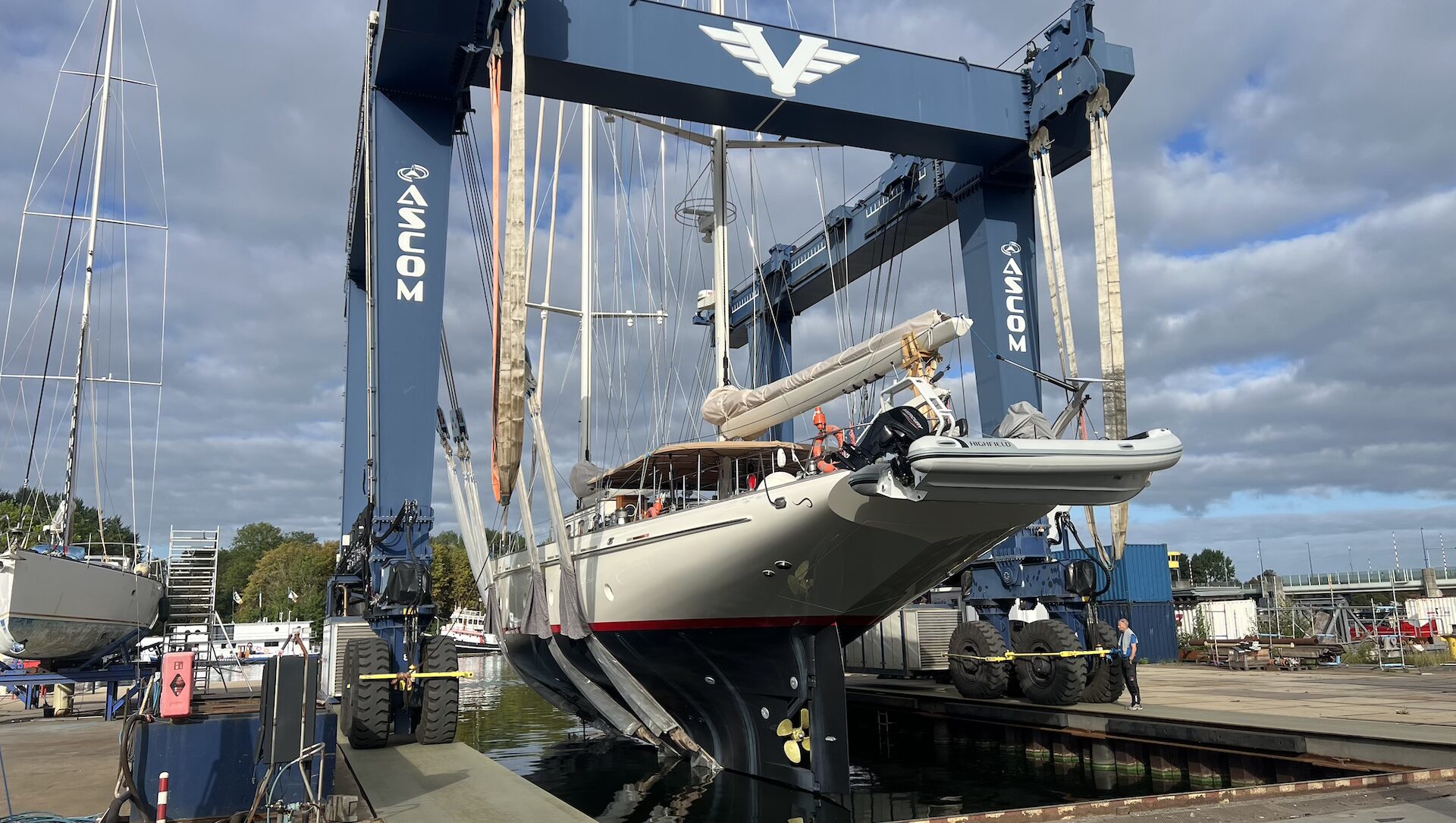
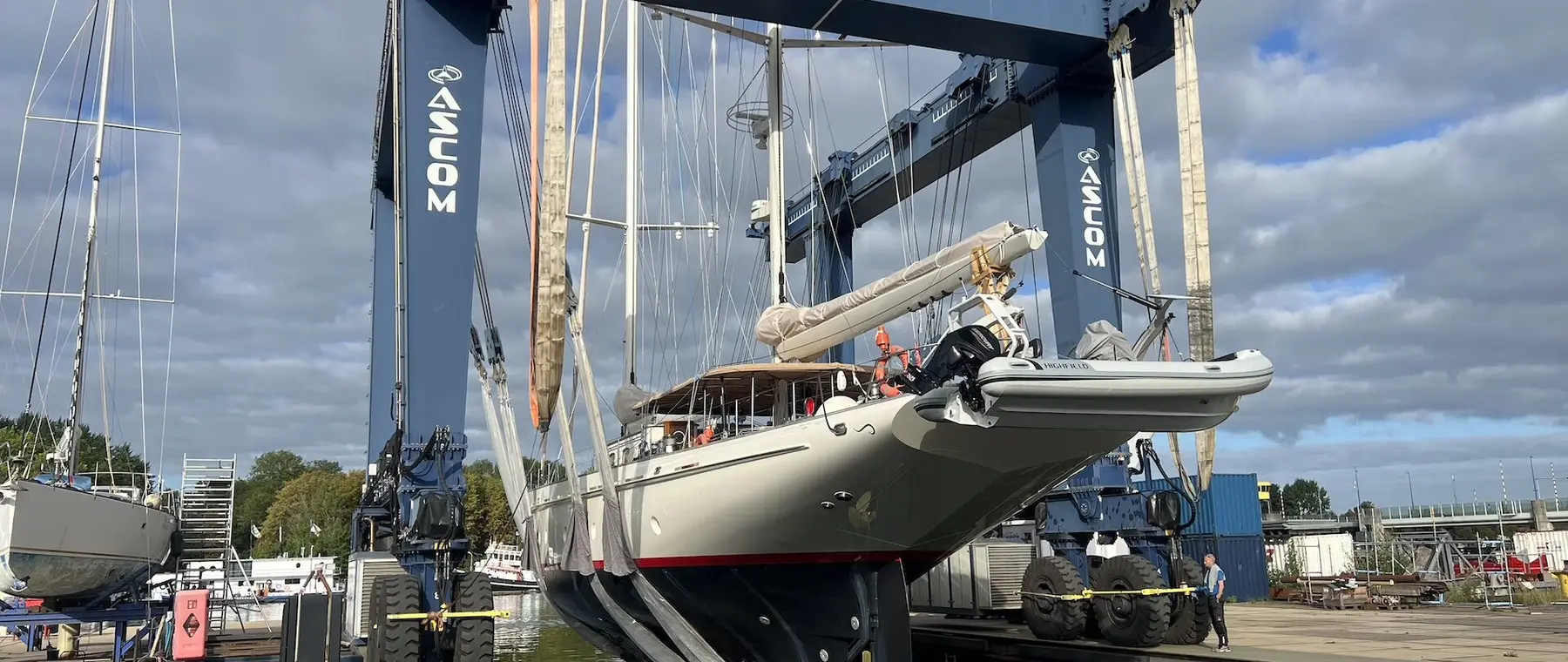
MELODY in the Amsterdam Yacht Service travel lift with rig stepped
Amsterdam Yacht Service reports a rig-on haul-out for 41.54m MELODY, including antifouling, exterior maintenance, rig retuning and a swing-keel inspection.
Amsterdam Yacht Service has reported the completion of an extensive maintenance visit by the 41.54-metre sailing yacht MELODY as she prepared to continue towards the Mediterranean. The yard's November 2026 update describes a programme encompassing the underwater surfaces, exterior finishes and standing rigging, with additional attention to the yacht's swing-keel mechanism. One of the most consequential findings was an issue with a keel pin identified during inspection. The yard was able to lift the Olivier van Meer design with her rig in place, avoiding the need to remove the entire sailing rig for the scheduled work. The announcement illustrates a particular challenge in maintaining large sailing yachts: a visit planned primarily around routine exterior renewal can also provide important opportunities to examine structural and mechanical components that are difficult to access during ordinary operation.
The yard describes MELODY's visit as an extensive refresh before her journey south. The principal intention was not a full reconstruction of the yacht. Instead, the work was aimed at restoring the condition of her existing external surfaces and supporting systems. Her passage towards the Mediterranean established the practical context for the selection of the work and the way the yacht would subsequently return to service.
A planned maintenance visit between cruising regions can be an efficient way to combine several activities that would otherwise require separate interruptions to a yacht's programme. An owner and captain can consider whether a hull inspection, renewal of protective finishes and attention to rigging can be carried out together while the vessel is already at an appropriate yard. The resulting schedule should nevertheless retain a degree of flexibility for findings that cannot be established until the boat is out of the water. For a large sailing yacht, an apparently modest initial scope may involve several different areas of specialist expertise. Painting, mechanical work and rig inspection need to be coordinated without compromising the access or environmental conditions required by each trade.
Amsterdam Yacht Service identifies the ability to lift the yacht without removing her rig as an important feature of the project. The photographs supplied with the announcement show MELODY supported by the yard's lifting equipment. The work is particularly interesting because a tall sailing rig changes the physical characteristics of a vessel during a haul-out.
A suitable lifting arrangement must accommodate the yacht's actual dimensions, weight distribution and the positions where the hull can safely receive support. The presence of a rig and its associated loads also requires attention to the conditions under which the operation is conducted. Wind, available clearances and the practical arrangement of the yard's equipment can influence the procedures developed for the particular vessel. The fact that one large sailing yacht can be lifted with its rig in place does not establish that a similar operation is automatically suitable for another. The yacht's naval architect, captain and responsible yard personnel should establish the appropriate lifting plan from the relevant technical information. Retaining the rig can reduce the number of dismantling and reassembly operations, but it should only be selected where it is compatible with the safety requirements and scope of work.
The maintenance programme included a complete refresh of the yacht's underwater surfaces and renewal of antifouling. This work serves practical purposes beyond improving the appearance of the yacht when hauled out. The condition and compatibility of a coating system affect the way a submerged hull can be maintained between visits to a suitable facility. The original announcement does not specify the antifouling product or the precise preparation and application methods selected.
A yard undertaking work of this kind should consider the existing paint system, the hull material and the recommendations applicable to each area of the vessel. A record of the condition of the underwater surfaces before preparation can be valuable in identifying changes over time. Particular attention may be required around appendages, intakes and other installations through which a yacht's operating systems interact with the water. The responsible specialists determine the appropriate preparation methods and materials for the actual installation. The engineering and deck departments can use the maintenance window to examine items that cannot normally be inspected in comparable conditions while afloat. Keeping those findings alongside photographs and the details of the new coating helps establish a more useful maintenance history for subsequent visits.
The yard's managing director, Robert Binnekade, identifies the discovery of an issue with a keel pin as the element that altered the initially planned project. The announcement confirms that work on the swing keel had already formed part of the schedule. It does not disclose the precise nature of the pin issue, the engineering investigation undertaken or any particular replacement specification.
For an adjustable-keel sailing yacht, mechanical arrangements associated with the keel need to be maintained in accordance with their design and operating requirements. Where inspection reveals a condition that differs from expectations, it may be necessary to obtain further specialist assessment before deciding whether adjustment, repair or replacement is appropriate. Owners should not draw conclusions about the extent of a defect merely from the fact that an item has been identified for attention. A pin involved in a mechanical arrangement may have a different function from one employed in a structural connection elsewhere on a yacht. A qualified assessment of the particular system is essential. MELODY's visit demonstrates why the opportunity to inspect accessible components during a planned lift is valuable even when the original focus of the work lies elsewhere.
The yard also reports polishing the topsides and carrying out work on the yacht's exterior varnish. On a large sailing yacht, the areas requiring attention may include complex combinations of painted surfaces, woodwork, metal fittings and the interfaces between them. These materials respond differently to their operating environment and require maintenance methods appropriate to their individual characteristics.
Polishing should be regarded as part of the management of an existing coating rather than as a substitute for assessing its physical condition. Where a coating has been compromised, a more extensive intervention may be necessary. Similarly, varnished woodwork can require attention to local damage, joints and the condition of previous finishes before the appropriate maintenance approach is selected. The original announcement does not reveal how much material was removed or whether individual components required repair. For the captain responsible for maintaining the appearance of a yacht during an extended season, accurate records of products and methods used by a yard allow later maintenance to be coordinated with the established coating system. This can be particularly useful when the yacht operates in regions served by different maintenance contractors.
The work also included the retuning of MELODY's standing rigging. The term covers an activity requiring knowledge of the configuration of the individual yacht, the condition of her rigging and the settings appropriate to the vessel's sailing characteristics. The yard does not state that the rigging was replaced, and its announcement should not be interpreted as confirmation that every element was renewed or surveyed to a particular standard.
The mast and standing rigging form a coordinated system whose characteristics affect sailing performance and the distribution of loads. Appropriate attention to that system is therefore closely connected to the yacht's wider maintenance programme. After a rigging intervention, the captain should retain the relevant records and ensure that any subsequent checks specified by the responsible specialists are incorporated into the operating schedule. The decision to conduct retuning while the rig remained stepped allowed the yard to combine that aspect of the work with the external maintenance programme. An owner planning a similar visit should establish whether specialist access, testing or inspections are required beyond the scope of the initial appointment.
The identification of a further issue during a routine maintenance visit poses a practical management question. An agreed scope may provide for several defined activities, whereas the condition of an item discovered during dismantling or inspection may require work beyond those activities. It is helpful to establish in advance how such findings will be documented, who will assess them and how decisions concerning any additional work will be authorised.
In the case of a sailing yacht preparing for a passage, the effect of a new finding on testing and the departure schedule may be especially significant. A responsible management arrangement separates the need to resolve the technical question from the commercial process of agreeing costs and timing. The importance of an item should be determined through the engineering assessment rather than by the degree to which its repair fits the original itinerary. MELODY's visit offers a useful illustration of the way a yard can combine scheduled maintenance with additional inspection findings within one project.
Amsterdam Yacht Service presents the completed visit as part of its capability to support superyachts through maintenance, repair and the renewal of their appearance. It has not disclosed the final budget, duration of the additional keel work or the yacht's subsequent itinerary. Those details remain matters for the owner, crew and yard.
The significance of the project lies in its combination of underwater renewal, attention to an adjustable-keel arrangement, rigging work and the maintenance of exterior finishes on a substantial sailing yacht. Such a visit demonstrates that preserving the quality of an existing yacht is an ongoing engineering and craft undertaking rather than an isolated cosmetic exercise. Through regular inspection and a properly documented programme of maintenance, the responsible team can better understand the condition of the vessel before the next period of operation.
Primary source: Amsterdam Yacht Services B.V. — company-issued 6 November 2026 release via TheSeaWire.
Original shipyard release: Amsterdam Yacht Service — MELODY project update.
Amsterdam Yacht Service — official project-update photograph of MELODY. Official source.
Amsterdam Yacht Service — official project-update photograph of MELODY.
Explore
Go deeper into the yachts, companies, events and destinations directly connected to this article.
Continue reading

Amsterdam Yacht Service confirms its first METSTRADE exhibition stand, bringing refit, classic restoration and technical maintenance services to Hall 7.

A Monaco Yacht Show agreement between Sela and ICON Saudi aims to develop specialist yacht maintenance services at Jeddah for the Red Sea fleet.
The 99.95m Feadship REVERIE, delivered as MOONRISE in 2020, has been photographed in Gibraltar following a reported ownership change earlier in 2026.
DeepBlue introduces Rounds, a mobile inspection workflow linking equipment readings, maintenance checks and follow-up jobs to yacht equipment records.
Superyacht Guide
Continue into the wider Superyacht Guide.
Business opportunities · Superyacht Guide
Companies serving the superyacht market can discuss clearly identified advertising, sponsorship and business-profile opportunities. Commercial activity remains separate from independent editorial coverage.