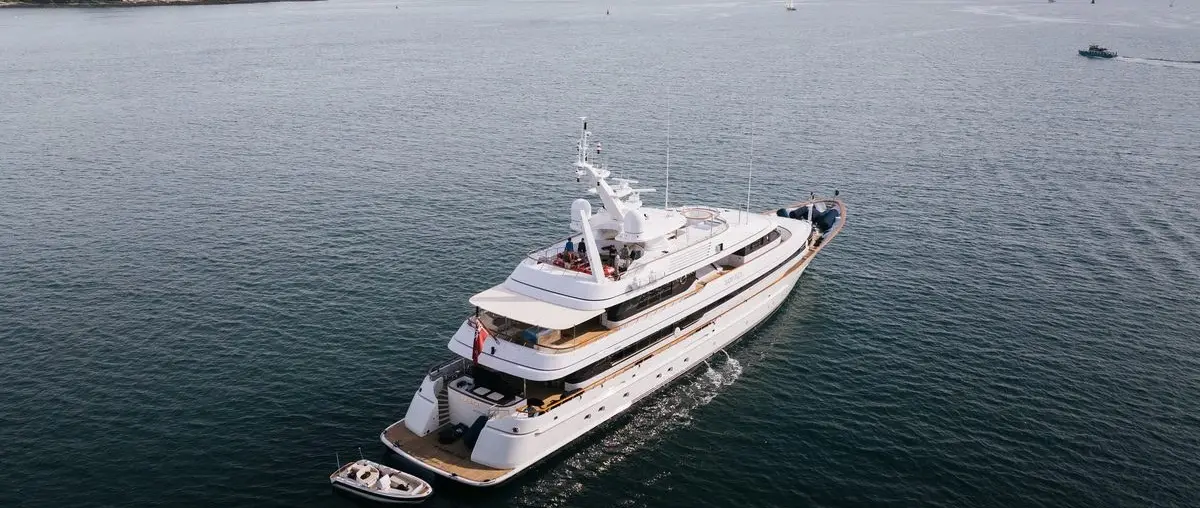
The 57-metre Feadship motor yacht Solace has won Best in Refit at the 2026 International Superyacht Society Design & Leadership Awards, recognising an extensive 2025 rebuild and systems upgrade undertaken by Pendennis in Falmouth.
The 57-metre motor yacht Solace has been named Best in Refit at the 2026 International Superyacht Society Design & Leadership Awards, presented in Fort Lauderdale on 28 October. The result recognises the extensive renewal undertaken by Pendennis Shipyard in Falmouth during 2025, nearly two decades after the yacht first left Feadship. Expedition specialist EYOS, which works with the vessel, publicly congratulated the Solace project on its success, while the society's finalist list identifies the builder, refit yard and original design team.
The ISS accolade follows another significant result earlier in the year, when Solace won the Refitted Yacht category at the 2026 World Superyacht Awards. The two distinctions should not be conflated: they are separate judging programmes, but together they underline the attention the project has drawn within the large-yacht refit community. The achievement is also different in character from awards for new builds, because a refit must improve an existing ship while respecting structural constraints and the identity established by its first designers.
Solace began life in 2005 as the 55.5-metre Feadship Twizzle and has carried other names, including Drizzle and Madsummer, during her career. Pendennis's own technical account records a 10-month programme after the yacht arrived at the yard in late 2024. The resulting 57-metre vessel is therefore not a newly built yacht, but one whose exterior, guest spaces and operational systems have been reconsidered for a new programme of long-distance cruising.
One of the most substantial alterations was a 1.5-metre extension at the stern. That figure comes from Pendennis's case study and explains the change from the original 55.5-metre length to the post-refit 57 metres listed in its specifications. Extending an established hull is a structural and engineering task as well as a design exercise; it changes the geometry of the aft areas and demands careful integration with existing machinery, access routes and watertight arrangements.
The yard also reconfigured the lazarette and swim platform, creating a new relationship between functional storage and leisure use near the water. A glass-fronted sauna now forms part of the updated beach club, giving the aft zone a distinct wellness purpose. The visual result is easy to appreciate in photographs, but the underlying work is equally important: access for maintenance, drainage, ventilation and resistance to a harsh marine environment must all be resolved when new amenities are introduced in a working yacht.
For an owner, these changes offer a useful example of how an established vessel can gain facilities associated with contemporary cruising without requiring an entirely new build. A beach club that connects well to the sea can add significant enjoyment on warm-water itineraries, while a sauna may be especially attractive after outdoor activities in colder regions. Neither amenity, however, should compromise the serviceability of the aft systems on which safe long-range operation depends.
Pendennis characterises the commission as an expedition-focused transformation intended to prepare Solace for demanding voyages, including remote and high-latitude regions. The programme included a substantial technical overhaul, safety and compliance improvements, and integration of FarSounder sonar technology. The yard presents these additions as part of the vessel's preparation for complex navigation, not as evidence that any specific future itinerary has been completed or that technology removes the need for careful passage planning.
Another notable change is the introduction of a double supernumerary cabin for guides, pilots or other specialists. Such accommodation may seem less glamorous than a redesigned saloon, but it can be important for journeys where local knowledge, expedition staff or temporary technical support are essential. It creates flexibility without assuming that those additional personnel should occupy guest berths or crew cabins originally designed for everyday yacht operations.
The distinction is useful for owners considering long voyages beyond conventional marina circuits. A technically capable yacht may still need different people and equipment for polar regions, secluded anchorages or complex shore programmes. Adding specialist accommodation, better situational-awareness tools and access to machinery can be as influential as installing another leisure feature, especially over a cruise measured in months rather than days.
Vickers Studio's involvement connects the renewed interior to the design language of Solace's earlier years, with RWD also identified in the project's design credits. Pendennis describes a reimagined interior and detailed joinery work, including a new bridge-deck cabin. The challenge in an extensive refit of this type is to make accommodation feel coherent despite changes to modern standards, new equipment and owner preferences that were not part of the original 2005 brief.
It can be tempting to judge a large-yacht refit by comparing before-and-after photographs of soft furnishings alone. Those visible decisions certainly affect how comfortable guests feel, but more lasting value can lie behind the surfaces in ventilation, electrical systems, service routing and machinery. A carefully planned project must coordinate those technical disciplines with interior craftsmanship so that the yacht can be used and maintained as intended once it returns to sea.
The society's published finalist credits name De Voogt for exterior design and naval architecture and identify RWD and Vickers Studio for the interiors, with Feadship as original builder and Pendennis as refit yard. That division of work matters when discussing who accomplished what. A successful refit is typically a collaboration among the owner team, yard specialists, designers, classification and flag authorities, and a crew that knows how the yacht actually operates.
Pendennis now lists Solace at 57 metres length overall, with a 10.4-metre beam and 3.15-metre draft. The structure combines a steel hull with an aluminium superstructure, a familiar construction approach for long-range displacement yachts of her generation. The published figures make clear that the yacht remains a substantial deep-draft vessel requiring serious port and berth planning, whatever refinements have been made to the exterior profile and guest decks.
Her Feadship pedigree continues to be central to the story, because the refit preserved an existing naval architecture rather than replacing it with a different design. Owners contemplating the same route should distinguish a yacht's underlying build quality from the current condition of systems and structure. An attractive design of proven heritage still needs detailed surveys and a realistic technical scope before a major renewal can be priced or scheduled with confidence.
ISS announced its 2026 Design Awards at the Broward Center for the Performing Arts during Fort Lauderdale's major yachting week. Solace appeared on the Best in Refit shortlist alongside Night Howl, Nurja, Starfire and Ursus, reflecting work by several international refit yards. Winning within that field is recognition from a specialist industry awards programme; it is not a substitute for a technical audit of any vessel's operating performance or a guarantee about future resale value.
The recognition is nevertheless meaningful for the people who worked on the project. Pendennis carried out the complex integration in Falmouth, while the original Feadship engineering and the design contribution from De Voogt, RWD and Vickers Studio gave the project a clear starting identity. EYOS's congratulatory announcement also places the achievement in the context of upcoming exploration, though specific voyages and charter arrangements should be confirmed with the vessel's representatives rather than inferred from an awards result.
For the wider superyacht sector, Solace illustrates the continuing potential of a high-quality existing yacht. Large structural work, discreet accommodation changes and targeted navigation and engineering upgrades can extend a vessel's useful life while retaining the qualities that made it noteworthy in the first place. The 2026 ISS Best in Refit award is a recognition of that balance between preservation and purposeful change, achieved in a project that reached well beyond cosmetic refurbishment.
For the event and its other award categories, see the 2026 ISS Design & Leadership Awards Gala listing. The event was held in Fort Lauderdale on 28 October 2026.
Explore
Go deeper into the yachts, companies, events and destinations directly connected to this article.
Continue reading
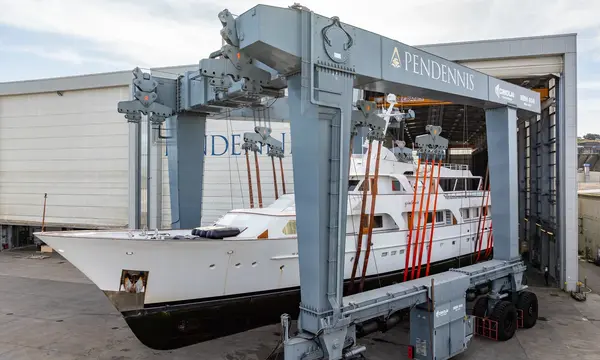
Pendennis has started a substantial refit of the classic Feadship Gin-Tonic at Falmouth, combining structural extensions, propulsion work and a complete repaint.
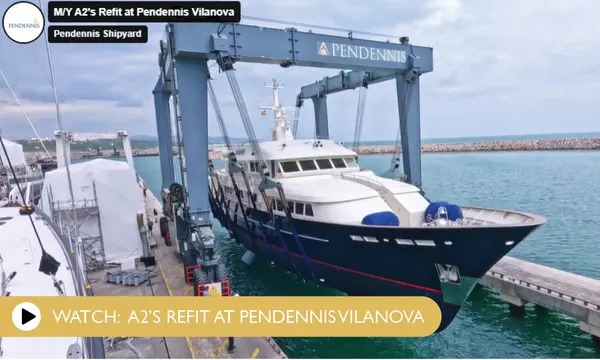
M/Y A2 has completed a broad refit at Pendennis Vilanova covering paint, varnish, engineering, crane works, steel repairs, interiors and sea trials.

Pendennis has highlighted winter 2025/26 refit capacity at its Falmouth shipyard.
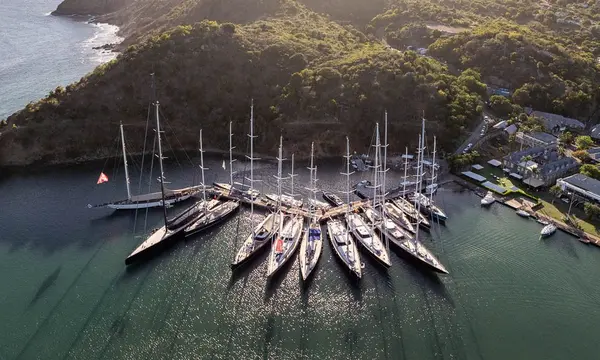
Pendennis has published an update connected with the Superyacht Challenge Antigua and the Caribbean regatta calendar.
Superyacht Guide
Continue into the wider Superyacht Guide.
Business opportunities · Superyacht Guide
Companies serving the superyacht market can discuss clearly identified advertising, sponsorship and business-profile opportunities. Commercial activity remains separate from independent editorial coverage.