Company
Australian International Marine Export Group
Explore the company profile and related Superyacht Guide coverage.
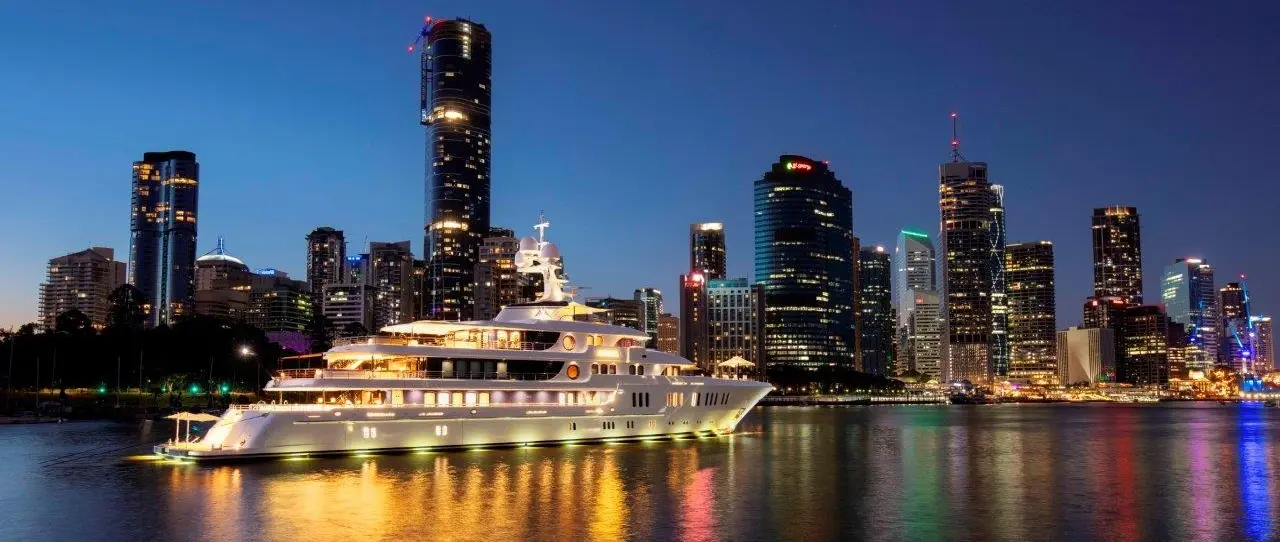
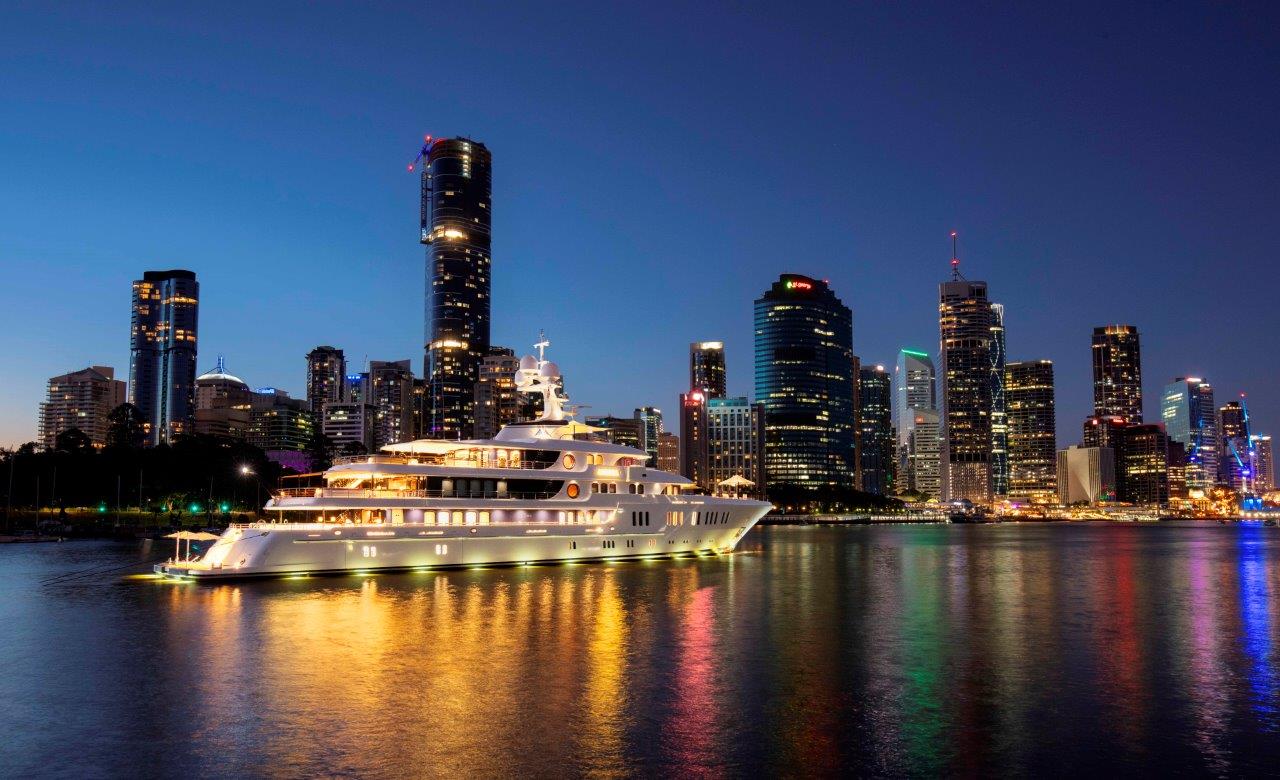
Superyacht Aurora on the Brisbane River — official Superyacht Australia destination photograph
AIMEX moves the Brisbane 2032 Marine Project into its existing international events programme as its dedicated project manager completes a year of groundwork.
The Australian International Marine Export Group (AIMEX) is moving its Brisbane 2032 Marine Project into the existing international events programme operated by AIMEX and Superyacht Australia. In a statement dated 10 November 2026, the association confirmed that the dedicated project manager, Stephen Joyce, had concluded his twelve-month engagement on the previous day. The project continues, but the organisation says its ability to maintain a separately funded project management resource depends on wider financial participation.
The initiative aims to establish Australia and the South Pacific as a more prominent destination for visiting superyachts before, during and beyond the Olympic and Paralympic Games in Brisbane in 2032. AIMEX refers to an economic impact assessment commissioned from AEC Group in 2022 which modelled more than 200 visits by foreign-flagged superyachts, national business output of approximately $1.8 billion and more than 7,500 full-time jobs supported directly and indirectly. The estimates describe the potential economic outcome of a future scenario. They are not confirmed bookings, secured revenue or a count of jobs already created.
The November announcement describes a shift in how the association will manage and finance its involvement. Creation of a dedicated project role in November 2025 was intended to give attention to a wide range of questions extending beyond any single marine business. These included coordination of public authorities and private operators, development of international recognition and communication of the project's economic case to destinations that might benefit.
AIMEX reports that Joyce's work secured backing from the Northern Territory Government, relationships with local governments in North Queensland and opportunities to present the project to Australian and Pacific stakeholders. The association intends to continue such promotion within its established calendar of international activities and the resources available to it. Moving away from the dedicated role is not equivalent to cancelling the project. Equally, its continuation does not mean that all the funding, regulatory arrangements and infrastructure commitments needed for the original ambition are in place.
Visits by large yachts can create demand for marine services and businesses well beyond the waterfront. The vessel may require port services, fuel, provisions, qualified technicians, replacement components and other operational support. Guests, owners and crew may also spend time ashore, creating demand for hotels, transport, restaurants and local experiences. Some of the economic benefits anticipated by the association would therefore accrue to businesses that do not belong to the marine industry itself.
Understanding the scale of the forecast requires examination of the assumptions behind the economic model. The number of yachts, length of stay, yacht size distribution and range of destinations visited would all affect expenditure. The concept of business output should not be confused with net profit, direct tax revenues or the value of new infrastructure. Nor is there justification for taking an approximate modelled national total and attributing an equal share to individual visits. These distinctions are important for businesses or local authorities considering whether investments would be commercially justified.
A yacht planning to move between major cruising regions may need to reconcile a substantial passage with its annual maintenance schedule, crew rotation, insurance arrangements and the owner's availability. For a large motor yacht, the costs of repositioning and the ability to replenish fuel along the way form part of the itinerary assessment. For a sailing yacht, seasonal winds and passage time can also influence when it makes sense to undertake the voyage.
A major sporting event provides a recognisable fixed point around which a trip can be planned. However, owners need not be interested exclusively in the competition itself. A longer voyage can incorporate multiple destinations before and after the event. Advance promotion is consequently more effective when backed by reliable operational information about ports, available facilities and onward travel possibilities. The organisation's decision to retain international engagement within its existing programme reflects the fact that potential visitors may begin considering these questions several years before 2032.
The availability of berths cannot be assessed simply by counting empty spaces on a marina plan. Yachts of different dimensions have different requirements for water depth, approach geometry, turning areas, fender arrangements, mooring infrastructure and the ability to remain connected to appropriate services. A berth suitable for a yacht in the 24-to-35-metre range may be unsuitable for a substantially larger vessel. Physical capacity also changes with operating restrictions, tides and the distribution of other waterfront activity.
Demand on shore-side infrastructure extends beyond mooring arrangements. Electricity, water, waste handling, secure access, technical support and provisioning logistics can become constraints when several large vessels arrive within a short period. For large yacht managers, confidence that essential services will remain available is a necessary consideration when selecting a destination for an event. Regional operators considering new facilities would benefit from understanding the likely mix of arriving yachts rather than basing development solely on a headline visitation forecast.
The association identifies regulatory settings, biosecurity, customs processes and readiness of the workforce as areas requiring coordination. These issues are particularly significant for yachts crossing international borders. The requirements applicable to a privately operated vessel may differ from those applicable to a yacht conducting commercial activity. Owners intending to offer charter services should establish the relevant permissions and constraints through the appropriate authorities and professional advisers before making commercial commitments.
From a captain's perspective, the availability of timely and consistent information about regulatory obligations is itself part of destination readiness. A useful industry initiative could help ensure that visiting operators know where they can obtain authoritative information, what documents to prepare and which body is responsible for a particular decision. It should not create the impression that the association can grant permissions on behalf of public authorities. The announcement makes no claim that all outstanding legal, customs or biosecurity questions have been resolved.
Although Brisbane is the location of the 2032 Games, the association's initiative envisages a wider regional opportunity. The support reported from the Northern Territory and North Queensland local governments indicates that the establishment phase sought to develop involvement beyond the host city. There is a commercial rationale for that approach: a yacht making a long international passage may prefer an itinerary encompassing several contrasting cruising environments rather than a short visit to one location.
Constructing such an itinerary requires attention to seasonal conditions, available facilities, voyage distances, yacht-specific operating restrictions and the requirements for moving between different jurisdictions. Regional cooperation can help operators understand the capabilities of individual destinations and improve their planning. It cannot remove differences in legal regimes or environmental conditions. The role of industry relationships is to improve coordination and the accessibility of information, while the businesses and public authorities in each destination remain responsible for the services and permissions they provide.
Marine workforce preparation is another important element of the economic scenario. An increase in large yacht activity can bring demand for engineers, electricians, fabricators, rigging specialists, agents and other professionals familiar with technically sophisticated vessels. The relationship between training and employment is complicated by the difference between a short-lived increase in event-related demand and the continuing operating requirements of the regional industry.
Investment in skills is more sustainable when it strengthens capabilities needed for ordinary operation as well as exceptional periods of demand. Service businesses can assess which types of work they can support reliably, identify gaps in expertise and consider partnerships with specialists elsewhere in the region. Owners and captains who receive a dependable service may be more willing to revisit, creating opportunities beyond a single event. The employment figure cited by AIMEX should be understood as a scenario-based measure rather than a promise that the jobs identified will all exist permanently.
AIMEX chief executive David Good has explained that the organisation's members have supported the initial establishment work, but that the project should continue within a budget appropriate to the association and those governments participating. The association says it remains willing to expand the programme again if adequate funding for the full initiative becomes available. The immediate change is thus a narrowing of the dedicated resource available to the project, not abandonment of its aims.
Owners should look for subsequent announcements about actual berth development, confirmed cooperation with government agencies and the publication of useful information about operational arrangements. Those are more concrete measures of readiness than speculative lists of superyachts expected to arrive in several years' time. The accompanying Superyacht Australia destination photograph shows the yacht Aurora on the Brisbane River and is illustrative of the existing cruising environment. The latest confirmed development is the change to the project's management structure; the scale of eventual visitation remains dependent on preparation, industry commitment and the individual choices of yacht owners.
Primary source: Australian International Marine Export Group, 10 November 2026.
Superyacht Aurora on the Brisbane River — official Superyacht Australia destination photograph. Official source.
Superyacht Aurora on the Brisbane River — official Superyacht Australia destination photograph.
Explore
Go deeper into the yachts, companies, events and destinations directly connected to this article.
Company
Explore the company profile and related Superyacht Guide coverage.
Continue reading
Superyacht Australia will stage its 2027 conference at REVY, Doltone House, Jones Bay Wharf in Sydney on 1–2 March, expanding the programme after a …
Australian Superyachts has established a long-term base at Royal Motor Yacht Club Newport, linking Sydney's Northern Beaches with its east-coast agency services.

A METSTRADE interview with former Indian Navy engineer Darsitha Babu examines the transfer of engineering, project leadership and compliance skills to yachting.

IGY reports that Mert Oygut and Rajesh Kurup completed Advanced Marina Management training in San Diego, strengthening leadership and operational expertise.
Superyacht Guide
Continue into the wider Superyacht Guide.
Business opportunities · Superyacht Guide
Companies serving the superyacht market can discuss clearly identified advertising, sponsorship and business-profile opportunities. Commercial activity remains separate from independent editorial coverage.