
AkzoNobel Says Regional Rules Are Reshaping Yacht Hull Coatings
By Stephen Yardley · Edited by Stephen Yardley
AkzoNobel says tightening and increasingly fragmented regional rules on biocides, VOCs and isocyanates are accelerating the shift toward biocide-free hull coatings.
AkzoNobel has highlighted the effect of environmental regulation on the paints and protective coatings used beneath yachts. Controls on biocides, volatile organic compounds and certain isocyanate-based materials are not identical across every country or state, leaving manufacturers and shipyards to navigate distinct approval requirements.
For an international superyacht, this can make specification more complicated than purchasing a familiar coating under the same product name every season. The yacht may be built, repainted and operated in different jurisdictions, while a coating permitted at one yard may not be authorised for application in another.
Marine organisms attaching to the hull increase surface roughness and can create additional drag. More resistance can mean higher fuel consumption during a passage, while moving vessels may also transport organisms between different marine ecosystems.
Traditional antifouling products use active substances designed to prevent or discourage growth, and those ingredients are increasingly scrutinised. Any environmental assessment needs to consider both the coating chemistry and the effect of hull condition on energy use and marine biosecurity.
AkzoNobel points to growing interest in foul-release and other alternatives that seek to limit organism attachment without relying on the same biocide-release mechanism as conventional antifouling. These products may require different preparation, operating patterns and cleaning regimes.
An alternative coating should not be assumed to work equally well on every hull. Yacht speed, time spent stationary, local water temperatures, salinity and maintenance access all influence results. Manufacturers' application guidance and independent performance records are therefore important when selecting a system.
A yacht undertaking an extensive refit may need several coating systems on different substrates, including the hull, propellers, appendages and specialist underwater sensors. Those components may have separate technical requirements and restrictions even when they are serviced at the same yard.
Planning should begin with the intended application location and the yacht's operating regions, followed by checks of local chemical rules, product approvals and compatibility. Crews can then maintain records of the coating system used and the maintenance procedures specified for it.
AkzoNobel's assessment reflects the way environmental policy is affecting both manufacturers' research and customers' product choices. It is not a claim that every biocidal antifouling product has been prohibited or that a single replacement technology suits the entire industry.
For superyacht owners and managers, the practical objective remains protecting the hull while controlling costs and impacts. The best specification must reconcile local legality, expected performance, maintenance frequency and the conditions in which the yacht will actually be used.
Explore
Go deeper into the yachts, companies, events and destinations directly connected to this article.
Continue reading

AkzoNobel and Axalta have announced Axanzo as the name for their proposed future combined coatings company, while marine products remain with existing suppliers.
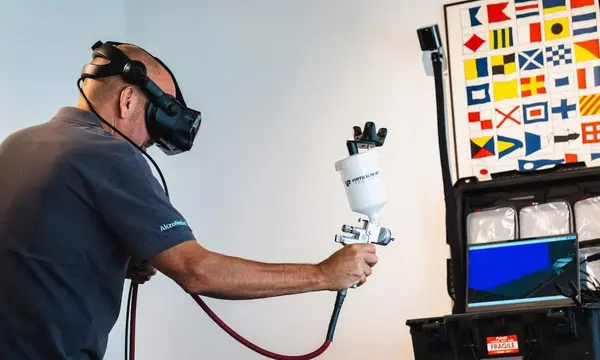
AkzoNobel has opened a Yacht Paint Application Center in Hamburg for hands-on coatings training, technical support and virtual spray practice.

Frigomar has introduced its CU210VFDT chiller with 210,000 BTU/h capacity, a titanium seawater exchanger and the same compact dimensions as its 180,000 BTU unit.

IDEA Data Solutions details release 2026.4.1 for yacht operations, including limited CLIVE AI testing and improvements to purchasing, maintenance and fleet views.
Superyacht Guide
Continue into the wider Superyacht Guide.
Business opportunities · Superyacht Guide
Companies serving the superyacht market can discuss clearly identified advertising, sponsorship and business-profile opportunities. Commercial activity remains separate from independent editorial coverage.