
USVI Charter Yacht Show Adds Insurance and Regulatory Seminars for November 2026
IGY Marinas has outlined a Brown & Brown-backed seminar programme surrounding the 14–17 November 2026 USVI Charter Yacht Show at Yacht Haven Grande, St …
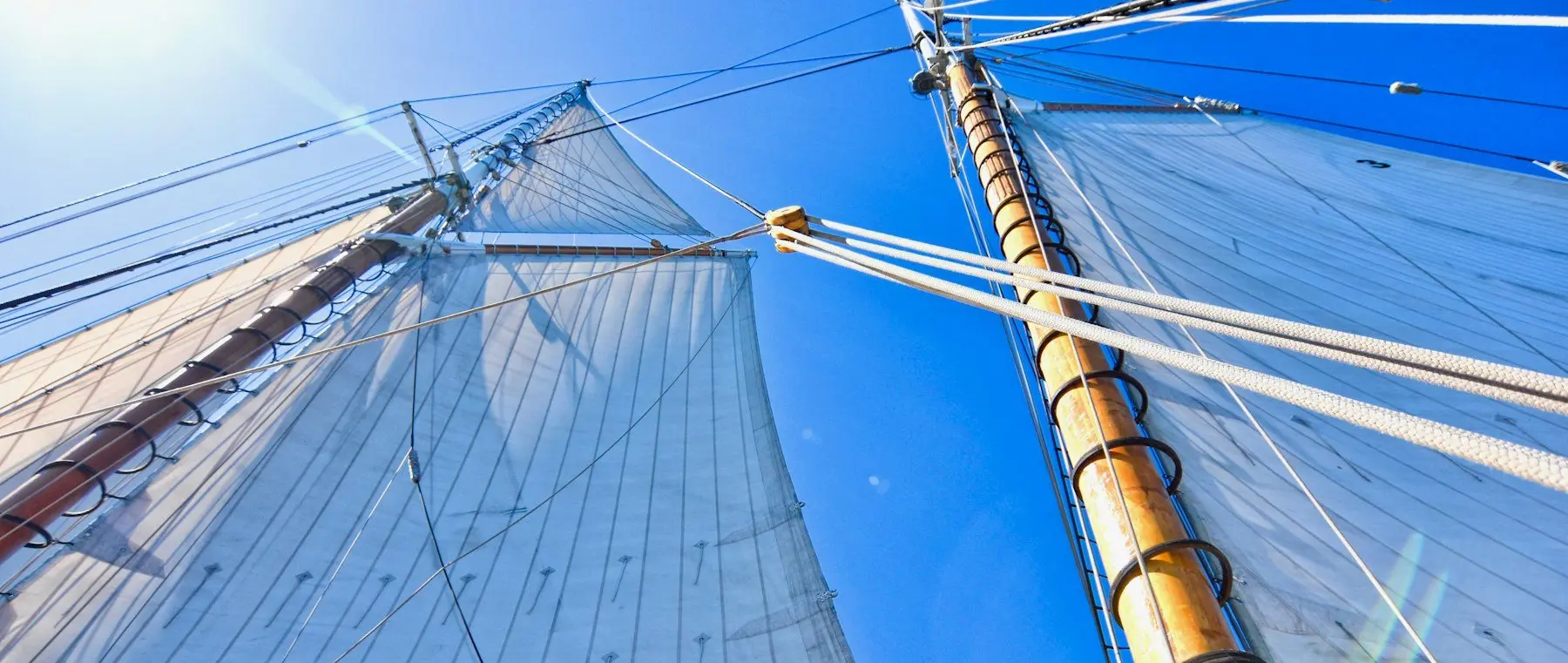
Amsterdam Yacht Service has disclosed a tightly sequenced exterior maintenance project on the 36.94-metre schooner Wolfhound. The brief combined a complete topsides respray with stripping and re-varnishing the vessel's gaff-rigged wooden masts. The shipyard says the yacht spent five weeks in its shed, after a further two weeks of preparation at the yard, and was relaunched in time for its intended onward programme. This is not a report of a new build or a redesign. Its importance is the convergence of substantial surface finishing, traditional rig work and a fixed seasonal deadline.
Amsterdam Yacht Service has disclosed a tightly sequenced exterior maintenance project on the 36.94-metre schooner Wolfhound. The brief combined a complete topsides respray with stripping and re-varnishing the vessel's gaff-rigged wooden masts. The shipyard says the yacht spent five weeks in its shed, after a further two weeks of preparation at the yard, and was relaunched in time for its intended onward programme. This is not a report of a new build or a redesign. Its importance is the convergence of substantial surface finishing, traditional rig work and a fixed seasonal deadline.
The owner wanted the work carried out between the end of the Mediterranean cruising season and the schooner's Atlantic crossing for winter. Such a calendar leaves little room for unplanned extensions. The project therefore required decisions about labour, access, weather-protected working space and the sequence in which spars, hull and supporting equipment would move. Amsterdam Yacht Service managing director Robert Binnekade described the preparation and production schedule in its announcement. Those operational particulars make the project more instructive than a generic declaration that a yard has repainted another yacht.
Wolfhound was launched in 2021 to a design dating from 1927 by John G. Alden, according to the yard. Her appearance reflects the language of a traditional schooner, but the vessel is a comparatively recent launch rather than a surviving hull from the interwar period. This distinction matters when discussing conservation. A newer yacht using historic design principles can demand the same specialist appreciation of wood, varnish and rig proportions as a much older classic, without sharing the same structural history or preservation requirements.
The wooden gaff-rigged masts are central to the project's character. Their finish is immediately visible against the sails and sky, while their length and rigging relationships shape how work can safely be carried out. Amsterdam Yacht Service says the riggers unstepped the masts, allowing a separate team to remove the existing varnish and prepare a fresh finish. The public account does not name the varnish product, specify the number of coats or quantify the work hours, so those common but important variables should remain unreported rather than being filled in by assumption.
The yard's approach divided the assignment into interdependent but simultaneous streams. While the wooden spars were being stripped and prepared for re-varnishing, Wolfhound was hauled out and positioned in the shed for hull preparation, tenting, spraying and final finishing. This avoided leaving all mast work until after the hull work was completed. Parallel scheduling is simple to describe and difficult to execute when tasks compete for equipment, people and space; in this case the yard's public explanation specifically identifies the sequencing that made the timetable possible.
The shed period of five weeks had to include not just application of paint but the operations around it: preparation, protective arrangements, final finishing, rolling the yacht out and relaunching. Afterward the masts had to be stepped back on the yacht, so their work could not drift indefinitely. For a yacht owner, the practical lesson is that a refit calendar must recognise critical dependencies, not merely assign a start and finish date to each contractor. The release does not provide an hour-by-hour programme or drying-time schedule, and none is inferred here.
A topsides respray is visually dramatic, but the quality of a finish depends heavily on what happens before the spray gun is used. Cleaning, assessing existing coatings, preparing substrates and protecting adjoining fittings all affect the result. For a large sailing yacht, prominent curved surfaces make imperfections easy to see in reflected light. Controlling contamination and working conditions is consequently part of the craft of yacht finishing. The Amsterdam yard specifically mentions tenting and preparation; its announcement does not identify any underlying coating defect or damage on Wolfhound.
For the masts, stripping away an old varnish finish creates a separate set of tasks. Wooden spars may have fittings, joins and high-wear areas requiring careful handling, and surface appearance must be considered alongside the vessel's rigging programme. It would be wrong to infer that Wolfhound's spars were unsound simply because they were re-varnished. A scheduled cosmetic and protective renewal can be appropriate before a long passage even when the underlying structure is satisfactory. The published case is about coordinated renewal under time pressure, not the correction of a reported structural failure.
Binnekade singled out the presence of the owner's project manager, who had overseen Wolfhound's original build, as an advantage in the project. That detail is particularly meaningful for a traditionally styled custom yacht. A representative who knows the original design, fittings, material choices and previous decisions can answer questions before they become days of investigation. Continuity does not replace the yard's accountability or independent technical checks, but it may reduce ambiguity and help specialist teams work from a common understanding of the vessel.
An owner considering a similar period ashore can draw a useful procedural lesson. A good project manager can assemble current drawings, coating histories, past defect lists and the owner's desired finish standard before the yacht is lifted. Clear instructions reduce late changes that are especially costly when a vessel has a passage booking or a limited weather window. Amsterdam Yacht Service says there was considerable planning before Wolfhound arrived. It provides no financial figure for the preparatory work, so the value of that planning must be understood operationally rather than converted into invented savings.
An Atlantic passage following refit places a different emphasis on readiness from a yacht returning to short coastal excursions. The timetable must accommodate a complete, inspected finish and the safe return of spars and rigging, while the crew prepares the boat for extended use. A freshly finished hull or mast is only part of the departure equation. Owners will also expect the captain and professional specialists to make their usual seaworthiness assessments. The yard's account confirms the winter crossing was the deadline, not that any particular passage had already taken place.
For classic-sail yacht owners, work that interferes with a rig can have knock-on effects that do not exist on a comparable motor yacht. Unstepping and re-stepping demands specialist coordination, and departures need to account for subsequent rig checks. This does not suggest Wolfhound left with any unresolved issue: none is reported. Instead the case demonstrates why apparently cosmetic work may need to be planned as a technical and navigational project when it touches the rig and is immediately followed by an ocean programme.
Alden-inspired lines and varnished spars appeal partly because they retain a visual language that many contemporary yachts have abandoned. Their upkeep nevertheless has to fit into modern logistics, where owners book marina space, passages and contractors months ahead. Wolfhound's project is interesting because the shipyard did not present tradition as a reason for a leisurely schedule. Instead, it described carefully organised labour and parallel processes for finishing a classic form within a narrow practical window. The account is about respecting craftsmanship through planning, not replacing it with haste.
The quality test for such work is not merely whether a glossy photograph can be taken on launch day. Protective finishes must remain fit for exposure, the rig should return to its intended configuration and those responsible need to be satisfied that the yacht is ready for its programme. The published release does not give a later condition survey or a long-term performance report on its coatings. It would therefore be premature to claim that the five-week completion proves a particular finish will last longer than alternatives. The reported achievement is the completed scope within the stated window.
The shipyard has presented Wolfhound as evidence that a five-week shed turnaround can be achieved when the circumstances and preparation align. It would be unwise to treat that duration as a general offer to repaint any 37-metre schooner in the same time. Starting condition, paint specification, repairs discovered, climate-control requirements, access, labour availability and the finish expected by the owner can change the scope. The yard itself makes the successful turnaround conditional on the project's circumstances rather than presenting a guaranteed industry standard.
What makes the announcement valuable for the superyacht sector is its specificity: a 36.94-metre custom sailing yacht, a 2021 launch based on a 1927 Alden design, two weeks of yard preparation, five weeks in the shed, complete topsides paint and full wooden-mast varnish work. For owners planning a narrow off-season window, the case illustrates that detailed preparation, parallel work and a knowledgeable owner's representative can bring a demanding assignment within a fixed schedule. It offers a practical result without suggesting that speed should displace inspection or workmanship.
Primary source: original announcement; corroborating source: additional first-party or industry material. Report dated 7 November 2026. Announcements and operating plans may change; editorial interpretations are distinguished from confirmed facts.
Editorial photograph: photographer and original image — Craig Cameron / Unsplash License; traditional schooner mast and rigging in Panama City, United States; not Wolfhound or the Amsterdam refit. Cropped and resized under the Unsplash License. Illustrative photograph only; it does not show the 2026 event or named product.
Continue reading
IGY Marinas has outlined a Brown & Brown-backed seminar programme surrounding the 14–17 November 2026 USVI Charter Yacht Show at Yacht Haven Grande, St …

Sunseeker International has appointed Daren Morris chief financial officer, succeeding Dean Lawler. The move follows new ownership and advances in its 134 Superyacht programme.
Marsh has acquired the Newport, Rhode Island-based Triton Insurance Agency, a yacht and marine insurance specialist founded in 2011. CEO Bob Peck and the …
D-Marin UAE marina customers can now access marine insurance advice and risk-management services through ult. Insurance, with placement and claims handled by the broker.
Superyacht Guide
Continue into the wider Superyacht Guide.
Business opportunities · Superyacht Guide
Companies serving the superyacht market can discuss clearly identified advertising, sponsorship and business-profile opportunities. Commercial activity remains separate from independent editorial coverage.