Awlgrip HDT at METSTRADE: Repairable Finishes and Superyacht Refit Decisions
By Superyacht Guide Newsroom · Edited by Superyacht Guide Newsroom
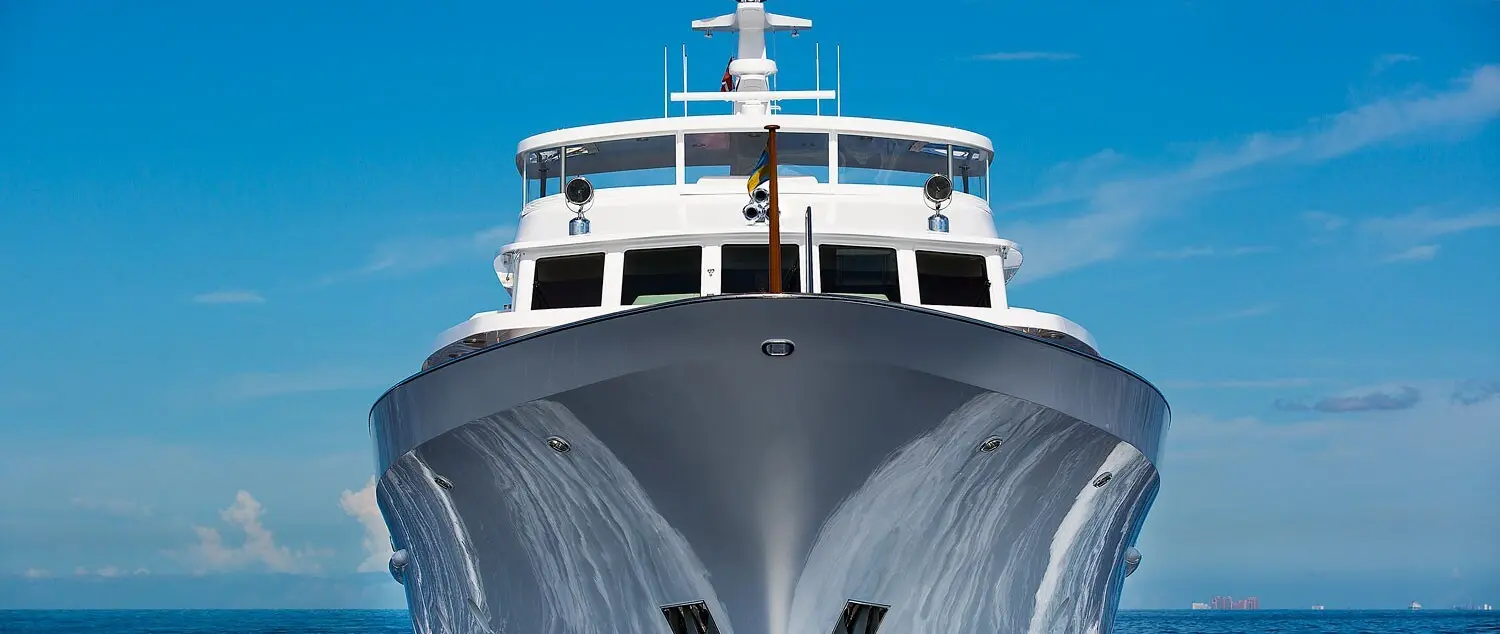
Awlgrip HDT — AkzoNobel official product media release photograph
Awlgrip HDT features on the METSTRADE 2026 sustainability route, bringing coating repairability and lifecycle assessment into superyacht refit decisions.
International Paint is among the suppliers on Water Revolution Foundation's Superyacht Sustainability Route at the forthcoming METSTRADE exhibition in Amsterdam, where Awlgrip HDT is listed at stand 11.101. The product, introduced in 2019, is an established polyurethane topcoat rather than a November 2026 launch. Its presence at the show nevertheless provides an occasion to reconsider the relationship between an exterior finish, the repairs it may require and the environmental cost of repeated coating work.
Water Revolution Foundation's comparative lifecycle assessment reports reductions of roughly 40 to 55 per cent across the environmental indicators studied when HDT is compared with its conventional Awlgrip Topcoat scenario. The findings concern the two assessed systems and their assumed service histories. They are not a guarantee of a corresponding reduction in the environmental impact of any yacht, nor evidence that every damaged finish can be restored locally. The practical relevance lies in how repairability is incorporated into the project and its subsequent maintenance.
The exterior of a superyacht may present substantial areas of fairing and high-gloss coating. The visual quality depends on the complete preparation and application process, including substrate condition, the extent of fairing and the characteristics of intermediate layers. A new topcoat cannot correct all underlying discrepancies. Where an area has moved, cracked or experienced water ingress, the cause of the defect may need to be addressed before the surface can be refinished.
Awlgrip describes HDT as a spray-applied coating combining hardness and resistance to fine scratches with the ability to undertake repairs. It is intended to maintain high gloss and clear reflections, important for an owner assessing large uninterrupted surfaces. Ask the supplier and painter how the proposed system meets the yacht's actual requirements. A product's nominal performance is meaningful only when installed within the correct compatible system and operated according to its instructions.
A full repaint is a major undertaking, often interacting with scaffolding, temporary enclosures, ventilation, other refit work and the movement of the vessel. A localised defect may appear trivial next to the size of the yacht, but repairing it to an appropriate visual standard can be challenging. If the damaged section can be treated without recoating an entire large surface, the operator may avoid considerable material use and disruption.
Such a possibility depends on the type of damage, location and condition of the surrounding finish. A small scratch may call for a different procedure from a deep impact reaching the underlying layers. Colour change and weathering elsewhere on a yacht can complicate matching even when the original paint specification is available. The technician must assess the surface and follow the manufacturer's instructions. A repairable product is not a promise that every defect disappears with a quick polish.
An owner's expectations about exterior appearance need to be expressed in a way that the yard and coating contractor can understand. Reflections, gloss, surface fairness and the visibility of localised repairs may be judged differently depending on the viewing distance, lighting and geometry of the surface. A broad continuous hull panel can reveal an imperfection more readily than a small area interrupted by a structural feature.
Before a major coating project, agree the visual criteria and inspection approach with appropriately experienced personnel. A reference panel may be useful where colour or finish is especially important. Define how disagreements will be resolved and which measurements are relevant to the specification. An agreed standard can help the parties assess whether a local repair is acceptable or whether more extensive work is needed. This makes a repair strategy a practical contractual arrangement rather than an expectation that can be reinterpreted after the work has been completed.
A coating system has environmental implications at several stages, from raw material production and manufacturing to transport, application, maintenance and end-of-life management. The relative importance of these stages depends on the boundaries of the assessment. The foundation's HDT summary notes that impacts associated with earlier and later stages dominate much of its comparison. It identifies transport-related influences as a factor in interpreting the particulate matter category.
Project managers should look beyond the headline reduction ranges and ask which replacement and repair schedules were assumed. A yacht operated in a demanding environment may require maintenance at a different frequency from the scenario modelled. The effect of using compatible intermediate systems or performing additional preparation should also be considered. The point of lifecycle evidence is to support a more informed procurement decision, not to label an entire project environmentally preferable solely because one material has been assessed favourably.
For a new build, the finish should be considered alongside decisions about structure, fairing materials, joins and detailing that may influence its behaviour during operation. On a refit, the coating history needs to be examined before a compatible system can be determined. If the original materials are uncertain, further investigation may be necessary. Do not presume that a familiar trade name establishes compatibility with every layer beneath the proposed finish.
The yard and specialist paint contractor should prepare a documented application plan following the selected manufacturer's current requirements. The practical arrangements may include temporary enclosures and protective measures for nearby equipment. Conditions affecting application and curing must be controlled and recorded as required. Good planning also means recognising that further mechanical work close to newly finished surfaces can introduce avoidable damage, so the schedule should be coordinated with other teams rather than managed as an isolated painting programme.
The owner's technical records should identify where different finishes have been installed and the products used. Colour references, batch information, photographs and contractor records can be useful when an area later requires attention. A yacht that changes management teams may lose a considerable amount of practical knowledge if these details are left only with personnel who were present during the original work.
Where repairs have taken place, record their extent and any relevant preparation or inspection information. A future contractor will then have a better starting point for investigating a recurring problem. Such documentation can be valuable during a sale or refit because it distinguishes changes in the finish from problems involving underlying material. An apparently minor repair may be quite routine, while another could indicate movement or deterioration requiring specialist assessment. The records support that distinction.
Terms such as repairable and easy to maintain should not be interpreted as an instruction for untrained personnel to undertake abrasive treatment or apply coatings without proper precautions. Solvent-containing materials and spraying operations require suitable controls and specialist knowledge. Consult the current product safety data, the manufacturer's repair guidance and the yard's applicable safety arrangements.
Similarly, ordinary cleaning and care procedures should be compatible with the finish. Products and methods familiar to a crew from another yacht may not be appropriate for a particular surface. Establish a written routine for regular maintenance and procedures for seeking technical advice when damage is identified. Preventing avoidable damage through suitable protection during tender operations, provisioning or nearby technical work may be more useful than repeatedly addressing defects after they appear. The value of repairability is greatest when used within a well-managed maintenance system.
A quotation for exterior refinishing should be assessed against its defined scope, not simply the price per square metre. Understand what preparation is included, whether existing layers are to be retained and which parts of the vessel are excluded. Discuss the circumstances under which additional fairing or repair work would change the price or extend the schedule. This helps the owner compare genuinely similar proposals from contractors.
Include future maintenance expectations in the comparison. Ask what kind of minor damage the supplier considers repairable and whether qualified specialists and the necessary materials are available in the yacht's regular cruising areas. A repair method that depends on equipment available only at a distant shipyard may have different practical value from one supported by an established network. Cost, downtime and visual quality belong in the same assessment. The initial appearance of a completed project is not the only relevant outcome.
Next week's exhibition offers an opportunity for owners' representatives, yards and marine coating suppliers to discuss these matters together. Request the specific lifecycle summary, technical specification and manufacturer guidance for the proposed HDT system. Compare it with alternatives using the yacht's actual coating history and anticipated programme. Ask how the manufacturer recommends addressing representative damage rather than relying on promotional adjectives.
The foundation's assessment gives those discussions a useful environmental dimension. Ultimately the choice remains a project-specific one, requiring compatible preparation, qualified application and a realistic care plan throughout the yacht's service. A successful exterior finish is an enduring part of the owner's experience and of the vessel's maintenance costs. Its environmental performance depends not only on what was applied at the yard but also on how much further work it requires, and how well that work is managed over time.
Primary source: Water Revolution Foundation / International Paint.
Exhibition programme: Water Revolution Foundation — METSTRADE 2026.
Awlgrip HDT — AkzoNobel official product media release photograph. Archive image, not a photograph of the 2026 event. Official source.
Explore
Go deeper into the yachts, companies, events and destinations directly connected to this article.
Continue reading
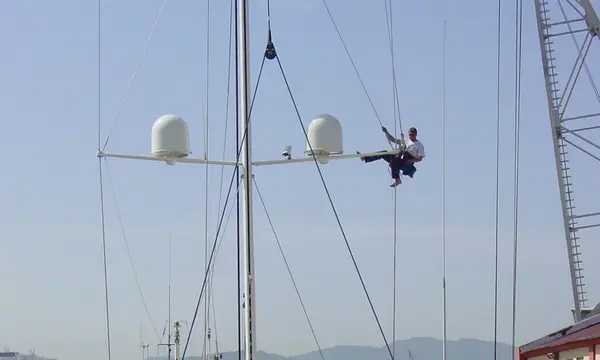
BSI Rigging will unveil a standard range of single and double acting hydraulic sail-control cylinders at METSTRADE, expanding support for custom sailing yachts.

Hundested announces its first five-blade controllable-pitch propeller, developed to balance ice-impact strength, low underwater noise and energy regeneration.

Wescom Group will preview its SHIELD MAX emergency beacon and a survival-craft AIS search and rescue transmitter at METSTRADE, ahead of their 2027 release.
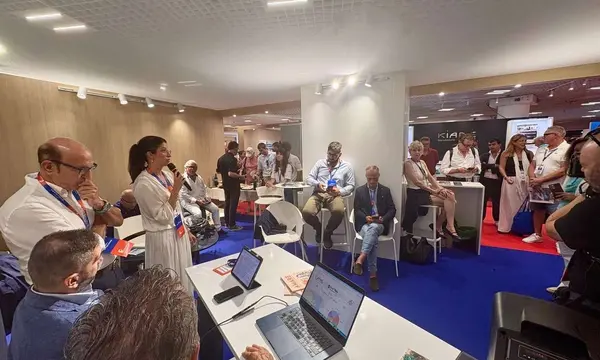
CIPNES Gallura and the Sardinian regional government will discuss a biomethanol research project and the region’s superyacht economy at METSTRADE on 18 November.
Superyacht Guide
Continue into the wider Superyacht Guide.
Business opportunities · Superyacht Guide
Companies serving the superyacht market can discuss clearly identified advertising, sponsorship and business-profile opportunities. Commercial activity remains separate from independent editorial coverage.
