
Oceanco Brings Material Intelligence and Ocean Assist to METSTRADE 2026
Oceanco's Amsterdam programme links yacht-interior material intelligence, environmental adoption, World Boating Day 2027 and positive ocean impact.
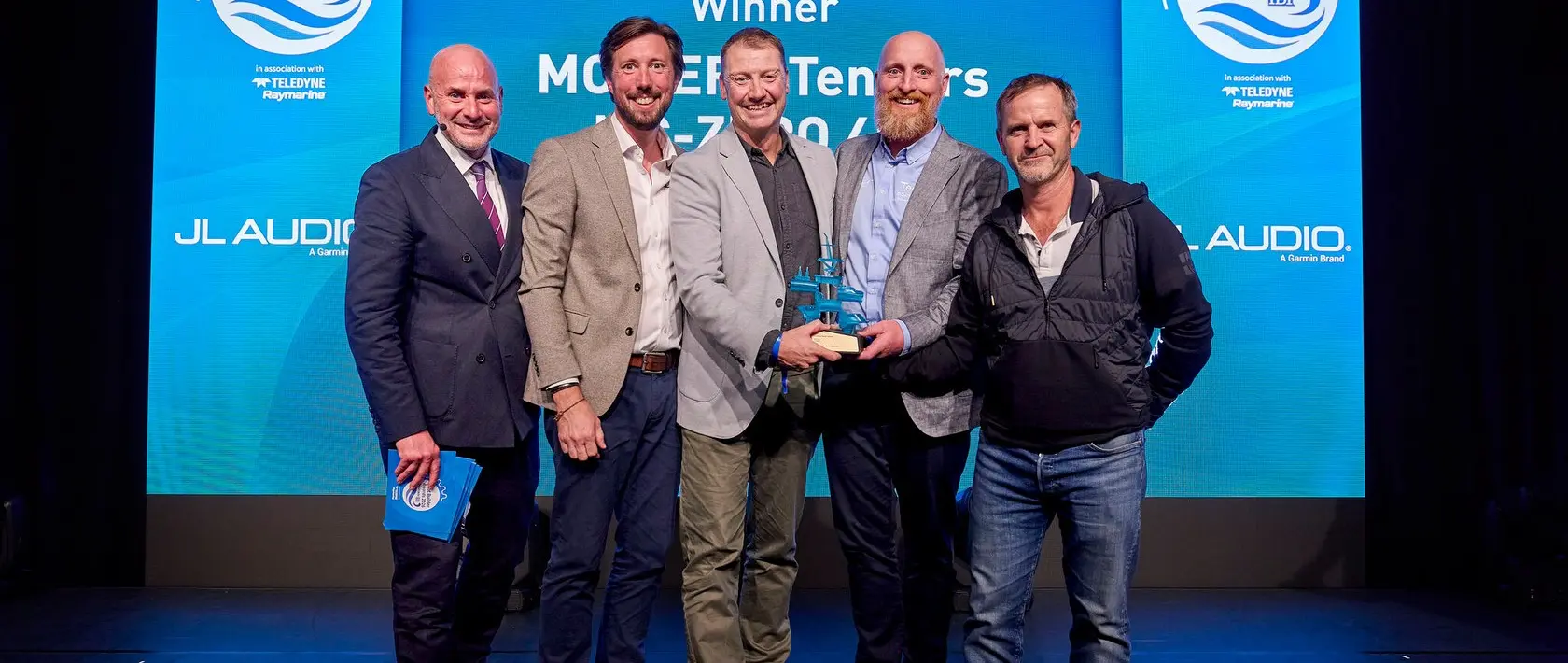
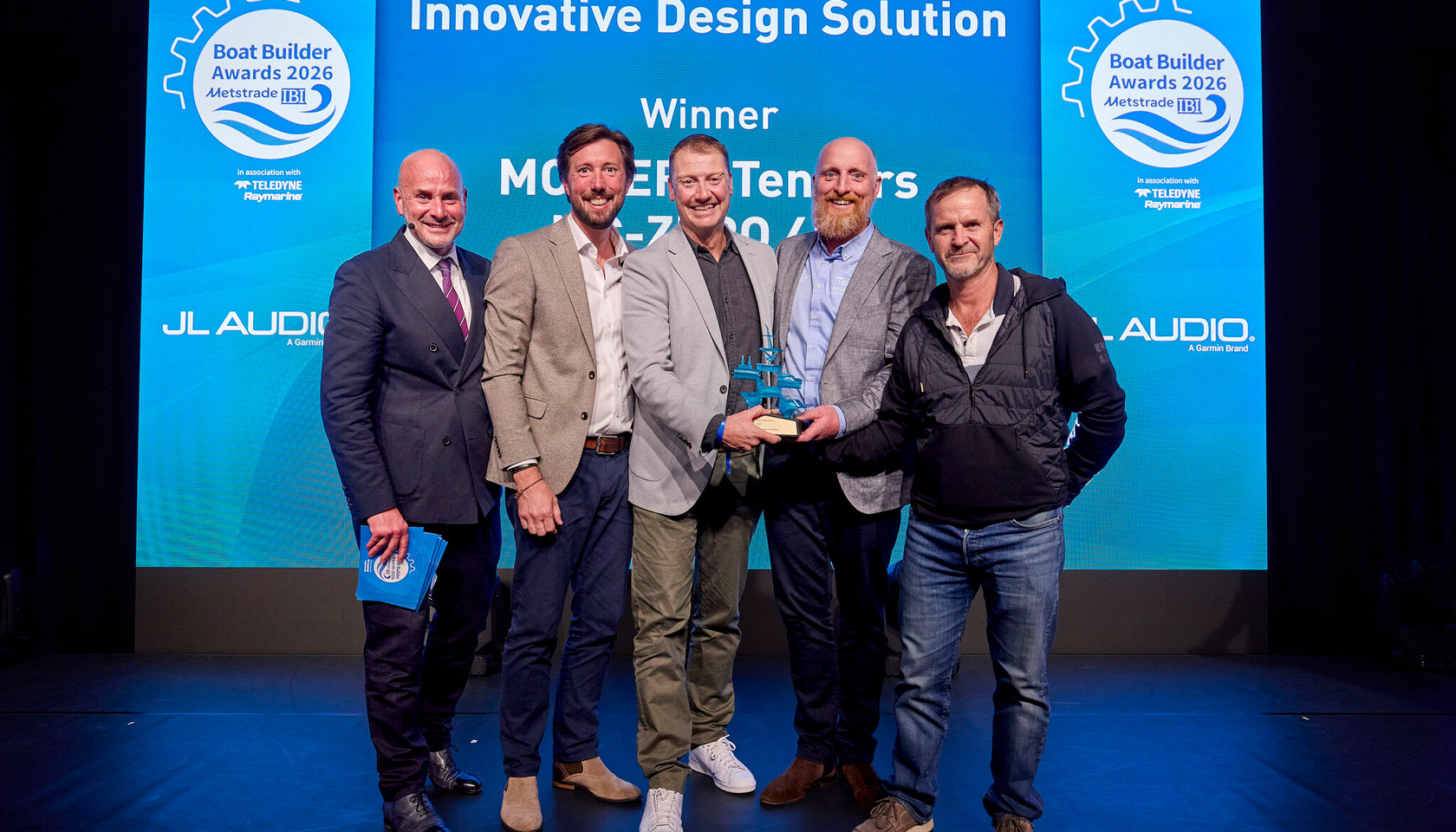
Original MC-ZERO 2026 Boat Builder Awards ceremony press image, illustrative category winner
Metstrade honours Wes Moxey for lifetime boatbuilding leadership and names Ione Astondoa and Kaloyan Radulov as 2026 Rising Stars in Amsterdam. at RAI.
The 2026 IBI Metstrade Boat Builder Awards have recognised leadership and technical collaboration across the international yacht-building sector, with Riviera Australia's Wes Moxey receiving the Lifetime Achievement award and Ione Astondoa and Kaloyan Radulov named as Rising Stars. The awards ceremony took place at Restaurant Harbour 8 during Metstrade in Amsterdam on 18 November, with the organiser announcing the results on 19 November. The event recognised achievements involving 27 companies and individuals across innovation, sustainability, design and industrial partnerships. For the superyacht sector, the results matter beyond the trophies: they provide a snapshot of how builders, naval architects and specialist suppliers are responding to environmental expectations, changing owner requirements and the challenge of transferring expertise between generations.
The jury selected Wes Moxey, chief executive of Riviera Australia, for Lifetime Achievement. According to the awards organiser, his career began as an apprentice shipwright building steel vessels in the late 1970s. He joined Riviera in 1982, became general manager within seven years and progressed to managing director in 1989. After a period away from the company, he returned as CEO in 2012 under owner Rodney Longhurst. That history makes the award notable for its focus on long-term manufacturing leadership rather than a single vessel launch. The jurors emphasised his role in raising production quality, developing the company's international market and sharing practical shipbuilding expertise.
The lifetime award was not presented simply for selling large numbers of yachts. The Metstrade citation specifically addresses workforce development, apprenticeships and the ability to turn technical ideas into successful production programmes. Riviera has launched more than 6,300 yachts since 1980, according to the organiser, but the relevant point for the wider industry is how builders develop people who can repeatedly deliver demanding products. The company has created training programmes that the judges describe as improving retention after apprentices qualify. These are important issues for both production yacht yards and full-custom superyacht builders, where skilled trades and project-management knowledge may take many years to develop.
Ione Astondoa, chief operating officer and chief financial officer of the Spanish builder Astondoa, was named one of the two Rising Stars. The jury notes that she represents the fourth generation of her family to lead within a company celebrating 110 years of history. She joined its management team in 2021, initially working across marketing, communication, costs and human resources. Her current role encompasses broader operating and financial responsibilities alongside chief executive Jesús Astondoa. For the European yacht-building sector, the recognition highlights an increasingly important question: how established family-owned businesses maintain their distinctive industrial knowledge while adapting to new technology, marketing channels and customer expectations.
The other Rising Star was Kaloyan Radulov, co-founder and chief executive of Omaya Yachts. The awards organisation describes how his experience in Bulgaria's family-owned Elica Group helped inform the development of a new yacht brand established in 2023. Radulov has also been active in promoting the wider Bulgarian marine sector and was named president of the Bulgarian Association of Boating Industry in 2025. The judges cited his work in entrepreneurship and mentoring, not just the visibility of a newly launched yacht range. A developing shipbuilding sector needs trade networks, industrial investment and a workforce as well as new products, and this is the broader context in which his recognition is significant.
A superyacht project can span several years, involve hundreds of specialists and expose a shipyard to significant technical and financial risk. Continuity of leadership matters because clients often commit long before a vessel is complete. A new management generation must understand both the established engineering process and the changing expectations of owners. The Astondoa and Omaya awards draw attention to two different paths: development within a long-running family yard and creation of a new brand with an industrial background. The ceremony does not prove that one model is universally better. It demonstrates that the industry is recognising successors who contribute to business operations as well as design.
The awards adopted 'The Industrial Pulse' as their 2026 theme, bringing together what the organisers described as the energy, precision, craft and expertise of modern boatbuilding. It is an appropriate framing for a sector whose public visibility often focuses on completed interiors and dramatic launches. Behind those results are metalworking, composites, systems integration, commissioning, logistics and financial controls. Suppliers are also increasingly involved in design decisions from the earliest stages rather than delivering stand-alone equipment late in construction. The awards' emphasis on partnerships suggests that judges see a competitive advantage in builders and technical specialists developing solutions together rather than treating every component as a separate procurement decision.
Benetti won Sustainability Project of the Year for the hybrid propulsion system aboard the B.NOW 67M yacht DAGGER. The organiser describes a technical package designed around the vessel's intended service profile, including controlled-pitch propellers, recovery of generator waste heat for domestic water and pool heating, and sodium-metal-chloride batteries. The judges noted that the submission included test data to support its claims. Those details are a more useful basis for discussing environmental improvements than general statements about a yacht being 'green'. Superyacht Guide has already covered the Benetti award as a separate vessel-specific story; here it forms part of the wider picture of what the 2026 jury chose to recognise.
The collaborative-solution award went to Groupe Beneteau and Groupe Fountaine Pajot for JOOOL, an integrated electrical system platform developed through cooperation between competitors. The organisers describe common energy storage, conversion, distribution and propulsion components that can be used across boat ranges and potentially by outside builders. That winner is not a newly announced 60-metre superyacht, but the technical approach is relevant to any yard integrating increasingly complex onboard electrical systems. A shared platform may improve scale and serviceability, though actual benefits depend on implementation and support. The judges' choice demonstrates that innovation can arise from industrial organisation as well as an individual hull or design studio.
The awards listed Azimut and Hull Vane for Grande 44M hull-vane integration and Cantiere delle Marche with CMC Marine for a stabiliser energy-recovery system among the collaborative-solution finalists. Both examples connect directly to superyacht efficiency and technical integration. The presence of these projects among the finalists does not make them category winners, and the article does not present them as such. Their selection indicates that the judging panel considered collaborations involving hydrodynamics and vessel systems alongside more broadly applicable propulsion platforms. For the 24-metre-plus sector, where equipment selection can influence years of operational expense, these kinds of supplier relationships deserve close attention.
The Innovative Design Solution award went to the MC-ZERO 450, a compact twin-electric-jet tender developed through collaboration between McConaghy Boats and ZeroJet. The judges highlighted the boat's moving helm and folding elements that allow the layout to change according to its use. This is a small vessel, but its relevance to the superyacht industry is straightforward: tenders must fit limited onboard garages while carrying people and equipment safely. An award reflects a jury's assessment of innovation, not an independent lifetime reliability test. Owners still need to consider handling, certification, maintenance and charging requirements. The same design challenge—getting greater utility from limited space—runs through many large-yacht projects.
The awards also recognised the SAMAR 50 as Breakthrough Launch of the Year, praising the way a new entrant combined traditional working-boat references with contemporary amenities and a low-emission energy approach. That product is smaller than the editorial focus of Superyacht Guide, but its inclusion illustrates the judging criteria. A recognised innovation can come from a modest boat if it offers a convincing engineering or ownership solution. The jury was not simply ranking vessels by size or price. Its stated interest was in solutions that improve experience, manufacturing and environmental performance. For superyacht builders, that is a useful reminder that promising ideas sometimes develop in adjacent segments before moving into larger projects.
Ed Slack, IBI editor in chief and chair of the judging panel, said the awards revealed substantial development activity centred on sustainability and more versatile use of boats. He also highlighted joint ventures that pool resources between companies. Metstrade exhibition manager Patricia Becker framed the ceremony as recognition of the combined work of yacht builders and their supply chains. Those are organisers' assessments, not independently measured evidence that the entire yacht-construction market has entered a period of growth. The most defensible conclusion is narrower: the finalists and winners show where leading companies have chosen to invest resources and where the 2026 jury found compelling achievements.
A design award, leadership honour or jury citation can draw attention to an idea, but it does not guarantee sales, environmental savings or project delivery in future years. For example, a hybrid yacht's emissions performance depends on its operating profile, while a shared electrical platform depends on integration and maintenance over time. The awards do provide specific cases that owners' advisers, project managers and technical teams can evaluate in greater detail. They also draw attention to the people involved, including managers whose work may be less visible than a yacht's naval architecture. This distinction between recognition and long-term proof is important when reporting technology in a sector where marketing language can otherwise obscure practical results.
This article is based on Metstrade's official 19 November 2026 Boat Builder Awards results release. The accompanying official Metstrade photograph illustrates the awards event as published by its organiser. It is not presented as a portrait of each named winner or proof that a particular technical system has been independently tested by Superyacht Guide. The original organiser and rights source are credited. Specific product and leadership details have been attributed to the award citation rather than recast as findings from an independent test. The complete winner and finalist lists are available in the original release for readers seeking more information.
The 2026 awards bring together three threads that are relevant to the future of the superyacht sector: experienced leaders who pass on manufacturing knowledge, younger executives who renew family or emerging businesses, and technical collaborations designed to tackle difficult energy and space requirements. Wes Moxey's lifetime contribution provides a historical reference point, while Ione Astondoa and Kaloyan Radulov represent different approaches to building future management capability. The recognised Benetti and supplier projects show how innovation is increasingly discussed in terms of measurable performance and implementation. These awards are not a forecast of the market, but they offer a grounded picture of the priorities being rewarded at an important marine industry gathering.
Primary source: Metstrade — organiser official Boat Builder Awards winners release, 19 November 2026.
Photo: MC-ZERO Tenders, official 2026 Boat Builder Awards ceremony photograph supplied in its 20 November original manufacturer press release. This illustrates the awards event, not the named Wes Moxey portrait. Official source.
Continue reading
Oceanco's Amsterdam programme links yacht-interior material intelligence, environmental adoption, World Boating Day 2027 and positive ocean impact.
The Ritz-Carlton Yacht Collection appoints Alan Leibman CEO and Tatiana Ferreira president as it reorganises commercial, technology and guest-experience roles.
Fox's Marina & Boatyard has named Mike Laker managing director from January 2027 and appointed Andrew Coulthurst to lead commercial and production work.
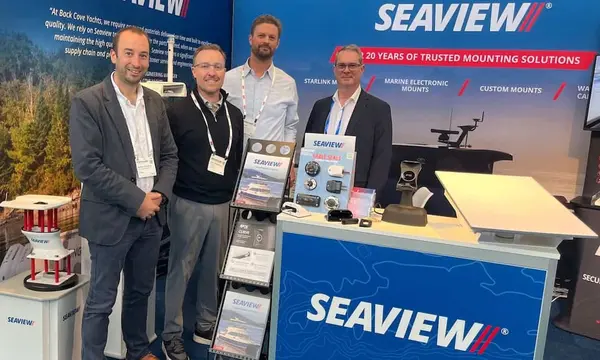
Seaview has appointed Kent Group to distribute and support its marine-electronics mounts and cable seals in Europe, announced at METSTRADE 2026.
Superyacht Guide
Continue into the wider Superyacht Guide.
Business opportunities · Superyacht Guide
Companies serving the superyacht market can discuss clearly identified advertising, sponsorship and business-profile opportunities. Commercial activity remains separate from independent editorial coverage.