
Oceanco Brings Material Intelligence and Ocean Assist to METSTRADE 2026
Oceanco's Amsterdam programme links yacht-interior material intelligence, environmental adoption, World Boating Day 2027 and positive ocean impact.
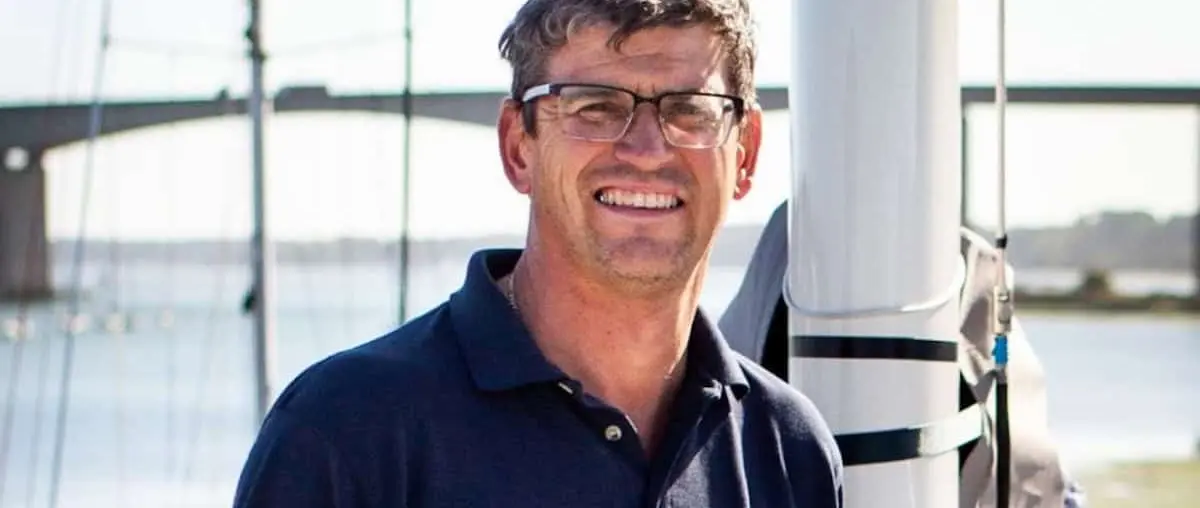
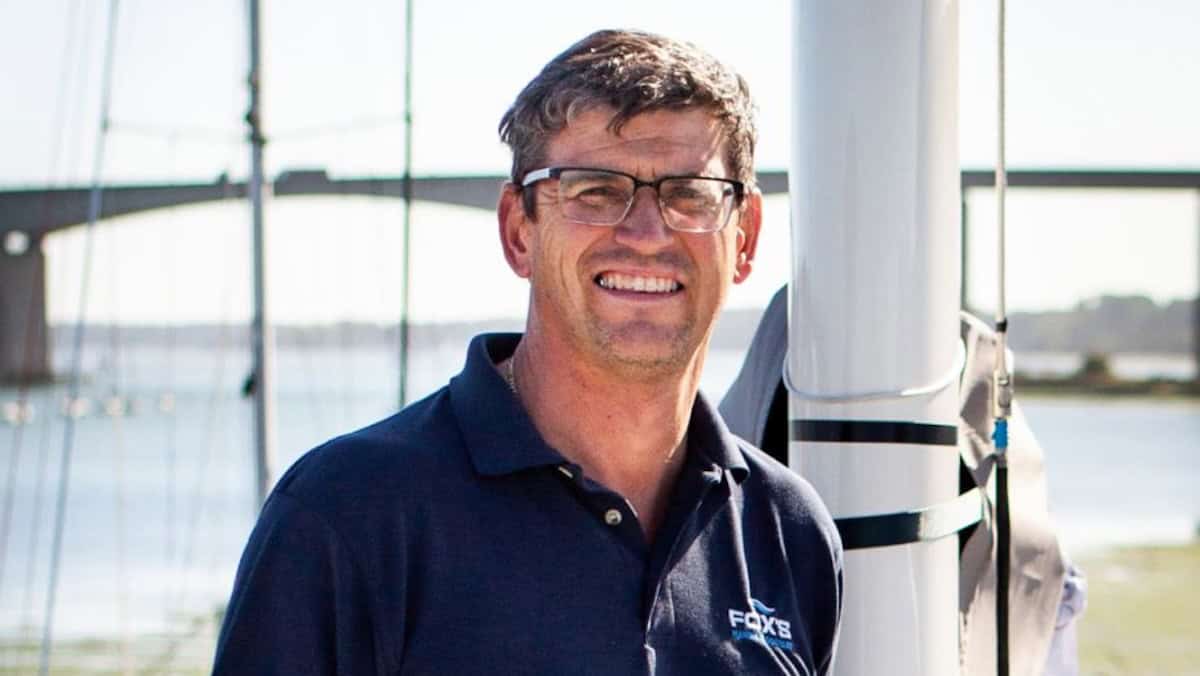
Mike Laker Fox's Marina Boatyard managing director official company-supplied portrait November 2026
Fox's Marina & Boatyard has named Mike Laker managing director from January 2027 and appointed Andrew Coulthurst to lead commercial and production work.
Fox’s Marina & Boatyard in Ipswich has announced the promotion of Mike Laker from production director to managing director, effective January 2027. He will succeed Will Taylor-Jones, who has led the business for 14 years. The company has also appointed Andrew Coulthurst as commercial and production manager. The changes were reported in a 20 November 2026 announcement carried by Marine Business with a photograph expressly credited to Fox’s. This is a change in the leadership of an established yard rather than the opening of a new marina, an announced superyacht contract or the purchase of another company.
The significance for the wider yachting service sector is the combination of long-standing in-house production knowledge with a new manager whose background includes professional yacht command and oversight of refit projects from the client's side. Shipyard customers depend on accurate planning, competent trades and clear communication as much as on physical facilities. These priorities matter across the spectrum of yacht maintenance, including the specialist suppliers and processes that support larger sailing yachts. Fox’s announcement does not specify that a newly appointed leadership team has secured any additional superyacht orders.
Laker joined Fox’s as a rigger in 2001. He progressed through rigging supervision and management roles before moving into broader production responsibility and eventually becoming production director. This history gives the incoming managing director a working familiarity with the yard's trades and service model. Rigging can be an especially demanding discipline because loading, wear and safety are not always visible from the deck. A manager who has worked with the equipment can bring a practical perspective to estimating and scheduling related work.
A long career inside one yard can also have limitations, so success in a new executive position should not be assumed solely from years of service. Managing director responsibilities include balancing customers, staff, finance, business development and operational risk. Laker's production experience is relevant because refit schedules are often shaped by how effectively specialist teams coordinate their work. The appointment places those skills at the centre of the yard's leadership, although the announcement supplies no quantified efficiency targets or financial forecast.
Rigging is one of the areas in which smaller sailing craft and large sailing yachts share basic principles while differing enormously in scale. A rig must be inspected and maintained to the correct specification, with regard to material condition, load paths, standing and running gear and the manufacturer's requirements. On a sailing superyacht, those tasks involve specialist engineering resources and often require equipment and facilities that are not interchangeable with those used on a smaller vessel.
Fox’s is known as a sailing-oriented refit and repair business, and Laker's technical background makes the appointment relevant to the wider rigging and yacht service industry. It would nevertheless be inaccurate to assume from this news that Fox’s can lift, berth or refit any 30-, 50- or 70-metre yacht. A yard's limits are determined by its own plant, berth depth, access and approved working arrangements. Owners and captains considering a particular project need to verify those capabilities directly rather than extrapolate them from the new managing director's experience.
Coulthurst joins the leadership structure as commercial and production manager. The announcement says he has already overseen substantial refit work at Fox’s while acting on a customer's behalf. That perspective may be valuable in an industry where owners frequently have to make technical decisions through representatives and cannot be physically present during every stage of work. A manager who has been on the client side of a yard contract may have a particular understanding of the importance of change control and realistic reporting.
He has also worked as a commercially endorsed yacht captain for approximately 12 years and is reported to have logged more than 125,000 nautical miles under sail. Before moving into yachting, he worked for around a decade in sustainability consultancy with responsibilities involving project management and business development. Those details are drawn from the company announcement and should not be transformed into unverified certificates or claims that he has commanded particular named superyachts. The relevance is his breadth of experience, not a speculative list of vessels or clients.
Coulthurst's prior experience supervising a refit from the owner's side provides a useful perspective on how boatyard clients experience a project. For an owner, a repair or upgrade can involve budgets, downtime, questions about what is found during dismantling and uncertainty about when the vessel will be available again. For the yard, the same period involves coordinating trades, obtaining components, controlling safety risks and making sure work meets the necessary technical requirements. A successful relationship requires these perspectives to remain connected.
Projects can become difficult when the original work scope changes without a clear record of decisions. A damaged fitting discovered behind an interior panel may require additional work, and a seemingly minor replacement can affect adjacent systems. Good project management involves explaining the options, obtaining approval and documenting the consequences for cost and schedule. These are general lessons from the refit industry rather than findings of any failure at Fox’s. The new appointment reflects a stated interest in clear advice and communication with customers.
Taylor-Jones is due to leave the managing director role after 14 years. In the announcement he expresses confidence in the incoming team, noting Laker's knowledge of the yard and Coulthurst's commercial and sailing background. The company has not set out a full account of his next role or the private reasons behind the change. It would therefore be inappropriate to describe the succession as a result of financial difficulty, internal conflict or a change in ownership strategy without independent evidence.
A planned handover can give managers time to transfer customer relationships, ongoing project responsibilities and operational knowledge. This matters at any service business whose work can stretch over months, especially when specialist repairs are undertaken while owners are planning a return to cruising. The announcement says Taylor-Jones has helped with selecting the new team, offering some evidence that the leadership transition is being coordinated in advance. It does not, however, specify the details of every operational handover.
Fox’s Marina & Boatyard is part of Morgans Group, according to the leadership announcement. Laker describes this relationship as providing a platform for growth as the yard approaches its centenary. That is a statement of the new manager's outlook, not an independently verified promise of a particular investment programme. Ownership by a wider group can potentially bring access to resources and management support, but the effect on a business depends on decisions which have not been detailed in the public statement.
For customers, continuity of technical capability can matter more than the corporate structure shown on an invoice. A yard's reputation is often built through the individual engineers, riggers, painters and project managers who deliver work. Maintaining those skills across a management transition can help protect customer confidence. Equally, a new leadership team may choose to develop services or improve administration over time. None of those possible initiatives should be reported as already approved capital expenditure or newly completed facilities.
Fox’s operates in Ipswich on England's East Coast, a region with an active sailing community and established marine-service businesses. Its location connects the yard with local owners, visiting yachts and suppliers engaged in specialist maintenance. The site includes boatyard and marina activities, but this article does not assume any particular lifting capacity, marina depth or berth length without current official specifications. A yacht owner considering a visit should obtain those details from the yard.
The wider East Coast sector contributes specialist skills to British yachting, including rigging and hull maintenance. Some suppliers serve several market segments, while individual yards specialise in different sizes and construction materials. The fact that a business belongs to this ecosystem does not establish its capability for a specific large-yacht contract. For superyacht managers, the practical lesson is to assess each proposed facility and subcontractor on documented experience, equipment, access and the suitability of the work scope.
A professional captain preparing for a refit must balance technical requirements with crew schedules, surveys, insurance obligations and the owner's intended itinerary. Delayed components or unexpected findings can affect all of these plans. Clear communication from the yard helps management teams evaluate alternatives before a problem becomes urgent. Having both a production-focused managing director and a commercial manager with seagoing experience may contribute to that communication, but the benefits will have to be demonstrated in practice.
The leadership statement emphasises advice, skilled workmanship and the ability to undertake complex refits. Those are the company's stated priorities. The announcement does not provide recent customer satisfaction figures or a schedule of confirmed large-yacht projects, so the appropriate editorial approach is to identify the ambitions and explain their potential relevance rather than declare the outcome achieved. Good customer experience ultimately depends on detailed work orders, transparent approvals and reliable results.
Fox’s is approaching its 100th year, according to the public announcement. A long operating history can signal that a business has adapted through changes in yacht construction, ownership patterns and technology. Yet longevity by itself does not certify workmanship on a current project, and owners should continue to seek references and relevant evidence for the work proposed. A newly appointed leader inherits both the advantages of an established name and the responsibility to keep its operating practices up to date.
For a refit specialist, that can mean retaining experienced tradespeople while developing capabilities suited to changing materials and onboard systems. It may also mean improving how projects are estimated, documented and explained to owners who use yachts for longer passages. These considerations are part of the operating environment for many yards, not a list of changes already announced by Fox’s. The confirmed business decision is the executive succession and appointment of a second manager with client-side and seagoing experience.
The verified development is that Mike Laker will become managing director of Fox’s Marina & Boatyard in January 2027, succeeding Will Taylor-Jones, with Andrew Coulthurst appointed commercial and production manager. Laker joined the company in 2001 and worked through rigging and production roles, while Coulthurst brings professional sailing experience and client-side refit oversight. The yard is based in Ipswich and is part of Morgans Group. These particulars come from the announcement reported on 20 November 2026, accompanied by a photograph supplied by the yard.
The transition matters to the marine-service supply chain because technical execution and project communication are central to successful yacht maintenance. It should not be misreported as a new superyacht order, a fleet acquisition or a change in the yard's certified physical capacity. Whether the incoming team expands the business or changes its mix of customers will become clear only through future confirmed announcements and results. For now, the appointments provide a distinct leadership update from a longstanding British yacht refit and repair business.
Primary source: Marine Business original Fox’s Marina & Boatyard leadership announcement, 20 November 2026.
Further information: All At Sea independent 20 November 2026 report on Fox’s Marina succession.
Photograph: courtesy Fox’s Marina & Boatyard, supplied to Marine Business for the 20 November 2026 announcement of incoming managing director Mike Laker. Official source.
Continue reading
Oceanco's Amsterdam programme links yacht-interior material intelligence, environmental adoption, World Boating Day 2027 and positive ocean impact.

The Ritz-Carlton Yacht Collection appoints Alan Leibman CEO and Tatiana Ferreira president as it reorganises commercial, technology and guest-experience roles.

Metstrade honours Wes Moxey for lifetime boatbuilding leadership and names Ione Astondoa and Kaloyan Radulov as 2026 Rising Stars in Amsterdam. at RAI.

Seaview has appointed Kent Group to distribute and support its marine-electronics mounts and cable seals in Europe, announced at METSTRADE 2026.
Superyacht Guide
Continue into the wider Superyacht Guide.
Business opportunities · Superyacht Guide
Companies serving the superyacht market can discuss clearly identified advertising, sponsorship and business-profile opportunities. Commercial activity remains separate from independent editorial coverage.