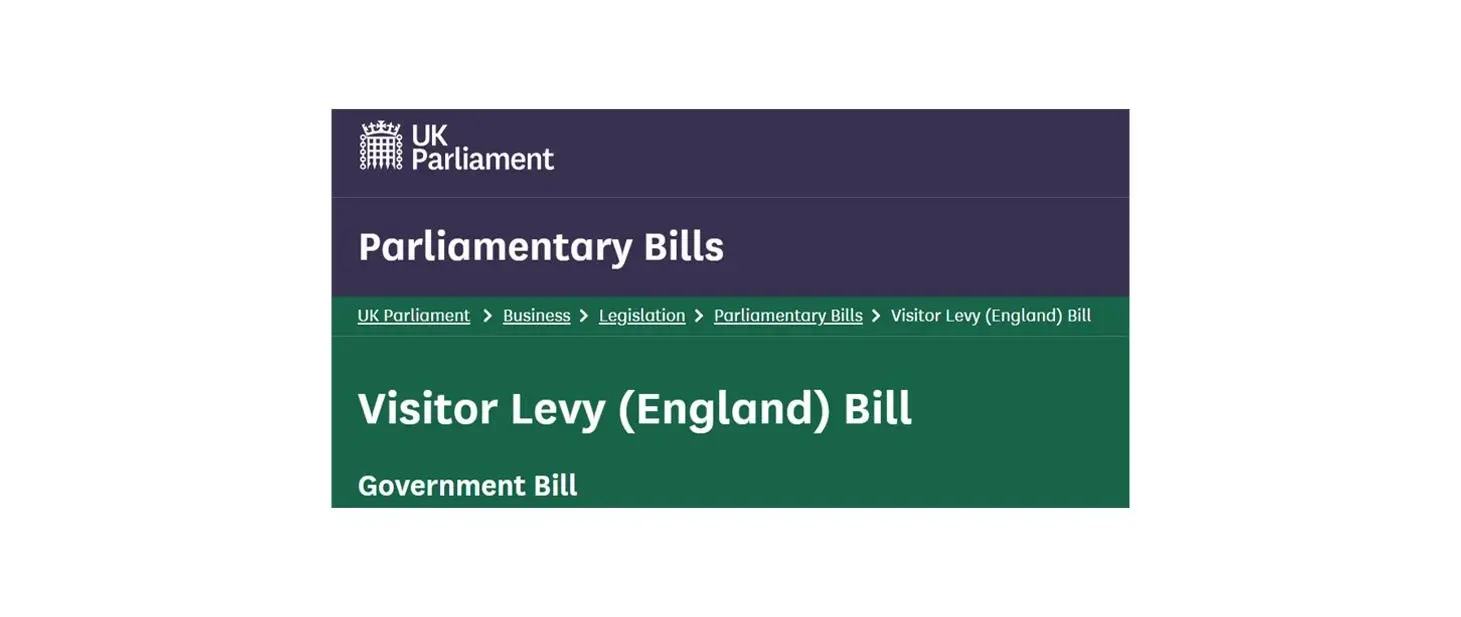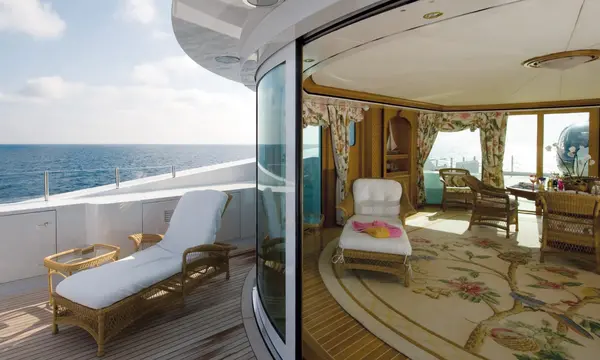
British Marine visitor levy policy announcement, official press illustration

News

British Marine Says English Visitor Levy Bill Excludes Most Cruising Yachts

Nov. 12, 2026 Legal

British Marine visitor levy policy announcement, official press illustration

British Marine says the proposed Visitor Levy (England) Bill should generally leave visiting boats outside the charge, while seeking assurances about permanently moored commercial accommodation.

Marine policy news, 12 November 2026. British Marine's 9 November statement expresses its reading of a proposed Bill and its lobbying objectives. The article does not represent the proposal as law, give definitive tax advice or promise an exemption for every yacht-related accommodation business.

The trade association draws a boundary around visiting boats British Marine says the proposed Visitor Levy (England) Bill appears to preserve a distinction between ordinary boats visiting an area and vessels permanently positioned to provide commercial accommodation. In a statement dated 9 November 2026, the industry association welcomed what it described as the protection of most boats from a new visitor-levy framework, even though it continues to oppose tourism taxes in principle. This is not an announcement that a new tax has taken effect or that every berth is now exempt. It is British Marine's assessment of a Bill that must progress through the parliamentary process and may be amended. The debate is relevant to visiting yachts, marinas, charter operators and owners who spend time in English ports. A visiting motor yacht may use the same waterfront infrastructure as a static floating lodge, but those two operations have different economic characteristics. The association argues that the law should recognise the difference rather than apply one accommodation label to every craft tied to a berth.

The key distinction is commercial lodging in a fixed location British Marine's interpretation is that vessels would enter the scope of the proposed levy principally where they are permanently situated in a single location for the provision of commercial letting accommodation, with floating lodges or accommodation-booking vessels given as examples. The description should not be converted into an unqualified rule about any yacht with overnight guests. An owner who visits a port for several nights, a commercially registered charter yacht changing destinations and a permanently moored lodging operation may present different factual circumstances. The exact statutory definitions, subsequent regulations and competent local authority decisions will matter. Those cannot be resolved by an association statement alone. It is particularly unwise to assume that a vessel's formal classification as a yacht automatically determines whether a future charge applies; the nature of the activity and permanence of the location may be central to the legal analysis.

What a visitor levy would do The Bill is described by British Marine as a national framework within which eligible English authorities could introduce visitor levies. A visitor levy typically aims to raise revenue from certain stays, but its applicable accommodation types, rates and administrative obligations depend on the actual legislative provisions. It would be premature to quote a national tariff for visiting superyachts, because the source announcement supplies no such uniform yacht rate. The policy debate concerns which activities should fall inside the tax base and how any local scheme might be defined. For marinas, uncertainty about scope can itself become an operational issue. Businesses need to know whether they must collect money from customers, record stay details or change booking systems before implementing a charge. The clearer the distinction between mobile visiting vessels and fixed accommodation businesses, the easier it should be to communicate rules accurately to boat owners and agents.

Local discretion is the unresolved concern British Marine says the Bill would give certain mayoral and strategic authorities discretion over the introduction of a levy and additional exemptions. The association is seeking assurances that this local discretion cannot be used to expand the centrally defined scope and bring normal boat visits within the charge. That distinction matters: a power to exempt an otherwise covered activity is not necessarily the same as a power to redefine the entire category of taxable accommodation. The precise answer depends on the text of the Bill and any future regulations. British Marine's chief executive, Earle Stanner, has written to the relevant minister seeking further clarification, according to the statement. No ministerial reply or enacted final wording is established by this release. For operators trying to plan several seasons ahead, clarity about which authority controls scope may be more important than early speculation about a hypothetical levy amount.

Visiting superyachts have different economic and operational patterns A 40-metre yacht visiting an English marina typically incurs berthing and operational costs and may bring spending on supplies, maintenance, transport, provisioning and local hospitality. That does not automatically settle the policy argument about visitor taxation, but it helps explain why the association believes ordinary boating activity should be distinguished from a hotel-style stay. A yacht may remain in a marina while guests change or be used privately for weeks without providing paid accommodation to the public. Another vessel may spend a long period on an annual berth, yet still operate as a yacht rather than a fixed lodging business. The legal classification of those situations requires facts and authoritative guidance. Captains and managers should avoid reducing the question to a slogan such as 'all yachts are excluded.' The proposed boundary appears to be based on the use and permanence of the vessel, not simply its length or market value.

The practical issue for marina operators If local levies are introduced in the future, a marina could face questions from customers about who must pay and which documents establish eligibility. An operator whose business serves cruising yachts, permanent residents, static floating accommodation and visiting boats may have to distinguish those uses correctly. That creates a need for consistent booking descriptions, contractual terms and staff guidance. It also creates an incentive to avoid collecting a charge that has no lawful basis. Conversely, a business that genuinely provides fixed commercial accommodation should not assume it is outside a future scheme merely because its units float. As legislative proposals evolve, operators may wish to seek guidance from trade associations and qualified advisers, keep their terms under review and build administrative systems that can respond if a scheme eventually takes effect. No change should be imposed on customers simply because a Bill has been introduced.

Charter operations require separate analysis For the superyacht market, the most difficult cases may involve different combinations of chartering, berth use and overnight accommodation. A commercially operated yacht hired for cruising is not necessarily equivalent to a permanently located vessel sold as a place to sleep. A charter yacht could also spend extended periods at the same berth between voyages. Whether a particular scenario falls within a future visitor-levy regime is a question that cannot be answered definitively from the British Marine press statement. Managers should separately examine existing tax and legal obligations, including those that already apply to chartering or accommodation, rather than assume the Visitor Levy Bill replaces them. For internationally operated yachts, treatment may also depend on jurisdiction, commercial registration and the nature of contracts. This report does not present legal conclusions for an individual vessel. It identifies the policy question and the association's requested protections.

Why precedent matters to the association British Marine points to its previous campaigning in Scotland, where it says references to berths and moorings were removed from legislation after its objections. The association regards that experience as a useful precedent for its position in England. It would be inaccurate, however, to treat the outcome of one legislative process as a binding interpretation of another jurisdiction's future Act. Devolved arrangements, local powers and statutory definitions can differ. What carries over is the policy argument that a transient boat visit should not be treated in the same manner as fixed commercial holiday accommodation without careful consideration of how marine tourism works. The association's influence and the eventual parliamentary outcome are separate questions. Its past success may give it an established campaigning strategy, but the English Bill must still be scrutinised and decided on its own terms.

Captains should monitor the law, not improvise charges A captain arriving in a marina needs dependable information about berthing costs and any legitimate additional charges. The current industry announcement should not be a reason for a captain to refuse an existing lawful fee or for a marina to add a new tax without a clear basis. Instead, management teams should monitor authoritative updates, keep correspondence with the marina and local agent, and seek advice if the proposed levy becomes relevant to an actual transaction. Larger yachts that use different English ports may face varying local conditions if the legislation creates local schemes. A consistent internal record of ports, berth arrangements and the type of use can help a manager establish facts if a future question arises. That is a sensible administrative practice, not an assertion that a new statutory reporting duty is already in force.

A public-policy decision with commercial consequences The proposed framework could influence how English waterfront businesses describe their services, and it may affect the attractiveness of particular visitor products if it eventually introduces new charges. These are possible consequences, not measured effects already demonstrated by the Bill. Some policymakers may see visitor levies as a way to fund local services used by visitors, while marine businesses may worry about disproportionate administrative burdens or loss of competitiveness. A considered assessment needs evidence on both sides, including how visiting boats contribute to local expenditure and how fixed accommodation is currently treated. The association's statement supplies its policy position but not a complete official impact assessment. Owners and operators should therefore treat it as an important industry response rather than a substitute for reading the final statutory provisions when those are available.

What is known on 12 November 2026 The confirmed development is British Marine's 9 November statement about the Visitor Levy (England) Bill. The association interprets the proposed wording as generally excluding mobile visiting boats and says permanently situated commercial accommodation vessels may be treated differently. It has asked the minister for assurances about local authorities' powers and remains opposed to tourism taxes in principle. There is no confirmed new nationwide levy payable by ordinary visiting superyachts in this announcement, and no guarantee that the final legislation will be identical to the current proposal. The next verifiable milestones are the Bill's progress, any amendments and authoritative guidance on scope. Until those exist, the responsible message for yacht owners, captains and marina managers is to follow the evolving law rather than assume either a universal charge or a permanent blanket exemption.

Primary source: British Marine, 9 November 2026, Visitor Levy (England) Bill upholds red lines on boats.

Photo licence and source

British Marine official press illustration distributed with its 9 November 2026 statement on the Visitor Levy (England) Bill. This is an illustrative image, not a photograph of Parliamentary proceedings.

Continue reading

All news

Superyacht Guide

Explore the superyacht world

Continue into the wider Superyacht Guide.

Business opportunities · Superyacht Guide

Reach the superyacht industry audience

Companies serving the superyacht market can discuss clearly identified advertising, sponsorship and business-profile opportunities. Commercial activity remains separate from independent editorial coverage.