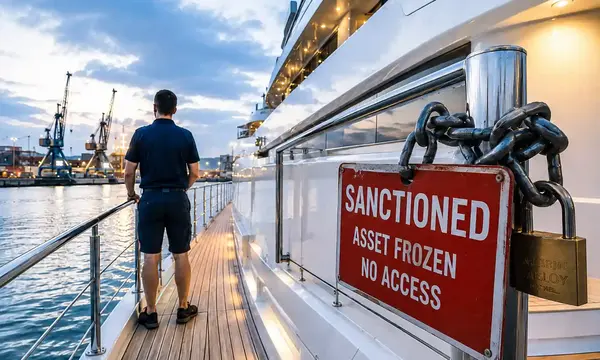
When Crew Are Caught in Sanctions: Life Aboard a Frozen Yacht
A sanctions freeze can immobilise a superyacht without making its crew sanctioned, leaving wages, contracts and daily operations caught between employment law and financial …
Two Italian maritime worker associations have urged caution over second-class yacht officer contracting rules introduced by decrees on 7 and 9 October.
Two Italian maritime worker organisations have raised concerns about the employment status of second-class yacht navigation officers following new ministerial measures issued on 7 and 9 October 2026. In a joint statement reported on 19 October, the Central Tyrrhenian Recreational Seafarers Association and Super Captains Team warn that simpler qualification and registration procedures should not be treated as automatic grounds for using self-employed service contracts instead of employment agreements.
The position adds a worker-side perspective to an earlier statement from owner association AssoYacht about the same regulatory changes. Both sides appear concerned about the risk of misclassifying regular onboard work, although the published statements place different emphasis on what flexibility the rules should allow. This report describes the positions of the associations and does not resolve how an individual contract would be interpreted by an Italian authority or court.
The debated qualification concerns second-class navigation officers authorised, within its prescribed limits, to command Italian-flagged private or commercially operated leisure craft of up to 200 gross tons. It offers a professional route that can operate without compulsory inclusion on the traditional seafarers' register. The 200GT ceiling is based on gross tonnage, a measure of enclosed vessel volume, rather than the hull's length or displacement.
That distinction makes the issue relevant to some yachts over 24 metres as well as smaller privately operated craft. A vessel's eligibility cannot be inferred from its overall length alone. Owners and managers need to examine the recorded gross tonnage, flag, intended operations and the exact qualification of their officers before drawing conclusions about the role a second-class officer may perform.
According to AssoYacht's analysis, managerial decree 164 of 7 October provided for a written employment contract for qualifying second-class officers who were not on the seafarers' register. Managerial decree 167 of 9 October subsequently introduced the possibility of using a service-provision contract as an alternative. The sequence has prompted debate because contractual labels can carry implications for labour protections and the responsibilities of vessel operators.
An available contract form does not, by itself, establish that it is suitable for every crewing arrangement. AssoYacht says the ordinary model for people working within a yacht's chain of command remains dependent employment, while genuinely autonomous arrangements may be appropriate only in particular circumstances. The seafarer organisations want assurance that administrative flexibility is not used to weaken established safeguards.
In their 19 October joint statement, the maritime worker organisations express concern that the ability to use service contracts could undermine security, protections and continuity for crew members whose work resembles traditional employment. Their concern is not limited to salary. Working time, rest, access to social protections and the ability to raise safety issues are among the considerations that can follow from how an onboard relationship is formally organised.
Large yachts depend on an established operational hierarchy in which deck officers receive instructions, carry watches and coordinate with engineering and interior departments. Crew associations argue that such routines often reflect the practical characteristics of employment, even where a different label is applied in a written agreement. A general statement cannot determine an individual case, but it identifies questions that owners and captains ought to have professionally reviewed.
AssoYacht's own 17 October release sets out its view that a contract must correspond to the actual organisation of work on board. It warns that presenting a worker as independently engaged when the person is substantively integrated into normal crew operations could expose the owner to disputes about employment classification, associated contributions and possible financial consequences. The association also draws attention to the contractual conditions attached to insurance policies.
These are risk assessments by an industry organisation, not a finding that particular yachts or owners have breached the law. AssoYacht supports the availability of genuinely independent professional services where the work is organised with real autonomy. It argues, however, that the contractual freedom created by the later decree should not be interpreted without regard to how the officer actually works.
AssoYacht also notes that preventive medical examination requirements remain relevant to the officers concerned, regardless of whether they are entered in the seafarers' register. The discussion highlights the difference between removing an administrative registration requirement and removing all other conditions attached to safe maritime service. Owners should obtain accurate documentation and current professional advice before changing the paperwork for a serving crew member.
The association has also discussed a requirement to bring inconsistent existing contracts into line within a specified period after the measure takes effect. Anyone affected should verify the operative text, commencement dates and transitional provisions directly rather than rely solely on commentary. The timeline and its application may depend on facts that a general news report cannot evaluate.
For captains responsible for recruitment, the issue is how a qualified officer's employment status aligns with the vessel's working arrangements. A person who is expected to follow a roster, operate within a bridge hierarchy and remain available for the yacht's continuing programme may face a different contractual analysis from a specialist engaged for a limited independent task. Clear instructions and accurately recorded responsibilities are important in either case.
Yacht management firms and owners also have interests in retaining experienced crew and managing compliance consistently across multiple seasons. Uncertainty about the proper classification of officers can complicate insurance and employment planning, especially when voyages cross national borders. The debate does not imply that the Italian measures alter the rules for every foreign-flagged superyacht; flag-state and local law determine what applies.
The 19 October response from the Central Tyrrhenian seafarers' association and Super Captains Team adds a further voice to a live regulatory discussion. The organisations seek safeguards against arrangements that would make dependent crew appear self-employed, while AssoYacht has advocated a clear distinction between ordinary employment and genuinely autonomous service. The common theme is the need for contractual accuracy rather than relying on the administrative status of a licence alone.
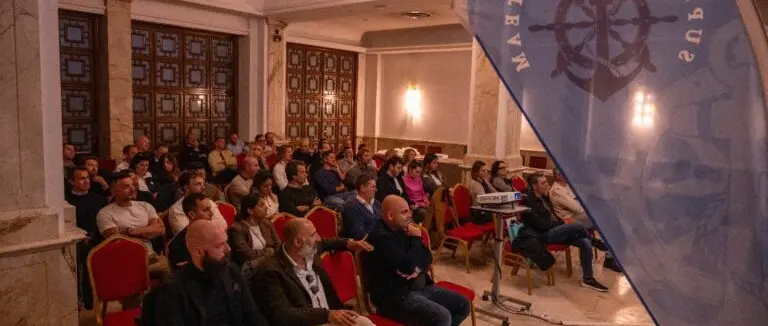
Further guidance from the Italian authorities, clarifications from professional bodies or specific interpretations in individual disputes could change how the industry applies the measures. For now, yacht owners, captains and crew should read the original decrees and obtain qualified legal and employment advice for their circumstances. The photograph accompanying this report shows an earlier Super Captains Team gathering; it is an archive image, not a photograph of the October joint statement.
Continue reading
A sanctions freeze can immobilise a superyacht without making its crew sanctioned, leaving wages, contracts and daily operations caught between employment law and financial …

Fraser has published its October 23 Fort Lauderdale Forum programme for yacht captains, with sessions on crew welfare, regulation, insurance and safety.

Captain Whitney Reiter and Bosun Martin Dawson from 55m NEXT CHAPTER won the Northrop & Johnson crew tournament near Fort Lauderdale after more than …

Northrop & Johnson has completed its fourth superyacht interior-care masterclass in Viareggio, training approximately 25 senior stewards in fabric and leather care.
Superyacht Guide
Continue into the wider Superyacht Guide.
Business opportunities · Superyacht Guide
Companies serving the superyacht market can discuss clearly identified advertising, sponsorship and business-profile opportunities. Commercial activity remains separate from independent editorial coverage.