
Sharp Previews MEO/LEO Satellite Terminals for Moving Yachts
Sharp prepares to demonstrate its MEO/LEO tracking satellite user terminals at CEATEC 2026, with marine vessels among the planned mobile use cases.
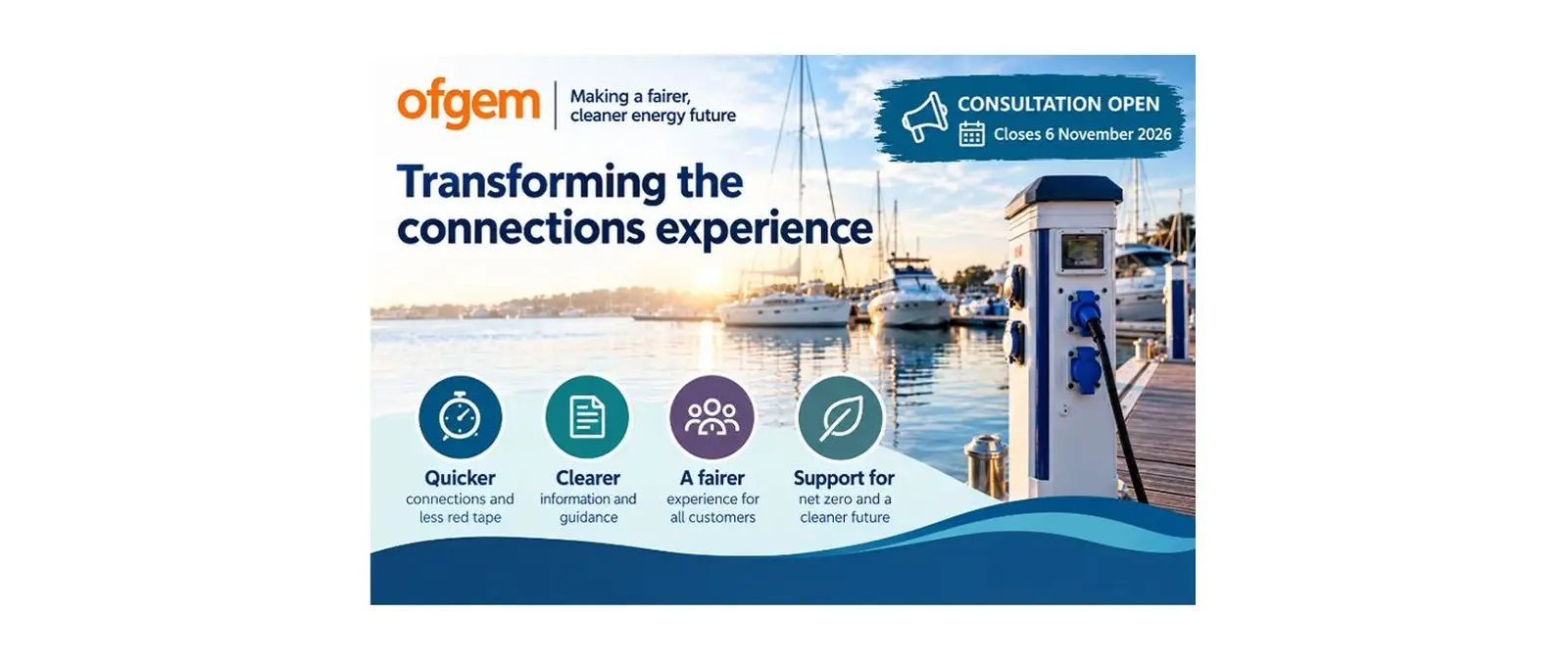
British Marine asks marinas, yards and shore-power developers for evidence of grid-connection delays and costs as Ofgem consults on electricity network service standards.
British Marine has asked marina operators, boatyards and other marine businesses to share their experiences of electricity-grid connection problems as UK regulator Ofgem considers changes to connection service standards. In an official notice on 6 October 2026, the trade association said the regulator's Transforming the Connections Experience consultation could affect investment across the boating industry.
The consultation concerns the service provided by electricity network companies when customers request new or upgraded connections. It is not an immediate order requiring every marina to replace its shore-power equipment or a guarantee of cheaper electricity bills. The marine industry's concern is that delays and uncertainty around network capacity can make planned investments difficult to budget and deliver.
An established marina may have shore-power supplies suitable for its present fleet yet find that additional large yachts, new workshops or electric-boat chargers require much greater capacity. Power demand can rise further when several vessels run hotel systems, climate control and battery charging simultaneously during a warm-weather peak.
For a marina seeking to attract superyachts, the limiting factor may be its upstream connection to the distribution network rather than the shore-power pedestal itself. Upgrading the berth outlet is insufficient if the available supply, transformer capacity or safety infrastructure cannot accommodate the aggregate load. Engineers must therefore design a complete power strategy from network connection to individual vessel interface.
The association is asking businesses that have faced significant waiting periods, unpredictable charges or unclear schedules to provide examples. It is also inviting input from operators wanting to expand electric-vessel charging, renewable generation or energy storage, and from yards requiring more power for normal commercial operations.
British Marine has requested case studies by 23 October 2026 so it can decide how to respond to Ofgem. The invitation does not mean that the trade body has already submitted an agreed industry position, or that the regulator has accepted any particular policy change. It is an evidence-gathering stage intended to document a practical problem.
Electrical upgrades can have a long lead time involving surveys, permissions, network design and construction. Delays may affect a developer's financing arrangements or prevent new berths from being used as advertised. Even where sufficient capacity exists, the distribution of energy within a marina requires load monitoring, protective equipment and attention to harmonics, earthing and safe isolation.
Facilities supporting visiting superyachts should also distinguish between advertised peak connection ratings and sustained deliverable supply across the site. A captain planning an extended stay needs to know the actual voltage, frequency, connection type and power available to that vessel under normal operating conditions.
Ofgem's proposed changes are aimed at improving transparency, consistency and accountability in the grid-connection experience. Whether they deliver more timely capacity for marinas will depend on the final requirements and how the network companies implement them. Specific engineering upgrades will still be subject to local technical constraints.
The original British Marine image accompanying this report is its official graphic for the Ofgem consultation, rather than a photograph of a particular superyacht shore-power installation. The relevant development is an opportunity for marine operators to document infrastructure barriers before the response deadline.
Continue reading
Sharp prepares to demonstrate its MEO/LEO tracking satellite user terminals at CEATEC 2026, with marine vessels among the planned mobile use cases.
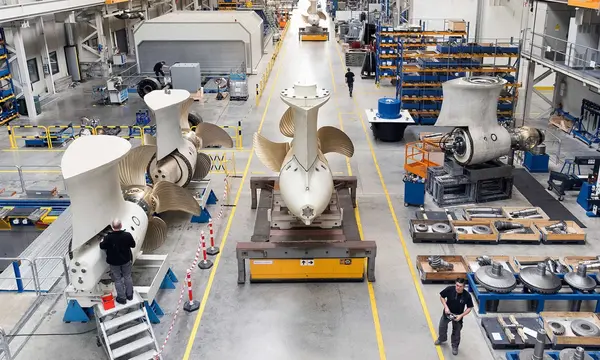
Schottel reports 20 superyachts on order with its forward-facing EcoPeller azimuth propulsion system, highlighting efficiency, manoeuvrability and reduced onboard noise.
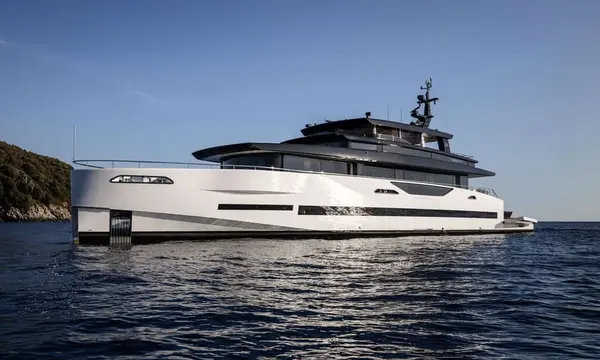
GX Superyachts has presented the 42-metre GX42 with a parallel hybrid drivetrain, substantial battery storage and solar generation integrated into one energy-management architecture.
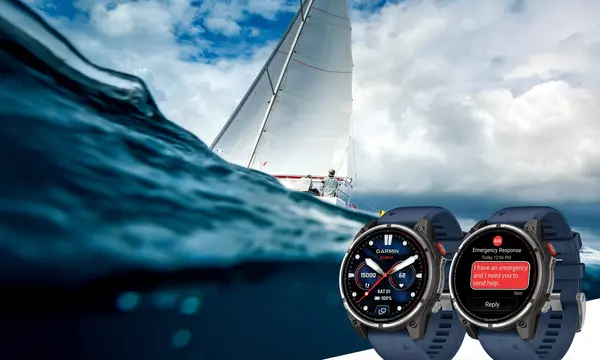
Garmin’s quatix 8 Pro combines inReach satellite and LTE connectivity, marine controls, SOS support and up to 15 days of smartwatch battery life.
Superyacht Guide
Continue into the wider Superyacht Guide.
Business opportunities · Superyacht Guide
Companies serving the superyacht market can discuss clearly identified advertising, sponsorship and business-profile opportunities. Commercial activity remains separate from independent editorial coverage.