Schottel Says 20 Superyachts Have Ordered EcoPeller Main Propulsion
By Stephen Yardley · Edited by Stephen Yardley
Schottel reports 20 superyachts on order with its forward-facing EcoPeller azimuth propulsion system, highlighting efficiency, manoeuvrability and reduced onboard noise.
German propulsion specialist Schottel says twenty superyacht projects are now on order with its EcoPeller azimuth propulsion system specified as main propulsion. The figure comes from a September 2026 account by Andreas Witschel, the company's sales director for passenger vessels and superyachts, and represents a substantial move for a technology whose roots lie in ferry and other professional-vessel engineering. The orders are a statement about contracted applications, not twenty completed yachts already operating at sea.
For owners, the development matters because propulsion architecture influences almost every part of a yacht, from machinery placement and guest cabin noise to the space available beneath the aft deck. Instead of a traditional diesel engine driving an angled shaftline and fixed propeller, a steerable pod places the propeller and its associated equipment in a different relationship with the hull. The choice must be made early enough to influence naval architecture and onboard accommodation.
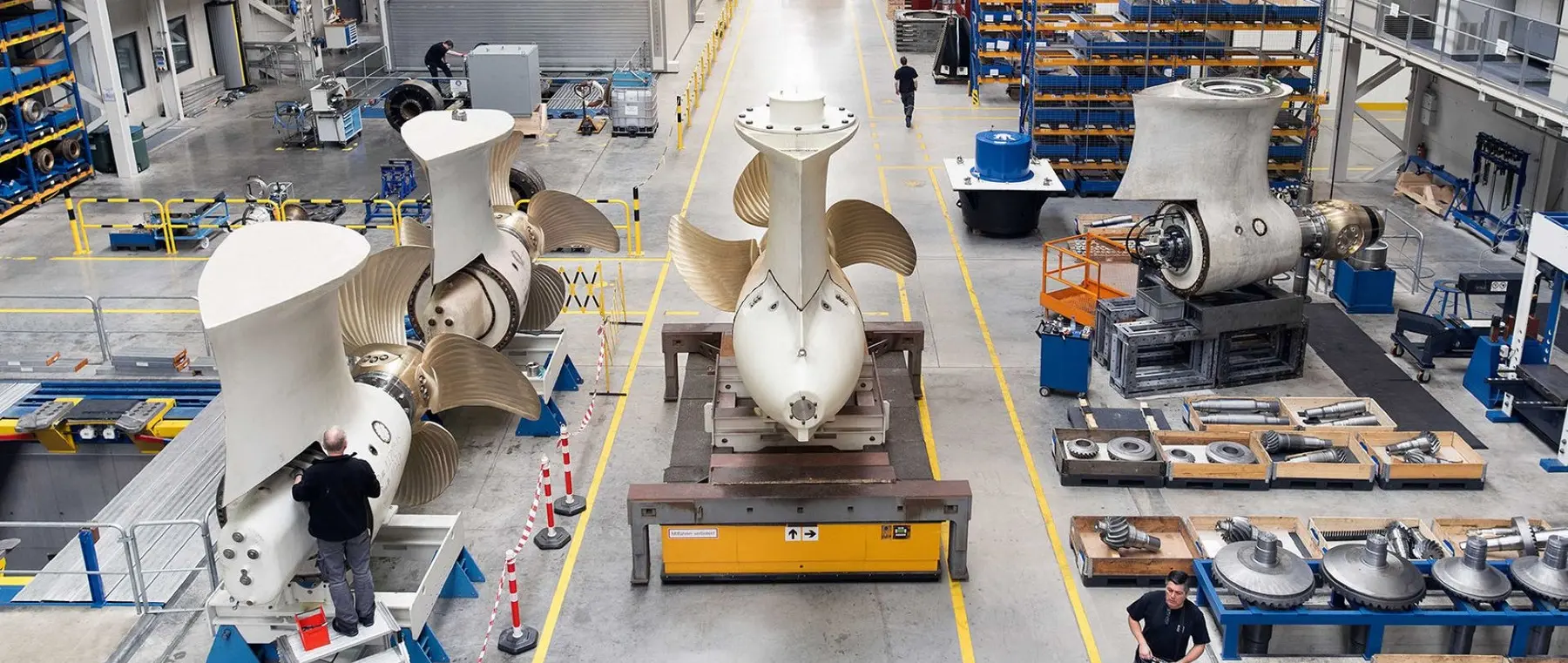
The EcoPeller is a forward-facing pulling thruster. Its propeller runs ahead of the unit's vertical support, rather than pushing water past that structure before it reaches the blades. Schottel says this configuration gives the propeller a relatively even incoming flow, supporting efficiency and reducing some forms of turbulence. The company has also moved the propeller farther forward from the supporting strut to minimise interactions that could create extra resistance or unwanted vibration.
A pulling arrangement is not automatically superior on every hull. Wake conditions depend on vessel geometry, the immersion of the unit, propeller design and cruising speed. Naval architects must study the pod's interaction with the surrounding hull as carefully as they would a conventional shaftline. Sea trials and independent performance measurements remain necessary before an owner can compare fuel use or acoustic benefits with another yacht of different displacement.
Schottel worked with the University of Dresden to refine the gearing and packaging inside the EcoPeller housing. The goal was to reduce the physical size of the underwater unit while preserving an efficient propeller diameter. A compact drive can let naval architects position machinery differently and potentially return useful accommodation or storage space to the owner, especially in the aft part of a displacement yacht.
Space gains should not be calculated from the removed shaftline alone. The pod still needs power equipment, structural foundations, cooling, control systems and adequate access for inspections or maintenance. Its location can affect hull structure, stabiliser arrangements and vulnerable underwater appendages. A useful general arrangement shows the entire installation, not just the empty volume where conventional shafts and gearboxes might otherwise have been.
The company has developed elastic mounting arrangements intended to reduce the transmission of high-frequency vibration into the hull. A yacht's guest cabins can be unusually sensitive to small acoustic disturbances because owners expect near-residential comfort while travelling overnight. Reducing mechanically transmitted noise may improve the quality of sleeping spaces and quiet lounges even when engine power remains largely unchanged.
The final result also depends on propeller cavitation, hull panels, generator mounting and the construction of the surrounding accommodation. Vibration can travel along pipes, cables and other structural paths not addressed by one mounting component. Owners should request contractual acoustic targets with agreed measuring conditions. The most reliable test takes place after the vessel is fitted out and carrying a realistic operational load.
Schottel describes EcoPeller units for the yacht market from approximately 500 kilowatts to 2,500 kilowatts each. That range gives designers choices for yachts with different hull sizes, cruising profiles and redundancy needs. Multiple steerable units can provide strong manoeuvring capability, although the configuration and control software need to be matched to the operating characteristics of the particular ship.
Electric drive also gives designers flexibility in where power is generated, but it does not in itself make a yacht emissions-free. A diesel-electric installation can shift engines to more efficient operating points and permit batteries to support some functions; total fuel savings depend on the real power profile. Owners should distinguish the advantages of controllable propulsion from claims about overall emissions that require proper comparative data.
Beyond main propulsion, Schottel offers a PumpJet arrangement that draws water through a flush hull intake and directs it horizontally through steerable outlets. It can be paired with other thrusters to provide low-speed positioning and precise movements in restricted waters. Witschel says a conventional twin-shaft yacht may be able to use an electrically driven PumpJet for slow manoeuvring without keeping the main shafts turning.
That capability can help captains when approaching a berth or holding position, but a PumpJet is not a substitute for anchoring where local rules require an anchor, nor a guarantee of unlimited dynamic positioning. Station-keeping requires suitable sensor redundancy, controls and a clear understanding of environmental limits. The captain remains responsible for assessing water depth, current, surrounding traffic and the risk of stirring seabed sediment.
Schottel has decades of experience in propulsion for ferries, workboats and specialised vessels. The company began work on the EcoPeller around 2015 for double-ended ferries and later refined a yacht-oriented version from roughly 2022. This transfer of technology is a recurring pattern in high-end yacht construction: systems developed for demanding professional ships are adapted for owners who require quiet operation, advanced controls and extensive living space.
The transition is not merely a change in product branding. Yacht builders may demand different surface finishes, more restricted machinery volumes, redundant control interfaces and tighter acoustic specifications. Schottel's engineering teams must work closely with yards, electrical-system suppliers and naval architects so that an efficient underwater device does not create servicing complications years after the yacht is delivered.
The September disclosure of twenty superyacht orders offers evidence that several builders are willing to specify the technology. It does not identify the twenty projects individually or establish whether each will achieve the same measured fuel or noise benefit. Future deliveries will create the references that owners need when comparing steerable pods with more conventional machinery.
The wider significance is a change in priorities. Speed alone is no longer the only measure of propulsion success for a large cruising yacht; controllability, efficient partial-load operation, low noise and the availability of space for hospitality have become central design requirements. Schottel's progress illustrates that trend while leaving real-world operating figures to be validated on the vessels themselves.
Explore
Go deeper into the yachts, companies, events and destinations directly connected to this article.
Continue reading
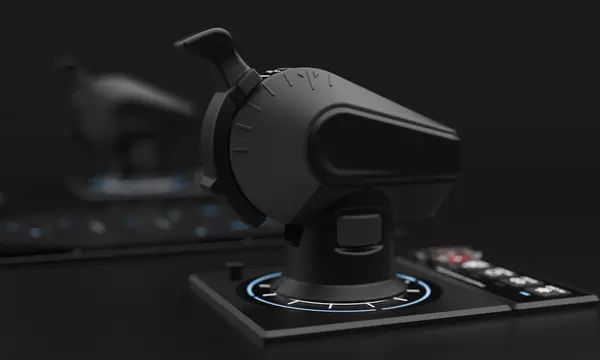
SCHOTTEL’s new PropControl 4 platform combines propulsion controls, telemetry, cybersecurity and remote service for thrusters and controllable-pitch propellers.
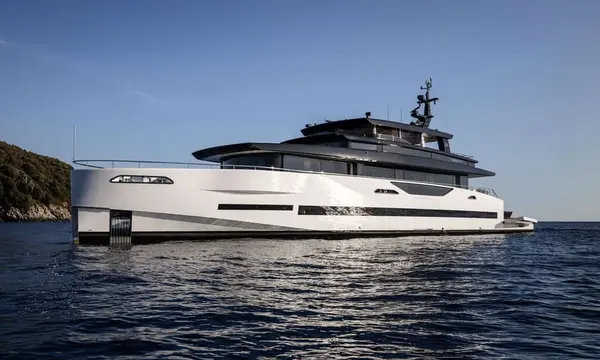
GX Superyachts has presented the 42-metre GX42 with a parallel hybrid drivetrain, substantial battery storage and solar generation integrated into one energy-management architecture.
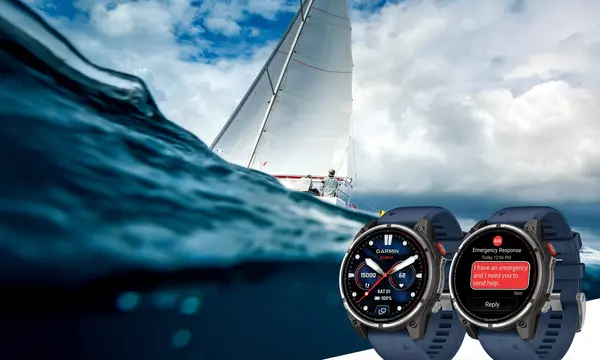
Garmin’s quatix 8 Pro combines inReach satellite and LTE connectivity, marine controls, SOS support and up to 15 days of smartwatch battery life.
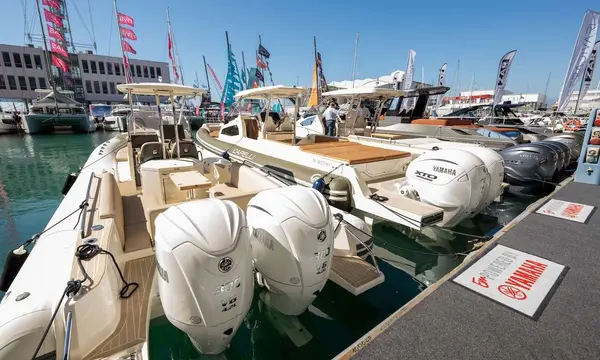
Yamaha Marine is using Genoa to present its high-power V8 and V6 outboards, integrated control systems and on-water Torqeedo electric propulsion trials.
Superyacht Guide
Continue into the wider Superyacht Guide.
Business opportunities · Superyacht Guide
Companies serving the superyacht market can discuss clearly identified advertising, sponsorship and business-profile opportunities. Commercial activity remains separate from independent editorial coverage.