SCHOTTEL Launches PropControl 4 for Connected Yacht Propulsion
By Stephen Yardley · Edited by Stephen Yardley
Image: SCHOTTEL
SCHOTTEL’s new PropControl 4 platform combines propulsion controls, telemetry, cybersecurity and remote service for thrusters and controllable-pitch propellers.
SCHOTTEL has unveiled PropControl 4, a new generation of propulsion-control technology designed to bring thrusters, controllable-pitch propellers, bridge interfaces and remote service functions into a more connected operating platform. The system was announced on 2 September 2026 and is intended for a broad range of vessels, including yachts, where propulsion controls increasingly have to coordinate complex machinery rather than simply command ahead and astern.
PropControl 4 supports SCHOTTEL azimuth thrusters, transverse thrusters and controllable-pitch propellers, with a modular architecture that can be adapted to different propulsion arrangements. The company is emphasising operational reliability, intuitive handling, cybersecurity and digital connectivity, which reflects how bridge and machinery systems are converging into one technical environment on modern large yachts.
On a conventional installation, propulsion controls translate commands from bridge levers, joysticks and steering devices into mechanical or electrical action at the propulsor. Modern systems have to do more because yachts may combine multiple thrusters, dynamic-positioning functions, hybrid power sources, automation, integrated bridge displays and remote diagnostic tools.
PropControl 4 is designed around that broader role. SCHOTTEL says the platform can combine control functions, operating modes and digital interfaces in one system, allowing the configuration to match the vessel rather than forcing every project into one fixed control layout.
For yacht builders, modularity can reduce integration risk when a project has an unusual propulsion architecture. A large explorer yacht, for example, may have different redundancy and manoeuvring requirements from a fast planing yacht, even if both use equipment from the same propulsion supplier.
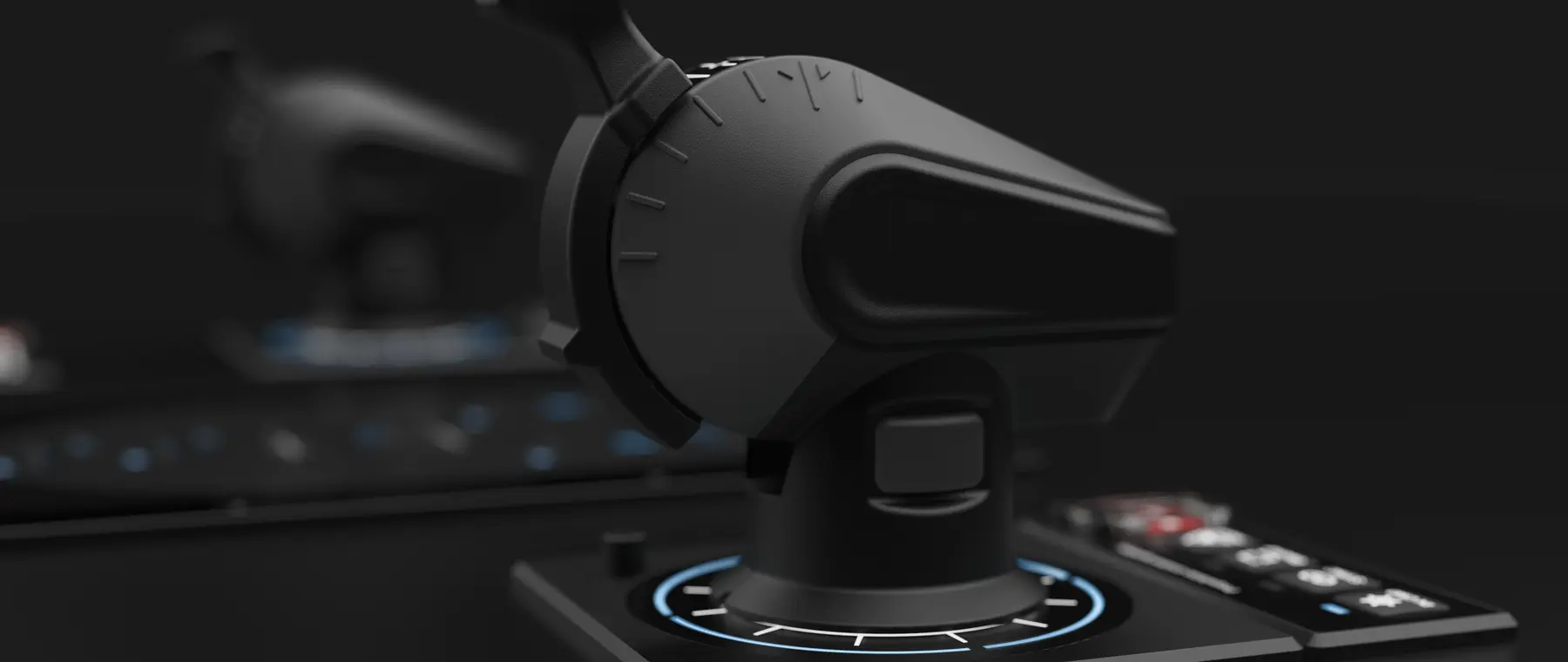
The most visible part of PropControl 4 is the bridge interface, including a redesigned control lever with an integrated push-to-talk button and configurable displays and button panels. SCHOTTEL says the aim is to make complex propulsion functions easier for the operator to access without creating unnecessary workload on the bridge.
Human-machine interface design is particularly important during docking and close-quarters manoeuvring, when crews need immediate confirmation of thrust direction, power level, alarms and operating mode. Clear feedback can reduce the chance of an incorrect command, while a consistent interface across different propulsion functions can make training and familiarisation easier.
On a superyacht, bridge ergonomics also has a design dimension because control hardware is often integrated into highly customised consoles. A modular system gives bridge designers more freedom, but visual integration should never compromise the legibility, redundancy and physical separation needed for safe operation.
SCHOTTEL says PropControl 4 can collect operational and telemetry data and transmit it to the company’s MariNet platform. That creates a path for condition monitoring, trend analysis and maintenance decisions based on actual operating information rather than relying entirely on fixed service intervals.
The system also allows authorised remote access to log files, system information and display views, and it can support software or parameter updates without a technician being physically onboard. For a yacht operating internationally, that can shorten fault-finding time and help a service team arrive with better information if an onboard intervention is still required.
Remote service has to be engineered carefully because propulsion control is safety-critical. A secure connection, controlled access rights, event logging and clear procedures for enabling or disabling remote functions are essential if connectivity is to improve serviceability without creating an unacceptable cyber risk.
SCHOTTEL is presenting security as a core feature of PropControl 4 rather than an optional addition. That is increasingly necessary because class societies, flag states and owners are paying more attention to the vulnerability of operational technology, particularly where propulsion, power management and bridge systems are connected to broader onboard networks.
A propulsion-control platform must remain usable if external connectivity is lost, and critical functions need deterministic local control even when shore-based services are unavailable. For yacht managers, that means cybersecurity reviews should consider not only office IT and guest Wi-Fi but also the operational networks that control machinery.
The service benefit of connected equipment can still be substantial. Faster diagnostics can reduce downtime, while access to operating history can help identify recurring faults or maintenance needs that would be difficult to see from a single alarm event.
SCHOTTEL serves many vessel sectors, so PropControl 4 is not a yacht-only product. Its relevance to superyachts comes from the same trend affecting other sophisticated vessels: propulsion, energy management, automation and digital service are becoming more integrated, and owners increasingly expect the bridge to present that complexity through a manageable interface.
Large yachts also operate with high expectations for manoeuvrability and redundancy. Azimuthing propulsors, bow and stern thrusters and controllable-pitch systems can provide exceptional control, but their value depends on the control architecture coordinating them predictably under normal operation and fault conditions.
PropControl 4 therefore represents more than a new lever or display. It is SCHOTTEL’s attempt to make propulsion control a connected lifecycle system, combining onboard operation with telemetry, remote support and future software development while retaining the local reliability required of safety-critical marine machinery.
For builders and owners considering SCHOTTEL propulsion on a new project or major refit, the practical questions will be how the system integrates with the chosen bridge, automation and cybersecurity architecture. Those interfaces will determine whether the additional connectivity produces a simpler yacht to operate or merely adds another layer of complexity.
For new-build yachts, the ideal time to address those interfaces is before the bridge and machinery specifications are frozen. Early coordination between the propulsion supplier, naval architect, automation contractor and bridge integrator can define data ownership, alarm priorities, fallback modes and network boundaries before they become expensive commissioning problems at the end of a build.
The same architecture may also support future upgrades because software-defined functions can evolve without replacing every bridge component. That advantage only holds if long-term support, version control and backward compatibility are managed carefully throughout the yacht’s service life.
For captains, the practical measure will be predictable behaviour under pressure. A sophisticated control system earns its place only when crews can understand its state quickly and recover safely from faults.
Explore
Go deeper into the yachts, companies, events and destinations directly connected to this article.
Continue reading
Lloyd’s Register says nuclear propulsion for superyachts now warrants serious safety and regulatory work, while major technical and societal barriers remain.
How Much Does Starlink Cost on a Superyacht? 2026 Plans and Setup Starlink’s current European maritime pricing starts around €250 per month for 50 …
Can You Work Remotely from a Superyacht? Wi-Fi, Starlink and Power Yes, remote work from a superyacht is technically realistic when the yacht has …
Videoworks has detailed the integrated AV, IT, communications and cybersecurity architecture aboard the 67.55m CRN superyacht Amor à Vida.
Superyacht Guide
Continue into the wider Superyacht Guide.