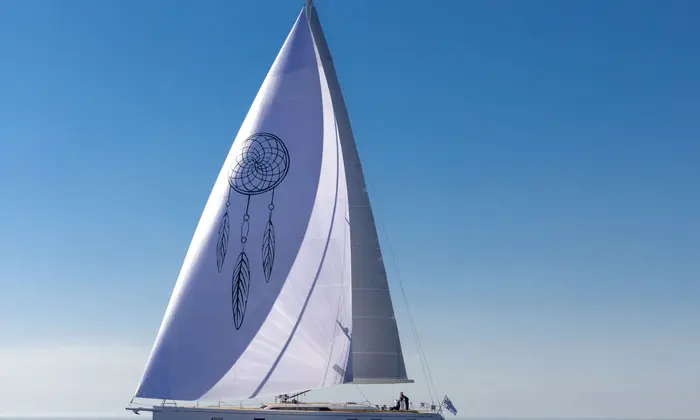

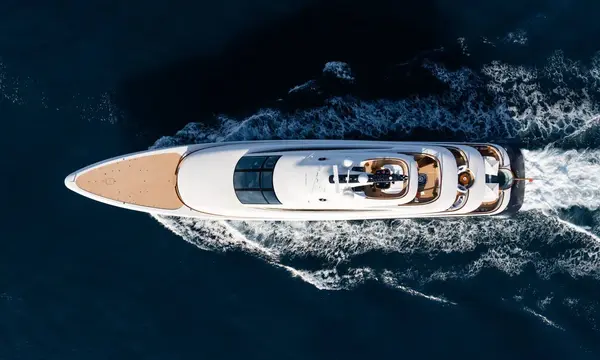
Nautor Swan 88 DreamCatcher — original 2024 Nautor Swan PR photo
The history and engineering of the 28.27m first hybrid-electric Swan 88 DreamCatcher, with its distinct Nautor hull identity and official 2024 source.
Nautor Swan's 2024 launch of the first Swan 88, later identified as DreamCatcher, introduced a different way of thinking about large performance cruising yachts. With a length overall of 28.27 metres, this is a yacht that belongs among modern sailing superyachts, even though the builder deliberately designed her measured load-line length to fall below 24 metres. That contrast is not a contradiction. Different measurement conventions serve different purposes, and the most reliable public record retains the real length overall rather than treating a regulatory measure as the vessel's full size. The result is a yacht that connects a distinctive performance-cruising identity with advances in electric propulsion.
The launch took place in Pietarsaari, Finland, in April 2024. Nautor Swan's original announcement identified the first unit of the Swan 88 series as the builder's first hybrid-electric Swan 88. The individual yacht name DreamCatcher was subsequently confirmed in the builder's model history and the brokerage record for Swan 88 hull 001. It is important to distinguish this vessel from another Swan 88, Spiip, because both relate to the same design and construction year while representing separate physical hulls. The Nautor Swan emails circulated around the 2024 Cannes and Monaco shows provide useful historic evidence of the Swan 88's public presentation, not a reason to duplicate the same yacht in a fleet database.
The Swan 88 was designed to provide the accommodation, cruising capability and presence of a substantially larger sailing yacht while staying within the rules associated with a load-line length below 24 metres. The official model specifications quote 28.27 metres overall and 26.54 metres of hull length, while the load-line figure is 23.99 metres. Those numbers should always be identified by their proper measurement labels. A 23.99-metre load-line figure must not be mistaken for a 23.99-metre overall yacht simply because it is convenient for a headline or a website category.
The design objective has an obvious commercial dimension: requirements can change at particular measurement thresholds. But this article does not claim that every flag-state, crewing or charter rule applies uniformly, because legal obligations depend on the specific use and jurisdiction. The practical conclusion is narrower and more useful. DreamCatcher is a 28.27-metre yacht by overall length and is therefore correctly listed by Superyacht Guide as a superyacht, while Nautor's load-line design illustrates the importance of regulatory considerations from the earliest naval-architecture stage.
Nautor Swan's established collaboration with Germán Frers underpins the Swan 88. Frers Naval Architecture developed the naval architecture, while Lucio Micheletti and Micheletti + Partners contributed the exterior styling. Misa Poggi's interior design approach addresses the more intimate demands of onboard living. These disciplines are related but not interchangeable. The naval architect must balance form stability, load and hydrodynamic performance, while the exterior designer shapes how guests, crew and sailing systems use deck space. The interiors have to function within structural and machinery boundaries without undermining weight or service access.
That integration is especially demanding on a performance cruiser. A powerful sail plan, substantial deck hardware and a deep keel introduce forces that require serious structural thought, while guest circulation and accommodation need to feel composed and relaxing. The official photographs of the first Swan 88 show a yacht whose proportions are guided by sailing purpose rather than a motor-yacht-style superstructure. The appeal lies in joining practical working decks and a long, controlled profile with enough protected living space for serious private passages.
DreamCatcher introduced a Torqeedo-associated hybrid-electric propulsion arrangement. The builder has described how electric drive allows quieter manoeuvring and running, and how the system is intended to work with the yacht's wider electrical demand. In a large sailing yacht, propulsion is used intermittently, but hotel systems may need power continuously. Electrification is relevant because it can link energy generation, storage and consumption in ways that conventional machinery arrangements do not.
The word hybrid is not a promise of emissions-free ocean crossings. How much fuel a yacht actually uses depends on generation sources, storage capacity, propulsion demand, wind conditions, anchoring behaviour and the owner or captain's operating decisions. A battery's ability to support silent harbour manoeuvres does not demonstrate what happens during days of unfavourable weather. Nautor's system is significant precisely because its functions can be described without inventing universal efficiency percentages or claiming that the yacht can sail indefinitely using stored electricity alone.
A well-developed hybrid system can also change the use of a yacht at anchor or during passages under sail. The propulsion machinery and onboard electrical system do not have to be considered solely as separate compartments in the technical design. Modern energy management can bring together the requirements of domestic comfort, navigation electronics, refrigeration and occasionally propulsion itself. Some installations can recover energy from propeller rotation under sail, although the rate of recovery and its drag effects vary with the actual system, speed and operating choices.
Owners notice the consequences in everyday activities: the sound environment at night, the way crew manage equipment and the availability of electrical power when the main engines are not required. Engineers notice a different set of challenges, including power-electronics redundancy, safe charging, thermal management, access for service and the overall maintenance plan. DreamCatcher illustrates why a hybrid yacht should be examined as a complete technical architecture, not simply described as a conventional sailing yacht with a new motor added.
The first Swan 88 also reflects Nautor Swan's longstanding emphasis on composite construction. Contemporary accounts of DreamCatcher discuss the use of SPRINT pre-preg composite processes associated with Gurit, a route to weight control and structural performance. The challenge is not merely making the yacht lighter at any cost. Engineering teams must deliver suitable strength and stiffness where rig loads, appendages and deck gear demand it. The balance influences stability, pitching, sailing response and how the yacht feels when conditions deteriorate.
Carbon reinforcement and carefully designed structural members offer opportunities, but their quality depends on manufacturing control and inspection. A specific construction process is not a guarantee against every future defect, nor is a yacht's light displacement an adequate summary of its comfort. The important story is the coordination between hull engineering, sail-carrying power, systems and serviceability. It is this integrated approach that makes a high-end cruiser capable of being both technically ambitious and practical for extended voyages.
An essential result of checking the original Nautor Swan emails is confirmation of the first Swan 88 as DreamCatcher, the 2024 first hull, rather than a generic model or an alias for another boat. The same model line later includes the separate 28.27-metre Spiip, which already had a record in the Superyacht Guide fleet. A first-hull press release and a second-hull photograph can easily become confused if sources are catalogued only by model name, especially where a yachtyard issues publicity about several boats around the same show season.
The correct record therefore identifies DreamCatcher as Swan 88-001, with its own name, construction identity and image, and retains Spiip as a separate yacht. The builder's model page offers information that belongs to the design shared by the two, but it cannot establish individual ownership, current cruising areas or the exact options fitted to both yachts. Those details have to be checked at hull level. The distinction also matters to charter and brokerage readers who may see one example offered for sale while a different yacht of the same design remains privately operated.
The corrected Nautor Swan newsletter circulated in July 2024 announced the Swan 88 among the headline premieres scheduled for the September boat shows. It also mentioned ClubSwan 43 and Swan Arrow, which have very different dimensions and intended uses. The original communication included official photographs supplied through the builder's own newsletter media channels. These images are useful because their provenance can be traced back to the sender, date and individual source file rather than depending on a generic gallery found elsewhere.
A photograph from that 2024 Nautor Swan circulation accompanies this feature with the builder's credit. Its inclusion illustrates the first Swan 88 and the wider design language rather than pretending that the photograph records a new November 2026 launch. The historical source provides context for the yacht's introduction to the market. Subsequent specifications and brokerage material provide the separate evidence needed for the individual identity DreamCatcher.
The significance of the Swan 88 is broader than its propulsion system. It demonstrates a competitive category in which very large sailing yachts are expected to provide genuine performance, carefully designed guest spaces and complex systems without losing their purpose as sailing vessels. A 28-metre yacht can be operated in very different patterns, from short summer passages to extended bluewater cruising, and each choice places distinct loads on machinery, rigging, sails and crew procedures.
For that reason, the builder's launch is best understood as an engineering and design milestone within a continuing series. The historical article remains relevant even when the first yacht has been sailing for two years, because the details have value for later yacht management and model comparison. The combined references to hybrid propulsion, the measurement conventions, the naval architect and the actual first-hull identity create a fuller and more durable record than simply repeating that a new Swan was launched.
Superyacht Guide has used the original Nautor Swan communications and the builder's public reference material to distinguish DreamCatcher from Spiip and other vessels called Dreamcatcher. The 28.27-metre DreamCatcher has her own first-hull fleet entry; the separate Spiip record has not been overwritten. The associated historical technical report gives readers the context to understand both the model and the distinct boat involved. This prevents a construction milestone from being translated into several supposed hulls merely because the same project appeared in more than one PR mailing.
Accuracy extends to what is left unsaid. No current asking price, owner's identity or future itinerary has been inferred from the original 2024 release. The hybrid system is described through attributed technical information, not invented performance results. The official image is credited and logged against its original source checksum, and the press correspondence remains in the Nautor Swan CRM record. For a yacht whose design deliberately challenges conventional categories, careful identification matters as much as the technology itself.
Official photograph: © Nautor Swan, original builder-supplied 2024 press newsletter. Source: https://www.nautorswan.com/news/2024/04/swan-88-the-first-hybrid-electric-propulsion-yacht-by-swan-has-been-launched/; original full PR email in Nautor Swan CRM, ID 403.
Explore
Go deeper into the yachts, companies, events and destinations directly connected to this article.
Continue reading
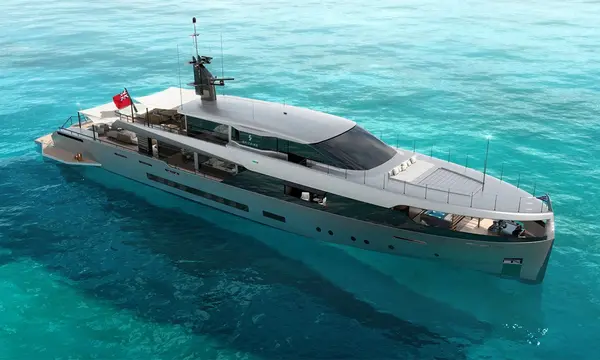
ARES Yachts' 50.55m SPITFIRE project combines a lightweight composite hull, hybrid electric drive and a radically flexible guest layout as the Antalya yard develops …
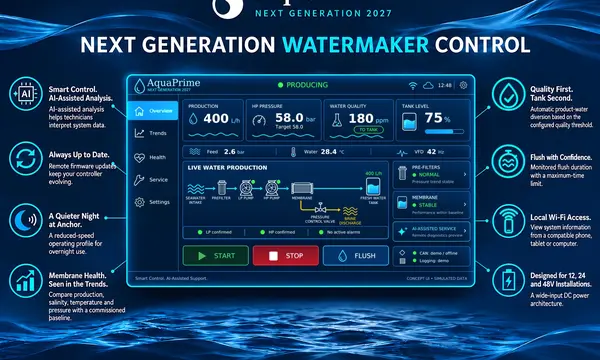
AquaPrime will preview its new watermaker control platform at METSTRADE, with touchscreen monitoring and diagnostic features under development for yacht crews.
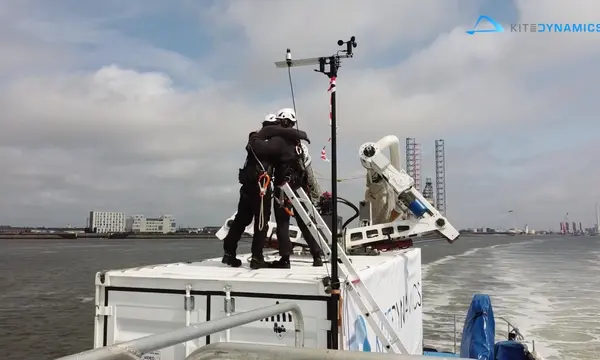
Kite Dynamics is developing four-line kite propulsion following at-sea trials in 2025 and 2026, with yacht applications remaining at the prototype and engineering stage.
How the 79.95m Feadship Faith became hull 714 in the fleet record, and what its RWD design and diesel-electric engineering reveal about custom yacht …
Superyacht Guide
Continue into the wider Superyacht Guide.
Business opportunities · Superyacht Guide
Companies serving the superyacht market can discuss clearly identified advertising, sponsorship and business-profile opportunities. Commercial activity remains separate from independent editorial coverage.